A century-old shophouse is the main attraction here, but the real draw is the way its rooms bring Peranakan life into focus. You’ll hear about wedding rituals beside the bridal chamber, see family objects in their domestic setting, and learn how Chinese, Malay, and Colonial influences shaped Peranakan culture. I like the personal guided talk and the chance to see original household pieces rather than only read about them.
The visit is compact, usually about an hour, and the guides make time for questions. One thing to plan around: the mansion is upstairs, with no lift, and the ticket is valid only for your selected date and time. If stairs are a problem, this is not the right stop.
- Key points to know
- A Peranakan home with stories in its rooms
- Starting at 283A Joo Chiat Road
- The reception room and the collection
- The dining room and the Tok Panjang
- The ancestral hall and family customs
- The bridal chamber and wedding rituals
- How much time to allow, and what it costs
- Who will get the most from this visit
- Is this Peranakan mansion worth booking?
- FAQ
- How long does the guided visit take?
- What is the address?
- What languages are available for the guided tour?
- Is the activity wheelchair-accessible?
- Can I take photographs inside?
- Are tea and Nonya cakes included in admission?
- The Best Of Singapore!
- More Tours in Singapore
- More Tour Reviews in Singapore
- Not for you? Here's more nearby things to do in Singapore we have reviewed
Key points to know
 1 / 9
 2 / 9
 3 / 9
 4 / 9
 5 / 9
 6 / 9
 7 / 9
 8 / 9
 9 / 9
- A 1928 shophouse, not a large museum: The rooms and preserved interiors give the collection a lived-in setting.
- A guided visit with room for questions: Guides such as Joan, Kim, Clarence, and Jade have led talks, though your guide will vary.
- Wedding customs are a highlight: The bridal chamber and the stories around it give context to objects you might otherwise pass by.
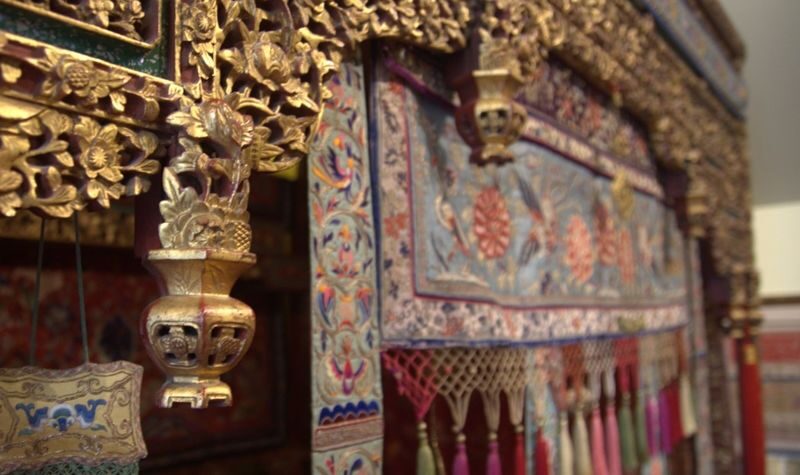
- Small details carry meaning: Look for phoenix and peony motifs on architecture and ceramics, as well as everyday household items.
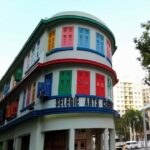
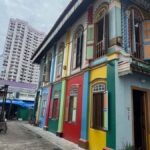
- A short stop in Joo Chiat: The address is 283A Joo Chiat Road, close to the colourful shophouses on Koon Seng Road.
- Extras may cost more: Tea and Nonya cakes have been offered for an additional $10 per person, while costume experiences are separate from basic admission.
👉 See our pick of the 25 Best Guided Tours In Singapore
A Peranakan home with stories in its rooms
Peranakan culture grew from generations of exchange among Chinese, Malay, and other communities in Southeast Asia. In Singapore, the term often refers to people of Chinese ancestry whose families developed local customs, food, language, dress, and design traditions. This tour gives you a close look at that heritage through a family-style collection inside a preserved shophouse.
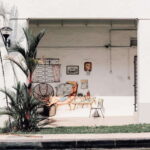
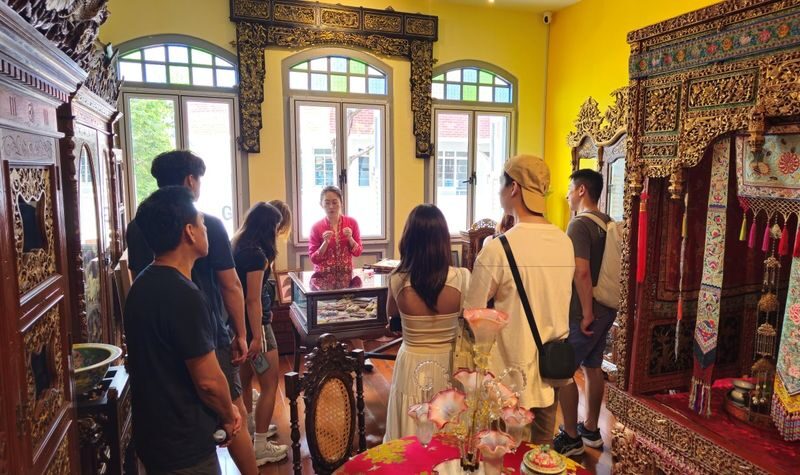
The setting matters. Instead of seeing objects grouped in a standard gallery, you move through rooms that suggest how a Peranakan household might have been arranged: a reception area, dining space, ancestral hall, kitchen, and bridal chamber. Furniture, fabrics, ceramics, photographs, and household tools help make the talk concrete. A table or a piece of porcelain can lead into a story about family standing, ritual, or daily routines.
This is a small-scale visit, not an all-day museum outing. The core guided experience is about an hour, though the advertised duration is one to two hours. That shorter format suits a busy Singapore schedule, and it leaves time to explore the Joo Chiat area afterward. It also means the guide’s explanations are central. If you want to study every item at length, you may wish to ask whether there is time to look around after the talk.
You can also read our reviews of more tours and experiences in Singapore.

Starting at 283A Joo Chiat Road
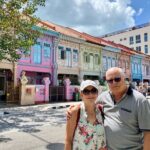
The mansion is at 283A Joo Chiat Road, Singapore 427537, near the colourful Peranakan-inspired houses of Koon Seng Road. That location makes it easy to pair the visit with a stroll around Joo Chiat, an area known for its shophouses and local character. You can make the mansion the focus of a short outing, then take photos along Koon Seng Road or choose a nearby place to eat.
The entrance is on the second level. There are stairs and no lift, so consider that before booking if you have limited mobility or are visiting with someone who cannot manage steps. A washroom is on the ground level, according to on-site details shared by a visitor. The experience is not wheelchair-accessible.
You enter directly with your voucher. The ticket is valid only on the selected date and, where applicable, the selected time. There is no re-entry once you leave, so use the washroom and take care of anything you need before starting the visit.
The reception room and the collection
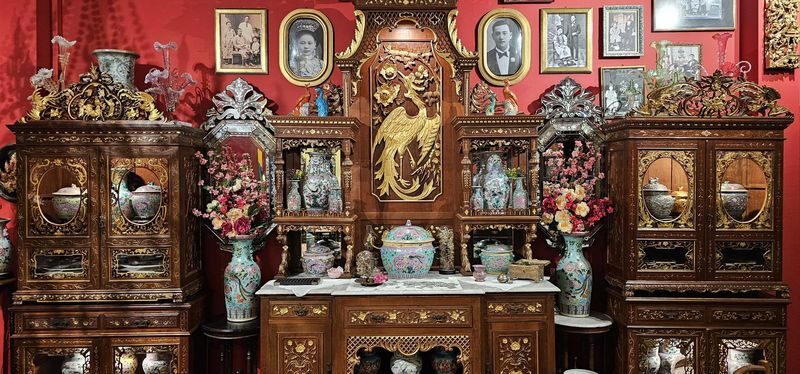
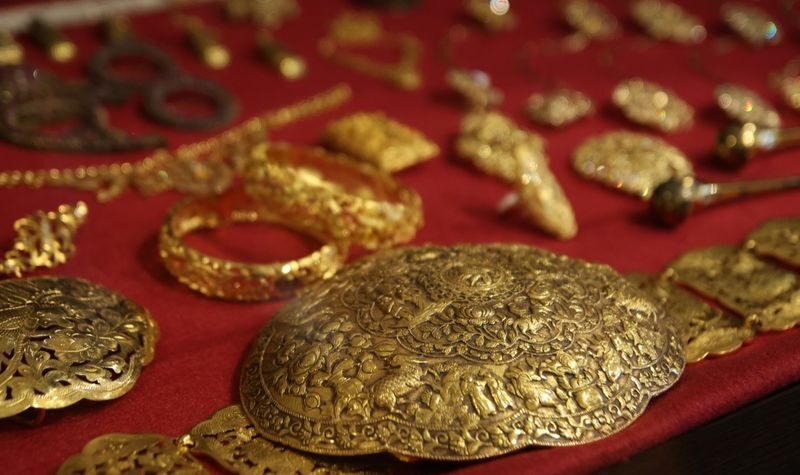
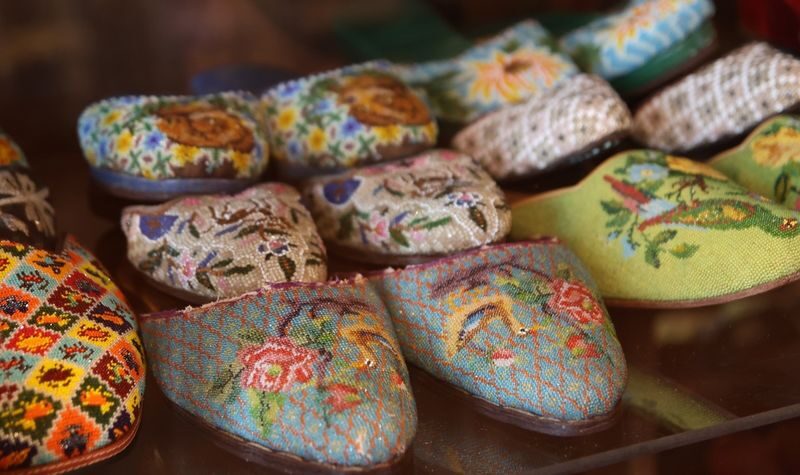
The first rooms introduce you to the mansion’s visual language. Expect carefully displayed furniture, fabrics, ceramics, photographs, and other artifacts. The collection is described as numbering in the thousands, so the guide helps you focus on pieces that tell a story rather than trying to take in everything at once.
One useful thread is the way design motifs recur across different objects. Phoenix and peony symbols, for example, can appear in architecture and ceramics, and the guide can explain why these images mattered. That makes the patterns easier to read: they are not simply decoration, but clues to ideas about family, prosperity, and social life.
Household objects may be the most relatable part of the visit. A display of daily-use items can connect the past to your own family memories, especially if you recognise similar tools or furnishings from a parent’s or grandparent’s home. The tour also gives you a sense of how daily life and family status were reflected in a home’s rooms and possessions.
The collection is visually striking, but it is worth remembering that the experience is guided. You may not have time to examine every artifact closely during the talk. If an object catches your eye, ask about it; questions are welcome, and several guides have been praised for patiently explaining details.
The dining room and the Tok Panjang
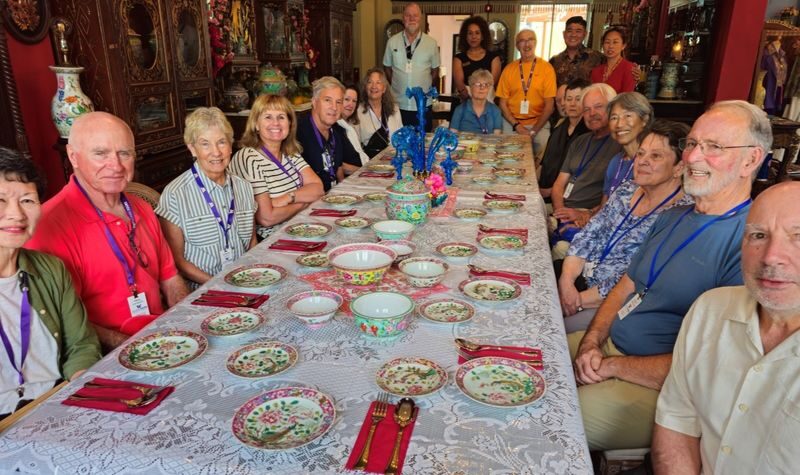
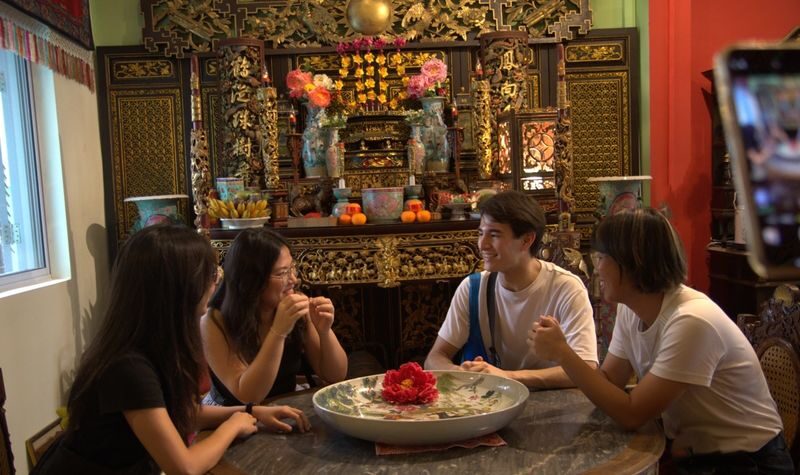
The dining area helps explain the importance of family meals and formal hospitality. One notable display is a long table laid with porcelain wares, including pieces described as around 200 years old. The Tok Panjang, a long dining table used for a feast, is a useful starting point for understanding how food and hosting could express family identity and standing.
You do not need to know much about Peranakan cooking to appreciate this section. The table setting gives you a visual sense of ceremony, while the guide connects it to social customs. Food is one of the most accessible ways into a culture, and this stop makes a good case for pairing the visit with tea and Nonya kueh if that option is available during your visit.
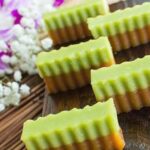
A tea set with cakes has been offered for an additional $10 per person. It is not part of the basic admission, and availability or booking arrangements may vary, so check before you build it into your schedule. If you enjoy sitting down to talk over what you have just seen, the extra time can make the outing feel less rushed.
The ancestral hall and family customs
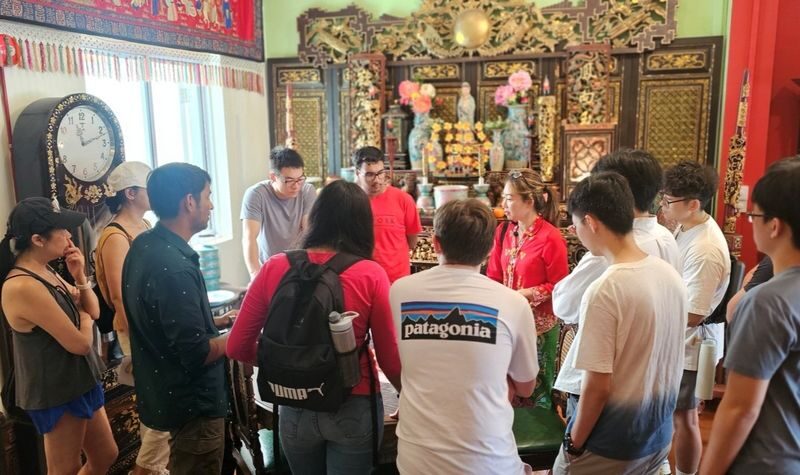
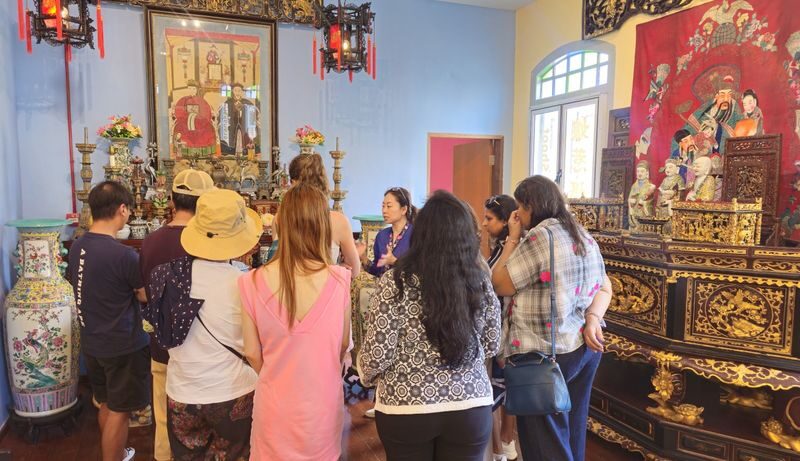
The ancestral hall offers a window into family observance and the role of ancestors in household life. Here, objects are not merely old keepsakes: their placement and use can carry meaning. The guide can explain customs and practices that shaped family routines across generations.
The talk ranges across Peranakan history, from early Chinese migration and the formation of local communities to modern expressions of identity. The point is not to memorize dates. Rather, you begin to see how customs shift over time while still holding meaning for families today. For Singaporeans with Peranakan ancestry, this can be a personal way to connect family stories with objects and practices. For other visitors, it offers a useful local perspective beyond the familiar landmarks.
This is also a good part of the tour to ask questions. The guides have included people with personal ties to Peranakan culture, and the experience is described as an intimate talk rather than a lecture delivered from a distance. Names mentioned by people who have taken the tour include Joan, Kim Ong, Clarence, Jade, and Elaine. You cannot choose a particular guide, but the emphasis on personal stories is part of the appeal.

The bridal chamber and wedding rituals
The bridal chamber is one of the tour’s most memorable stops. Peranakan wedding traditions involved elaborate customs, and the room gives the guide a setting in which to explain them. You may hear about symbolic objects, family expectations, and rituals connected with marriage and hopes for children.
Some customs can sound surprising to modern ears. One story shared during a tour involves a young boy rolling on the bridal bed, a ritual believed to encourage the birth of a son. The value here is not simply the amusing detail; it is the chance to understand how family wishes and social beliefs shaped ritual.
The chamber also helps make the mansion feel like a home rather than a cabinet of curiosities. Clothes, textiles, and furnishings show how appearance and household life intersected. If you are interested in traditional dress, some packages or add-ons have included the chance to wear Baba and Nonya costumes and take photographs nearby. That is separate from the basic admission, so confirm what is included before you book.
How much time to allow, and what it costs
Admission starts at $9.39, with the guided visit generally taking about an hour. For that price, you get entry to the mansion and its galleries, plus an English- or Chinese-speaking guide. The strongest value is the interpretation: without it, you could still admire the furniture and ceramics, but you would miss much of the context behind the motifs and customs.
The advertised duration is one to two hours, which gives you a sensible planning range. The guided portion may be shorter or longer depending on the group and questions. Some visits have been described as a small group of about five, while others have had two groups running at once. You should expect an intimate setting, but not assume that you will have the rooms to yourself.
The ticket is eligible for the SG Culture Pass. If you are using that benefit, check the current terms when booking. The basic package covers mansion admission and the guided tour; tea, cakes, costume rental, photographs, or craft activities are not guaranteed parts of that package.
The experience is open daily from 11:00 a.m. to 6:00 p.m., with last admission at 5:45 p.m. Hours and closure dates can change, so verify them before setting off. Outside food and drinks are not allowed, and pets are not admitted except service animals with valid identification. Photography for personal use is allowed, but commercial photography, commercial video, and live broadcasting are prohibited.
Who will get the most from this visit
I’d recommend this tour if you like learning through domestic spaces, family objects, and stories. It works for culture-minded visitors who want something more specific than a broad overview of Singapore, and it can also be meaningful for local families introducing children to Peranakan heritage. The visit has been enjoyed by adults and children, though the ticket price applies to children aged 10 and older at the adult rate. Children aged one to three enter free, and there is no stated age limit.
It is especially worthwhile if you have Peranakan family connections and want a place to ask questions about customs, clothing, or household life. But you do not need personal ties to follow the tour. The guide’s explanations make the objects approachable, and the room-by-room route provides an easy way to understand how ritual and everyday life fit together.
If you prefer to move at your own pace, or want a large museum with extensive written interpretation, this may feel too brief. The talk is the core of the visit, and its quality can depend on the guide and the group’s timing. One visitor found a tour disorganized, so it is sensible to arrive on time and follow the scheduled briefing rather than expect to join midway.
Is this Peranakan mansion worth booking?
For a starting price of $9.39, this is a worthwhile hour if you want a close, human-scale introduction to Peranakan life. You get a preserved shophouse, a substantial collection of objects, and a guide who can connect design and household details to family customs. I’d pair it with a walk around Koon Seng Road, and consider the extra tea and Nonya cakes if you want to linger.
Book it if you value cultural context and do not mind stairs or a fixed time. Skip it if you need step-free access, want a self-guided museum visit, or cannot commit to the selected date, since cancellations and refunds are not available. For most curious visitors, it is a focused, good-value stop that makes Singapore’s Peranakan heritage easier to see and understand.
A Peranakan Legacy: A Journey Through Time
“Good experience. The deco is really nice and and know a little on the peranakan culture. Will recommend.”
FAQ
How long does the guided visit take?
The guided experience is described as about one hour. The overall activity duration is listed as one to two hours.
What is the address?
The venue is at 283A Joo Chiat Road, Singapore 427537, near the colourful shophouses on Koon Seng Road.
What languages are available for the guided tour?
The guide speaks English or Chinese.
Is the activity wheelchair-accessible?
No. The mansion is on the second level and has no lift.
Can I take photographs inside?
Personal photography and video are allowed. Commercial photography or video and live broadcasting are prohibited.
Are tea and Nonya cakes included in admission?
No. Tea and cakes have been offered as an additional option for $10 per person, but they are not included in the basic admission package.