The prize here is the approach to Annapurna Base Camp at 4,130 meters, where the trail opens into a high mountain sanctuary ringed by Himalayan peaks. The five-day schedule is brisk, but it takes you through Gurung villages and forest before the big alpine views.
I like two practical touches: Kathmandu departures can include round-trip flights to Pokhara, and the package supplies a sleeping bag and duffel bag. I also like that guides such as Pravin, Tilak and Gokarna have been praised for adjusting their pace to the people they lead.
The trade-off is the compressed schedule. You gain time with flights and 4WD transfers, but the daily walks are substantial and the climb to altitude comes quickly. This is a demanding trek, not a casual mountain stroll.
- At a glance: five days to Annapurna Base Camp
- A fast route into the Annapurna Sanctuary
- Day 1: Fly to Pokhara, then climb to Chhomrong
- Day 2: Forest trail from Chhomrong to Himalaya
- Day 3: Machhapuchhre Base Camp and the sanctuary
- Day 4: A long descent to Bamboo
- Day 5: Jhinu Danda, hot springs and the return
- Guides, porters and what the support means
- Packing and preparation for a short high-altitude trek
- Who should book this route
- FAQ
- How long is the Annapurna Base Camp trek?
- Can I depart from Kathmandu or Pokhara?
- Are flights included in the Kathmandu package?
- Which meals are included?
- Is a porter included?
- What equipment is provided?
- What should I bring?
- More Hiking & Trekking Tours in Annapurna
- More Tours in Annapurna
- More Tour Reviews in Annapurna
At a glance: five days to Annapurna Base Camp
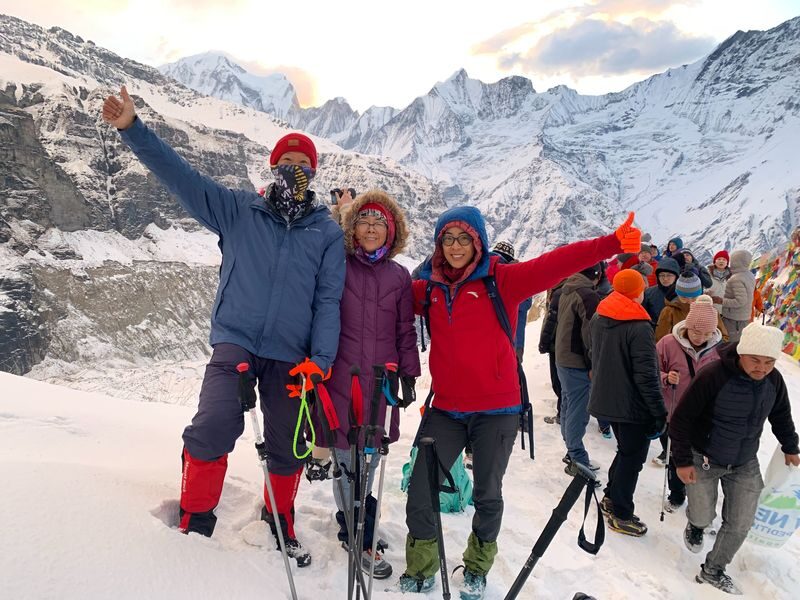
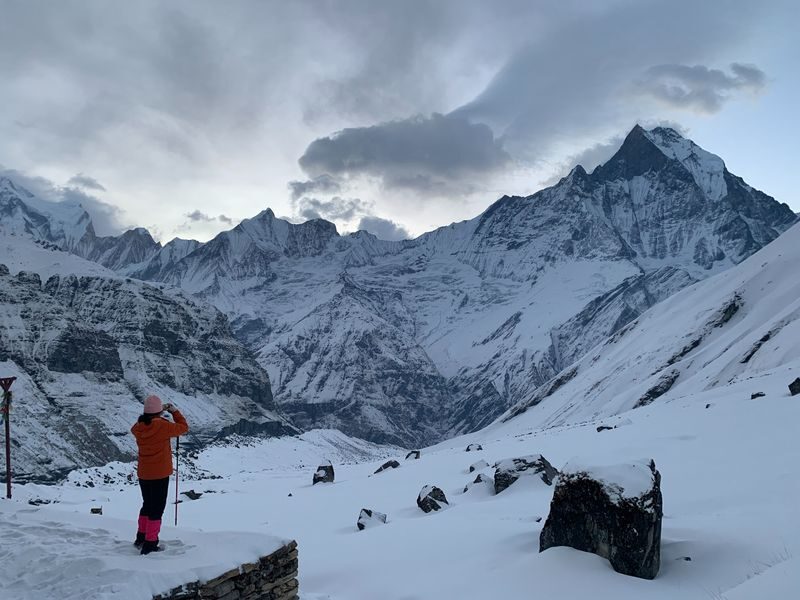
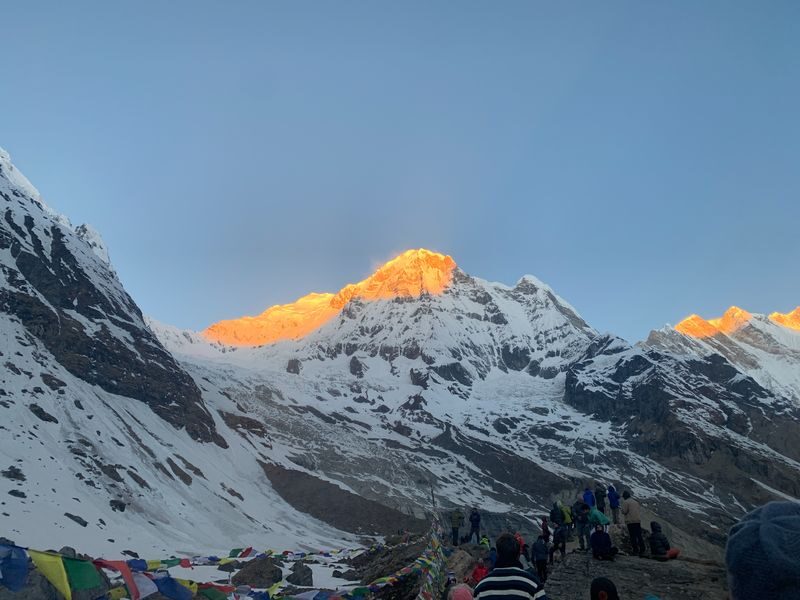
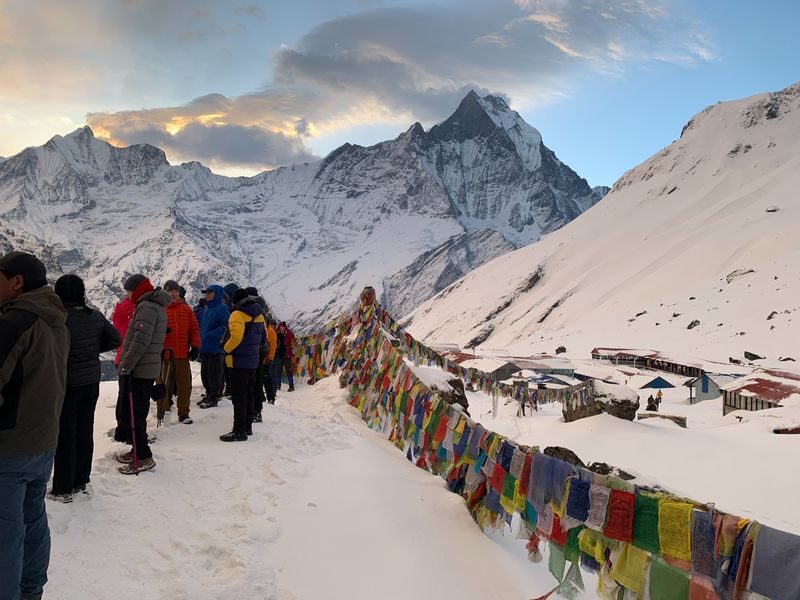
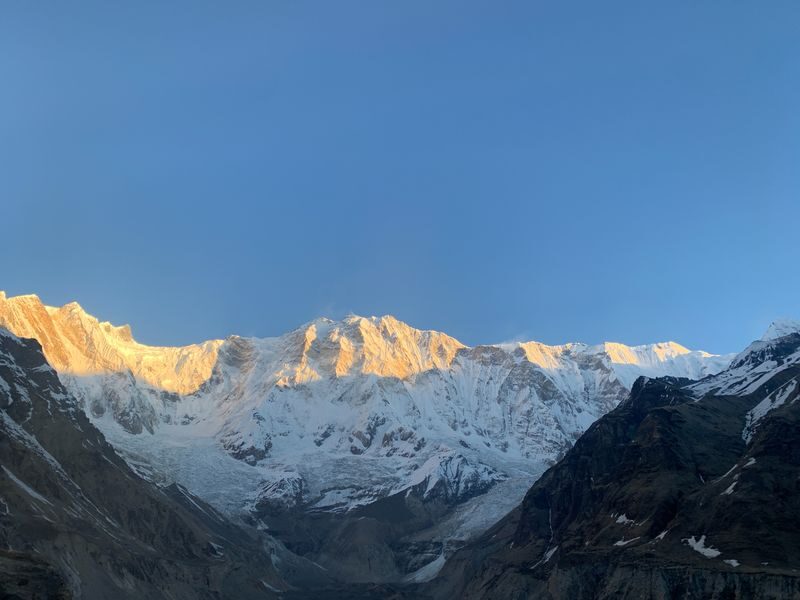
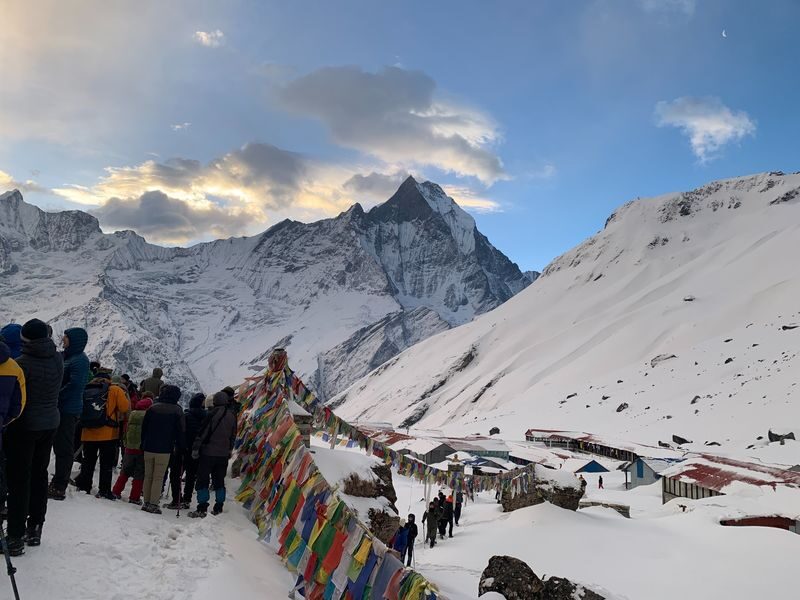
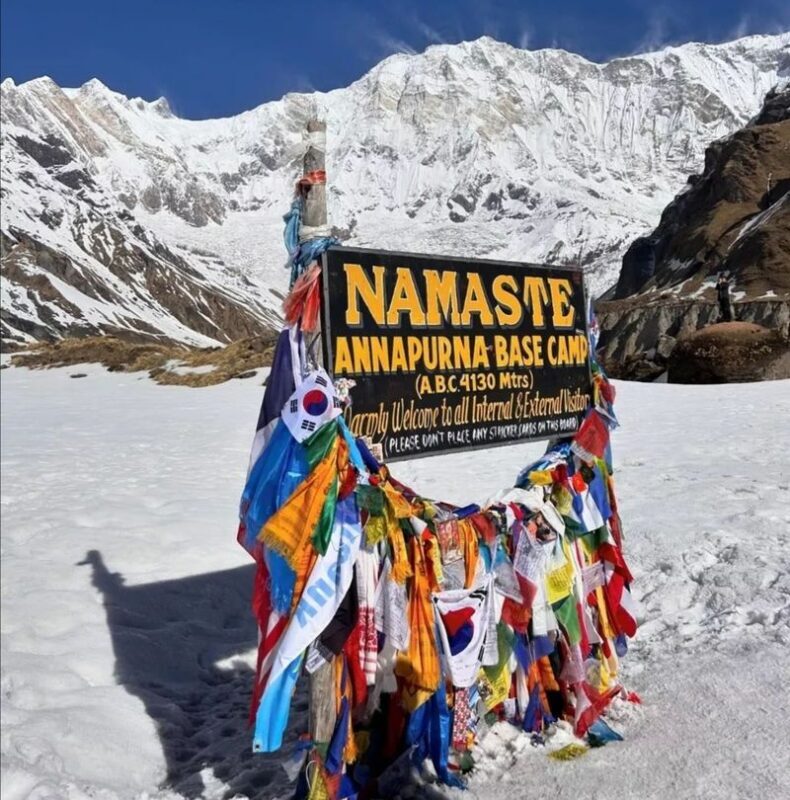
- The summit of the route is 4,130 meters: Reach Annapurna Base Camp via Machhapuchhre Base Camp, with Annapurna I and Fishtail Peak among the surrounding mountains.
- Choose Kathmandu or Pokhara: The Kathmandu package includes round-trip domestic flights. A Pokhara departure avoids those flights.
- Sleep in teahouses: Four nights of accommodation and meals are included, from dinner on Day 1 through lunch on Day 5.
- Expect long walking days: The listed trekking times range from four to seven hours, with steep sections and a quick rise in elevation.
- A porter carries shared luggage: One porter is included for every two participants, with a combined luggage limit of 18 to 20 kilograms.
- Jhinu Danda is part of the return: The route passes through the village known for its natural hot springs, before a jeep transfer toward Pokhara.
A fast route into the Annapurna Sanctuary
This is a short version of a classic Nepal trek. In five days, you travel from Kathmandu or Pokhara to the trail, climb from Chhomrong through forest and mountain settlements, reach the Annapurna Sanctuary, then descend to Jhinu Danda and return. The pace saves time away from home, but it leaves little room for slow walking or weather delays.
The Kathmandu package is designed to cut out a long road journey: you fly to Pokhara, transfer by jeep to Jhinu Danda, then walk uphill to Chhomrong. On the final day, you trek back toward Jhinu, take a jeep to Pokhara airport and fly to Kathmandu. Flights are listed as about 30 minutes each way, while the jeep transfers are listed at roughly two to two and a half hours.
From Pokhara, the full-board package starts closer to the trail and does not include the Kathmandu flights. It is the simpler choice if you are already in Pokhara. The published starting prices are about US$73.75 for the Kathmandu package with flights and US$123.75 for the Pokhara package. The overall starting figure is also shown as US$72.15, so check the selected date and package for the price that applies. Compare what is included, not just the lowest starting figure.
The Kathmandu option can be good value if you need the flights anyway, since airport transfers and the flight legs are included. The Pokhara option costs more at the stated starting price, but avoids spending part of your trip getting to Pokhara from Kathmandu. Either way, meals, four teahouse nights, permits, a guide and transport are bundled into the trek. Personal expenses, tips and insurance are not.
Day 1: Fly to Pokhara, then climb to Chhomrong
The day starts early. Kathmandu participants are picked up from their hotel at about 6:30 a.m. and transferred to the domestic terminal for the morning flight. In Pokhara, you meet the driver and guide, then continue by jeep toward Jhinu Danda before walking uphill to Chhomrong.
The flight saves a long overland transfer, but it does not make the first day easy. The listed walk takes about four hours, after the airport and jeep journey. You will have lunch and dinner, then stay in a teahouse. The supplied details do not name the accommodation, so ask the operator what to expect if room arrangements matter to you.
Chhomrong is a Gurung village and a key point on the route into the sanctuary. It is also the start of the sustained walking portion, so use the evening to check your boots, organize your day bag and drink enough water. The guide can help set the pace, but you should arrive ready for a full day rather than treating the transfer as a rest day.
Day 2: Forest trail from Chhomrong to Himalaya
The second day climbs from Chhomrong at 2,170 meters to the Himalaya lodge area at about 3,200 meters. The walk is listed at six and a half hours. The route passes through Sinuwa and Bamboo, with rhododendron and oak forest along the Modi Khola river.
This is a day of changing effort. The trail moves through forest and settlements, but the elevation gain adds weight to every uphill stretch. Take the first hours steadily and avoid treating the guide’s pace as a target you must beat. Several participants have needed patient pacing and encouragement, and guides including Ram and Pravin have been singled out for adapting to slower walkers.
Breakfast, lunch and dinner are included. Teahouse stops give you a place to eat and rest, but the package does not promise a particular room setup or private bathroom. Bring cash for extras such as hot showers, charging devices, Wi-Fi and snacks. ATM access ends at Pokhara, so plan before leaving the city.
Day 3: Machhapuchhre Base Camp and the sanctuary
This is the high point of the trek, both in scenery and elevation. From Himalaya, you walk past Machhapuchhre Base Camp at about 3,700 meters and continue to Annapurna Base Camp at 4,130 meters. The listed walking time is five hours, though the altitude and trail conditions can make the effort feel greater than the clock suggests.
At ABC, the route enters a broad mountain bowl surrounded by peaks. Annapurna I rises to 8,091 meters, and Machhapuchhre, also called Fishtail Peak, is another landmark. The setting is the reason to take this route: after days of steady climbing through village and forest, the mountain walls gather around you.
Sunrise is a particular draw, but mountain weather is never something to count on. Clear skies can make the peaks glow; cloud or poor conditions can limit the view. The operator includes accommodation at the high camp area, but the supplied details do not specify the room or heating conditions. Pack warm layers and keep expectations flexible.
The rise from 3,200 meters to 4,130 meters is significant, especially in a five-day itinerary. The guide carries a first-aid kit and checks oxygen saturation and pulse daily, but those checks are not a substitute for travel insurance or a careful response to symptoms. Hydration, a steady pace and speaking up early if you feel unwell matter. Insurance is not included, so arrange suitable cover before departure.
Day 4: A long descent to Bamboo
After the high point, the route descends from ABC to Bamboo at about 2,310 meters. The walk is listed at seven hours. The scenery shifts back toward forest, and the lower elevation can feel welcome, but a long downhill day puts real work on knees and feet.
Trekking poles are a practical choice here, not just an optional extra. The route includes steep stone staircases, and poles can help with balance and reduce strain on the descent. Make sure your waterproof boots are broken in before the trek. A blister or loose sole is especially unwelcome when you still have a full day of walking ahead.
Breakfast, lunch and dinner are included, and you return to a teahouse for the night. Fresh fruit is served as dessert after dinner during the trek. It is a small comfort after a big day, and a useful reminder to keep some space for the simple pleasures: a hot meal, dry socks and a place to sit.
Day 5: Jhinu Danda, hot springs and the return
The final day combines trekking and transport. You walk from Bamboo toward Jhinu Danda, then take a jeep toward Pokhara airport. The Kathmandu package includes a return flight, with an expected return to your hotel or personal address around 6 p.m., subject to traffic and weather.
Jhinu Danda is associated with natural thermal waters, and a soak can be a welcome way to relax after several days on the trail. The schedule also includes a four-hour walk, breakfast and lunch, so do not assume you will have unlimited time at the springs. Ask your guide how the timing looks that day and bring a towel if you hope to use them.
The final travel legs make the short format possible, but they also make Day 5 a long one. If the trail, road or weather runs late, the schedule may change. Avoid making an important same-evening connection in Kathmandu unless you have confirmed the timing and allowed room for delays.
Guides, porters and what the support means
The operator, THRILL HIMALAYA TREKS, supplies an English-speaking guide and says its guides are licensed. Past departures have been led by guides including Pravin, Tilak, Gokarna, Ram and Karna, but you should not assume you will be assigned a specific person. The useful quality to look for is a guide who communicates clearly, checks how you are feeling and is willing to adjust the pace.
That last point matters on this route. People with limited trekking experience have completed it with patient support, and some groups have changed their pace to reach the teahouses safely. Still, a guide cannot remove the physical demands. Be candid about your fitness, health and walking speed before setting out.
One porter is included for every two participants, with an 18 to 20 kilogram total luggage limit. The arrangement means you carry a day bag while the porter handles shared trekking bags. If you are traveling alone, confirm how porter support is handled for a solo booking. A participant has previously reported trekking without a porter when traveling solo, even though the package description specifies the two-person arrangement.
Sleeping bags and duffel bags are provided for the trek, and the package also lists trekking equipment. The exact gear supplied may vary, so confirm whether trekking poles are included for your departure rather than relying on a general description. The operator also provides a trekking certificate after successful completion.
Packing and preparation for a short high-altitude trek
The weather can change quickly in the mountains, so use layers: a breathable base layer, an insulating down jacket and a waterproof, windproof outer shell. Add a raincoat or poncho, sunscreen, sunglasses, a hat, toiletries, a towel, a water bottle and a flashlight or headlamp.
Bring cash in Nepali rupees for trail costs not covered by the package, including charging, Wi-Fi, hot showers and snacks. Take water purification tablets or drops, and plan to drink around three to four liters a day as advised for the trek. You should also break in waterproof hiking boots well before departure and consider trekking poles for steep steps.
The activity has no age limit, but that does not mean the route suits every person at every age. The demanding part is the combination of long walking days and a quick rise to 4,130 meters. If you have concerns about health or fitness, discuss them with a medical professional and the operator before booking. Do not treat the daily pulse and oxygen checks as a guarantee against altitude problems.
Who should book this route
I would consider this trek if you have limited time in Nepal, are comfortable with several hours of walking each day and want to reach the Annapurna Sanctuary with the main logistics arranged. The flights from Kathmandu, full-board meals, teahouse accommodation, guide and porter support can simplify planning, especially for a first Nepal trek.
It is also a reasonable option for newer trekkers who are prepared to work hard and can walk at a steady pace. People with little prior trekking experience have completed the route with guides who offered encouragement and adjusted the pace. But the short schedule leaves little slack, so do not book it expecting a gentle introduction or guaranteed clear skies.
The best choice depends on your starting point. Pick Kathmandu if round-trip flights and airport transfers are useful. Pick Pokhara if you are already there and want to start nearer the trail. In either case, confirm your exact package, porter arrangement, gear, room expectations and insurance before paying.
5-Day Annapurna Base Camp (ABC) Trek from Kathmandu or Pokhara
“Annapurna Base Camp Trek I had a blast doing this 5-day ABC trek solo with my guide Pravin and a porter. The trip is very well organized with hotel…”
FAQ
How long is the Annapurna Base Camp trek?
The trek is scheduled for five days and four nights, with four nights of teahouse accommodation.
Can I depart from Kathmandu or Pokhara?
Yes. The packages include a Kathmandu departure with round-trip domestic flights and a Pokhara departure with full-board meals.
Are flights included in the Kathmandu package?
Yes. The Kathmandu package includes round-trip domestic flights between Kathmandu and Pokhara, plus airport pickup and drop-off transfers in both cities.
Which meals are included?
Meals are included from lunch and dinner on Day 1 through breakfast and lunch on Day 5. Full-board meals are provided on Days 2, 3 and 4.
Is a porter included?
One porter is included for every two participants, with a combined luggage limit of 18 to 20 kilograms. If you are booking alone, confirm how porter support applies to your booking.
What equipment is provided?
A sleeping bag and duffel bag are provided for the trek. Trekking equipment is also listed as included, but confirm which items are supplied for your selected package.
What should I bring?
Bring layered clothing, a raincoat or poncho, sunscreen, sunglasses, a hat, toiletries, a towel, cash, a water bottle and a flashlight or headlamp. Waterproof hiking boots and trekking poles are recommended.