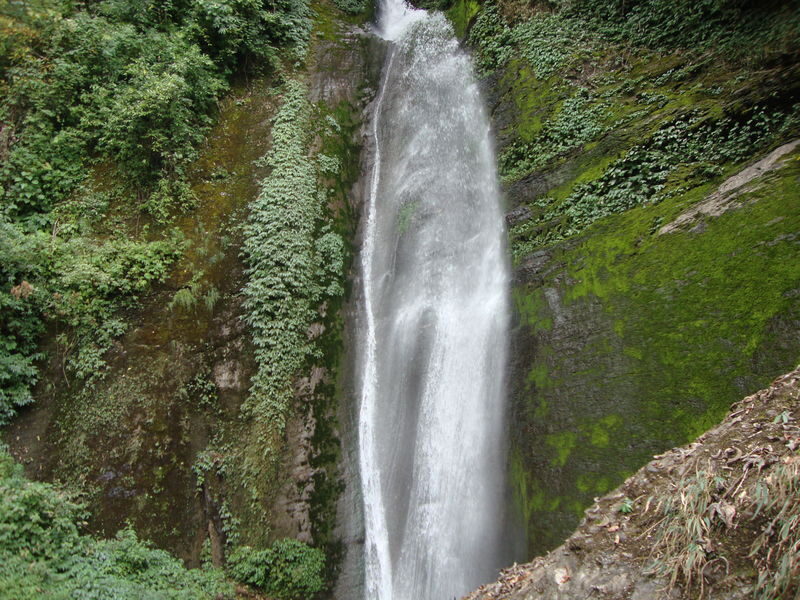
The reward here is not just reaching Annapurna Base Camp. It is the gradual change in scenery: Gurung village paths give way to stone steps, forest, waterfalls, and then a wide, high mountain basin ringed by peaks. I like that the trek pairs this demanding route with a guide and teahouse stays, so you can focus on the walking rather than organizing each night.
I also like the chance to spend time in Ghandruk, including its Gurung museum if the schedule allows. The main caution is that the published day-by-day plan skips Day 6 and gives conflicting elevations for a Dovan overnight, so confirm the exact route and nights before paying. This is a serious high-altitude trek, not a scenic stroll with a mountain backdrop.
- At a glance: what matters on this trek
- From Pokhara to the Gurung village of Ghandruk
- Stone steps, river crossings, and the climb to Chhomrong
- Forest gives way to high mountain country
- The Annapurna Sanctuary and the long return to Dovan
- Teahouse nights, meals, and what the price covers
- Fitness, seasons, and the things to plan ahead
- Who should book this Annapurna trek?
- FAQ
- How difficult is the Annapurna Base Camp trek?
- Where does the trek start?
- Which months are recommended?
- Are meals included?
- Is a guide included?
- Is a porter included for solo trekkers?
- What should I clarify about the itinerary?
- More Hiking & Trekking Tours in Annapurna
- More Tours in Annapurna
- More Tour Reviews in Annapurna
At a glance: what matters on this trek
 1 / 7
 2 / 7
 3 / 7
 4 / 7
 5 / 7
 6 / 7
 7 / 7
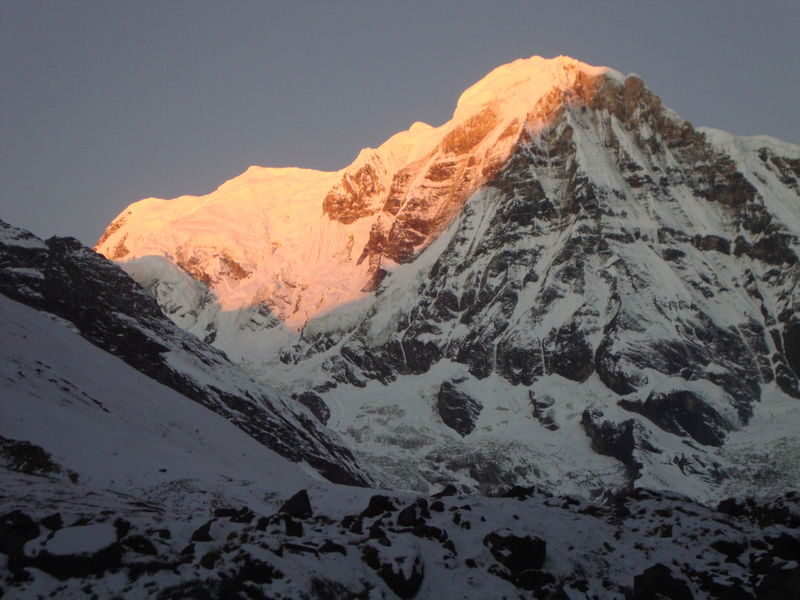
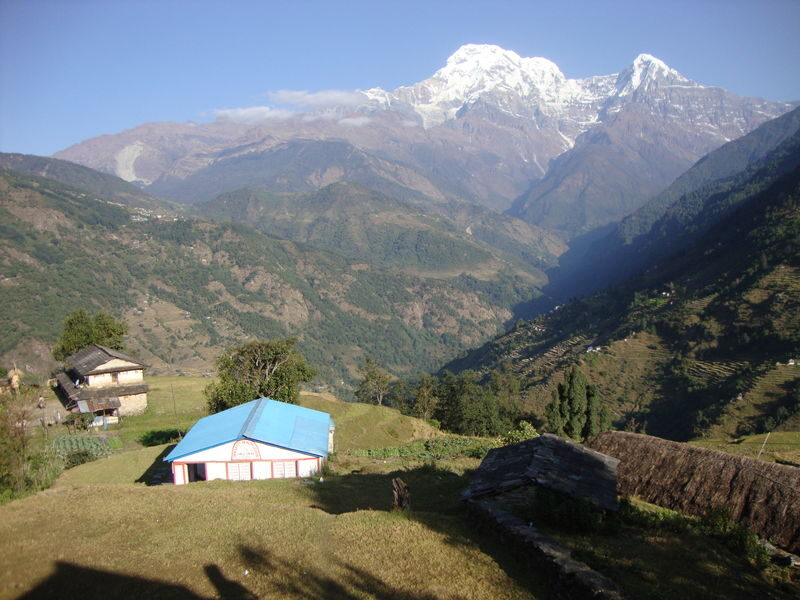
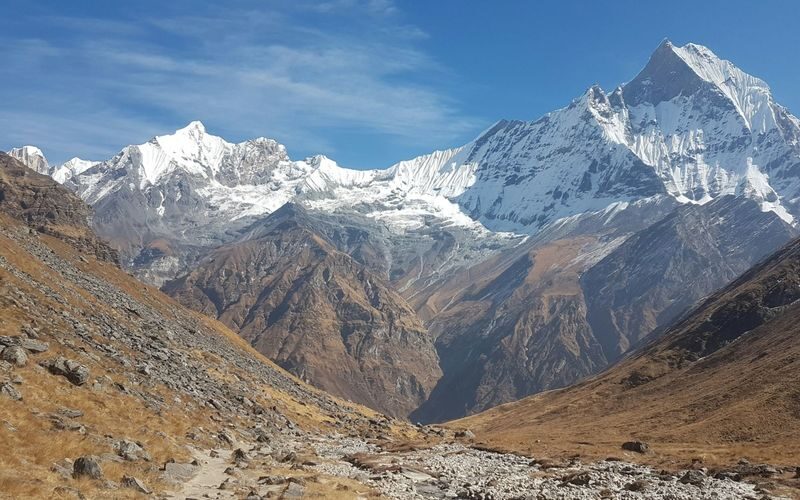
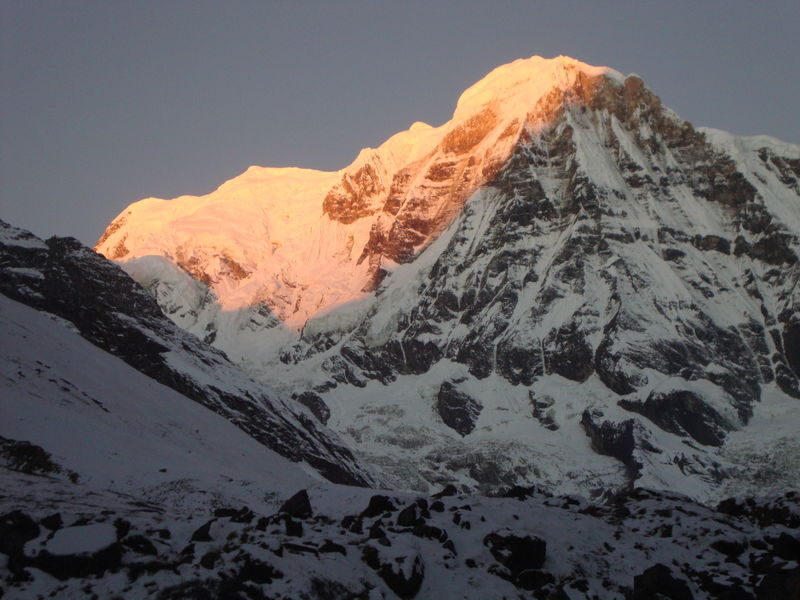
- The big finish is Annapurna Base Camp: The route enters the Annapurna Sanctuary for wide views of Machhapuchhre, Annapurna South, Annapurna I, and Hiunchuli.
- Ghandruk adds cultural context: This Gurung village is more than a first-night stop, and the museum visit may fit if timing allows.
- Walking days are long: Most listed days involve about four to six hours on foot, with a seven-hour push to Base Camp and back.
- The package includes real support: A licensed guide, a first-aid kit carried by the Sherpa leader, permits, teahouse accommodation, and a porter shared between two trekkers are listed.
- Meals depend on your package: Breakfast is included in either option. Full board adds lunch and dinner; drinks, snacks, and other personal purchases cost extra.
- Clarify two itinerary details: Day 6 is missing from the supplied schedule, and the stated overnight elevation for Dovan after Base Camp conflicts with the earlier Dovan elevation.
From Pokhara to the Gurung village of Ghandruk
The trek begins with hotel pickup in Pokhara and a roughly 90-minute drive to Naya Pul. From there, you walk to Birethanti and start the trail toward Ghandruk, with about five hours of trekking on the first day. Pokhara is your own responsibility before and after the trek: you arrange your lodging there, your journey from Kathmandu, and your return to Kathmandu.
Ghandruk, at 1,940 meters, is a welcoming first stop after the drive and a full day on foot. The village is mostly Gurung, and a visit to its museum may be possible if there is time. That cultural stop gives the route more texture than a string of overnight lodges, but it is not guaranteed, so think of it as a bonus rather than a fixed appointment.
The first day is a useful test of your legs and boots. You are not yet at extreme altitude, but a five-hour walk can feel plenty long if you have just arrived in Nepal or have not been training. I would use the evening to eat, drink water, and get ready for an early start rather than assume the trek will ease you in gently.
Stone steps, river crossings, and the climb to Chhomrong
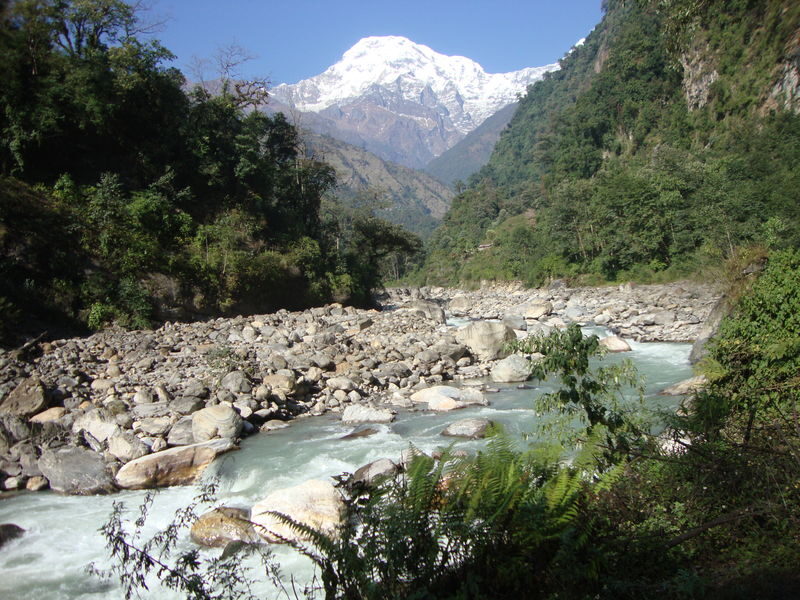
Day 2 is listed as a five- to six-hour walk from Ghandruk to Chhomrong, at 2,170 meters. The route climbs for about an hour to Kimrungdanda, where views open toward Annapurna South, Hiunchuli, Fishtail Mountain, and Gangapurna. Then comes a descent to the Kimrong Khola river, followed by another climb over Chere Danda before reaching Chhomrong.
That pattern of dropping down and climbing back up is a recurring feature of Himalayan walking. The distance on a map does not tell the whole story, and your legs may notice every contour. Chhomrong is a key point on the route, but the next day’s descent makes a short rest and a good night’s sleep worthwhile.
Day 3 brings one of the trek’s more memorable pieces of trail: a descent of about 2,500 stone steps from Chhomrong, followed by a crossing of the Chhomrong Khola on a swaying suspension bridge. From there, the trail climbs toward Sinuwa, passes through forest to Kuldihar, and then descends more easily to Dovan. Allow four to five hours, and take care on the steps, especially if your knees dislike long descents.
Forest gives way to high mountain country
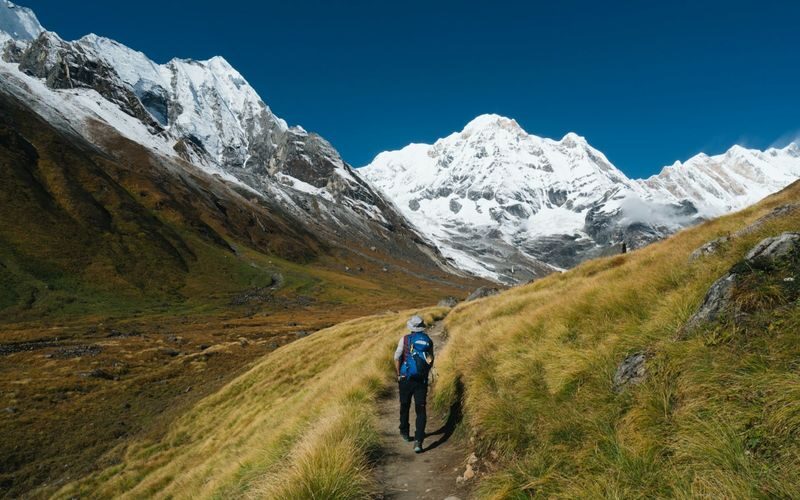
The walk from Dovan to Machhapuchhre Base Camp is listed at about five hours. The scenery shifts as you gain elevation, and the views become the main event: Machhapuchhre, Hiunchuli, Annapurna South, Annapurna I, Annapurna III, Gandharvachuli, and Gangapurna are among the peaks named along the route. The overnight stop at Machhapuchhre Base Camp is listed at 3,700 meters.
This is where the trek begins to feel distinctly different from the lower village-and-forest days. The air is thinner, the route is higher, and your pace may slow even if you feel fit. A patient guide matters here, not just for navigation but for setting a sensible rhythm and helping you notice changes in how you feel.
Several guides are named in past trip accounts, including Raj, Gyanashwor Adhikari, Bikash, Ramkumar, Manoj, and Gokar. Their names are not a promise that you will be assigned one of them, but the consistent practical value of guiding is clear: a good guide can adjust pace, explain the mountains, help with arrangements, and take care when trail conditions or weather affect the plan. English and Chinese-speaking guides are available; the Chinese-speaking option carries a stated US$100 surcharge per trip.
The Annapurna Sanctuary and the long return to Dovan
Day 5 is the centerpiece, and also the toughest day on the listed schedule. The plan allows about seven hours to walk from Machhapuchhre Base Camp to Annapurna Base Camp and then back down to Dovan. As you climb toward the Sanctuary, vegetation disappears and the path widens. At Base Camp, the advertised reward is a 360-degree view of Machhapuchhre, Annapurna South, Annapurna I, Hiunchuli, and surrounding peaks.
The setting is the reason many people choose this trek. You arrive in a high basin with mountains all around, rather than simply viewing the range from a distant lookout. But the day’s length deserves respect: reaching Base Camp is only part of it, since the plan continues back down to Dovan. Start with enough food and water, keep your pace steady, and listen closely to your guide if conditions or your health call for a change.
There is a detail to sort out before booking: the itinerary gives Dovan as 2,310 meters on Day 3, then lists the post-Base-Camp Dovan overnight at 4,130 meters. That second figure conflicts with the earlier elevation and may be an error. The Day 6 route is also absent, although the trip is sold as seven days and six nights. Ask the operator to confirm where you sleep after Day 5, what you do on Day 6, and how the return walk is arranged.
The listed final day runs from Jhini Danda to Naya Pul, with about five hours of walking, followed by transport back to your chosen drop-off point in Pokhara. Since the schedule does not show Day 6, do not assume the Jhini Danda walk follows directly after the Dovan night. A clear written itinerary will help you plan your food, rest, and onward travel.
Teahouse nights, meals, and what the price covers
Accommodation is included throughout the trek, in teahouses rather than hotels. Expect a simple place to sleep and basic facilities. A past solo trekker described rooms as cold at night despite a thick blanket, so bring warm sleeping layers and do not count on heated rooms. Hot showers, battery charging, laundry, drinks, snacks, and similar extras are listed as personal expenses.
The breakfast-only option includes breakfast each day, while the full-board option adds lunch and dinner. Breakfast is typically noodles, porridge, bread, or eggs. Full-board meals are usually dal bhat and vegetables, while teahouses and trail restaurants offer other choices for those buying meals independently. Boiled water is available at teahouses, but soft drinks, beer, and snacks cost extra. If you have dietary needs, enter them when booking.
The price shown starts at US$488.75, but package rates vary by group size: the listed options start at US$425 for groups of nine or more, US$501 for groups of four to eight, US$525 for two or three, and US$595 for a solo traveler. These figures do not line up exactly with the headline starting price, so check the amount for your dates, group, and meal choice before you commit.
The value comes from bundling a guide, porter support, permits, transport connected with the trek, and accommodation. For a first Himalayan trek or a solo trekker, that organization can be worth paying for, especially when a guide handles route decisions and daily arrangements. Still, one trekker found local operators offering lower prices, so bargain hunters may want to compare options. A cheaper quote is only comparable if it covers the same guide, porter, meals, permits, and transport.
There is a small but important porter detail: the package describes one porter for every two trekkers, with a maximum load of 25 kilograms shared between two people. A past solo trekker noted needing to pay extra for a porter. If you are traveling alone, confirm in writing whether your chosen package includes porter service and what weight you can expect the porter to carry. Pack lightly, and use a soft duffel or lightweight bag as directed.
Fitness, seasons, and the things to plan ahead
The trek is described as medium difficulty, but that label should not lull you into thinking it is easy. You need a good level of fitness for repeated climbs and descents, several hours of walking most days, and a high point above 4,000 meters. The stone steps, suspension bridge, and long Base Camp day add variety, but also fatigue. Train with hills or stairs if you can, and bring broken-in trekking shoes and warm layers.
The recommended seasons are March to May and September to November, when conditions are described as warmer and skies clearer. The trek is offered year-round, but weather, health, natural disasters, landslides, and other conditions may lead the guide to change or cancel part of the route. The leader has authority to make safety decisions. Extra costs from events beyond the operator’s control, including flight cancellations or political unrest, are assigned to you.
Your own travel and accident insurance is not included, and it is strongly recommended. Rescue or emergency evacuation costs are also not included. Bring personal trekking gear such as a sleeping bag and down jacket, or arrange rentals if you do not want to buy equipment. Tips are not included; the suggested average is US$5 per day.
Remember, this trek starts in Pokhara, not Kathmandu. You need to arrange your own journey there by flight, private transfer, or public bus, as well as your Pokhara lodging before and after the trek and your return to Kathmandu. The package does include welcome and farewell dinners in Kathmandu, but those dinners do not replace the need to plan your own accommodation and transport.
Who should book this Annapurna trek?
I would consider this trip if you want a guided route to Annapurna Base Camp and value having accommodation, permits, and porter support organized in one package. It is especially suited to first-time Himalayan trekkers who are fit enough for long days but would rather not manage the trail and teahouse logistics alone. The cultural pause in Ghandruk and the steady climb from forest to high mountain terrain make the route rewarding beyond the final viewpoint.
I would hesitate if you need a fully transparent schedule before booking and cannot get the missing Day 6 details clarified. I would also compare prices if you are comfortable arranging a local guide and logistics yourself. Before paying, get confirmation of the daily route, the disputed Dovan elevation, solo porter arrangements, the meal package, and the exact price for your group. If those answers are clear and you are ready for the physical effort, this is a compelling way to reach the Sanctuary.
7D6N Annapurna Base Camp Trek
“The ABC trek was a fantastic experience! My guide, Raj, was excellent and took great care of me throughout the entire journey. Even though the teah…”
FAQ
How difficult is the Annapurna Base Camp trek?
It is described as medium difficulty and requires a good level of fitness. Most listed walking days take about four to six hours, with a seven-hour day to Annapurna Base Camp and back.
Where does the trek start?
The trek starts from Pokhara, with hotel pickup and a drive of about 90 minutes to Naya Pul. You arrange your own travel from Kathmandu to Pokhara.
Which months are recommended?
March to May and September to November are the recommended hiking seasons, when the weather is described as warm and skies are clearer. The trek can be taken at other times of year, too.
Are meals included?
Breakfast is included in both package options. The full-board option also includes lunch and dinner; the breakfast-only option leaves lunch and dinner to you.
Is a guide included?
Yes. The package includes an experienced, government-licensed guide. English and Chinese-speaking guides are available, with a stated US$100 surcharge per trip for a Chinese-speaking guide.
Is a porter included for solo trekkers?
The package describes one porter for every two trekkers, and a past solo trekker reported paying extra for a porter. Confirm the solo porter arrangement and any additional cost before booking.
What should I clarify about the itinerary?
Ask for the full Day 6 plan, which is missing from the schedule, and confirm the overnight stop after the Base Camp day. The stated Dovan elevation of 4,130 meters conflicts with an earlier Dovan elevation of 2,310 meters.