Two days here bring you face to face with two very different Sichuan icons: Mount Emei’s high-altitude temples and shifting sea of clouds, then the 71-meter Leshan Giant Buddha carved into a river cliff. The contrast is the point. One day is about a mountain pilgrimage; the next, a monumental work of human craft.
I like two things in particular: you get a practical Chengdu pickup and a night near Emei, rather than trying to squeeze both sights into one exhausting day, and the route includes temples and mountain scenery as well as the headline Buddha. The main caution is that the schedule is tight, several cable cars and scenic-area rides cost extra, and early pickup can mean a wait before the main bus departs.
- The details that matter before you book
- Golden Summit is the big first-day payoff
- Day two trades the summit for temple paths
- Leshan’s Buddha makes the scale of the trip clear
- The opera dinner is a bonus, not the core promise
- What the price includes, and what it does not
- Expect a group trip, not a private cultural tour
- Is this the right two-day trip for you?
- FAQ
- How long is the tour?
- Is Chengdu pickup included?
- What meals are included?
- What hotel is used?
- Are cable cars and scenic buses included?
- Is the tour guide English-speaking?
- Does the Leshan visit include a boat ride?
- Is the Sichuan opera face-changing dinner guaranteed?
- What is the child fare?
- More Tours in Leshan
- More Tour Reviews in Leshan
- Not for you? Here's more nearby things to do in Leshan we have reviewed
The details that matter before you book
 1 / 8
 2 / 8
 3 / 8
 4 / 8
 5 / 8
 6 / 8
 7 / 8
 8 / 8
- A 71-meter Buddha by the river: Leshan’s cliff-carved Maitreya is the largest existing cliff-carved statue in China.
- Golden Summit views depend on the weather: Clouds and Buddha’s light are possible, not promised.
- One night near Mount Emei: The plan uses a boutique 4-diamond hotel, with a twin room as the default.
- A full mountain day: Golden Summit comes first, followed by temples, a plank road, and the natural ecological monkey area.
- Extra transport charges add up: Cable cars and sightseeing buses are not included in the tour price.
- A group tour with up to 30 people: Pickup and timing can vary, and one tour guide may serve a mixed group with different plans.
Golden Summit is the big first-day payoff
The tour starts early from Chengdu, with complimentary pickup within the Third Ring Road. The pickup window is listed as 6:00 to 7:00 a.m., but the actual time depends on where you are staying and the season. If you are farther from the meeting point, you may be collected early and then wait while other pickups are completed. The guide or driver is meant to confirm the details the night before, so keep your phone available.
One departure involved a hotel pickup around 6:00 a.m., followed by a wait at a common meeting point until the group bus set off around 8:00. That is a useful reality check: door-to-door pickup is convenient, but it does not mean a direct, private ride to the mountain. The group may include as many as 30 people, and the vehicle is assigned according to the group size. Bus condition can vary; a coach on one trip was described as worn, so do not expect luxury transport.
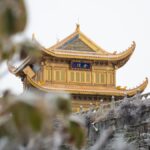
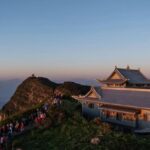
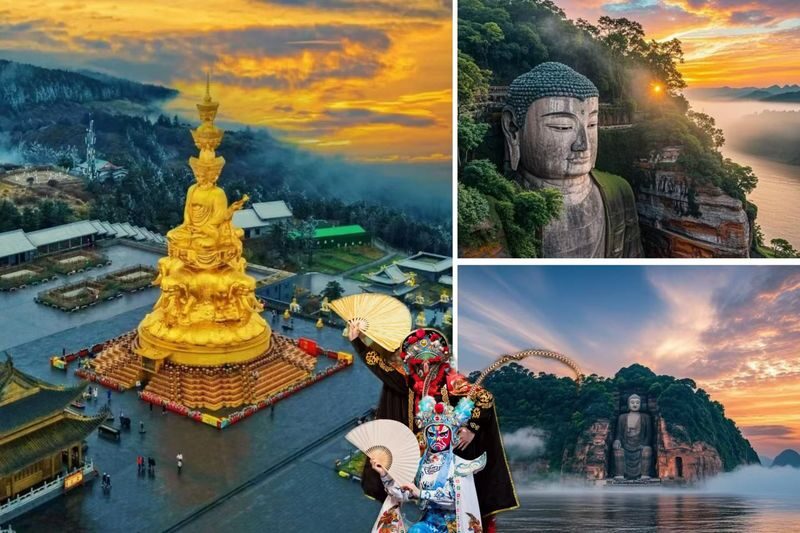
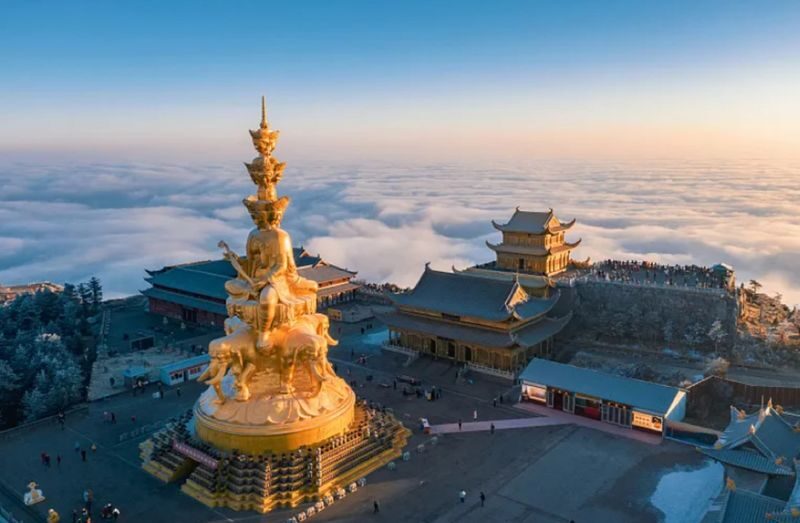
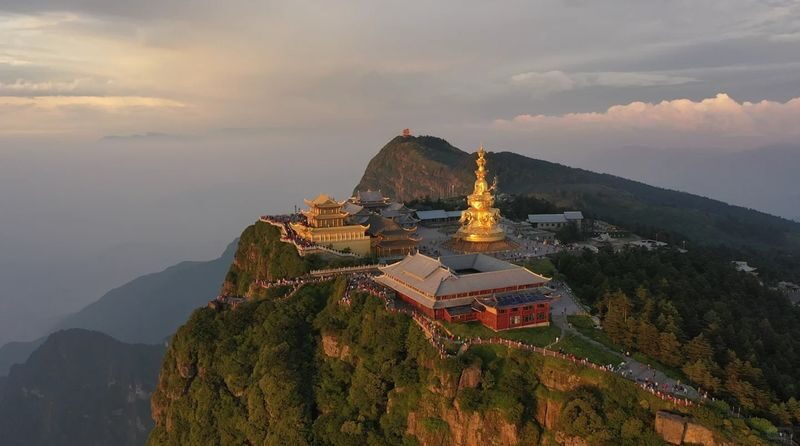
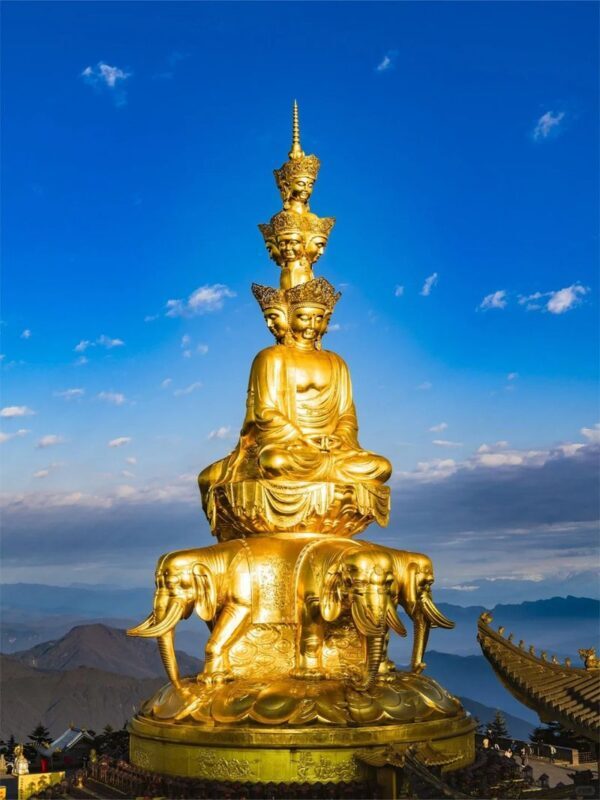
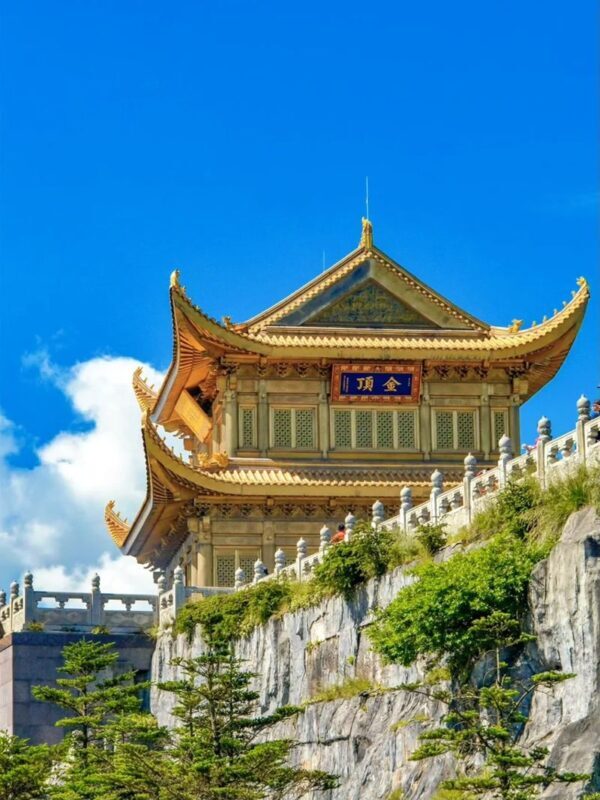
The drive to Emei takes about two and a half hours according to the schedule, with lunch planned before the climb to Golden Summit. You get a special meal, then head up to the highest summit area of Mount Emei. The Golden Summit concentrates several of the mountain’s major temples and sights, including Huazang Temple, Woyun Nunnery, and the large Four-Faced, Ten-Directions Samantabhadra statue.
The summit is more than a mountain viewpoint. Mount Emei is a major Buddhist site, and the temples give the scenery a human and spiritual scale. You can take in the golden halls, incense, mountain mist, and steep drops around the viewing area in one visit. If clouds open, the sea of clouds can be striking. If they do not, you still have the temples and the mountain setting, but the famous views are never guaranteed.
The schedule also includes Vajra Mouth and Sheshen Cliff. These names can sound like a long list when read in advance, but on the ground they help make the summit visit more than a quick photo stop. Your guide can explain the religious and local context as you move among the sites. On one departure, guide 鲜海 (Xian Hai) was credited with giving useful explanations. He is not guaranteed to lead your tour, but the example is a reminder to ask questions while you have a Chinese-speaking guide with you.
Allow for the fact that reaching the summit involves extra transport charges. The Mount Emei Golden Summit sightseeing bus is listed at ¥90 per person, and the round-trip summit cable car at ¥120. These are not included in the package price. The tour’s broad outline says Golden Summit, but the details of the scenic-area transport can affect both your budget and how much time you spend walking.
Dinner follows the mountain visit, then you stay near the scenic area. The hotel references are Wangshanqi and Moke Zizai, or a similar property, under the tour’s 4-diamond boutique category. One traveler specifically described the hotel as good, and another said the group was well taken care of. Still, this is a reference standard, not a promise of a particular hotel or room. A twin room for two adults is the default, and there is no room-sharing arrangement for unrelated solo travelers.
You can also read our reviews of more tours and experiences in Leshan.


Day two trades the summit for temple paths
Breakfast is included, then the group heads into Mount Emei’s middle-mountain area. The planned visit lasts about three and a half hours and includes Wannian Temple, Bailong Cave, Qingyin Pavilion, Qingyinping Lake, the Heilongjiang Plank Road, and Yixiantian, or the narrow strip of sky. The route also names the natural ecological monkey area.
Wannian Temple is presented as one of the oldest temples on the mountain and a major place of worship for Samantabhadra. This stop gives the second day a different feel from the previous afternoon. Golden Summit is the grand high-altitude show; the middle mountain is a more varied sequence of religious sites, water, paths, and forest scenery.
Some transport options here also cost extra. The Wannian Temple uphill cable car is ¥65, the downhill cable car is ¥45, and the temple entrance ticket is ¥10. The mid-mountain sightseeing bus is ¥40. There is also a ¥20 insurance charge for the monkey area. These fees are separate from the tour price, so check which options you intend to use before setting your spending limit.
The monkey area is an unusual feature, but it is still part of a mountain visit, not a guaranteed close-up animal encounter. The schedule names it as a stop; it does not promise how many monkeys you will see or how they will behave. Keep your attention on the guide’s instructions and the path around you.
After the morning route, lunch features local food from the Emei middle-mountain area. The package includes three full meals over the trip, plus breakfast, with meals served in group-table style. Dishes may change with the season and group size. Alcohol is not included, and the meal arrangement is set as a package, so skipping a meal does not bring a refund.
Leshan’s Buddha makes the scale of the trip clear
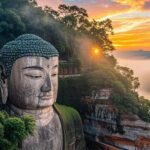
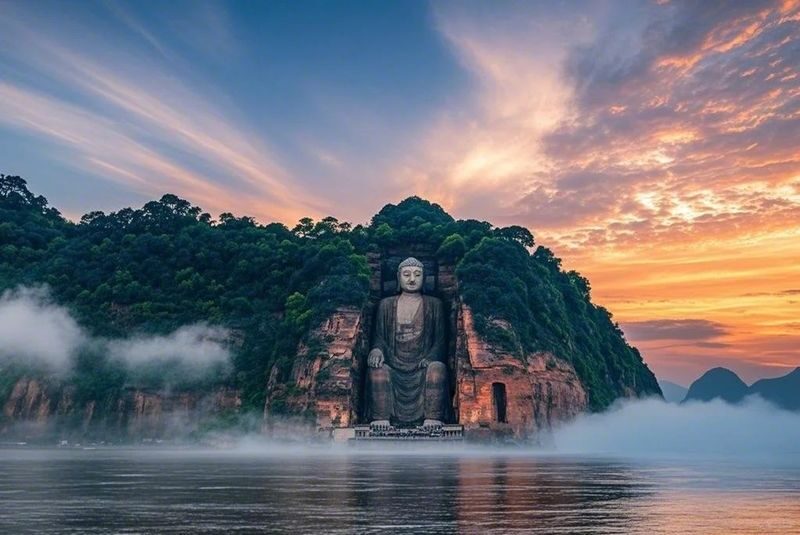
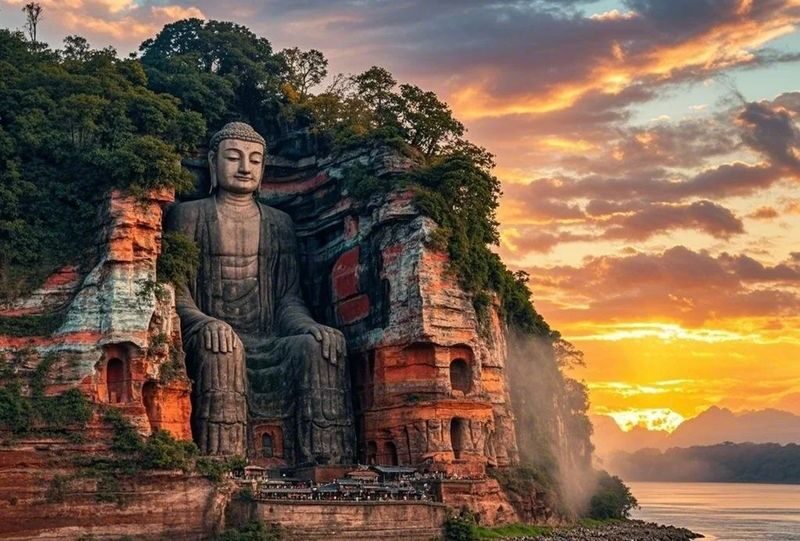
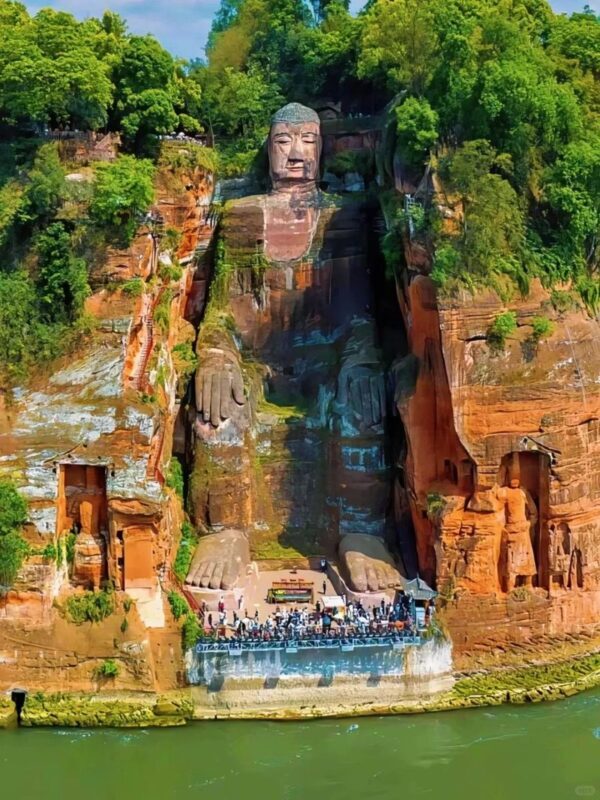
In the afternoon, the group goes to the Leshan Giant Buddha Scenic Area. The statue sits on the eastern bank of the Min River, south of Leshan city. At 71 meters tall, with its head level with the mountain, it is a monumental example of ancient Chinese stone carving. Its seated posture and calm expression are part of what makes the first sight so memorable.
The tour description refers to a boat tour, while the exact way you see the Buddha can vary with the day’s arrangements. A walk down toward the statue’s feet gives you a close look at its size and carved details; a boat offers a broader view from the river. One visitor preferred walking down and found the foot-level view worthwhile. Ask your guide which route the group is taking before you set your expectations.
The Leshan sightseeing bus is listed as an additional ¥30 per person. The tour includes first-entry tickets for the Leshan Giant Buddha and Mount Emei, but not every scenic-area ride or optional facility. A ¥20 earpiece fee for Leshan is also listed separately. Confirm exactly what is being used and charged on your departure, especially if you want to keep optional costs under control.
The return drive to Chengdu begins around 4:30 p.m., with arrival listed between 4:30 and 7:00 p.m. Traffic and the day’s timing can shift that window. Do not plan a tight evening connection or appointment based on the earliest estimate.
The opera dinner is a bonus, not the core promise
The tour promotes a Sichuan opera face-changing hotpot dinner as a complimentary extra. It is an appealing way to add a local performance and meal to a trip built mainly around mountain and heritage sights. But the daily schedule lists dinner at the hotel area and does not give a separate performance time, so treat the opera as a bonus rather than the reason to book.
The terms say the performance and dinner can be canceled if force majeure prevents them from taking place. In that case, there is no refund or replacement activity of equal value. If seeing face-changing opera is important to you, confirm how it is handled for your date before booking.
What the price includes, and what it does not
The headline price is shown from US$135.35, while the premium 4-diamond package is also shown from US$117.69. Prices can vary by package and date, so check the amount displayed when you select your option rather than assuming either figure applies to every departure.
The base package covers group transport, first-entry tickets for both scenic areas, one hotel night, one breakfast, three full meals, a licensed Chinese-speaking guide during the tour, and travel accident insurance. The listed maximum insurance compensation is 100,000, subject to the insurer’s terms. The guide is not provided during pickup and shuttle transfers.
The add-ons are important to the value calculation. Summit and middle-mountain buses, cable cars, the Wannian Temple entry, monkey-area insurance, and Leshan transport or earpiece charges are all listed separately. If you use several of them, your final outlay will be meaningfully higher than the headline fare. The package still offers value if you want transport, hotel, meals, and a guide bundled into two days, but it is not an all-in ticket to every ride.
There is also a single-room supplement. If you are traveling alone, or if an odd number of adults needs separate sleeping arrangements, the default twin-room setup will not solve that on its own. For children under 1.2 meters, the child fare covers transport and guide services only, not a bed or hotel breakfast and dinner. Children 1.2 meters or taller are charged at the adult rate.


Expect a group trip, not a private cultural tour
The strengths are straightforward: two major Sichuan sights in one short trip, a night near Mount Emei, meals and a hotel arranged, and a Chinese-speaking guide for the sightseeing portions. People who do not speak Chinese may find it helpful to have someone in their party who can manage basic communication with local guides. One past participant specifically advised this, even though the tour was described as well handled.
The main weakness is coordination. Morning pickup can involve waiting, the group may combine people booked on different tour versions, and the route order can change with weather, road conditions, holidays, queues, and traffic. One departure had confusion over whether Huguo Temple was included, with inconsistent explanations and a late attempt to fit it in. Huguo Temple is not part of the day plan described here, so do not assume that a city or temple stop from another package will be added.
The advertised title refers to Chengdu city highlights, but the supplied day plan does not set out a Chengdu sightseeing stop. Its Chengdu conveniences are the morning pickup and the round-trip transfer. If you want a dedicated city tour, book that separately or ask the operator to define what the city-highlights wording means for your date.
Is this the right two-day trip for you?
I would choose this tour if you want to see both Emei and Leshan without arranging separate buses, hotel, meals, and entry tickets yourself. It suits families and friends who are comfortable with early starts, shared transport, set meals, and a brisk sightseeing pace. The mountain’s temples and Leshan’s Buddha give the trip more substance than a pair of quick photo stops.
I would think twice if you dislike group schedules, need a guaranteed English-speaking guide, want a private vehicle, or are counting on an opera performance or specific city stop. Budget for the extra scenic-area transport, ask about the precise Leshan viewing route, and make sure the room arrangement fits your party. With those points settled, the tour offers a practical way to see two of Sichuan’s most memorable cultural landmarks in a short visit.
2-Day Cultural Tour of Leshan and Mount Emei, including City Highlights
“The itinerary transfer is only one-way, and you are dismissed at the Chengdu bus drop-off point on the return trip. This is a mixed group of variou…”
FAQ
How long is the tour?
It lasts two days and includes one night of accommodation near Mount Emei. The group returns to Chengdu on the second day, with arrival listed between 4:30 and 7:00 p.m.
Is Chengdu pickup included?
Complimentary morning pickup is offered within Chengdu’s Third Ring Road. The pickup time can vary by about an hour, and the driver or guide is expected to confirm the details the night before.
What meals are included?
The package includes one breakfast and three full meals. Alcohol is not included, and the dishes may vary with the season and group size.
What hotel is used?
The default is a twin room in a boutique 4-diamond hotel. Wangshanqi and Moke Zizai are reference hotels, or a similar property may be used.
Are cable cars and scenic buses included?
No. The listed extra charges include Mount Emei summit and middle-mountain buses, summit cable cars, Wannian Temple cable cars and entry, Leshan sightseeing bus, monkey-area insurance, and a Leshan earpiece.
Is the tour guide English-speaking?
The included sightseeing guide is described as licensed and Chinese-speaking. A guide is not provided for pickup and shuttle transfers.
Does the Leshan visit include a boat ride?
The day plan refers to a boat tour, but the exact viewing arrangement can vary. Walking down to the Buddha’s feet is another way the site may be visited; confirm the plan for your departure.
Is the Sichuan opera face-changing dinner guaranteed?
No. It is described as a complimentary item and may be canceled if force majeure prevents it. No refund or equal-value replacement is promised in that case.
What is the child fare?
Children under 1.2 meters are charged a child fare covering transport and guide services, but not a bed or hotel breakfast and dinner. Children 1.2 meters and taller are charged the adult rate.