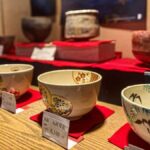
Kyoto’s temple bells and Tokyo’s subway rush sit only two weeks apart on this 14-day trip, with mountain villages, samurai lanes and Hiroshima between them. The route gives you a broad look at Japan without asking you to plan every train and transfer yourself.
I like the mix of iconic sights and smaller-town stops, especially the contrast between the Peace Memorial in Hiroshima and the thatched farmhouses of Shirakawa-go. I also like that you use local trains, buses and the bullet train, so getting around becomes part of the experience rather than a private coach ride past everyday life.
The trade-off is pace. There are several one-night stops, a lot of walking and frequent changes of transport, so this suits you best if you are happy to keep moving and carry a small overnight bag when your main luggage goes ahead.
At a glance
- Kyoto opens the trip: Visit Nijo Castle, Kinkaku-ji and Ryoan-ji, then make a day trip to Nara and Fushimi Inari.
- Hiroshima has real time set aside: Visit Miyajima Island, the Peace Memorial Park and the museum.
- The mountain heartland is a highlight: Walk through Shirakawa-go, explore Takayama and see Matsumoto’s black castle.
- Travel is part of the plan: Expect bullet trains, local trains, buses, a ferry and Tokyo’s subway.
- The group stays small: English-guided departures are for 4 to 16 people, with travelers aged 16 and up.
- Budget beyond the headline price: The listed starting price is $6,832, but international flights, insurance, lunches and most dinners are extra.
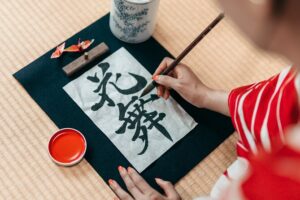
👉 See our pick of the 25 Best Workshops And Classes In Kyoto
- At a glance
- Kyoto starts with temples, gardens and a first look at Japan
- Hiroshima brings the trip’s most sobering visit
- Kanazawa balances samurai houses with a working market
- Shirakawa-go and Takayama bring a slower mountain rhythm
- Matsumoto and Kawaguchiko add castles and Fuji views
- Tokyo gives you guided bearings and room to choose
- What the pace, group and hotels mean in practice
- Is ,832 good value for this route?
- Should you book this Japan tour?
- FAQ
- What is the group size?
- Where does the tour start and end?
- Are international flights included?
- Which meals are included?
- Can vegetarian or vegan meals be arranged?
- How much walking should I expect?
- Do I need to carry my main suitcase on every transfer?
- Are the hotels traditional inns?
- Is Mount Fuji guaranteed to be visible?
- Are cherry blossom departures available?
- The Best Of Kyoto!
- More Tours in Kyoto
- More Tour Reviews in Kyoto
- Not for you? Here's more nearby things to do in Kyoto we have reviewed
Kyoto starts with temples, gardens and a first look at Japan
 1 / 9
 2 / 9
 3 / 9
 4 / 9
 5 / 9
 6 / 9
 7 / 9
 8 / 9
 9 / 9
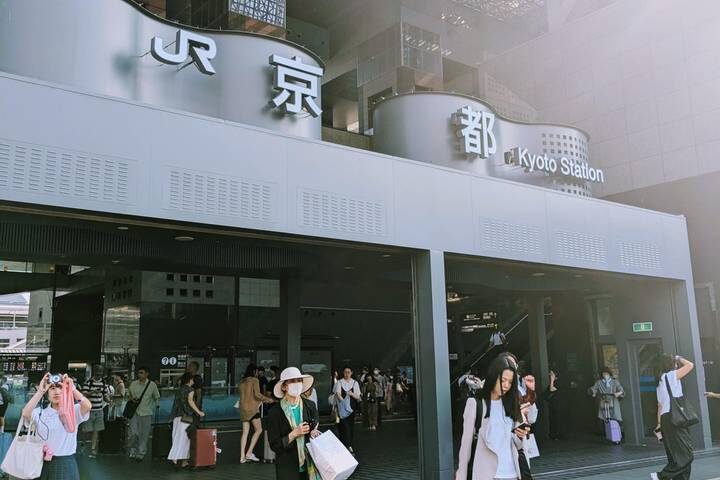
The group meets in Kyoto around 6 p.m. on Day 1, then shares a welcome dinner arranged by the tour leader. If you want time to recover from a long-haul flight or explore before the group begins, ask about adding a pre-tour hotel night.
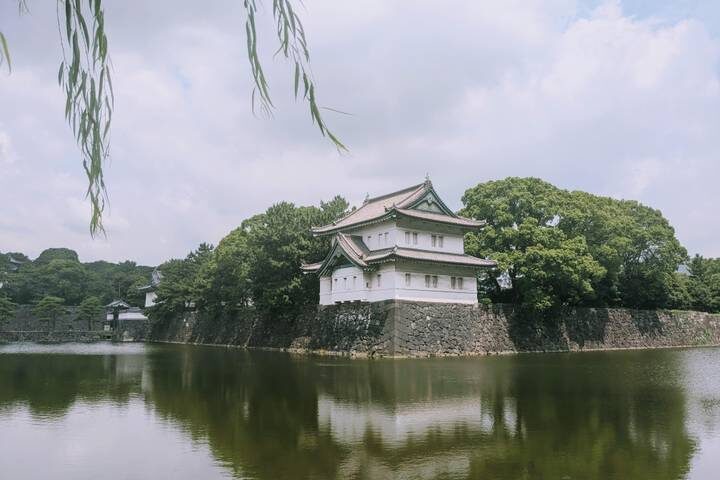
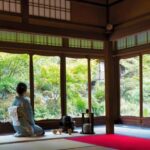
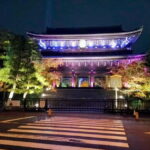
Day 2 sets the tone with three of Kyoto’s most familiar sights. At Nijo Castle, you see the former residence of the Tokugawa shoguns; Kinkaku-ji’s gold-leaf pavilion reflects in its pond; and Ryoan-ji offers a quieter pause beside its famous rock garden. The afternoon is free, which gives you room for a relaxed lunch or a rest before the next busy day.
On Day 3, a roughly one-hour train ride takes you to Nara. The Great Buddha at Todai-ji is nearly 15 metres tall, and the temple building itself is remarkable for its scale. Nara Koen’s deer are a less solemn attraction: they roam freely and may be pushy around food, so keep snacks tucked away.
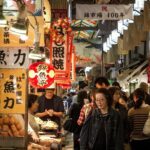
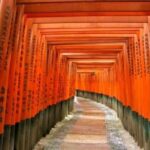
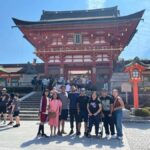
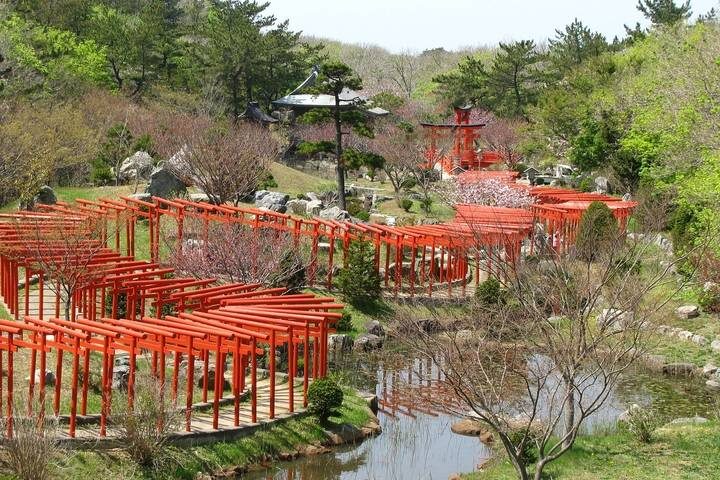
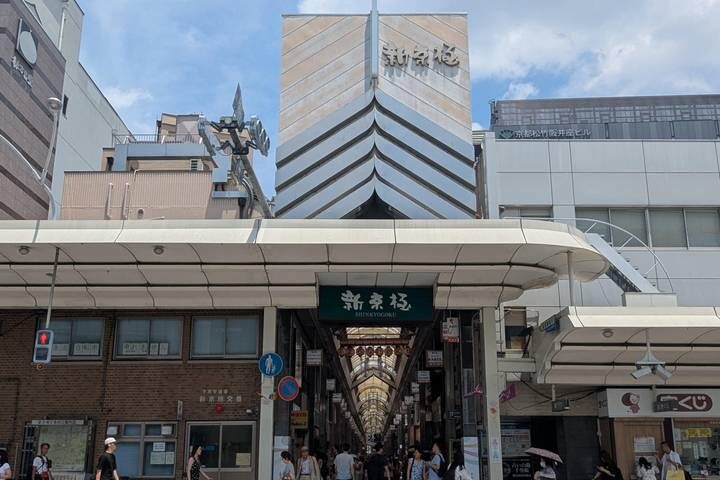
The return to Kyoto includes Fushimi Inari Taisha, where long rows of red gates climb into the wooded hills. Later, you can walk around Gion or head to Nishiki Market for local sweets, pickles, seafood and other Kyoto specialties. Both are optional evening choices, so ask your leader which fits the group’s timing and your energy.
You can also read our reviews of more tours and experiences in Kyoto.
Hiroshima brings the trip’s most sobering visit
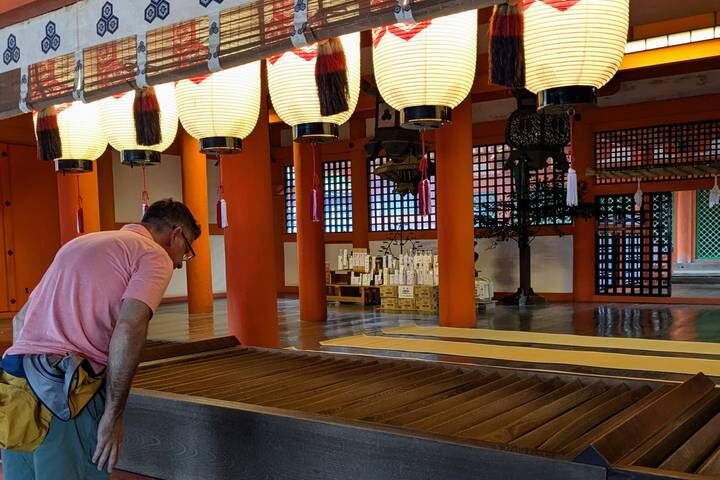
A shinkansen ride of about two hours carries the group from Kyoto to Hiroshima. From there, local train and ferry connections take you to Miyajima Island and Itsukushima Shrine. At high tide, the shrine’s famous torii gate appears to float above the water, with Mount Misen behind it. Tide and weather change the view, so this is a place to slow down and take in the setting rather than rush straight to a photograph.
Back in Hiroshima, you have some free time. Orizuru Tower offers views over Peace Memorial Park, while Shukkeien Garden provides a peaceful alternative. The next morning is devoted to the Peace Memorial Park and Museum, where the scale and human cost of the August 1945 bombing are presented directly. It is a serious visit, and the time here gives you space to absorb it.
Then it is about 1 hour 45 minutes by train to Kobe. The stop is brief, but it gives you an evening to walk around the port city and, if you choose, try Kobe beef. A group dinner with the leader is optional and needs to be confirmed early, since a reservation is arranged for those who want to join.
One practical point: there is no room for large suitcases on the shinkansen. Pack a small overnight bag for the nights in Hiroshima and Kobe; your main luggage is sent ahead.
Kanazawa balances samurai houses with a working market
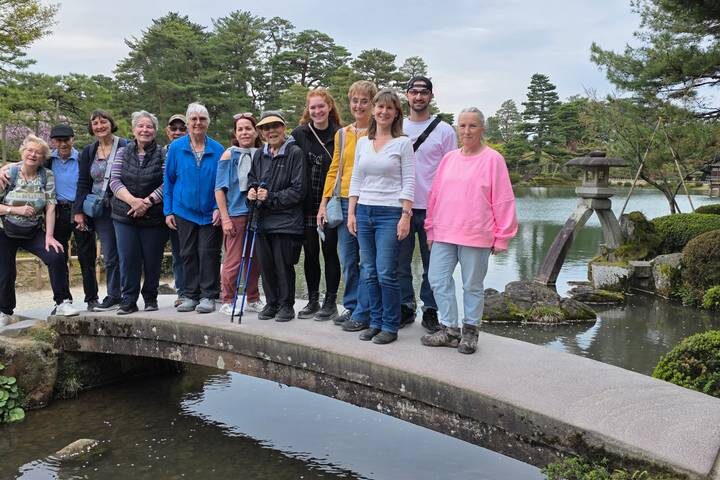
The route to Kanazawa takes about 3 hours 15 minutes on the Thunderbird and shinkansen trains, passing Lake Biwa. After lunch, you visit Kenrokuen, a large garden known for its pond and plants that change with the seasons. It is a good place to notice how much Japanese gardens rely on careful framing and small details, not just grand views.
The following day brings a more local view of Kanazawa. In Nagamachi, narrow lanes and canals thread through the former samurai quarter. The Nomura Samurai House gives you a look inside an affluent residence, while Omicho Market shows the practical side of the city: local cooks and shoppers come here for produce and seafood from the Sea of Japan.
In the afternoon, Higashi Chaya takes you to one of Kanazawa’s geisha districts. The sequence works well: a historic home, a food market and a preserved neighborhood, all without making the day feel like one long museum visit.
Your main luggage is transferred onward this evening, so once again you need a small overnight bag. This kind of packing is manageable, but it helps to keep one compact bag ready rather than repeatedly unpacking your full suitcase.
Shirakawa-go and Takayama bring a slower mountain rhythm
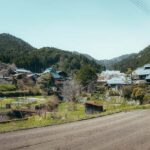
A bus ride of about 90 minutes leads to Shirakawa-go, a mountain village known for gassho-zukuri farmhouses. Their steep thatched roofs were designed to shed heavy snow, and their large attics once supported silkworm cultivation. You have time to walk through the village and visit some of its older buildings before continuing by bus to Takayama.
In Takayama, Hida no Sato is an open-air museum with around 30 traditional houses and other buildings from the Edo period. It gives useful context for the architecture you have just seen in Shirakawa-go, though it is a second heritage stop in one day. The reward is two nights in Takayama, a welcome pause after several days of moving on.
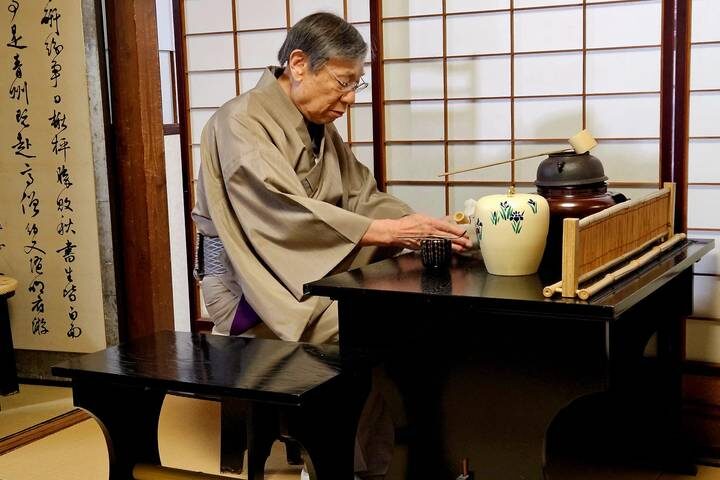
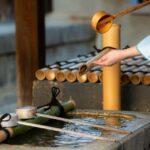
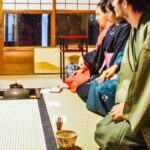
The next morning starts at the daily market beside the Miyagawa River, followed by the old Sanmachi district. A relaxed tea ceremony introduces matcha and its customs without demanding formal dress or expert manners. It is an approachable way to encounter a tradition that can otherwise seem intimidating to first-time visitors.
The afternoon is free for lunch, sake tasting, antique and lacquerware shops, Takayama-jinya or the temple-lined Higashiyama Walkway. This is one of the best chances to follow your own curiosity. If you like local food, ask your leader for a restaurant suggestion; good guidance matters when menus are unfamiliar and you have limited time.
Matsumoto and Kawaguchiko add castles and Fuji views
A direct bus takes about 2 hours 30 minutes from Takayama to Matsumoto. The main visit is Matsumoto Castle, nicknamed Crow Castle for its black exterior. Built in 1504, it keeps much of its original structure and interior, an unusual survival among Japanese castles. Its steep, tall staircases can be difficult, so take your time on the climb and descent.
You have some time after the castle to explore Matsumoto, and a walk back to see the castle at night is a good use of the evening. The stop is short, however. If you prefer time to browse at a slower pace, this is one of the places where you may wish the schedule allowed an extra day.
The following morning, a private transfer of about 2 hours 30 minutes brings you to Kawaguchiko by Lake Kawaguchi. Oishi Park is a lakeside stop with possible views of Mount Fuji, but Fuji visibility depends on conditions. The Itchiku Kubota Art Museum pairs kimono collections with architecture designed to sit in its natural surroundings. On some departures the museum is closed; the visit is then replaced by Matsumoto City Museum of Art.
Before leaving Matsumoto, pack another overnight bag for Kawaguchiko and the bus-and-subway journey into Tokyo. Your main luggage is sent ahead again. The forwarding service covers one piece of baggage per person from Kyoto to Matsumoto and then on to Tokyo, but you still need to manage your essentials for the intervening nights.

Tokyo gives you guided bearings and room to choose
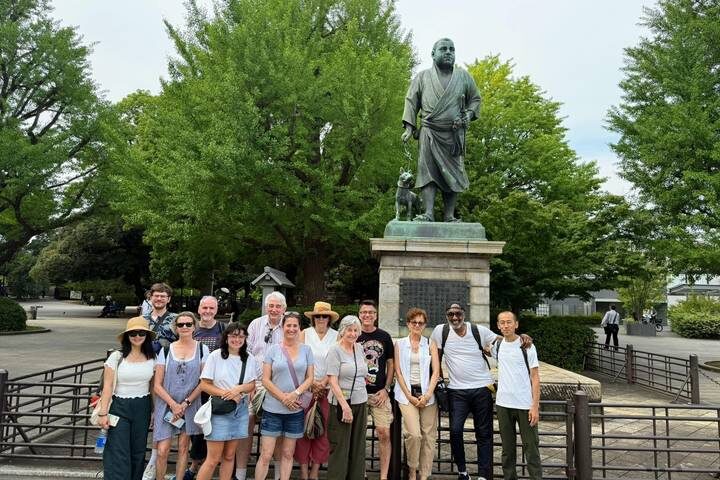
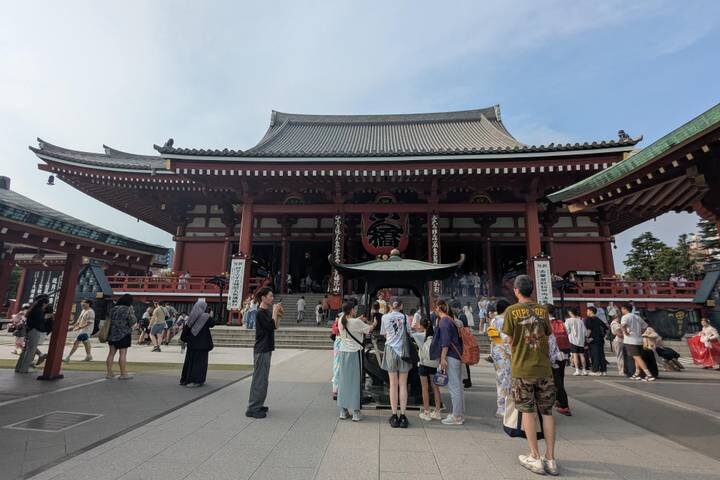
The bus ride from Kawaguchiko to Tokyo takes about 1 hour 45 minutes. After arrival, the group uses the subway to reach Senso-ji in Asakusa and walk through Nakamise shopping street. This is a useful introduction to Tokyo’s public transport and historic center before you explore independently.
The rest of Day 12 is free. Ameyokocho, near Ueno Station, is a lively market street; nearby downtown areas offer eateries and shops beneath the rail tracks. On Day 13, a one-day metro pass is included, and you can choose from Meiji Shrine, Omotesando, Ginza, Shibuya or Shinjuku. Your tour leader can help you plan, but you will need to make your own choices. Tokyo is too large to cover in a day, so pick a neighborhood or two rather than trying to tick off everything.
The tour ends in Tokyo on Day 14. There is an optional farewell dinner and karaoke on the previous evening. If this is your first visit, I would consider adding a night or two after the tour: the city’s scale makes extra time useful, and the guided portion cannot cover every district.
What the pace, group and hotels mean in practice
This is a fully guided English-language group tour for 4 to 16 people. The leader handles the logistics across trains, buses, ferries and the subway, and can recommend restaurants and ways to use free time. Guides change by departure, so do not book expecting a particular leader. Past departures have had leaders including Kohei Nishido and Charlie-san, but neither is guaranteed for your date.
Expect substantial walking. One participant described days of 10 to 12 miles, and the route includes temple grounds, market streets, crowded stations and steep castle stairs. This does not mean you need to be an athlete, but you should be comfortable on your feet and able to keep a steady pace. If you need frequent rests or prefer a slow schedule, ask Exodus how the pace can be managed before booking.
Accommodation is in hotels with private bathrooms, and some properties have onsen baths. Examples include Hotel Monterey Kyoto, Hotel Amanek Kanazawa and Dormy Inn Matsumoto, though the exact hotel may vary. Japanese rooms and beds are often smaller than Western equivalents; twin rooms are standard for two people sharing. Onsen bathing is usually nude and follows specific etiquette, and people with large, visible tattoos may be refused entry. Some hotels may offer private baths by reservation.
Is $6,832 good value for this route?
The starting price is $6,832, based on the cheapest room option. The package includes accommodation, listed transport and activities, a Japan Rail Pass, breakfasts, the first evening’s group dinner, and some luggage forwarding. International flights and travel insurance are not included. Most lunches and dinners are also your own expense, apart from the welcome dinner and any optional group meals.
The value is strongest if you want a leader to manage Japan’s many transport connections and a planned route through both major cities and smaller mountain towns. You cover a lot in 14 days, including Hiroshima, Kanazawa, Takayama and Matsumoto, places that can take more planning to link on your own. You also get free time in Kyoto, Takayama and Tokyo rather than being escorted every minute.
The main cost is not only money. The pace asks you to trade long stays for breadth, and optional meals and sightseeing add to your budget. Dietary needs need advance attention: vegetarian and vegan options are available on request, but strict plant-based meals cannot be guaranteed in every area. Tell the operator at least 30 days before travel and ask what can be arranged for your specific needs.
The published details give September 14 to December 13, 2026, as the valid dates for this version of the route, while also referring to special cherry blossom departures and other operating months. Since these date notes do not fully align, confirm the exact departure calendar before paying, especially if seeing sakura is the reason you are choosing the trip. Blossom timing varies from year to year.
Should you book this Japan tour?
Book it if you want a guided first visit that connects famous temples, Hiroshima, mountain villages, castles and Tokyo without requiring you to plan each transfer yourself. The small group size, well-organized transport and blend of guided visits with free time are real strengths.
Think twice if you want two nights in every stop, a leisurely walking pace or long stretches of unscheduled time. There are several one-night stays, frequent luggage changes and plenty of walking. If you are comfortable with that rhythm, this is a practical way to see a broad cross-section of Honshu and understand how traditional and contemporary Japan meet along the way.
Ancient & Modern Japan 14-Day Tour by Exodus Adventure Travels
“The guide was a great logistics guy, getting us from place to place. I enjoyed his general knowledge and outlook. The trip would have been more enj…”
FAQ
What is the group size?
The group size is 4 to 16 people. The tour is guided in English and is for ages 16 and up.
Where does the tour start and end?
It starts in Kyoto and ends in Tokyo. The first group meeting is around 6 p.m. on Day 1.
Are international flights included?
No. International flights and travel insurance are not included in the tour price.
Which meals are included?
Breakfast is included on Days 2 through 14, along with a group dinner on Day 1. Most other lunches and dinners are at your own expense.
Can vegetarian or vegan meals be arranged?
Vegetarian and vegan options can be requested. Choices may be limited in some areas, and strict vegetarian or vegan meals cannot be guaranteed. Provide dietary requirements at least 30 days before travel.
How much walking should I expect?
The route involves a lot of walking, including some days that may reach 10 to 12 miles. Matsumoto Castle also has steep, tall staircases.
Do I need to carry my main suitcase on every transfer?
No. One piece of baggage per person is covered by courier forwarding from Kyoto to Matsumoto and then to Tokyo. You still need small overnight bags for certain stops when your main luggage is sent ahead.
Are the hotels traditional inns?
The tour uses hotels with private bathrooms. Some properties have onsen baths, but the listed accommodation examples are hotels rather than traditional inns.
Is Mount Fuji guaranteed to be visible?
No. You visit Kawaguchiko and Oishi Park for possible views, but visibility depends on weather and conditions.
Are cherry blossom departures available?
Special cherry blossom departures are mentioned, but bloom timing varies and the supplied date information includes different operating periods. Confirm the specific departure dates with Exodus before booking.