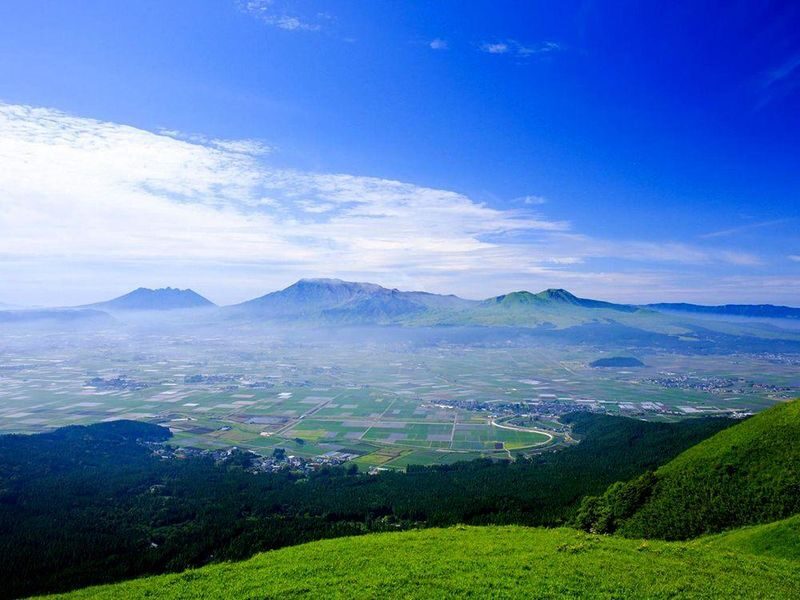
Aso is best understood from its wide-open viewpoints: from Daikanbo, you can see the caldera spread below and the five peaks lined up on the horizon. This bus trip links that big view with Aso Shrine, the Nakadake crater area and Kusasenri in one day, without making you piece together local transport.
I like two things in particular: Daikanbo is hard to reach without a car, and the tour also gives you time to wander the shrine’s Monzen-machi shopping street and try its local food. One caveat matters: the Aso-san Park Road is currently closed, so the crater stop is not available, with no reopening date given.
- Five things to know before you go
- A practical way to see Aso in one day
- Daikanbo: the caldera from above
- Aso Shrine and its Monzen-machi street
- Nakadake crater: the stop to check before booking
- Kusasenri: open grassland below Eboshi
- The bus, the schedule and the language support
- Who will get the most from this tour?
- Should you book the Aso day trip?
- FAQ
- Where does the tour depart from?
- When does the bus return?
- Can I visit the Nakadake crater?
- What happens if the crater is closed?
- Is a tour guide included?
- Is lunch included?
- Can I bring large luggage on the bus?
- The Best Of Kumamoto!
- More 1-Day Tours in Kumamoto
- More Tours in Kumamoto
- More Tour Reviews in Kumamoto
- Not for you? Here's more nearby things to do in Kumamoto we have reviewed
Five things to know before you go
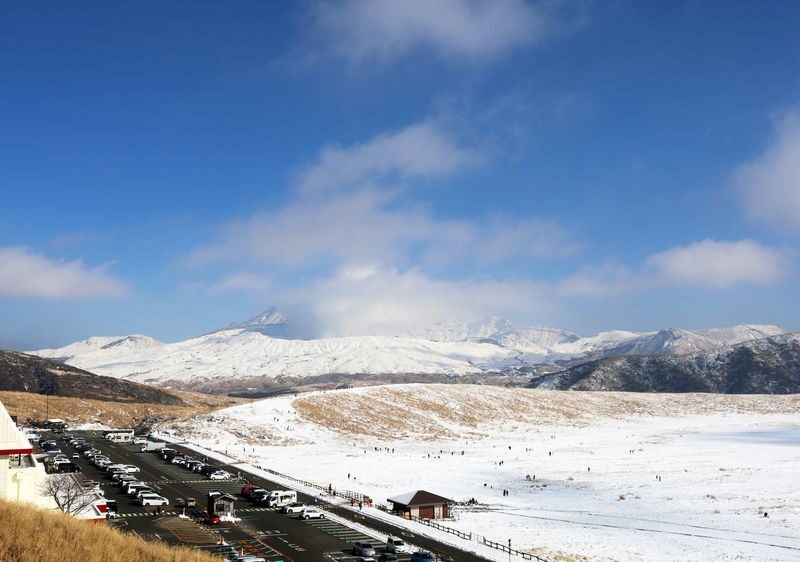
- Daikanbo is the day’s big viewpoint: Forty minutes gives you time for the caldera panorama, though weather can hide the peaks.
- The shrine stop includes lunch time: You get 90 minutes to see Aso Shrine, browse the approach and buy a meal on your own.
- Crater access is not assured: The park road is currently closed; when crater visits are restricted, the tour extends your time at Kusasenri.
- There is no transfer puzzle: The bus links Kumamoto with the main Aso sights, including places that are awkward to reach independently.
- The accompanying staff member is not a full tour guide: Japanese and Chinese support is provided, but detailed on-site commentary is not guaranteed.

👉 See our pick of the 9 Best Tours In Kumamoto
A practical way to see Aso in one day
Aso’s scale is the point. The region’s enormous volcanic caldera surrounds fields, towns and the five peaks, with Nakadake still active. On a clear day, the views make the geography easy to grasp: you are not just looking at a mountain, but at a broad volcanic basin and its rim.
This tour is built around that sweep of scenery. It departs from Kumamoto and connects Daikanbo, Aso Shrine, the Nakadake crater area and Kusasenri by bus. That makes it especially useful if you are not driving. Public transport around Aso can be inconvenient for linking several sights in one day, and a hired car is not everyone’s preferred answer.
The advertised price starts at US$63.09. For a full day of round-trip transport and several widely spaced stops, that can be good value, particularly if the alternative is arranging separate connections yourself. Meals, museum admission, horse riding and personal purchases are extra, so budget for those separately.
One important qualification: the tour’s four-stop outline does not guarantee a visit to the crater. The information for this experience says the Aso-san Park Road is currently closed, with no definite reopening date. If it remains closed on your date, expect more time at Kusasenri instead. Check the road and access status close to departure rather than booking on the assumption that you will reach the crater rim.
You can also read our reviews of more tours and experiences in Kumamoto


Daikanbo: the caldera from above
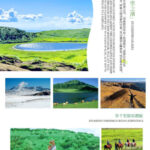
The first major stop is Daikanbo, at about 935 meters above sea level. From this northeastern viewpoint, you can look across Aso’s broad fields toward the Five Peaks of Aso and the Kuju mountain range. The peaks are often described as resembling a reclining Buddha, a useful image to keep in mind as you scan the horizon.
You have 40 minutes here. That is enough for the main view and a short wander, but not a long walk. The stop is self-guided, so you can spend your time taking in the panorama rather than following a set commentary.
The view depends heavily on the weather. Strong wind and rain can make the lookout uncomfortable, and fog can obscure the mountains altogether. Summer sunshine brings its own challenge: one visitor found the heat intense. Bring weather-appropriate clothing and sun protection, and treat the view as a bonus rather than a promise.
Daikanbo is one of the tour’s strongest arguments for taking the bus. It is a signature Aso viewpoint, but less convenient to reach if you are relying on local transport. If the sky is clear, this stop quickly shows why Aso’s volcanic setting draws people out of Kumamoto.
Aso Shrine and its Monzen-machi street
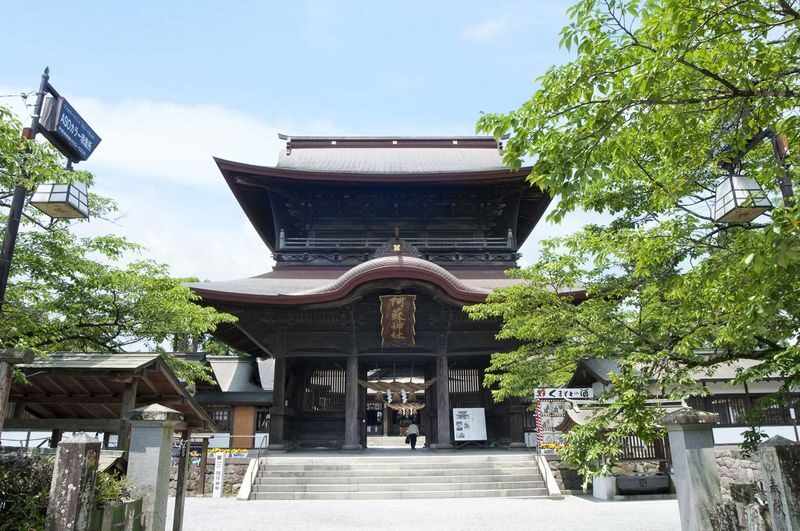
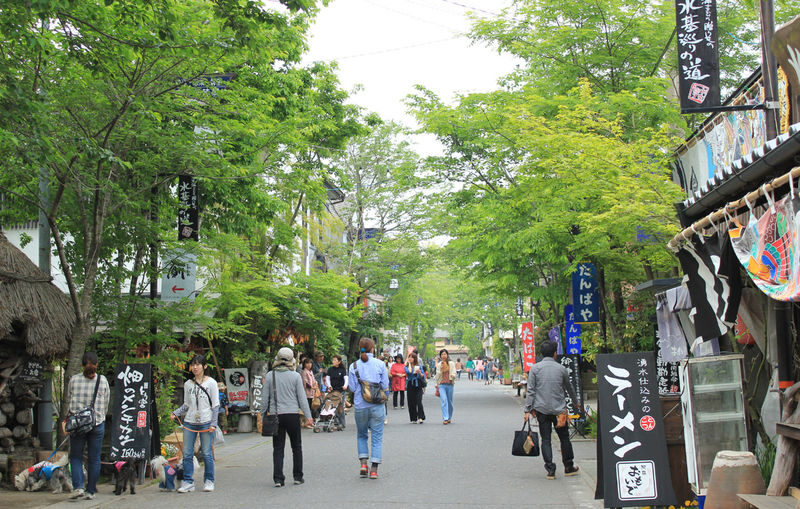
After about 30 minutes on the bus, you reach Aso Shrine for a 90-minute stop. The shrine’s tower gate faces Monzen-machi, the approach street lined with places to eat, sake shops and souvenir stores. This is the tour’s most flexible stop, and also the one where you need to manage your own time.
You can visit the shrine, pick a lunch spot and take a stroll around the shopping street. Local springs called suiki are found in the area, and the popular Suiki Pilgrimage is a way to seek out these drinking-water sources as you walk. The stop is not a guided walking tour, so you will need to choose what interests you and keep an eye on the departure time.
From July to September 2026, the tour information says each participant will receive one Mizuki Pilgrimage Exchange Ticket for use at participating shops on Monzen-machi. It can be exchanged for local foods such as croquettes and desserts. The offer is limited to one ticket per person, and you should check that it applies to your departure date.
Ninety minutes gives you room for lunch and a modest look around, but not an unhurried visit to every shop and spring. Some people may prefer less time here and more at the volcanic sights. Still, a meal and a taste of local street life make a welcome contrast to the day’s broad mountain views.
Nakadake crater: the stop to check before booking
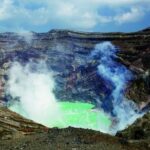
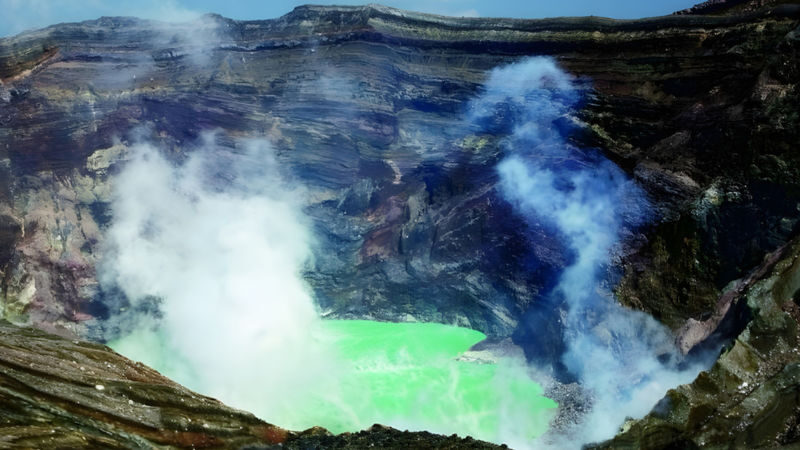
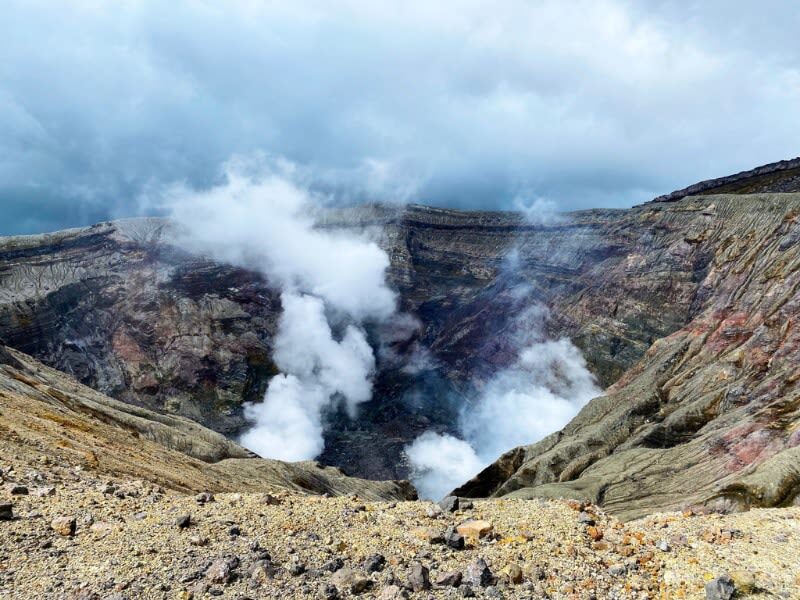
Nakadake is the active peak among Aso’s five mountains. The crater area is known for its scale and for the white volcanic smoke that can rise from it. When access is open, the planned stop is 40 minutes, enough to look around without turning the day into a lengthy hike.
At present, however, the Aso-san Park Road is closed, and there is no definite reopening date in the tour information. That means you should not count on reaching the crater. If the road reopens, access can still be restricted because of volcanic gas emissions or other safety rules.
The air around the crater can contain sulfur dioxide. People with respiratory or heart conditions, or anyone feeling unwell, are not allowed to visit. If officials restrict crater access because of smoke, the tour extends the Kusasenri stop instead.
This uncertainty is the biggest booking consideration. If the crater is the main reason you want to go, confirm its access status before setting your expectations. If your priority is seeing Aso’s countryside and key viewpoints in one day, the tour still has value even when the crater is off limits.
Kusasenri: open grassland below Eboshi
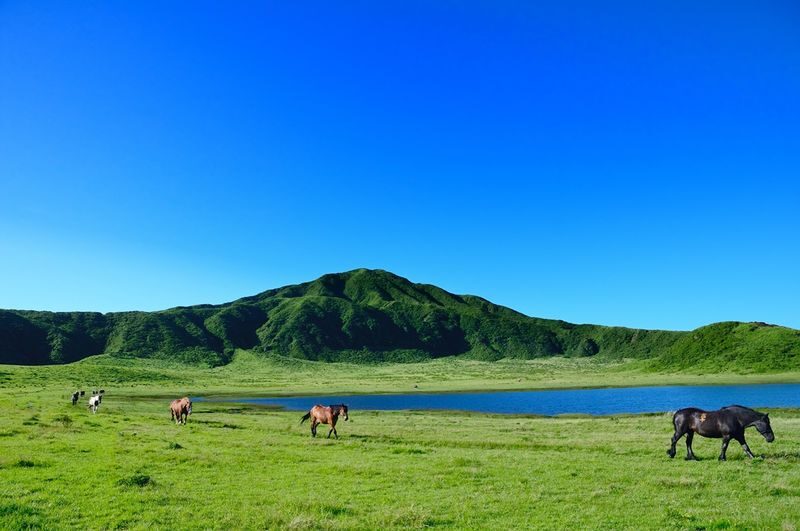
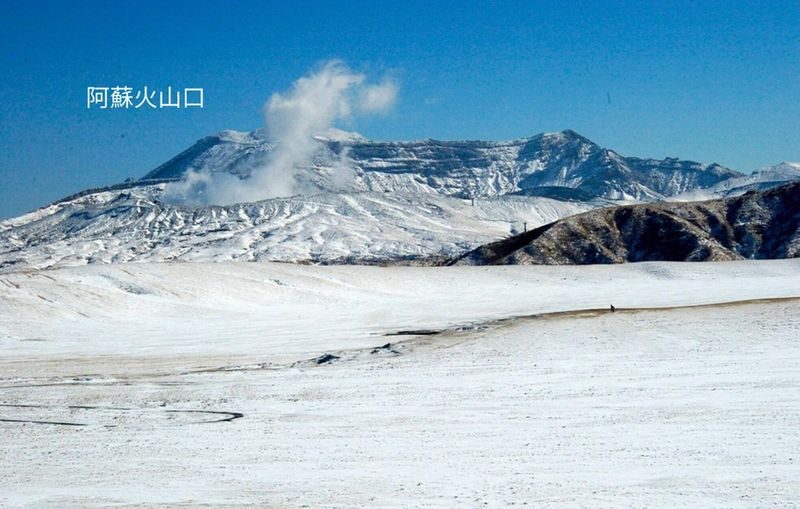
A five-minute bus ride from the crater area brings you to Kusasenri, a broad grassland of about one kilometer, with Mount Eboshi behind it and ponds formed by rainwater. The mood changes with the season: green in summer, white in winter, and varied through the year.
The scheduled stop is 40 minutes, though it may be extended when crater access is blocked. You can walk across part of the grassland and take in the open view. Horse-riding experiences are available in the area, but they are not included in the tour price. The same goes for admission to the Volcano Museum.
Kusasenri is a strong second viewpoint, but weather can make a difference here too. Fog has been thick enough to hide much of the grassland, and winter can bring a very different scene from summer. In mid-March, the grass may still look withered, so do not expect a lush green field in every season.
If the crater stop is unavailable, extra time here is a sensible fallback, not an equivalent replacement for standing near an active volcano. Think of it as more time to appreciate Aso’s open country rather than a guaranteed substitute attraction.



The bus, the schedule and the language support
The tour offers three boarding points: Sakuramachi Bus Terminal in Kumamoto at 9:00, Aso Kumamoto Airport at 10:10, and Aso Station at 10:50. You must arrive at least 10 minutes before your chosen departure. At the airport, the meeting point is Group Bus Stop E. The bus returns first to Aso Station at about 16:35, then to the airport at 17:20, and finally Sakuramachi at 18:30.
The stops are self-guided. A Japanese and Chinese-speaking staff member accompanies the group to help the day run smoothly, but the role is not that of a tour guide or tour conductor, and on-site explanations are not promised. Some past participants appreciated lively introductions, while one found English explanations less clear. If English commentary is important to you, do not assume it will be available throughout the day.
The bus size depends on the number of people booked, and you may be seated beside another participant. The vehicles generally do not have room for large luggage, so make other arrangements if you are carrying a suitcase. Children aged 0 to 2 can ride free if they do not need a seat; reserve a child ticket if you want a seat for one.
Allow slack after the tour. Traffic, weather and road conditions can delay the return, especially during the busy September to November season. The operator does not guarantee connections to onward trains, buses or flights, so avoid planning a tight transfer. Winter road icing and late-February to early-March grass burning can also lead to changes or suspended operations.
The tour is guaranteed to depart with one or more participants, but it can be canceled if no one books by 15:00 Japan time ten days before departure. Arriving late or missing the bus for personal reasons brings no compensation. Cancellation refunds depend on how far ahead you cancel, so check the terms before booking.
Who will get the most from this tour?
I would choose this trip if you are staying in Kumamoto, do not want to rent a car and want a straightforward way to see several Aso sights in one day. It also suits solo visitors and families who value having transport arranged, and it can make the day easier for older members of a group who would rather not manage several bus connections.
It is less suitable if you need English-language guiding, want a slow visit at each stop or are booking chiefly to see the crater. The stops are fairly short, the shrine visit is independent, and volcanic access can change. In mid-March, expect the grass to be duller; in summer, plan for strong sun; in any season, allow for poor visibility.
Past outings have included a leader named Mr. Zhou, whose explanations were described as clear and helpful. That is a useful sign of the kind of personal support you might encounter, but staff assignments can vary, and the service description promises Chinese-speaking assistance rather than a particular guide or language of commentary.
Should you book the Aso day trip?
Book it if convenience is worth more to you than complete freedom. At a starting price of US$63.09, the bus connects Daikanbo and the main Aso sights without asking you to solve the transport puzzle yourself. The strongest day combines a clear view from Daikanbo, time to eat near Aso Shrine and a walk across Kusasenri.
Pause before booking if the Nakadake crater is essential. The road is currently closed, and access may remain restricted even if it reopens. Check the latest conditions, then decide whether the viewpoints and grassland are enough to make the day worthwhile.
Kumamoto Aso Day Trip: Enjoy 4 Major Attractions Group Tour
“This trip to Aso left us with wonderful memories! The magnificent mountain scenery and lush greenery along the way relaxed our minds at every turn,…”
FAQ
Where does the tour depart from?
You can board at Sakuramachi Bus Terminal in Kumamoto at 9:00, Aso Kumamoto Airport at 10:10, or the bus stop in front of Aso Station at 10:50. Arrive at least 10 minutes before your selected departure.
When does the bus return?
The scheduled return is around 16:35 at Aso Station, 17:20 at Aso Kumamoto Airport and 18:30 at Sakuramachi Bus Terminal. Traffic and weather can cause delays.
Can I visit the Nakadake crater?
The Aso-san Park Road is currently closed, and the reopening date is not definite. Even when the road is open, volcanic gas regulations can restrict access.
What happens if the crater is closed?
The tour extends the sightseeing time at Kusasenri when crater access is restricted by volcanic smoke or other conditions.
Is a tour guide included?
A Japanese and Chinese-speaking staff member accompanies the group, but the staff member is not a tour guide or tour conductor and does not promise on-site commentary.
Is lunch included?
No. The Aso Shrine stop includes free time for lunch, but meals and drinks are not included in the tour price.
Can I bring large luggage on the bus?
The buses generally do not have space for large luggage. Arrange to store it in advance if you are bringing a suitcase.