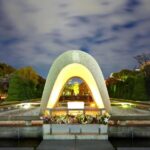
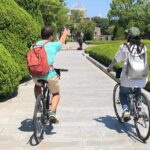
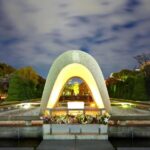
Hiroshima’s Peace Park is more than a collection of memorials: it sits within the area devastated by the atomic bombing, and the city’s recovery is written into the streets around it. This two-hour e-bike tour takes you beyond the park’s main paths to surviving bombed sites, with a local guide such as Shin or Kana connecting the places to personal and family stories.
I like two things in particular: the electric bikes make it easier to cover more ground without turning the outing into a workout, and the guides bring a local perspective that a museum visit alone can’t provide. One consideration: this is a shared ride for up to 10 people, and the pace may be adjusted for children or anyone less comfortable cycling.
- What makes this Hiroshima bike tour worth considering
- Start at the Peace Park Rest House
- Ride through Peace Memorial Park and its riverside paths
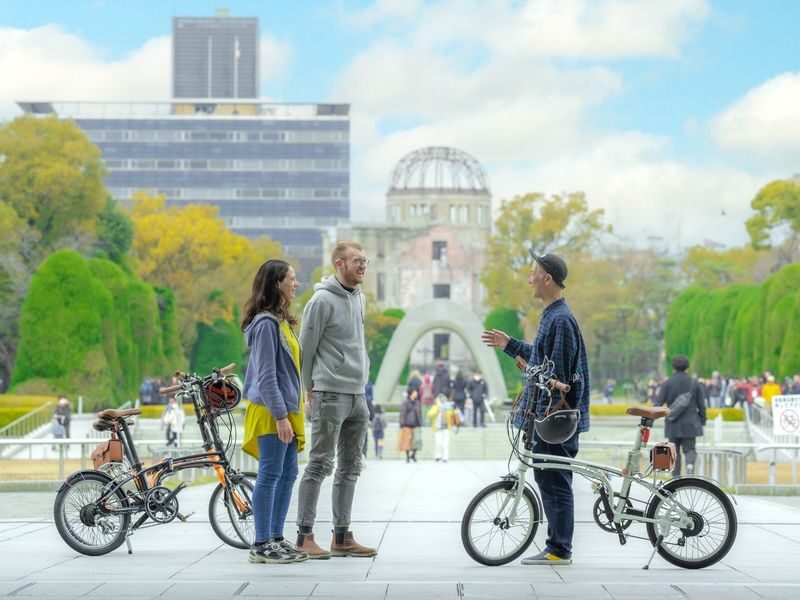
- See the Atomic Bomb Dome and surviving sites
- Hear how Hiroshima rebuilt and chose a message of peace
- How easy are the bikes to ride?
- What happens if the weather turns?
- Is .55 good value for two hours?
- Who should book this tour?
- FAQ
- How long is the Hiroshima Peace Cycling Tour?
- What is included in the price?
- Does the tour go inside the Peace Memorial Museum?
- Can children join the tour?
- What happens if it rains?
- Where is the meeting point, and when should I arrive?
- The Best Of Hiroshima!
- More Cycling Tours in Hiroshima
- More Tours in Hiroshima
- More Tour Reviews in Hiroshima
- Not for you? Here's more nearby things to do in Hiroshima we have reviewed
What makes this Hiroshima bike tour worth considering
 1 / 9
 2 / 9
 3 / 9
 4 / 9
 5 / 9
 6 / 9
 7 / 9
 8 / 9
 9 / 9
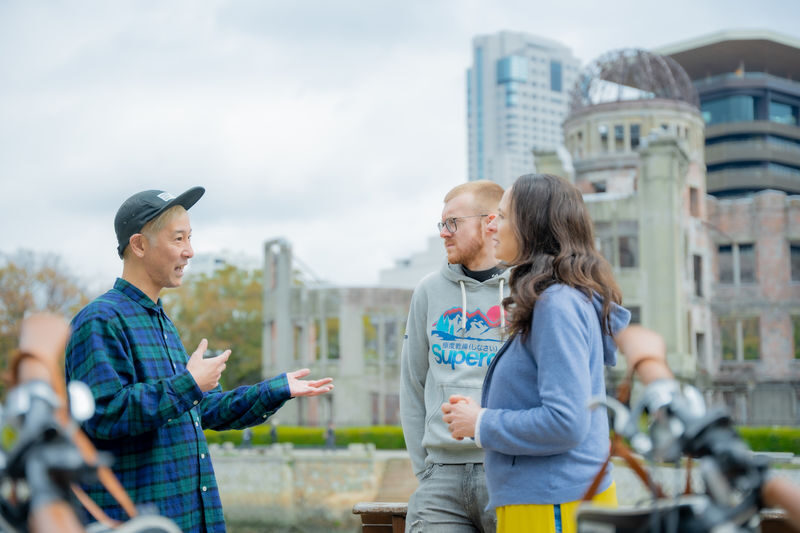
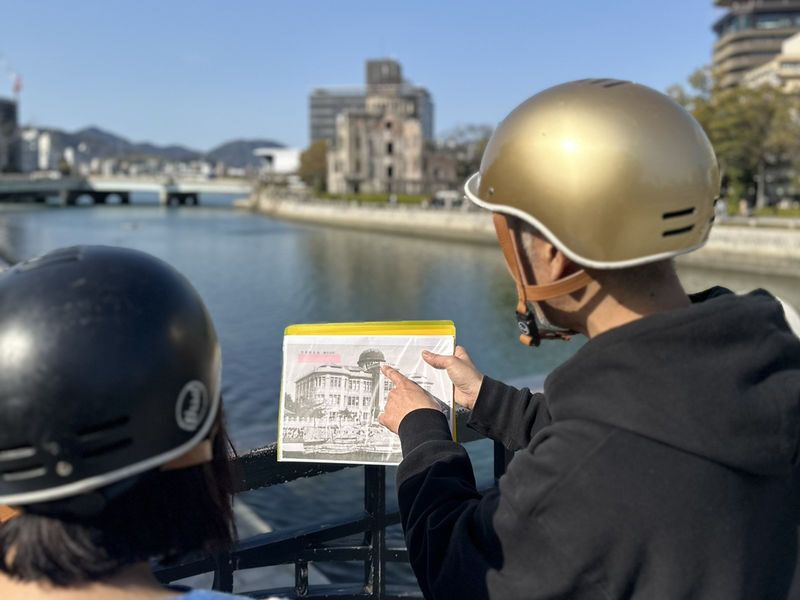
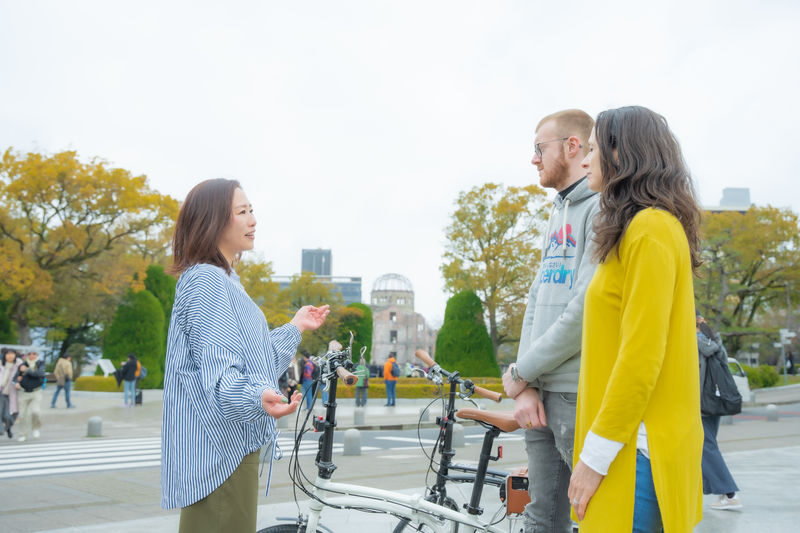
- Local voices put the history in human terms. Guides including Shin, Kana, Moet, and Thomas have shared family stories alongside historical context.
- The route reaches beyond the Atomic Bomb Dome. You ride around Peace Memorial Park and nearby sites connected to the bombing and the city’s recovery.
- Electric bikes keep the outing manageable. The route is described as relaxed and mostly on paths, and participants receive a brief introduction to riding and the rules.
- The experience is about the area, not a museum tour. Don’t assume the guide will take you through the Peace Memorial Museum’s exhibits.
- Rain changes the format, not necessarily the subject. A walking route can visit the park, the Dome, the hypocenter, the Former Bank of Japan, and Fukuromachi Elementary School.
- It suits curious families and first-time cyclists. Child seats and a limited number of children’s bikes are available, but you’ll need to check the height and weight rules before booking.

👉 See our pick of the 3 Best Workshops And Classes In Hiroshima
Start at the Peace Park Rest House
The meeting point is the Hiroshima Peace Park Rest House Tourist Information Center, at 1-1 Nakajimacho, Naka Ward. Plan to arrive 10 minutes before your selected departure, either 11:00 or 15:00. The return is scheduled for 13:00 or 17:00, depending on your start time and the day’s conditions.
The Rest House is a practical place to begin because you’re already in the Peace Park area. The guide gives a quick briefing about the route and the bikes before the group sets off. You’ll receive a helmet, and the tour includes bike rental, basic insurance, and bicycle insurance.
Getting there by Hiroshima Electric Railway is straightforward: take the tram to Atomic Bomb Dome Station, then walk about five minutes to the meeting point. The address is worth saving in your phone, since the Rest House is the actual meeting location, not the museum entrance or the Dome itself.
There’s no place to leave luggage at the Rest House. If you have bags, coin lockers are available at the International Conference Center Hiroshima and the Peace Memorial Museum, both about a six-minute walk away. A little planning here saves you from trying to cycle with a suitcase.
You can also read our reviews of more cycling tours in Hiroshima


Ride through Peace Memorial Park and its riverside paths
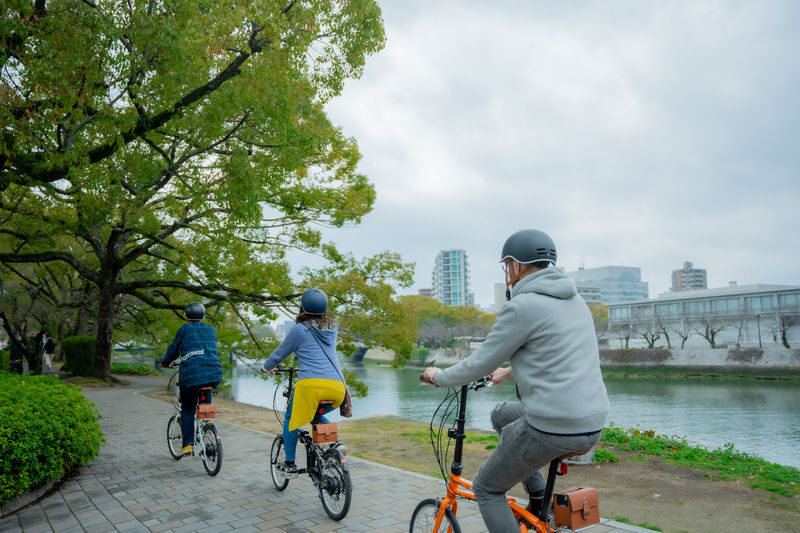
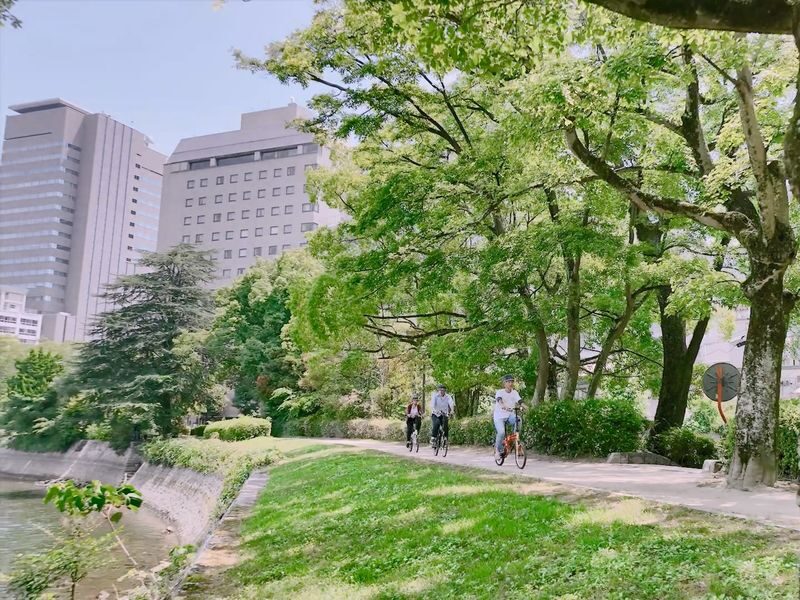
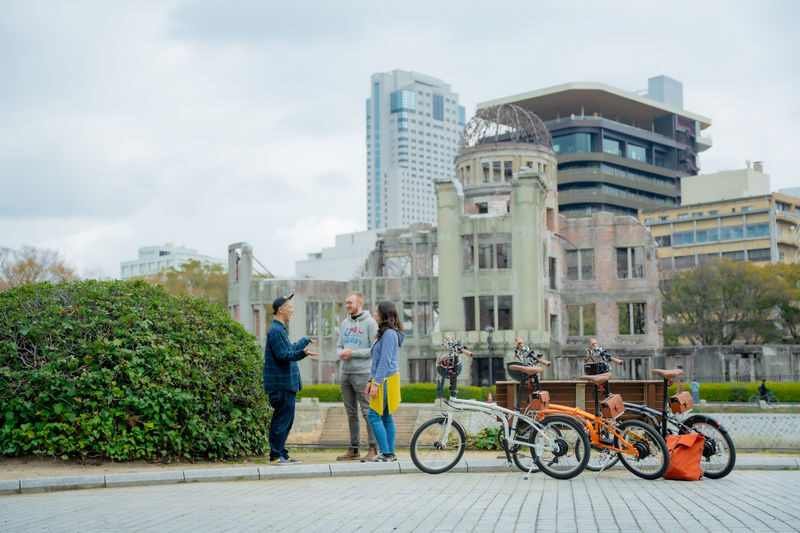
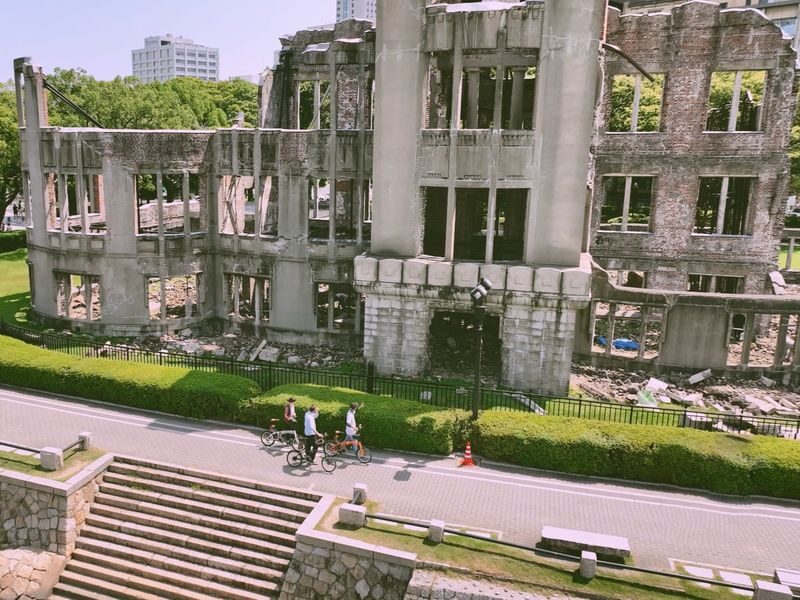
The ride gives you a different sense of scale from a walk. Hiroshima’s Peace Memorial Park and the surrounding area lie within a region heavily damaged by the bombing. Moving by bike helps you connect the park’s memorial sites with the city beyond it, including riverside paths and nearby streets.
The route is led in English, and the focus is on the bombing, reconstruction, and the city’s continuing effort to protect peace. The guide may use personal family history to make that subject more immediate. Shin, for example, has been praised for sharing his family’s experience, while guides such as Kana and Moet have also brought personal stories into their tours.
That human angle is a key reason to choose a guide rather than simply follow a map. You can ask questions as you go, and the guide can explain how a particular site fits into the wider story of the city. The tone is intended to be thoughtful, not glib; this is a solemn subject, even when the ride itself feels easy.
The group can include up to 10 people. That’s small enough for a more personal conversation than a large coach tour, though it is still a shared outing. If some riders are less confident, particularly children, the guide may slow the pace to keep everyone together. Expect a group ride, not a race between memorials.
See the Atomic Bomb Dome and surviving sites
The Atomic Bomb Dome is a central point in the tour and one of Hiroshima’s most recognized symbols of the bombing. Seeing it in context with the park and nearby streets can help you understand that the history is not confined to a single monument. The city’s memorial landscape is woven into its everyday geography.
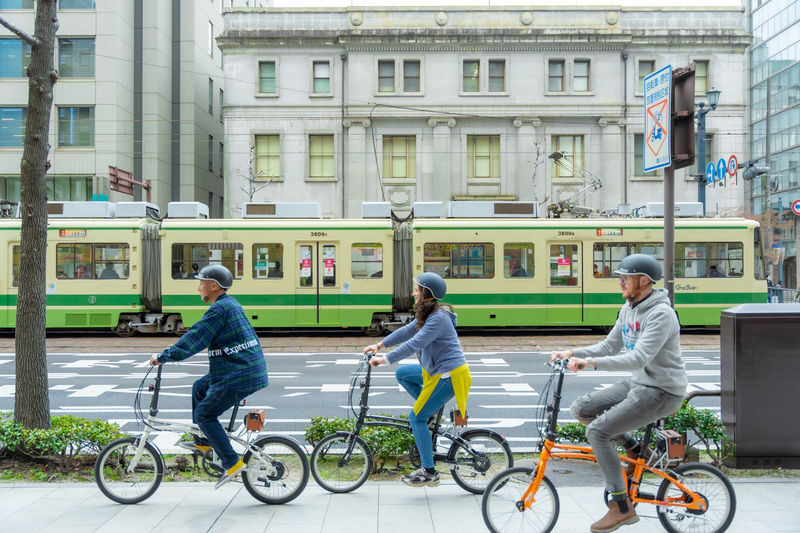
The tour also focuses on sites that survived the bombing, offering a look at the physical evidence left in the city. The Former Bank of Japan and Fukuromachi Elementary School are among the stops included on the rainy-day walking route. The exact cycle route can vary, so treat these as places the operator identifies for the alternative route, not guaranteed stops on every ride.
The hypocenter is another important location. The walking route visits the point that was reduced to scorched earth and covers an area roughly 0.5 to 1 kilometer around it. That visit gives the history a precise geographical anchor: you’re not only hearing about what happened, you’re standing near the center of the devastation.
A useful distinction: this is a guided tour of the Peace Park and surrounding area, not a guided visit through the Peace Memorial Museum’s exhibitions. The museum is nearby, but admission and a museum visit are not included in the tour details. I’d plan museum time separately rather than counting on the two-hour ride to cover it.
Hear how Hiroshima rebuilt and chose a message of peace
The tour’s value lies partly in what connects the stops: not just the destruction, but the rebuilding that followed. As you ride through the park, along the river, and into the surrounding area, the guide can show how Hiroshima has changed from the bombed city into the place you see today.
Local family stories add a perspective that a timeline or a display case can’t quite reproduce. Several guides have spoken about relatives affected by the bombing, bringing the history close without asking you to treat the tour as a substitute for the voices and records preserved in the museum. The best use of this experience is as a companion to your own reading and museum visit.
The cycling format also gives you more range than a short walk around the central memorials. That matters if you have limited time in Hiroshima or want an introduction before exploring on your own. One visitor found that two hours covered the key highlights while leaving time afterward for independent visits. I’d use the tour to get oriented, then return to the places that deserve a slower look.
How easy are the bikes to ride?
The bikes are electric, and the route is described by participants as flat and not especially tiring. If you’re a capable basic cyclist, the ride should be approachable, and the electric assistance can make the outing a welcome break from long days on foot. You’ll get a short bike briefing before departure.
Bike fit may be a concern for taller riders. One rider found the bike uncomfortable even with the seat at its highest setting. If you’re tall, or have particular comfort needs, contact the operator before booking rather than assuming the bike will fit you well.
There are specific rules for children. An adult electric bicycle is for riders at least 145 centimeters tall. A child seat is available for children under 22 kilograms and under 115 centimeters, and children using one ride free. Two children’s cross bikes are available per booking for children from 110 to 145 centimeters; children under 15 riding their own bike pay the child rate. Since the number of child seats and children’s bikes is limited, check availability in advance.
You can also read our reviews of more guided tours in Hiroshima



What happens if the weather turns?
In rain, the cycling tour may switch to a walking route at the same price. That route visits Peace Memorial Park, the Atomic Bomb Dome, the hypocenter, the Former Bank of Japan, Fukuromachi Elementary School, and a main street, with an expected finish at 13:00 or 17:00.
This is a useful alternative if you’re comfortable walking, but it won’t suit everyone equally. One participant who had difficulty walking could only manage part of the route, though the guide adjusted the outing to include important sites. If walking is a problem for you, consider that possibility before booking and ask the operator what options are available.
If you don’t want the walking alternative, the stated option is a refund. The operator can also cancel for extreme weather or other unforeseen events, with the choice to reschedule or request a full refund. In ordinary rain, though, don’t assume the activity is automatically cancelled.
Is $57.55 good value for two hours?
At a starting price of $57.55, this is more than a basic bike rental, but the price includes an English-speaking guide, bike rental, and both basic and bicycle insurance. The main value is the guide’s local interpretation and the ability to cover more ground than you might on foot in the same amount of time.
You’re not paying for a meal, drinks, museum admission, or personal expenses, so budget separately if you plan to visit the Peace Memorial Museum or stop for food afterward. The two-hour format works well as an introduction, though it won’t replace a full museum visit or a longer exploration of Hiroshima.
I’d especially consider the tour if you want a guided overview, appreciate personal stories, or prefer a gentle ride to a long walking tour. If you want extensive time inside the museum or prefer to move at your own pace, visit the museum independently and decide whether the cycle tour adds enough for you.
Who should book this tour?
Book it if you want to understand how the Peace Park connects to the wider city, hear from a local guide, and see several places in a compact outing. The personal stories and the chance to reach sites beyond the Dome are its strongest reasons to go.
It’s a weaker fit if you need a very strict timetable, are uncomfortable sharing a cycling pace with a group, or can’t manage the walking alternative in poor weather. Check the bike-fit and child-bike details before paying, and leave room in your schedule in case the tour runs a little long.
For most visitors who are comfortable on a bike, I’d book the two-hour ride early in a Hiroshima stay. It can give you useful context for a museum visit afterward, and it leaves you with time to return to the memorials at your own pace.
Hiroshima Peace Cycling Tour with Local Guide (2h Course)
“we had a great time on this tour learning about Hiroshima from a Hiroshima local. It was a great way to experience the city and explore. Some parts…”
FAQ
How long is the Hiroshima Peace Cycling Tour?
The tour lasts two hours. The listed departure times are 11:00 and 15:00, with scheduled returns at 13:00 and 17:00, depending on the selected start time.
What is included in the price?
The tour includes an English-speaking guide, bike rental, basic insurance, and a bicycle insurance fee. Meals, drinks, and personal expenses are not included.
Does the tour go inside the Peace Memorial Museum?
The experience is described as a guided ride around the Peace Memorial Park and surrounding area. The museum is not listed as an included visit, so plan a separate visit if you want to see its exhibitions.
Can children join the tour?
Yes. Children can ride in an electric-bike child seat if they are under 22 kilograms and under 115 centimeters; this option is free. A limited number of children’s cross bikes are available for children 110 to 145 centimeters tall. Contact the operator before booking to check availability.
What happens if it rains?
The tour may change to a walking route covering Peace Memorial Park, the Atomic Bomb Dome, the hypocenter, the Former Bank of Japan, Fukuromachi Elementary School, and a main street. If you don’t want the walking alternative, the stated option is a refund.
Where is the meeting point, and when should I arrive?
Meet at the Hiroshima Peace Park Rest House Tourist Information Center, at 1-1 Nakajimacho, Naka Ward. Arrive 10 minutes before your scheduled departure. The meeting point is about a five-minute walk from Atomic Bomb Dome Station.