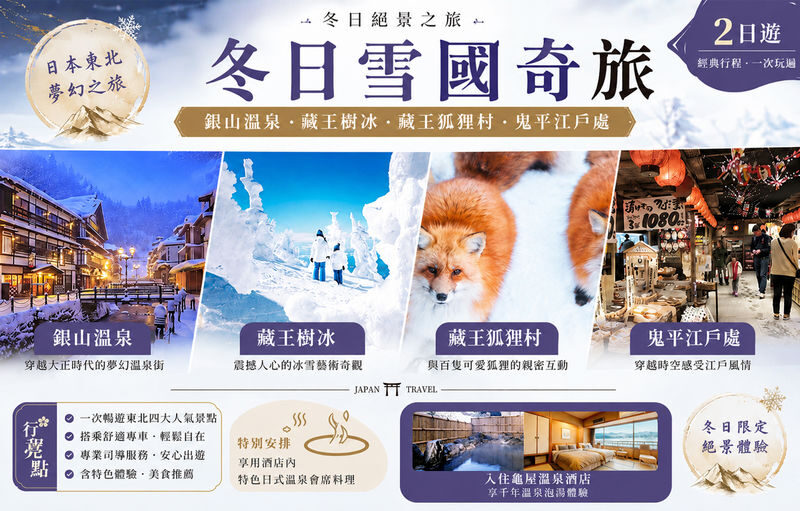
Winter in Tohoku is a study in contrasts: gas-lit hot spring streets, a mountain summit shaped by wind and snow, and foxes padding around a snowy enclosure. This two-day trip links Ginzan Onsen and Zao’s snow monsters with a night at Naruko Onsen, all from Tokyo.
I like that the trip pairs a famous winter scene with time to warm up in a hot spring, and that dinner and breakfast are included at the hotel. I also like the mix of old-town atmosphere, mountain views, animals and Edo-era flavor, a lot of variety for two days.
The trade-off is the long drive from Tokyo and a packed schedule. Weather can change the route or replace Fox Village with Shiroishi Castle, and the return to Tokyo is only an estimate, so keep your final evening open.
- The trip’s most useful details
- Ginzan Onsen: a short walk through a storybook street
- Naruko Onsen: dinner, a bath and a proper pause
- Zao Ropeway: the winter spectacle at the center of day two
- Fox Village: a memorable visit, with a weather caveat
- Onihei Edo-dokoro: a brief taste of another era
- What the price covers, and where extra costs arise
- Tokyo departures, luggage and the pace of the route
- Who should book this two-day Tohoku trip?
- FAQ
- Where does the tour depart from?
- When should I arrive at the meeting point?
- What meals are included?
- Is Fox Village admission included?
- What happens if the Zao Ropeway cannot operate?
- What happens if Fox Village is closed or inaccessible?
- How much luggage can I bring?
- What time does the tour return to Tokyo?
- More Tours in Obanazawa
- More Tour Reviews in Obanazawa
- Not for you? Here's more nearby things to do in Obanazawa we have reviewed
The trip’s most useful details
 1 / 9
 2 / 9
 3 / 9
 4 / 9
 5 / 9
 6 / 9
 7 / 9
 8 / 9
 9 / 9
- Ginzan Onsen’s old street: Spend about 90 minutes strolling beside the river, with shuttle fare included. The stop may stretch to two hours depending on road conditions.
- A night at Naruko Onsen: Hotel Kameya or a similar hotel includes dinner and breakfast, plus a chance to soak in the hot springs.
- Zao’s snow monsters: The second day allows about two hours at the ropeway and summit area. If the main ropeway cannot operate, the tour switches to Zao Chuo Ropeway and refunds the price difference.
- Fox Village is weather-dependent: Admission costs 1,500 yen for junior high school students and adults. If snow or poor access closes it, the scheduled replacement is Shiroishi Castle.
- Edo-style break: A 30-minute stop at Onihei Edo-dokoro gives you time to rest or buy a simple meal at your own expense.
- Tokyo return is not fixed: The stated arrival window is 19:15 to 20:30, but traffic and weather can push it later.
Ginzan Onsen: a short walk through a storybook street
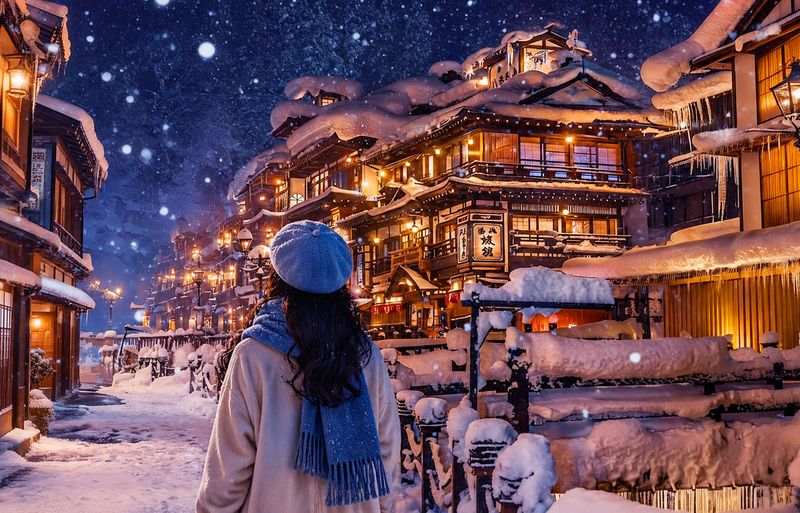
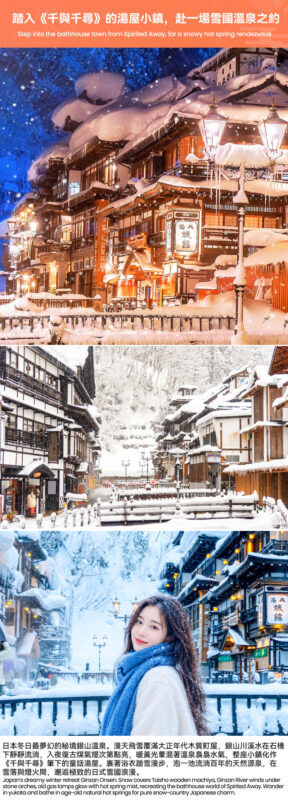
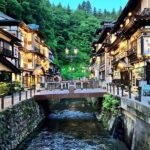
The first major stop is Ginzan Onsen, a Yamagata hot spring town known for its Taisho-era wooden inns and old-fashioned riverside street. In winter, snow and the warm glow of gas lamps can give the place a memorable, almost theatrical mood. It is also associated with settings from Spirited Away and Demon Slayer: Kimetsu no Yaiba.
You get about 90 minutes to explore on your own. That is enough for a walk along the main street, a few photos, a look at the old buildings and, if available, a pause at a free foot bath. The shuttle fare for the street is included, which helps simplify access.
This is a scenic stop, not a long visit. You will not have hours to browse every lane or settle in for a slow meal, and the street can feel busy when many people arrive at once. If conditions allow, the stop may be extended to 120 minutes, but treat that as a possibility rather than a promise.
Wear warm layers and shoes suited to winter walking. The tour is scheduled to reach Ginzan around 14:00, after a morning departure from Tokyo, so the first day already includes a substantial amount of travel. If you are prone to motion sickness or simply prefer a relaxed pace, keep that in mind before booking.
You can also read our reviews of more tours and experiences in Obanazawa.
Naruko Onsen: dinner, a bath and a proper pause
After Ginzan, the group heads to Naruko Onsen and checks in at Hotel Kameya or a similar property. The stated arrival time is around 16:30, but winter roads can affect the schedule. The overnight stay matters: rather than rushing back to Tokyo after a day of sightseeing, you get an evening to rest and use the hot springs.
Hotel Kameya is described as having a rare Futami hot spring. The tour information also refers to Naruko’s range of spring waters, with eight different qualities associated with the area. Exact bathing arrangements can depend on the hotel assigned, so think of the included stay as a hot spring experience, not a guarantee of a particular bath or room view.
Dinner is included and is described as a Tohoku-style kaiseki meal built around seasonal ingredients. Breakfast is buffet-style. If road or other delays make the group arrive too late for the planned dinner service, the hotel may provide a bento instead. That is a practical backup, though naturally less of an occasion than a sit-down meal.
The hotel may be Kameya or a similar property, so do not book on the assumption that every detail of one hotel is certain. The main value is the overnight hot spring stop, along with two meals that save you from finding food after a long day on the road.
Zao Ropeway: the winter spectacle at the center of day two
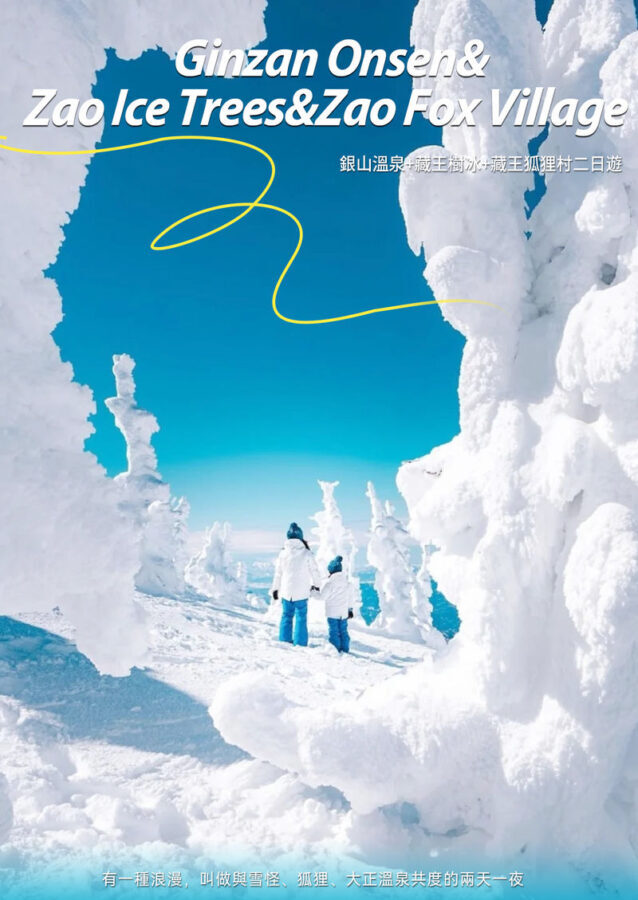
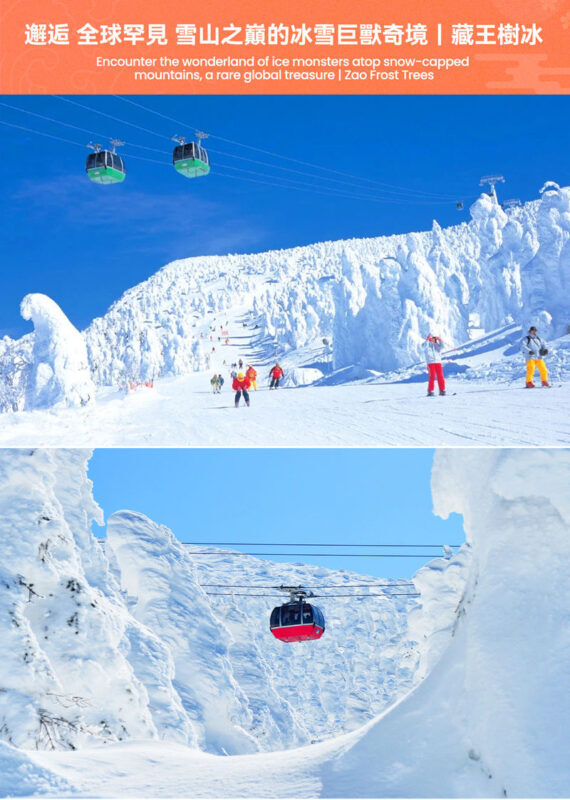
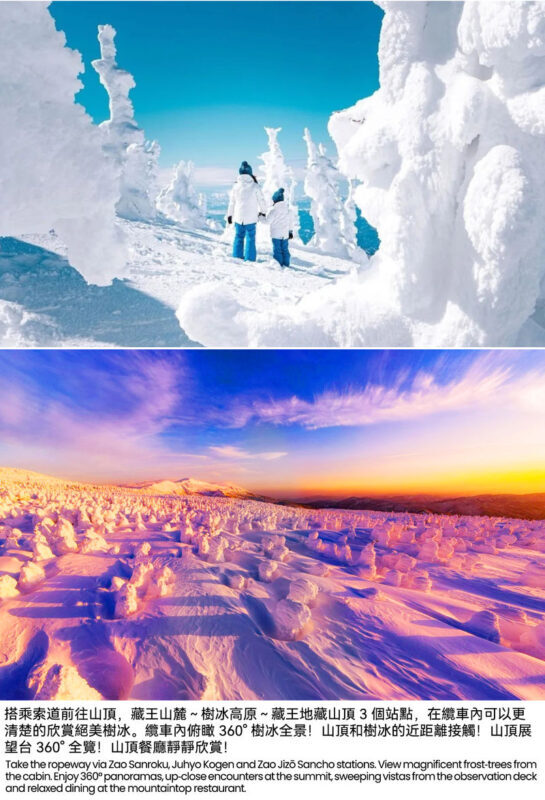
The next morning, the tour heads to Zao Juhyo, the snow monsters. These formations are trees coated with snow and ice under winter weather conditions. From the ropeway and summit area, the appeal is the scale: a high mountain setting dotted with bulky white forms, with broad snowy views around them.
The schedule allows about two hours for the Zao stop, including the ropeway visit. The tour describes the ropeway ride as guaranteed, but weather and operating conditions still matter. If the main Zao Ropeway is inaccessible, the group transfers to Zao Chuo Ropeway and receives a refund for the corresponding price difference. This is a sensible fallback, but it is not the same as a promise that the primary route will run in every condition.
The tour is planned around the snow monsters, so this stop is a major reason to choose the winter departure. At the same time, the exact appearance of the formations depends on the season and weather. The operator may adjust stop times or the order of the itinerary when conditions require it. If the scenery differs from your hopes, the seasonal nature of the trip does not come with a refund.
The tour reaches Zao around 10:00 and leaves the area after roughly two hours. That gives you a focused visit rather than a full day on the mountain. Dress for cold, exposed conditions, and bring what you need for a short outdoor stop. The operator does not provide child seats, a point worth noting if you are arranging a trip with young children.
Fox Village: a memorable visit, with a weather caveat
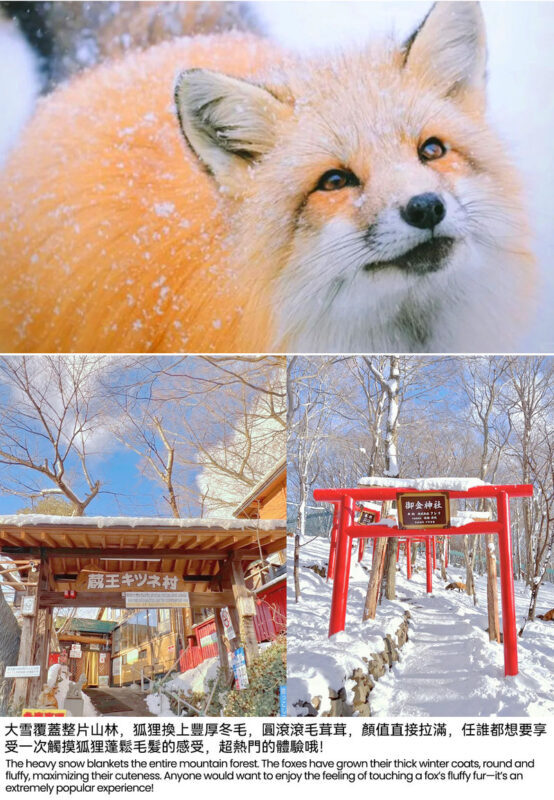
Miyagi Zao Fox Village is scheduled for about an hour. It is home to more than a hundred foxes from seven types, including Ezo red foxes, cross foxes and Arctic foxes. The visit is self-guided, with time to watch, photograph and, where offered, feed the foxes. A baby-fox holding experience is also described, though the information does not say when it is available or whether it costs extra.
Admission is not included. Budget 1,500 yen for each adult and junior high school student, while elementary school children and younger enter free. Bring cash or another accepted payment method only after confirming current arrangements, since payment details are not specified here.
Winter access is the key uncertainty. Heavy snowfall or bad weather may affect the village’s operating days or make it unreachable. In that case, the scheduled substitute is Shiroishi Castle. That keeps the day moving, but the two stops offer very different experiences, so book only if you are comfortable with a possible change.
An hour is enough to see the animals and take photos, but not a long visit. Keep to the village’s rules around feeding and handling animals, and do not assume every fox can be touched. The tour includes transport to the stop, not the entrance fee.
Onihei Edo-dokoro: a brief taste of another era
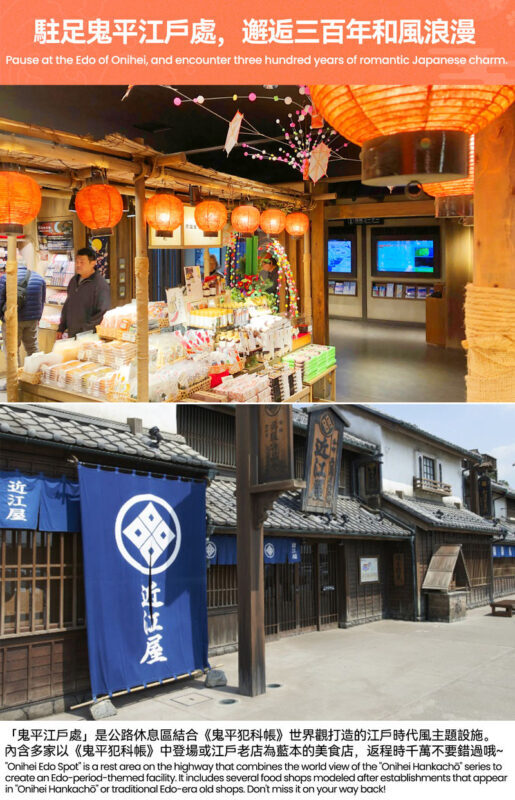
On the way back toward Tokyo, the tour pauses at Onihei Edo-dokoro for about 30 minutes. The stop is intended as a short break with an Edo-period atmosphere. You can stretch your legs and buy a simple meal or snack at your own expense.
The food examples associated with the stop include soba, eel rice bowls and ningyo-yaki, a small cake traditionally shaped in molds. With only half an hour, treat this as a quick bite rather than a proper dining stop. It is a pleasant change of pace after the mountain and animal visits, but it is the shortest attraction on the schedule.
The stated return to Tokyo is between 19:15 and 20:30. That is an estimate, not a firm arrival time. The drive is long, and traffic or weather can push the return later, so avoid scheduling a show, train connection or dinner reservation that night.
What the price covers, and where extra costs arise
The tour price is shown from $254.45, while the named Ginzan Onsen shuttle and guaranteed Zao Ropeway package is listed from $423.49. These are different displayed prices, so check the exact package, date and inclusions before paying. Do not assume the lowest starting price applies to the version you want.
The stated inclusions are round-trip transport from the Tokyo meeting point, an English- or Chinese-speaking guide, Ginzan street shuttle fare, Zao ropeway admission and one hotel night with dinner and breakfast. Fox Village entry, other meals and drinks, personal purchases and tips are not included.
The value is strongest if you want several far-flung winter sights without arranging regional transport and hotel transfers yourself. You also avoid separately organizing the Ginzan shuttle and the Zao ropeway. On the other hand, you are paying for a tightly scheduled shared trip, not a private itinerary, and several stops are weather-sensitive.
The guide also serves as the group’s main point of contact, but the guide’s name and vehicle information are sent by email between 20:00 and 21:00 the evening before. Check your spam folder and use the latest message if more than one arrives. The vehicle type depends on group size, and you may share the ride with people who speak other languages.
Tokyo departures, luggage and the pace of the route
Departure is listed at either 07:00 or 07:30. Confirm which meeting time and location apply to your booking, then arrive 15 minutes early. The guide carries a GOGODAY flag. This is a shared-ride tour, and late arrivals are not waited for or refunded, so leave yourself a generous margin for getting to the meeting point.
Each person may bring one piece of luggage, with carry-on size recommended. You must note it when booking, preferably at least a day ahead. Unannounced luggage may overcrowd the vehicle, and the guide can refuse boarding without a refund. Infants under three who do not occupy a seat still count toward the vehicle’s approved passenger capacity, so report them in advance. The tour does not provide child seats.
The route is long and the schedule can change. Japanese rules limit commercial vehicle operating hours, and traffic or weather may lead the guide to adjust the order or shorten stops. You cannot leave the group partway through and then rejoin later. If you need a flexible pace or want long visits at each stop, a self-planned trip may suit you better.
Who should book this two-day Tohoku trip?
I would consider this tour if your priority is seeing several signature winter sights in a short window, and you are comfortable trading independence for transport and logistics handled as a group. It suits couples, friends and families with older children who can manage early starts, winter conditions and a full day on the road.
It is less suited to anyone who needs a fixed return time, wants to spend a full day in Ginzan or Zao, or would be disappointed if Fox Village were replaced by the castle. The winter scenery is the draw, but weather is part of the deal.
Book it if the snow monsters, Ginzan’s old street and a hot spring night are your main goals, and the price for your selected package fits your budget. Look elsewhere if you want a slow-paced stay, guaranteed access to every attraction, or a predictable arrival in Tokyo on the second evening.
2-Day Tour: Zao Ropeway, Ginzan Onsen, Fox Village, Okurayama (Hotel Breakfast, Dinner)
“Our tour guide also served as the driver and was very responsible, ensuring everything was well-arranged. The tickets he purchased were for the fir…”
FAQ
Where does the tour depart from?
The tour departs from Tokyo. The listed meeting times are 07:00 or 07:30, depending on the departure selected. Confirm your exact time and meeting point before the trip.
When should I arrive at the meeting point?
Arrive 15 minutes before departure. The guide carries a GOGODAY flag, and late arrivals are not waited for or refunded.
What meals are included?
One dinner and one breakfast are included at Hotel Kameya or a similar hotel. Dinner is described as Tohoku-style kaiseki, with a bento provided if delays prevent the planned meal. Breakfast is buffet-style. Other meals and drinks are not included.
Is Fox Village admission included?
No. Admission costs 1,500 yen for junior high school students and adults. Elementary school children and younger enter free.
What happens if the Zao Ropeway cannot operate?
The tour transfers to Zao Chuo Ropeway, and the corresponding price difference is refunded.
What happens if Fox Village is closed or inaccessible?
If snowfall or bad weather prevents the visit, the tour replaces Fox Village with Shiroishi Castle.
How much luggage can I bring?
Each person may bring one piece of luggage, with carry-on size recommended. Declare it in the booking’s special requests. Unreported luggage may lead to overcrowding and refusal of boarding.
What time does the tour return to Tokyo?
The estimated arrival window is 19:15 to 20:30. Traffic and weather can cause delays, so avoid booking other activities for that evening.