
Here is the thing nobody tells you about Keukenhof. The world’s largest flower garden is open eight weeks a year, and that’s it. From mid-March to mid-May the gates open, the seven million bulbs go off like a slow firework, and then on the second Sunday of May the whole thing closes again until next spring. I have met more than one tourist who flew into Amsterdam in July expecting to walk in. They did not.
So if you are in the Netherlands during the right window, the question is no longer whether to go. It is which way to get there and which ticket to buy. There are at least five distinct booking paths from Amsterdam, and the one most people pick first is rarely the best fit. This guide sorts them out.
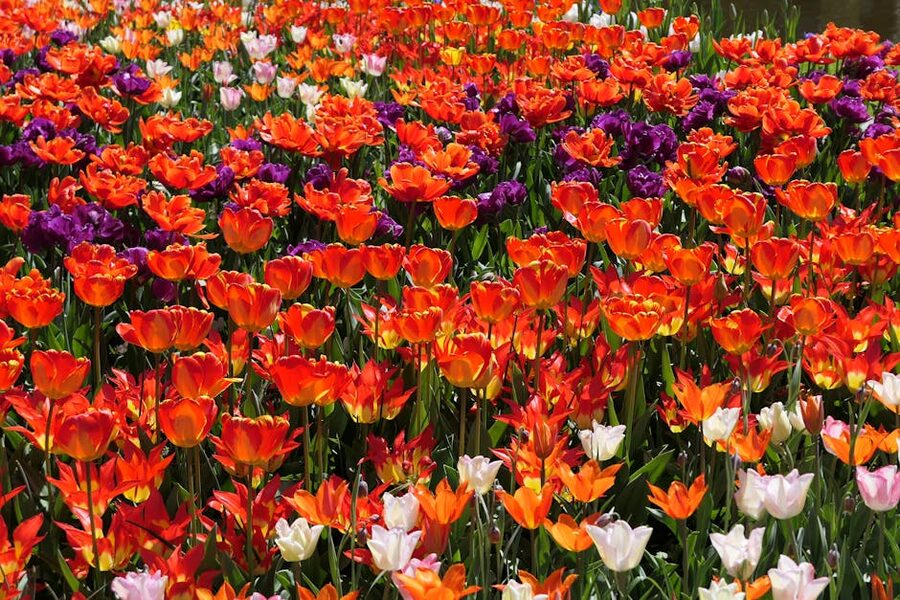
Keukenhof sits in Lisse, about 35 to 40 kilometres south of Amsterdam, halfway between Schiphol Airport and Leiden. Coach takes 35 to 50 minutes depending on traffic. The gardens cover 32 hectares, were laid out in 1949 in the grounds of a 15th-century estate, and the bulbs are planted by hand each autumn by the Dutch flower growers as a kind of giant living catalogue for the export industry. Fun fact most visitors miss: the show is technically a marketing event for the bulb growers. You are walking through their shop window.
- In a Hurry? Three Picks
- Why the eight-week window matters more than you think
- One date to actively avoid: Flower Parade Saturday
- Five ways to get from Amsterdam to Keukenhof
- Where the shuttles actually pick up
- Top picks for booking right now
- 1. Keukenhof Entry and Shuttlebus with Flexible Return:
- 2. Keukenhof Gardens Tour with Windmill Cruise:
- 3. Keukenhof and Zaanse Schans Windmills Day Trip:
- What you actually see inside the 32 hectares
- The numbers that actually mean something
- The themed gardens worth knowing about
- Tickets and prices for 2026
- Timing your day at the gardens
- Eat, drink, and the things people miss
- Combining Keukenhof with the rest of the Netherlands
- The history nobody tells you on the bus
- Practical odds and ends
- If the dates don’t work for you
- If your trip falls outside the window
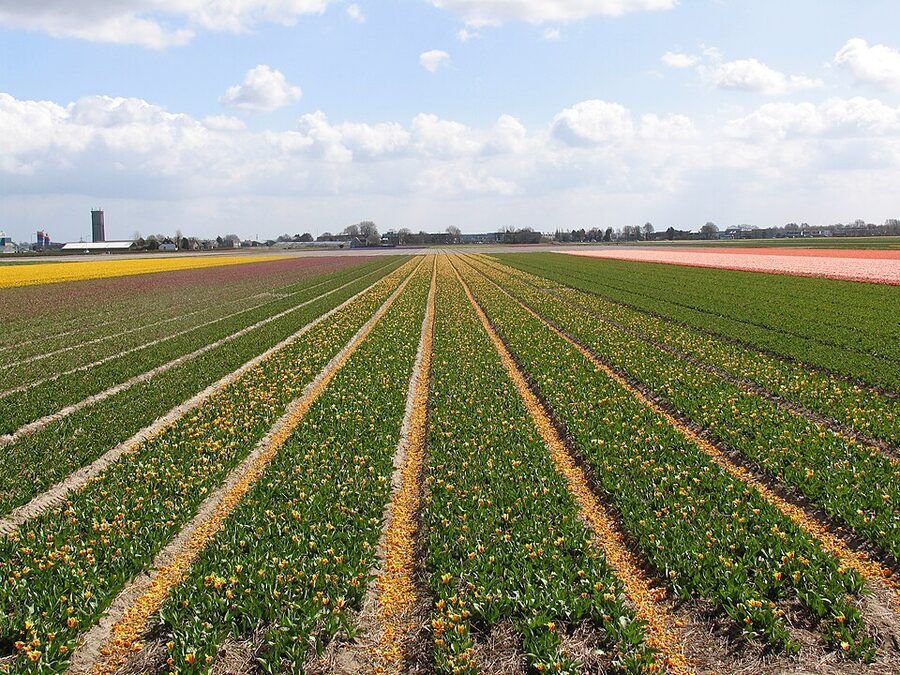
- One more thing about the bulb fields
- Where this fits in your wider trip
- What to read next
In a Hurry? Three Picks
Best for most people: Keukenhof Entry and Shuttlebus with Flexible Return from $41. Round-trip shuttle plus your gardens ticket. Flexible return time so you don’t have to clock-watch.
Best add-on for peak bloom: Keukenhof Gardens Tour with Windmill Cruise from $64. Same shuttle plus a 45-minute boat ride through the surrounding bulb fields.
Best double-header: Keukenhof and Zaanse Schans Day Trip from $72. Tulips in the morning, working windmill village in the afternoon.
Why the eight-week window matters more than you think
For 2026 the gardens are open from 19 March to 10 May. That is 53 days. The 2025 dates were similar. The 2027 dates will probably be similar again. After 10 May the gardens stay closed until the following spring. This is not a “shorter hours in winter” situation. The gates are physically locked. Your taxi driver will tell you the same thing if you somehow miss this and try anyway.
Within the season, three weeks matter more than the others. Late March to first week of April is the indoor-pavilion phase: outside is patchy and weather-dependent, the early bloomers are out, and the four pavilions are stunning. Mid-April is peak bloom, the photogenic week, the busiest week, and the priciest week. First week of May is the late-season run, with most outside beds re-planted with tulip varieties that bloom later, plus stronger displays of irises and lilies.
I have been to all three phases. Late March is the quietest and the cheapest, but if you came specifically for the tulip view, you might be disappointed. Mid-April is the postcard, but plan for crowds and book early. The first week of May is my favourite. It is calmer, the light is better, and the gardens themselves are still in serious bloom even if the surrounding commercial fields are starting to come down.
One date to actively avoid: Flower Parade Saturday
The Bloemencorso Bollenstreek (Bulb Region Flower Parade) runs on the third Saturday of April. In 2026 that’s 18 April. The parade itself is wonderful, but it closes the road network around Lisse for the morning, the Keukenhof Express bus from RAI is disrupted, and the gardens fill up with parade-day overflow. Pick a different day if you can. If you can’t, build in two extra hours of buffer either side of your shuttle.
Five ways to get from Amsterdam to Keukenhof
Five booking paths cover all the options. Each suits a different traveller. Pick by what you actually want, not by which one comes up first on your search results.
1. Combo shuttle and entry from a third-party booking platform. Round-trip coach plus your gardens ticket on one voucher. Flexible departure or fixed time slot, depending on the operator. This is what most people end up booking and it is the right answer for most people. The all-in-one ticket means no transit ticket, no separate gardens ticket, and one customer-service phone number if anything goes wrong.
2. Public Bus 852 from Amsterdam RAI. The Keukenhof Express. Runs every 15 to 30 minutes, takes 35 minutes, drops you at the gardens’ dedicated bus stop. Cheaper than the packaged shuttles if you already have an Amsterdam and Region travel pass, more involved if you don’t. Adults are around €37 for a combined bus-and-entry ticket bought via the official Keukenhof site, kids 4 to 17 around €17.
3. Combo plus a windmill cruise or Zaanse Schans add-on. The longer day-trip product. Same coach to Keukenhof, plus a 45-minute boat through the surrounding bulb fields, or a separate stop at the working-windmill village of Zaanse Schans. Eight hours rather than five. Worth it in peak bloom because the cruise is genuinely beautiful. Less worth it in late March or early May when the surrounding fields aren’t at their best.
4. Go City Amsterdam Pass. A multi-attraction city pass that bundles Keukenhof entry plus the shuttle plus 40 other Amsterdam attractions on one card. Worth running the maths if you are doing three or more big attractions in two or three days. Not worth it if Keukenhof is your main outing.
5. Drive yourself. Roughly 40 minutes by car from central Amsterdam, longer if you hit the morning rush. On-site parking is €14 if you book ahead via the official site. Best option if you are continuing on to The Hague or Leiden after Keukenhof, or if you want to chase the tulip fields between Lisse and Hillegom in the afternoon.
Where the shuttles actually pick up
This is where the bookings get confusing. The two main pickup hubs are nowhere near each other and choosing the wrong one wastes 45 minutes of your day.
Amsterdam RAI sits in the Zuidas neighbourhood in the south of Amsterdam. Metro M52 reaches it from Amsterdam Centraal in 12 minutes. The Bus 852 stop is right outside the Europaplein metro station. If you are staying near Centraal, factor in about 25 minutes of metro time plus walking to the bus stop.
This is Holland near A’DAM Tower sits across the IJ river in Amsterdam Noord. A short free ferry ride from Centraal Station gets you there. Most of the packaged bookings (the Hop-On Hop-Off Holland brand and the GetYourGuide flagship operator among them) leave from this side.
Schiphol Airport has its own Keukenhof shuttle service that is convenient if you are flying in or out the same day. Many travellers pair Schiphol-to-Keukenhof in the morning with the gardens, then catch their afternoon flight without ever going into the city.
A handful of private operators pick up at hotels in the centre of town. Read the booking voucher carefully. The pickup point is the most important field on the page. I once watched a couple jog from Centraal to RAI in 45 minutes because they had skim-read the address. They missed their bus.
Top picks for booking right now
I have narrowed it to three. The first is the workhorse shuttle that fits most people. The second is the windmill-cruise add-on for the peak-bloom photographers. The third is the combo with Zaanse Schans for travellers with a single day to spare and a list of Dutch icons to tick.
1. Keukenhof Entry and Shuttlebus with Flexible Return: $41

This is the one I recommend to first-timers without a complicated agenda. The big draw is the flexible return: you don’t have to march back to the bus at a fixed hour, which matters if the weather turns or you fall in love with one of the indoor pavilions. Our full review covers the operator differences and which time slots are calmer at the Keukenhof drop-off point.
2. Keukenhof Gardens Tour with Windmill Cruise: $64
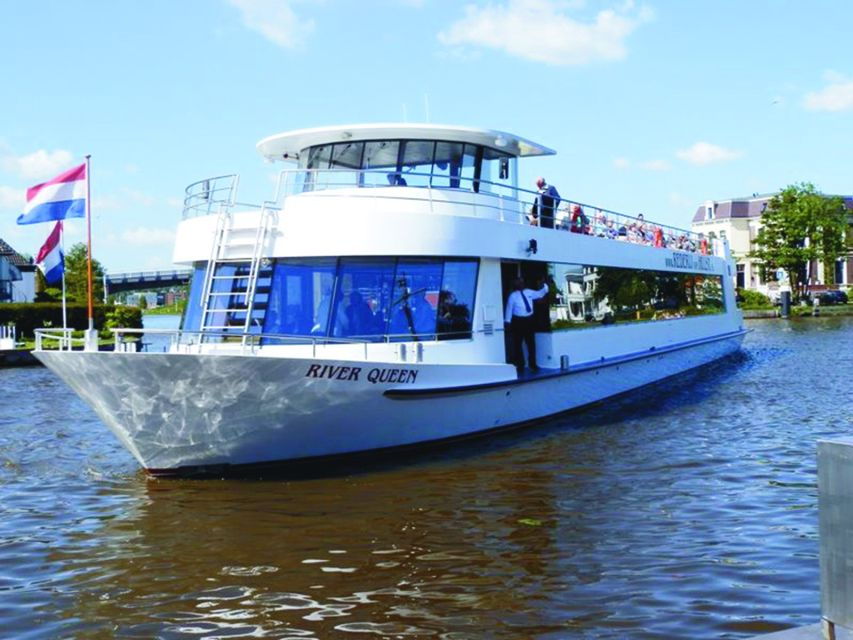
If you are visiting in the second or third week of April, this is the better booking. The cruise floats you past the commercial fields that supply the world’s tulip trade, and the view from the water is closer and quieter than from the road. The full review goes into the season-by-season case for the cruise upgrade and which weeks make it worth the extra spend.
3. Keukenhof and Zaanse Schans Windmills Day Trip: $72
This is the right pick if you have one day to do the two most-photographed Dutch icons. The pace is brisk and you don’t get a leisurely lunch, but you come away with both the gardens and a real cocoa-and-paint-mill village in the same eight hours. Our combined review covers what a typical itinerary looks like, plus the trade-off in time-on-site at each stop.
What you actually see inside the 32 hectares
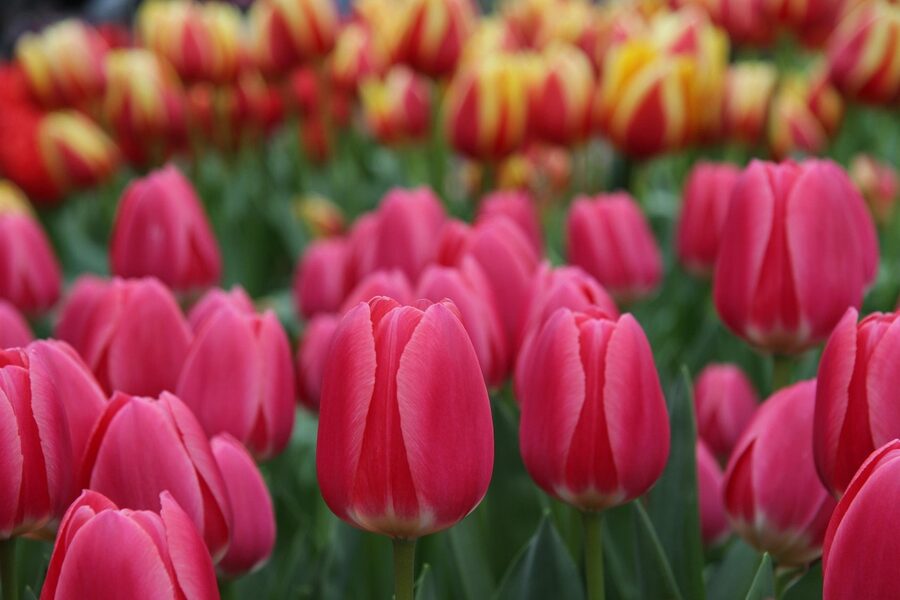
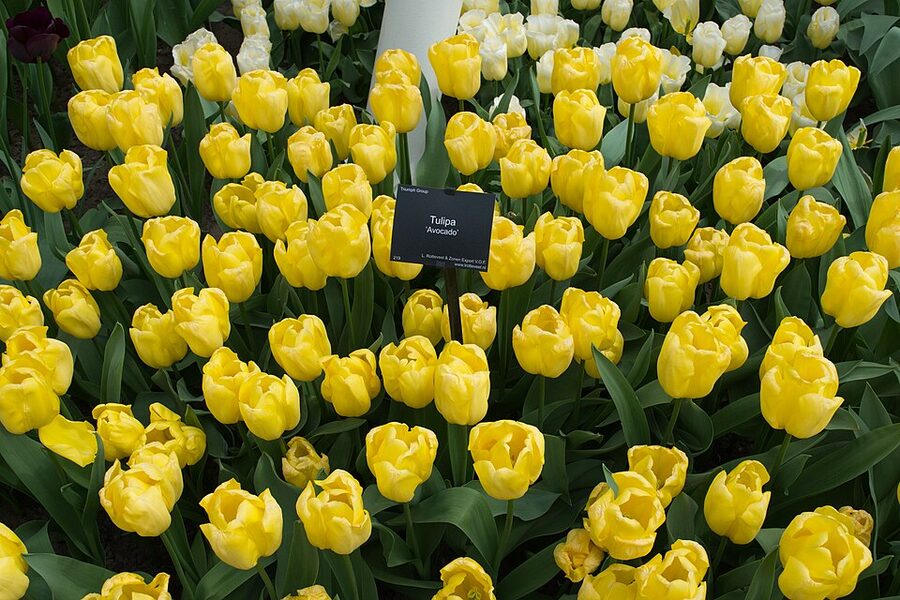
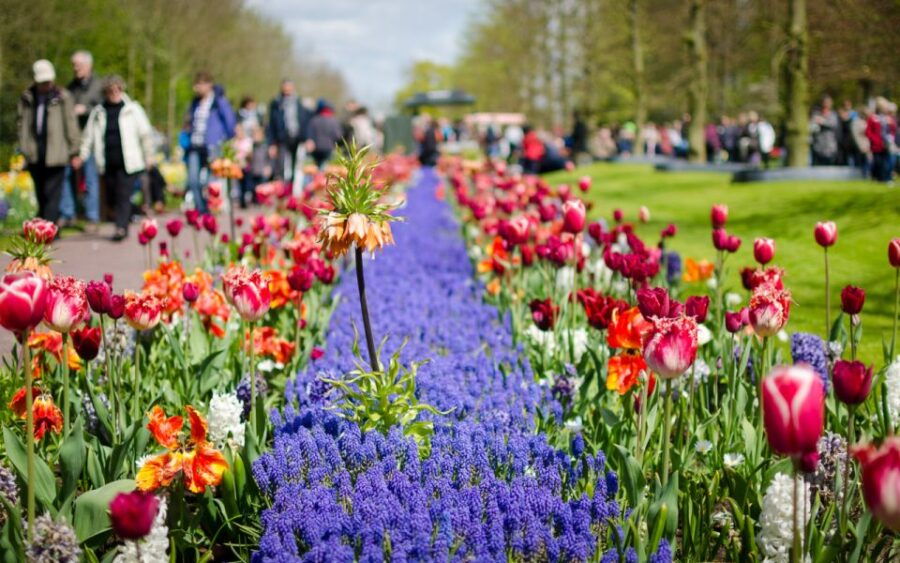
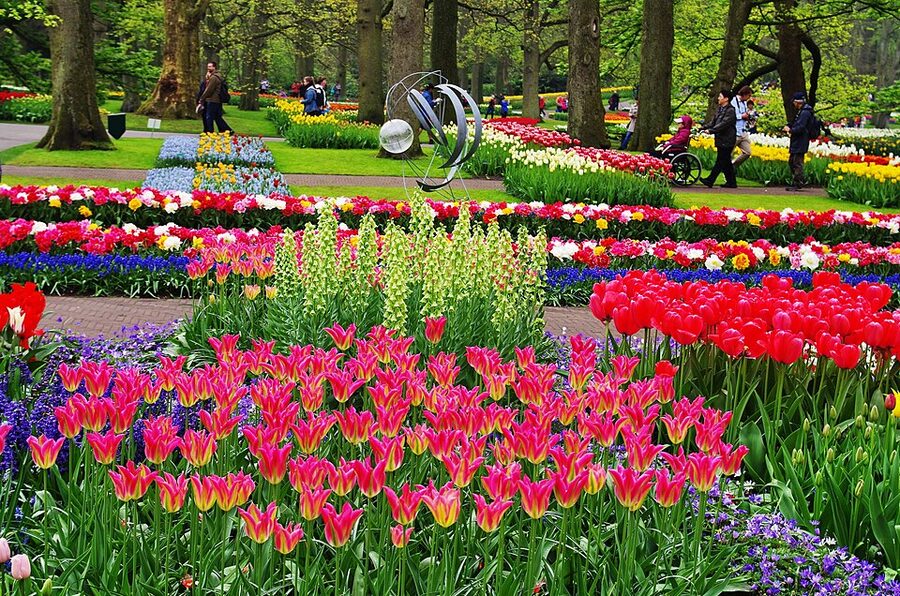
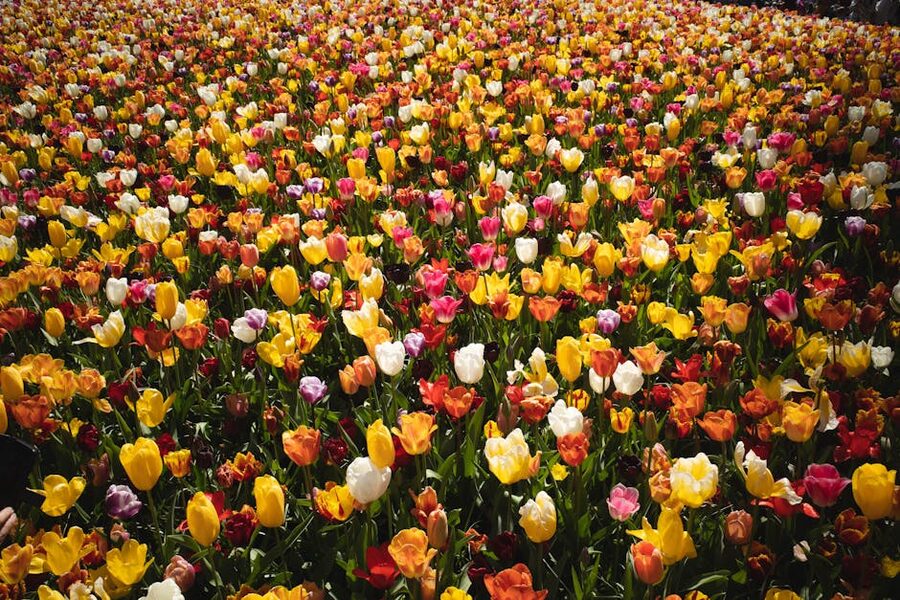
The seven million bulbs are arranged in 800-plus varieties: tulips of course, but also hyacinths, daffodils, lilies, irises, fritillaries, and a handful of less famous bulb species that the Dutch growers want to push that season. Outside, the planting changes through the eight weeks. Inside the four pavilions, the displays are refreshed weekly with cut flowers, so something is always at peak even if the weather has been miserable.
Things worth slowing down for, in rough loop order from the main entrance:
- The Beatrix Pavilion, all orchids and anthuriums, the warmest room and the busiest indoor spot in early-season weeks.
- The Willem-Alexander Pavilion, the world’s largest indoor lily and tulip show, refreshed weekly with cut flowers from the growers.
- The Oranje Nassau Pavilion, rotating creative arrangements that change every week, the most Instagrammed indoor spot.
- The Juliana Pavilion, an educational room with the actual story of how the tulip got to the Netherlands and crashed an economy in the 1630s.
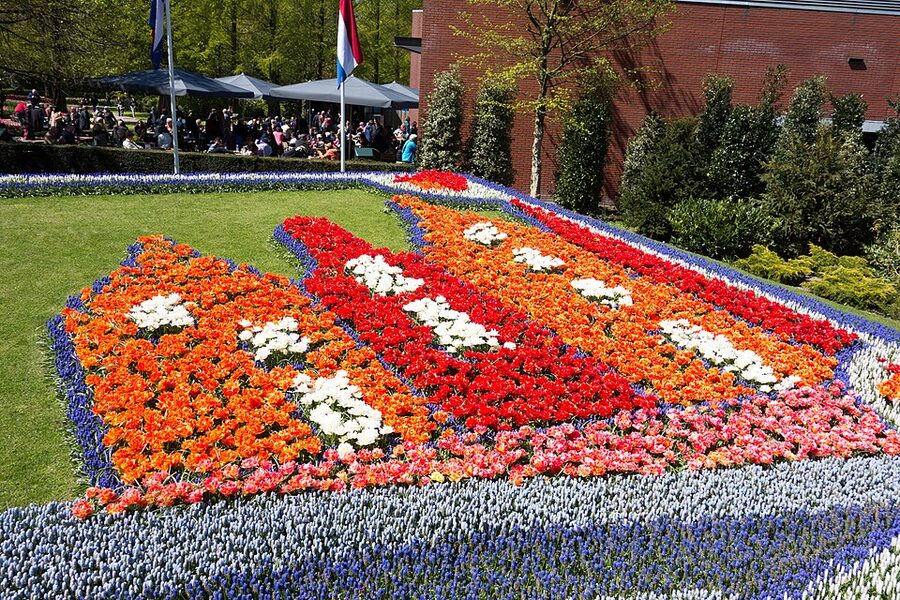
- The flower mosaic, a giant tulip-petal artwork laid out fresh each year on a different theme.
- The Historic Garden, smaller and quieter, traditional planting styles, the place to take a break from the main paths.
- The windmill, an 1892 working mill with a viewing deck three storeys up, with a queue that moves at about ten minutes a turn.
- The maze, animal meadow, and Miffy playground, the under-eights area that saves families an awful lot of grumbling.
The numbers that actually mean something
Press releases throw big figures around. A few are useful for your visit:
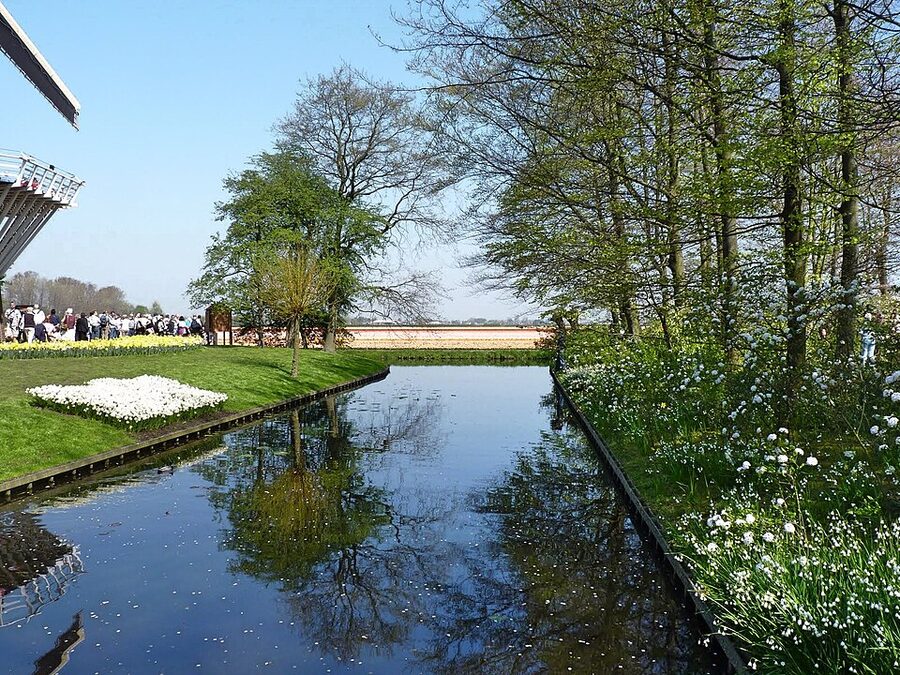
32 hectares. About the size of 60 football pitches. Walking the full loop without stopping takes 90 minutes. Most people walk it twice as a figure-of-eight, which is why three hours is the average dwell time.
7 million bulbs. All planted by hand each autumn. The planting starts in October and finishes in early December. The plan is drawn up by the head gardener using a colour-blocked grid, then 30 specialist planters lay it out.
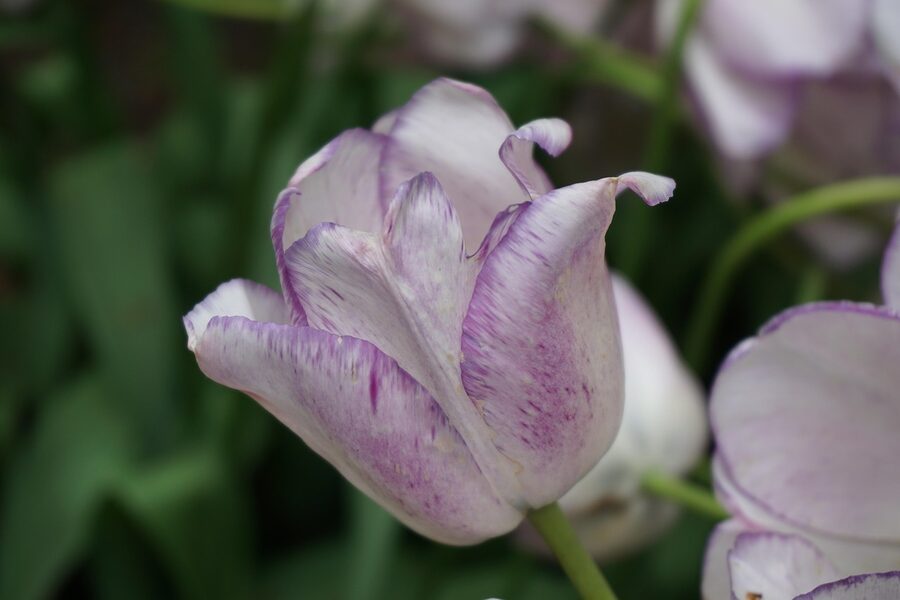
800 varieties. Of which roughly 500 are tulips. The rest are hyacinths (the smell is unmistakable in the first three weeks), daffodils, lilies, fritillaries, and irises.
1.4 million visitors a year. Across 53 days. Roughly 26,000 a day on average, but the Saturday peaks in mid-April push past 35,000. The morning queues at the entrance can run 30 to 45 minutes on those days. Pre-booking saves you that line entirely.
The themed gardens worth knowing about
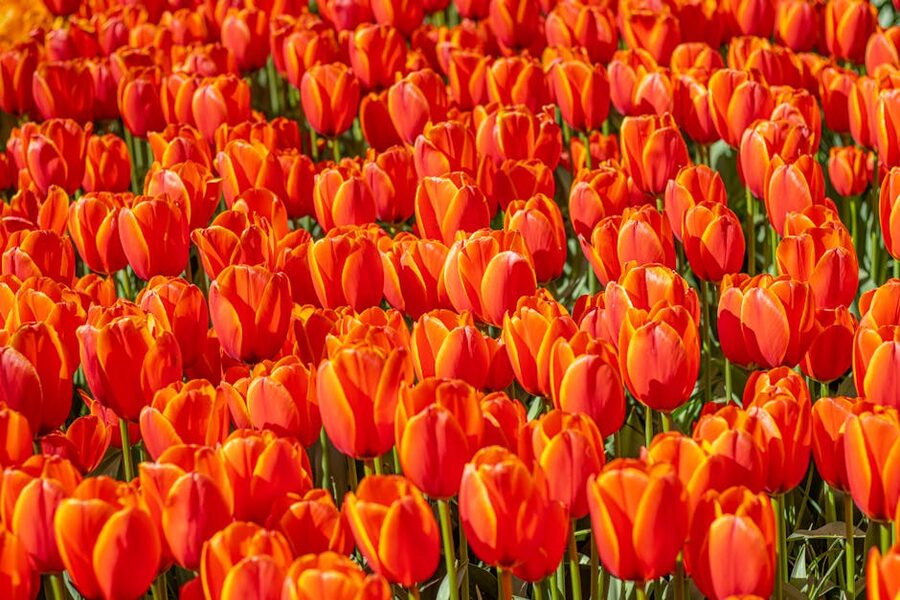
Within the 32 hectares there are smaller themed gardens, each laid out by a different team and changed every year. Most visitors walk through them without realising. They are worth slowing down for.
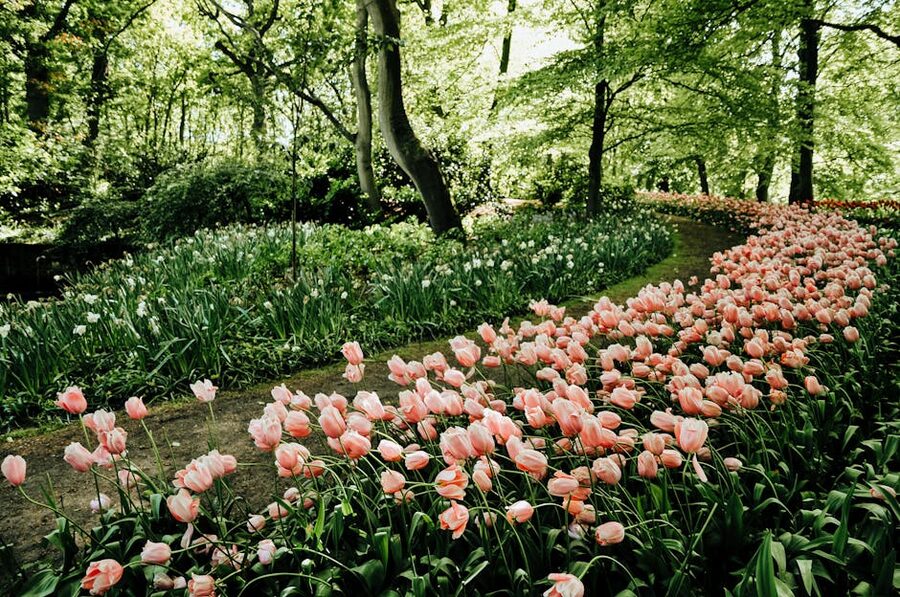
The English Garden. Rolling lawn, mixed bulb and herbaceous planting, the most “country house” of the lot.
The Japanese Country Garden. A long, calm strip with a stream and bridges, the only part of Keukenhof where you might forget you are in the Netherlands. The early-bloom irises here are the showpiece in the last fortnight of April.
The Historical Garden. Traditional 17th and 18th-century planting styles. Fewer crowds. Good benches.
The Music Garden. Bulbs grouped by mood and colour to evoke a piece of music. A bit gimmicky in description, more affecting in person.
The Inspirational Gardens. Rotating designer gardens, redone every year. This is where you steal ideas if you are a gardener.
Tickets and prices for 2026
Two main paths to a ticket. Either you buy entry only and arrange your own transport, or you buy a combo voucher that bundles the bus and the entry on one product.
Entry only, direct from the official Keukenhof site: €21 for adults 18-plus, €10 for children 4 to 17, free for under-fours. Tickets are timed. You pick a 30-minute entry window and arrive within it. After you have entered you can stay all day.
Bus 852 plus entry combo, official: Around €37 for adults, €17 for kids. Same idea as the entry ticket but the public bus is bundled. You pick a coach time slot and a date.
Packaged shuttle plus entry combo, third-party platforms: Around $40 to $50 per person. Pricier than the official combo but the pickup is more central and the operators handle the gardens entry timing for you. The flexible-return versions are the most popular booking on the platforms for a reason.
Combo with cruise or Zaanse Schans: $60 to $90 per person for the longer-day products.
Parking on site: €14 if pre-booked through the official site, more on the day. Don’t try to chance it on a peak Saturday; the lots fill before 11am.
Tickets sell out. Mid-April weekends are usually unavailable two weeks ahead. The 4pm-onward late-afternoon entry is the slot most likely to be available at short notice and is also the slot with the best light, which is a nice coincidence.
Timing your day at the gardens
This is the section everyone skips and then wishes they hadn’t. The gardens get busy. Big-city buses arrive on a clock and your timing matters.
The first slot is the calmest. 8am or 9am opening varies by date; check your voucher. The first 90 minutes are the only time the showpiece beds are properly empty. By 11am the place is moving with school groups, multi-language tour parties, and shutterbugs.
The midday lull is real. Between 1pm and 2pm a wave of morning visitors leaves to catch buses back. If you can hold off lunch and walk the central path then, you’ll get the cleanest second pass at the photogenic beds.
The last 90 minutes are wonderful. Closing is 7pm in the longer weeks, 6pm in shoulder weeks. After 5pm the coach parties have largely cleared, the light goes soft, and the gardens feel like a private estate. If you can wangle a flexible-return shuttle, this is the slot to aim for.
Weekdays beat weekends by a lot. Tuesday, Wednesday, and Thursday are 30 to 40 percent quieter than Saturday. If you have any flex on dates, use it.
Eat, drink, and the things people miss
There are six places to eat inside the gardens, ranging from a quick coffee-and-stroopwafel kiosk to a sit-down restaurant near the Willem-Alexander Pavilion. Prices are tourist-Lisse, not Amsterdam, but not cheap either. A coffee and a slice of apple cake will set you back about €8. Bring a packed lunch if you are on a budget; there are picnic spots near the lake.
Toilets are plentiful and clean. The biggest queues are at the entrance complex; if you are caught short, the toilet block near the windmill is usually empty.
The garden centre at the gates sells bulbs you can take home. Most countries allow Dutch tulip and hyacinth bulbs in your luggage as long as they are in the manufacturer’s box, but check your home customs rules before buying. The boxes are designed to fit cabin baggage.
The dog rule: no dogs allowed, no exceptions, no kennels on site. If you are travelling with one, plan accordingly.
Combining Keukenhof with the rest of the Netherlands
Most visitors fly in for a long weekend and squeeze Keukenhof into one of the days. A few combinations work better than others.
Pairing Keukenhof with a working-windmill village like Zaanse Schans in the same day is the obvious double-header and the operators have been running the route forever. The downside is that you spend almost as much time in coaches as you do at attractions. If you only have one day, it works. If you have two, do them on separate days.
The other strong pairing is Keukenhof in the morning, then back to Amsterdam for an evening canal cruise. The flowers in the daytime, the bridges at golden hour. It is a very tidy way to bookend a single day. The shuttle’s flexible return makes this easier than it sounds.
If you are renting a bike for the day, the Keukenhof flower-fields cultural bike tour takes you through the commercial bulb plots between Lisse and Hillegom; it is the closest thing to walking through a giant Mondrian. Keep that one for peak-bloom week or it isn’t worth the saddle time.
Travellers who want a city-pass approach often look at the Go City Amsterdam Pass, which bundles Keukenhof entry plus the shuttle plus 40 other Amsterdam attractions on a single card. Run the maths before you buy: it pays off if you are doing three or four big paid attractions in two or three days, and it doesn’t if Keukenhof is your only headline outing.
The history nobody tells you on the bus
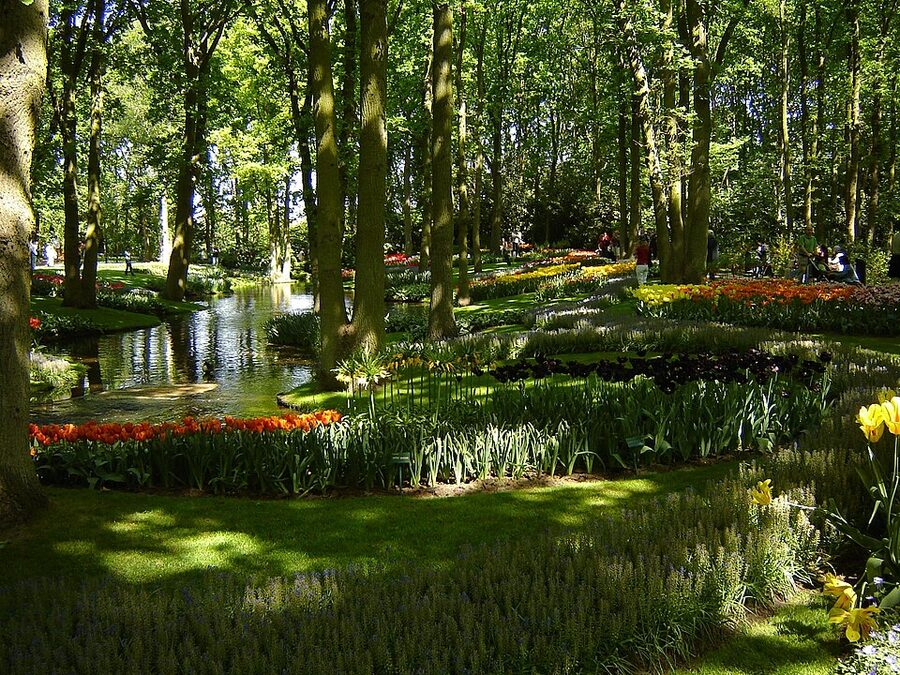
The site has been called Keukenhof, “kitchen courtyard,” since the 15th century. It was the kitchen herb-and-fruit garden of Jacqueline of Hainaut, the Countess of Holland, whose hunting estate covered the grounds. The original castle is gone but the lake at the heart of the park is part of the old hydraulic plan.
The gardens themselves only opened in 1949. Twenty Dutch flower-bulb growers got together to create a permanent showcase for the export trade, which had been hammered by the Second World War. They commissioned the landscape designers Jan David Zocher and his son Louis Paul Zocher (the same family who designed Vondelpark in Amsterdam) to lay it out. The basic plan you walk today is the Zocher plan from the 1850s, adapted to host bulbs in 1949.
The Dutch tulip story sits in the background everywhere. The bulbs were brought from the Ottoman Empire to Leiden in 1593 by the botanist Carolus Clusius, who planted them in his medicinal garden. By the 1630s the Dutch were trading tulip-bulb futures at prices that bought a townhouse in Amsterdam. The market crashed in February 1637. The growers survived. The export industry today moves 4.3 billion bulbs a year, and Keukenhof is its physical advertising poster.
Practical odds and ends
A few quick things people often ask:
Wheelchair and pram access: Excellent. The paths are wide, paved, and gently graded. There is a free wheelchair loan service at the entrance; book ahead in peak weeks.
Photography rules: Tripods allowed; commercial photography needs a permit obtained in advance. Drones are banned over the gardens; the airspace is part of Schiphol’s controlled zone anyway.
Weather: Cool. Even in mid-May the average daytime high is around 16°C and rain is common. Bring a rain shell, not an umbrella; umbrellas in the crowd of 20,000 people are awkward.
Cash and cards: The cafés take cards. The bulb shop takes cards. There are no ATMs inside the gardens, but you don’t need cash for any in-park transaction.
Storage: Coin-operated lockers at the entrance, big enough for a small backpack.
How long to allow: Three hours minimum, four hours for a relaxed visit, six hours if you want to do all four pavilions properly and the windmill climb.

If the dates don’t work for you
If you find out too late that Keukenhof is closed during your trip, there are a few partial substitutes worth knowing about.
The Bloemenmarkt on the Singel canal in central Amsterdam runs year-round. Floating flower stalls sell cut flowers, pot plants, and bulbs. It isn’t a substitute for 32 hectares of bulbs but it gives you a small taste of the Dutch flower business in 30 minutes.
The Hortus Botanicus in central Amsterdam has tropical flowers indoors year-round; it is genuinely beautiful and sees a fraction of Keukenhof’s crowds.
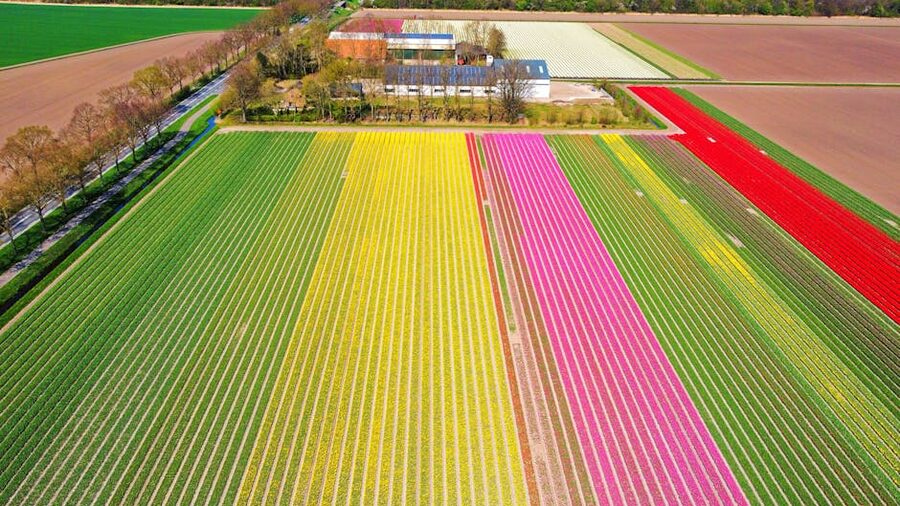
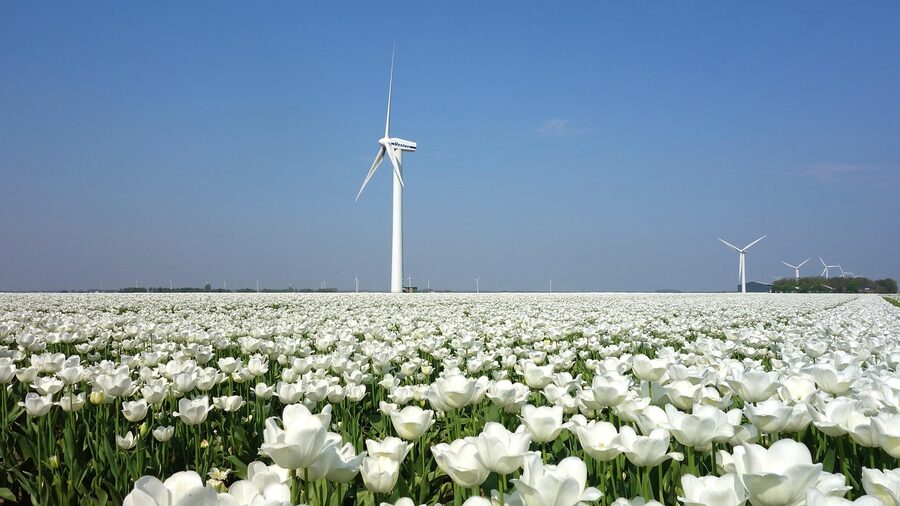
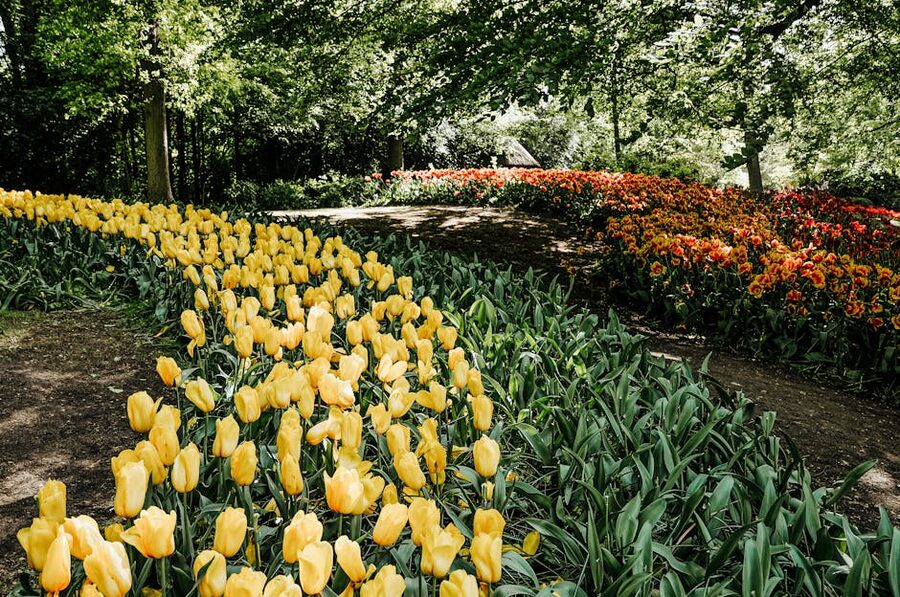
The countryside around Lisse, the so-called Bollenstreek, has commercial bulb fields you can drive or cycle through from late April. They are not gated and don’t charge admission; just stay on public roads and don’t trample beds. The fields peak about a week earlier than the gardens and are at their best in mid-April.
If your trip falls outside the window
Plan to come back. There is no good substitute for Keukenhof in full bloom, and travelling in April or early May has the secondary benefit of being one of the quieter shoulder periods for Amsterdam itself. Plane tickets and hotel rooms are usually cheaper than the summer high season. Build the trip around the gardens; it is the rare attraction that deserves to be the headline rather than the side dish.
One more thing about the bulb fields
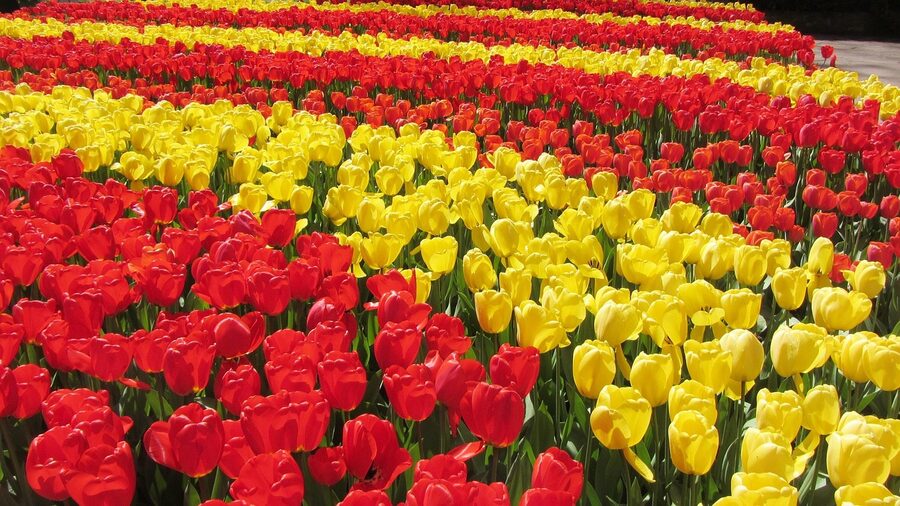
If you have a car or a bike for the day, do not stop at Keukenhof itself. Drive 15 minutes south to Voorhout, Sassenheim, and the lanes around De Zilk. The fields here are open to the wind, the sky is huge, and you can park on the verge and walk the dirt tracks between the rows. There is no admission, no queue, no shuttle, and no other tourists once you are 50 metres off the main road. Bring sturdy shoes; the soil is sandy and the verge is muddy after rain.
The window for this is tighter than for the gardens. The commercial fields peak roughly a week earlier and are cropped by 25 to 30 April most years. Mid-April is the only reliable week.
Where this fits in your wider trip
If Keukenhof is your headline, build a long weekend around it. Two full days in Amsterdam plus one day at the gardens is the right shape. If you have a fourth day, add Zaanse Schans or a longer Dutch countryside run. If you have a fifth day, get out of the orbit of Amsterdam altogether and head to Delft, Leiden, or Den Haag; they sit closer to Lisse than Amsterdam does and feel like a different country.
For getting around the city itself, the Amsterdam bike tour is the right way to spend half a day before or after Keukenhof. The bike capital of the world makes more sense from the saddle than from a coach window.
If you would rather not pedal, the Amsterdam hop-on hop-off bus and boat pass is the lazy alternative for ticking off the city’s other big sights between flower trips.
What to read next
For a full Dutch double-header, the Zaanse Schans, Volendam and Marken day trip is the natural pairing if you can spare a second day. If you would rather stay in town and let the city do the work, an Amsterdam canal cruise rounds out a flower-and-water week. And if you are pulling together a bigger Europe trip with day trips like this one, the same coach-from-the-capital format runs in England with the London to Cotswolds day trip; the playbook is identical, only the scenery changes.