Prince Gong’s Mansion is more than a grand Qing-era residence: it offers a compact lesson in court life, status, and the fortunes of the people who lived here. This guided visit takes you through its halls and gardens, with a 2.5-hour explanation and wireless headset intended to make the details easier to follow.
I like two things here: the guide gives the buildings a human story, from Heshen’s residence to Prince Gong’s ownership, and the route takes in both formal halls and garden features such as the Bat Pond and Fu Character Stele. The no-shopping format also keeps the focus on the site.
The main consideration is timing. One group’s explanation lasted about two hours rather than the advertised 2.5, and a past participant noted that the meeting-point arrangements could be clearer. Allow some flexibility, and check your guide’s meeting instructions before setting out.
- A mansion with several chapters: It was first associated with Heshen, then passed through other princely hands before Prince Gong Yixin became its owner in 1851.
- A blend of architecture and gardens: The buildings follow a formal layout, while the garden combines Jiangnan-inspired features with northern design.
- A route through key rooms and landmarks: Expect halls, pavilions, a study, a rear building, rockeries, a pond, a theater, and the famous Fu Character Stele.
- A guide-led visit, not just an entry ticket: Admission and a Chinese-speaking guide are included in the group options; a wireless headset is part of the tour experience.
- Several ways to book: Chinese groups of 20 or 30 are the lower-cost choices. Private tours are offered in English, Chinese, French, Spanish, Russian, and Korean.
- Why Prince Gong’s Mansion rewards a guided visit
- From Yin’an Hall to the rear building
- Garden landmarks, rockeries, and the Fu Character Stele
- What the guide and headset add
- Choosing a group size and language
- Timing, meeting instructions, and useful planning
- Is this the right Beijing tour for you?
- FAQ
- How long does the guided tour last?
- What time can I choose to depart?
- What time does the tour return?
- What is included in the Chinese group tour?
- Is the tour available in English?
- What group sizes are available for Chinese tours?
- Are hotel pickup and meals included?
- Can I keep visiting Prince Gong’s Mansion after the guided explanation?
- Are children aged 1 to 7 charged admission for this tour?
- Can I cancel or change my booking?
- The Best Of Beijing!
- More Tours in Beijing
- More Tour Reviews in Beijing
- Not for you? Here's more nearby things to do in Beijing we have reviewed
Why Prince Gong’s Mansion rewards a guided visit
 1 / 4
 2 / 4
 3 / 4
 4 / 4
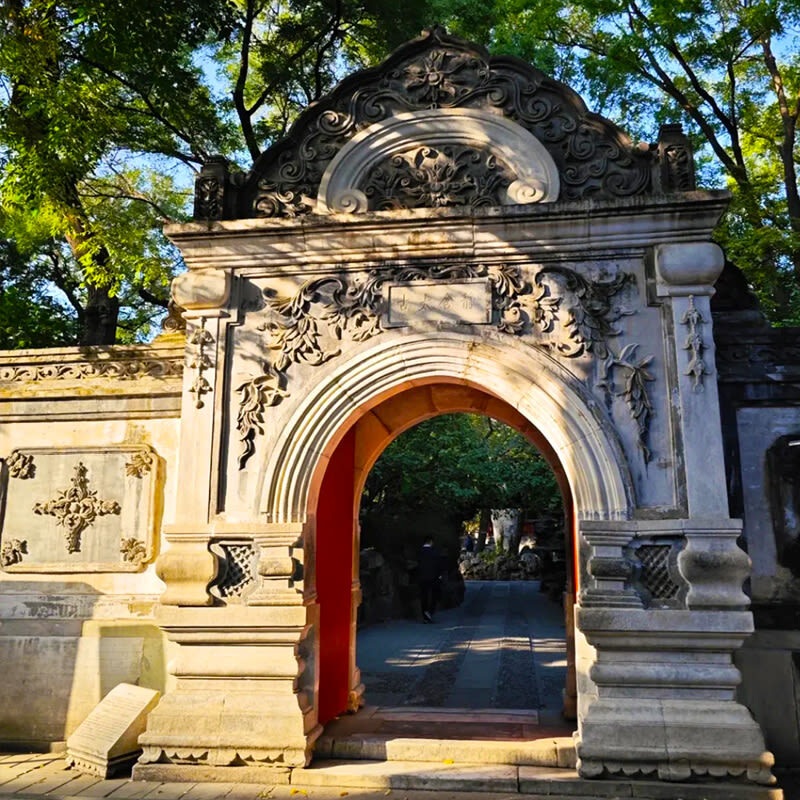
Prince Gong’s Mansion sits along the western edge of Qianhai, on the southern side of the Shichahai area. It is a large Qing Dynasty princely residence, and its scale is part of the point: the compound was designed to express rank, wealth, and authority, not simply to provide a home.
Its story is especially useful for understanding how quickly status could shift in imperial China. The mansion was formerly the residence of Heshen, a powerful official during the Qianlong Emperor’s reign. It later served other members of the royal family. In 1851, Prince Gong Yixin became its owner, giving the mansion the name it carries today.
I would choose a guided visit here because the buildings can look impressive without being easy to interpret. A guide can connect the formal halls, reception spaces, and garden features to the people who used them. That context helps you see the compound as a working residence, rather than a string of ornate rooms.
The mansion is also a national 5A-level attraction and one of the largest and best-preserved princely residences from the Qing period. That scale means there is plenty to take in, but it also makes a clear route helpful. You can focus on the main features without having to decide on the spot which way to go.
👉 See our pick of the 25 Best Shopping Tours In Beijing
From Yin’an Hall to the rear building
The suggested route begins with Yin’an Hall, then moves through Duofu Pavilion, Baoguang Chamber, Ledaotang, Jialetang, Xijin Study, and the rear building. The sequence takes you from grand public spaces toward more personal rooms, giving the visit a useful sense of how the residence was organized.
Yin’an Hall is one of the stops that helps establish the mansion’s formal character. The compound’s regular architectural layout and carefully made details reflect the status of its owners. Listen for how the guide explains the purpose of each space. Those distinctions can be more revealing than simply noting which room looks largest.
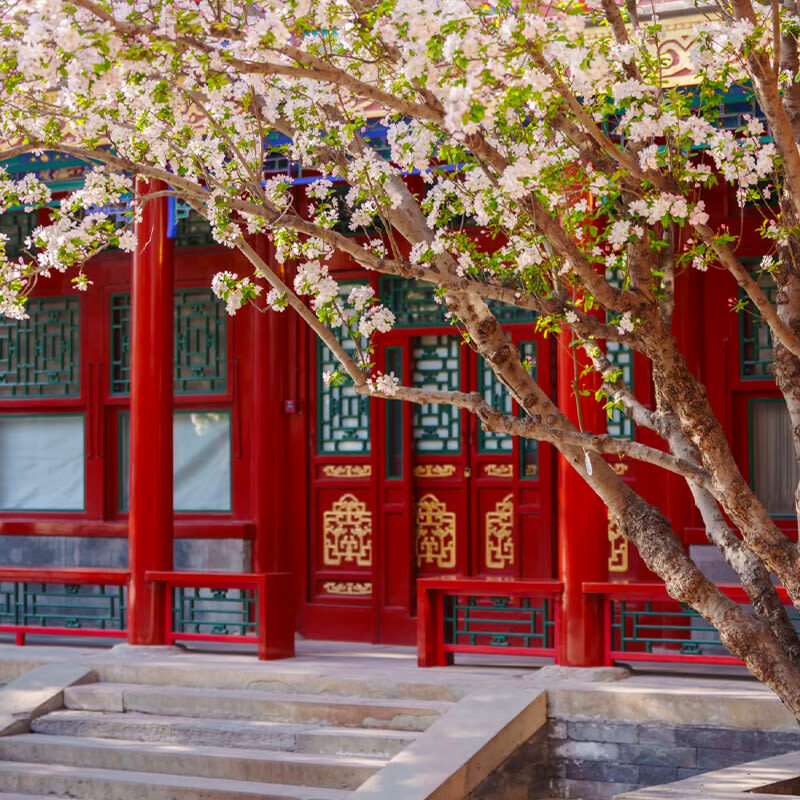
Duofu Pavilion, also known as the Wisteria Courtyard, has a more domestic role in the mansion’s story. During Prince Gong’s time, it was used mainly for receiving guests in daily life. Its name plaque was written by Emperor Xianfeng, a detail that links the building to the highest level of the imperial court.
The pavilion’s setting gives the route a change of pace from the large halls. This is a good place to pay attention to how garden space and architecture work together. The name Wisteria Courtyard points to a plant feature, though the tour information does not promise what will be in bloom on your visit.
The route continues to Baoguang Chamber, Ledaotang, Jialetang, and Xijin Study before reaching the rear building. These names mark a series of spaces with different functions and status. Your guide’s explanation is most valuable here: a room-by-room walk can otherwise blur into a succession of similar-looking structures.
You can also read our reviews of more tours and experiences in Beijing.


Garden landmarks, rockeries, and the Fu Character Stele
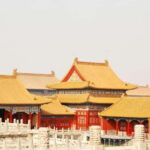
After the halls and study, the suggested route shifts to the western mansions, Dule Peak, Bat Pond, the Grand Theater, the Fu Character Stele, Pingbuqingyun Road, and Yaoyue Platform. This garden section broadens the visit beyond formal rooms and gives you a chance to see how the estate’s outdoor spaces were arranged.
Dule Peak and Bat Pond are distinctive features, and their names make good prompts to ask your guide about symbolism and design. The route also includes a Grand Theater, a reminder that entertainment and performance had a place within elite household life. The details supplied for the tour do not specify performances, so treat the theater as a historic site rather than a show.
The Fu Character Stele is another major stop. The character fu is associated with good fortune, which helps explain why the stele is a memorable feature of the mansion. Ask your guide about its significance and placement; this is the sort of detail that can turn a quick photograph stop into a more meaningful part of the visit.
Pingbuqingyun Road and Yaoyue Platform complete the garden portion. Together with the rockeries and pond, they show the contrast between the mansion’s formal architecture and its designed outdoor spaces. The estate combines features associated with Jiangnan gardens and northern landscaping, so you are seeing more than one regional sensibility within the same compound.
The route is a substantial walk through rooms and gardens, although the supplied information does not give a distance or a step count. Wear comfortable shoes and keep your pace flexible. If the guide’s explanation finishes before you have had enough time to look around, you can continue visiting the attraction on your own.
What the guide and headset add
This tour is built around explanation rather than transport or extra activities. Admission and a Chinese-speaking guide are included in the Chinese group options, and the wireless headset helps you hear the guide while moving through the compound. That matters in a large historic site, where a group may not all be able to stand close to the speaker.
The strongest element of the tour is the guide’s storytelling. Guides named Li, Xiao Tian, and Liu have been singled out for clear, engaging explanations, patience, and attention to the group. Those names are useful reference points, but they are not a promise that any one of them will lead your departure.
The guided portion is advertised as 2.5 hours. In practice, one participant found the explanation lasted about two hours. That difference need not be a problem if you have a flexible day, but do not plan your next activity on the assumption that the tour will use every minute of the advertised duration.
The format is described as a pure-play visit, with no shopping stops or forced purchases. I value that for a historical attraction: your time stays focused on the mansion, and the listed exclusions are straightforward. Meals, beverages, hotel pickup and drop-off, tips, personal expenses, and private or other-language guide services are not part of the basic Chinese group price.
Choosing a group size and language
The Chinese group tour for up to 30 people is the least expensive option, with a listed price from US$13.49. A Chinese group of up to 20 starts at US$15.75. The experience summary gives a starting price of US$15.50, so treat the final amount as dependent on the package and booking details rather than assuming one fixed fare.
The 30-person group makes sense if price matters most and you are comfortable listening through a headset in a larger party. The 20-person option costs a little more but offers a smaller group, which may make it easier to keep track of the guide and ask questions. The information does not promise a different route or longer visit for the smaller group.
Private tours cost considerably more: the listed starting prices are US$99.59 for Chinese and US$135.55 for English. French, Spanish, Russian, and Korean private options are also offered, with listed morning sessions at 9:00 AM and prices that vary by language. Private guiding is the practical choice if you need a language other than Chinese or want a group arranged for your party, but the price jump is significant.
Check exactly what your selected package includes. The Chinese group options include a Chinese-speaking guide and admission. Other-language tours and private group services are not included in the basic package, so choose the corresponding option rather than expecting language support to be added on site.
Timing, meeting instructions, and useful planning
Departures are offered at 08:00 and 13:00. The return time depends on the selected departure and the itinerary, with listed return options of 12:00 or 16:00. The actual meeting time is confirmed after booking, and the guide may send updated meeting details. One past participant felt the meeting-point arrangement could be improved, so read the final instructions carefully and keep an eye out for any message about a change.
The tour ends at Prince Gong’s Mansion. Once the guided explanation is over, you can continue visiting the scenic area or leave on your own. That flexibility is useful if you want more time with the gardens, but meals and drinks are not included, so plan those separately.
No luggage delivery service is provided. The tour also does not include hotel pickup or drop-off, so you need to make your own way to the departure point. The activity information does not specify a particular transport method or a fixed meeting address beyond the departure details sent after booking.
Children aged 1 to 7 are listed as free. The information does not provide further child-specific details, so confirm the booking conditions for your party if you are travelling with young children. The schedule may change with traffic or weather, and the voucher is valid only for the date and time specified.


Is this the right Beijing tour for you?
I would book this if you want the mansion’s history explained in place and prefer an organized route through its halls and gardens. The guide-led format is particularly useful if you are interested in Qing court life, the stories of Heshen and Prince Gong, or the meaning behind features such as Duofu Pavilion and the Fu Character Stele.
The low-cost Chinese group tour offers good value if you understand Chinese and are happy to share the guide with a group. Pay a little more for the 20-person group if a smaller party appeals to you. If you need English or another listed language, expect a much higher private-tour price and compare that cost with your priorities.
Skip the guided option if you want to move at your own pace from the start, or if you are counting on a full 2.5 hours of explanation to the minute. The guided visit may finish sooner, though you can remain at the attraction afterward. For most visitors who want the stories behind the rooms as well as a look at the architecture, this is a sensible, focused way to see one of Beijing’s most notable princely residences.
One-day tour of Prince Gong’s Mansion in Beijing (2.5-hour detailed explanation upon entry + wireless headset)
“Attentive to people's needs, with clear and polite explanations.”
FAQ
How long does the guided tour last?
The explanation is advertised as 2.5 hours. A past participant reported a total itinerary of about two hours, so allow some flexibility.
What time can I choose to depart?
The listed departure choices are 08:00 and 13:00. Your confirmed meeting time is provided after booking.
What time does the tour return?
Listed return options are 12:00 and 16:00. The available return time depends on your selected departure and itinerary.
What is included in the Chinese group tour?
Admission to the attraction and a Chinese-speaking guide are included. The tour also uses a wireless headset.
Is the tour available in English?
Yes. An English private tour is listed, starting at US$135.55. English is not included in the basic Chinese group option.
What group sizes are available for Chinese tours?
Chinese group options are listed for groups of up to 30 and up to 20 people.
Are hotel pickup and meals included?
No. Hotel pickup and drop-off, meals, and beverages are not included.
Can I keep visiting Prince Gong’s Mansion after the guided explanation?
Yes. The tour ends at the mansion, and you can continue visiting the scenic area or leave on your own.
Are children aged 1 to 7 charged admission for this tour?
The tour information lists children aged 1 to 7 as free.
Can I cancel or change my booking?
A full refund is available if you cancel at least 24 hours before the activity date, in local destination time. Changes are generally allowed until one day before, with stated exceptions for some booking types.