Delhi makes more sense when you see its two sides in one day: the lanes and markets of Old Delhi, then the broad roads and grand buildings of New Delhi. This private tour links them, with a Chandni Chowk rickshaw ride and stops at major religious and historic sites.
I like the contrast between the close-up market ride and the spacious monument grounds. I also like that a guide can help you make sense of places as different as a Sikh community kitchen, a Mughal tomb and a British-era government quarter.
The main catch is the package choice. The lowest-priced option is guide only, not a car-and-tickets deal, and the schedule may have to drop sites because of weather, capacity or traffic. Check the inclusions before you book.
- Chandni Chowk by rickshaw: Ride through narrow market streets where a car cannot take you.
- Jama Masjid and Bangla Sahib: See two important places of worship from different faiths.
- A long list of landmarks: India Gate, the government buildings, Humayun’s Tomb, Lotus Temple and, optionally, Qutub Minar feature in the route.
- Pickup across the Delhi area: Pickup is offered in Delhi, Noida, Gurugram, Ghaziabad and Faridabad.
- Three price levels: Choose between a guide alone, a guide with air-conditioned transport, or a package with transport, guide and monument tickets.
- Plan around Mondays: Akshardham and the Lotus Temple are listed as closed that day.
- Old Delhi’s lanes set the pace
- Bangla Sahib offers a quieter pause
- India Gate and the grand government quarter
- Humayun’s Tomb and the choice of Qutub Minar
- Lotus Temple and Akshardham: check the day
- Lunch is yours to arrange
- The package price changes the value
- What the guide can add
- Who should book this Delhi day?
- FAQ
- How long is the tour?
- Where can pickup be arranged?
- Does the lowest-priced package include a car?
- Is lunch included?
- Are Akshardham and the Lotus Temple open every day?
- Is Qutub Minar guaranteed?
Old Delhi’s lanes set the pace
 1 / 9
 2 / 9
 3 / 9
 4 / 9
 5 / 9
 6 / 9
 7 / 9
 8 / 9
 9 / 9
The day starts with pickup at your chosen address. You can select a pickup time between 8 and 10 a.m., while the listed schedule runs from 8 a.m. to 4 p.m. The operator confirms your pickup time in advance. If you have a flight, train or fixed evening plan, leave some margin: Delhi traffic and weather can change the day’s timing.
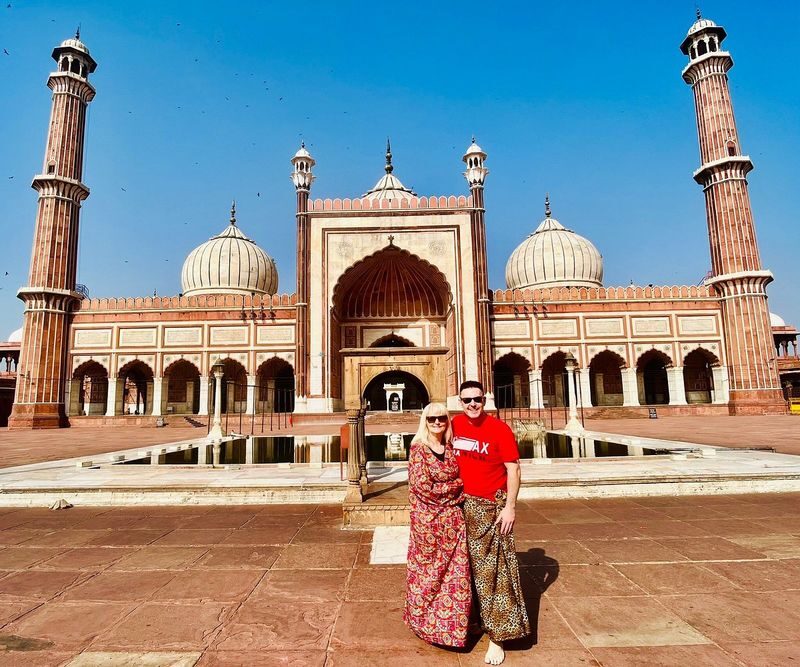
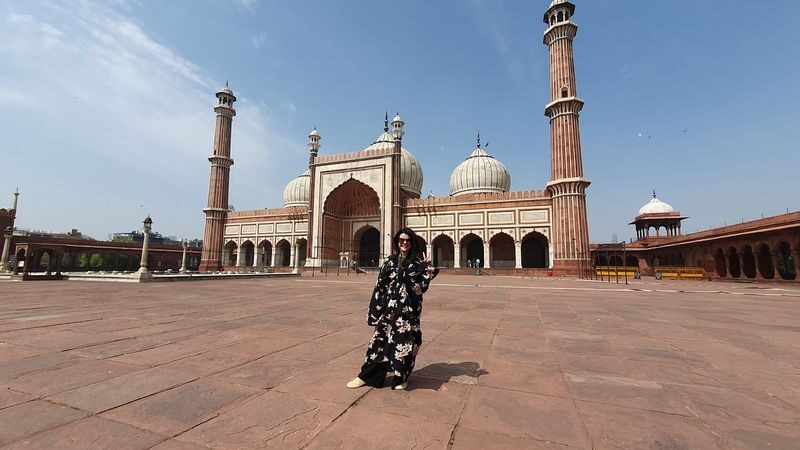
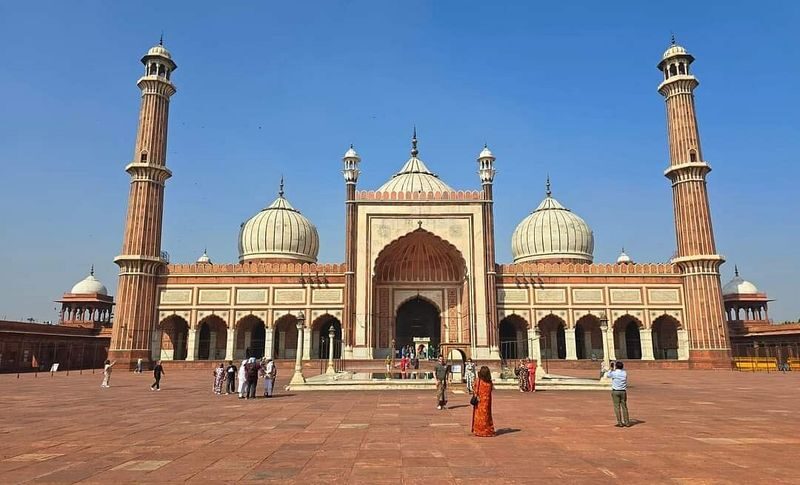
Jama Masjid is one of the most striking early stops. Built by Mughal emperor Shah Jahan, the large mosque can hold 25,000 worshippers. Its scale offers a good first lesson in how monumental architecture shaped Old Delhi. A guide can add context that helps you read the site as more than a grand backdrop.
The tour then shifts from monumental space to the crush of Chandni Chowk. The planned rickshaw ride takes you through busy markets and narrow streets, bringing you close to the color, movement and daily trade that define this part of the city. It is a memorable change of pace from riding between landmarks in a vehicle.
That contrast is one of the day’s best reasons to book. You get a taste of street life rather than only seeing Delhi through a car window. The trade-off is that the lanes can feel crowded and hectic. If you prefer a quiet, slow visit at each stop, the market portion may be less relaxing than the tombs and temples later on.
Bangla Sahib offers a quieter pause
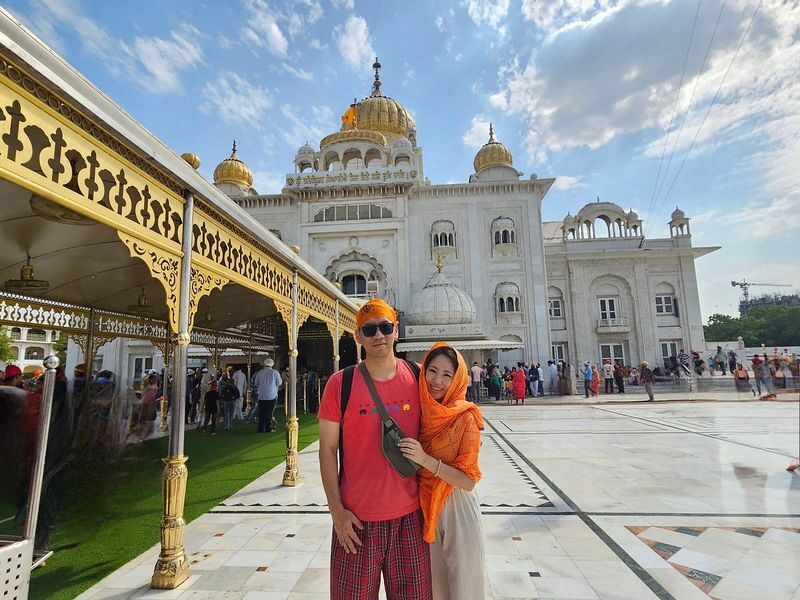
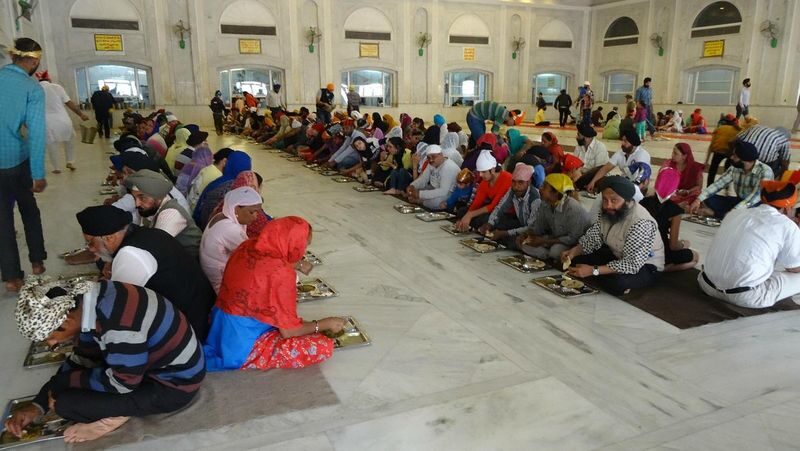
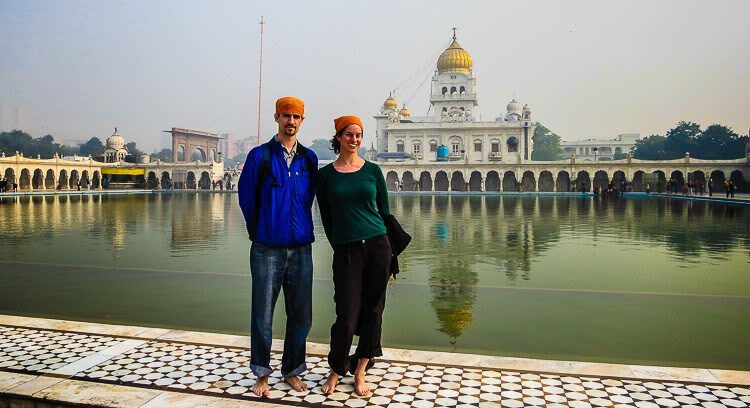
Gurudwara Bangla Sahib introduces you to Sikh worship and community life. The temple is known for its large community kitchen, a useful reminder that religious sites here are not only monuments. They are active places of service and gathering.
The day’s appeal lies partly in these shifts between faiths and settings. You may move from a mosque to a Sikh temple, then later to a Hindu temple and the Lotus Temple, a house of worship with a distinctive flower-shaped design. The guide is included in all package options, and the tour is described as having guided visits inside attractions.
For a day with several sacred sites, a guide can help you understand what you are seeing and how to approach each place. The practical details of entry and time at each stop are not fixed in the information provided, so follow your guide’s instructions on site and expect the pace to vary.
India Gate and the grand government quarter
The New Delhi portion shows a very different city. India Gate is a war memorial to 70,000 soldiers, and the tour also drives past Parliament House and the Presidential Palace. These government buildings are viewed from the vehicle rather than described as interior visits.
That drive-by is still worthwhile if you want to understand the city’s planned, monumental scale. After the close streets of Old Delhi, the broad avenues and formal government architecture make the contrast plain. But set expectations correctly: this is not a long architectural tour of the buildings, and the route may pass them as part of the drive between stops.
India Gate gives you a more direct stop at a major memorial. The government buildings provide a quick visual sweep of New Delhi’s public face. Together, they make a useful counterpoint to the older quarters, even if you would need a separate visit for a more detailed look at the government complex.
Humayun’s Tomb and the choice of Qutub Minar
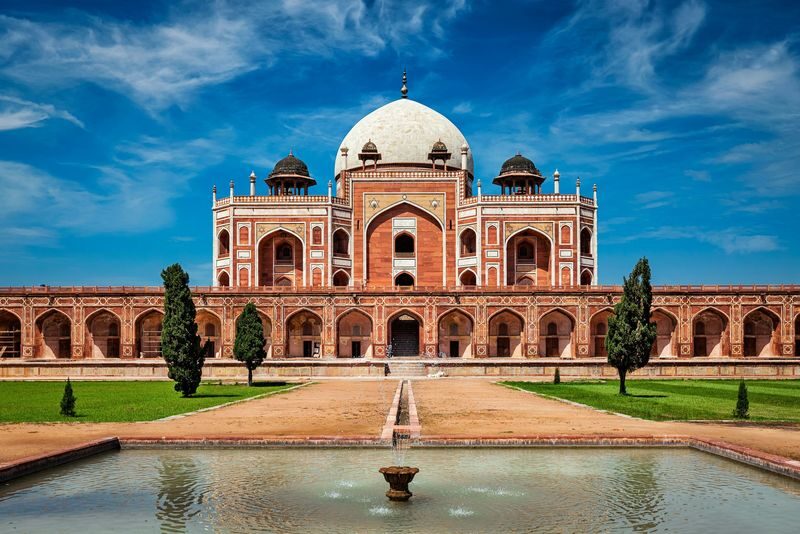
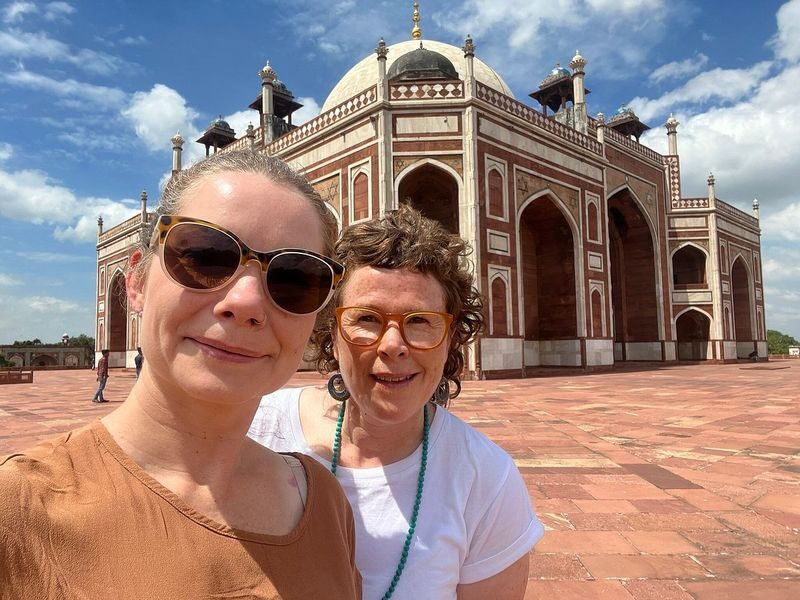
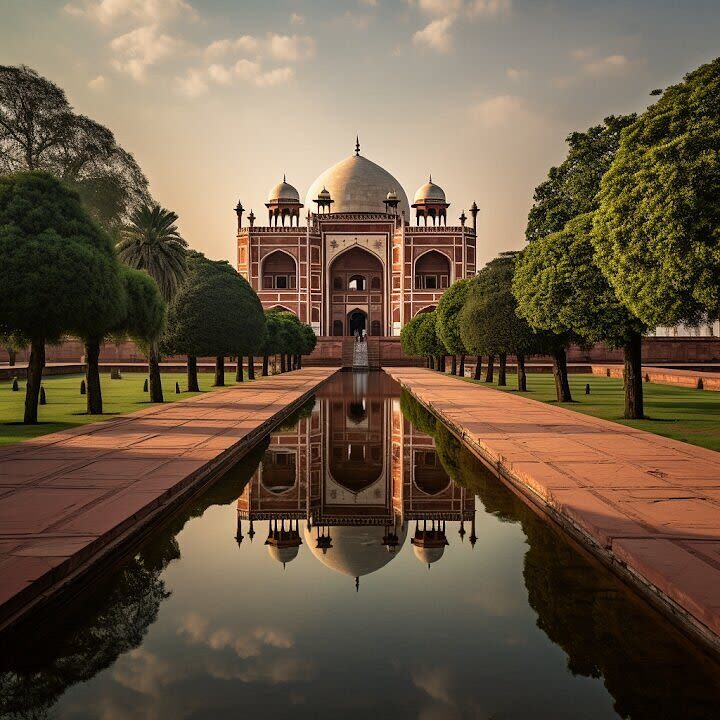
Humayun’s Tomb is a major highlight for anyone interested in Mughal architecture. The garden tomb is a UNESCO site and is described as the first of its kind in India. Its landscaped setting offers a calmer contrast to the city streets, while the tomb itself gives you a chance to look closely at the symmetry and design that make the site so memorable.
Qutub Minar is listed as optional. The tall brick tower is another UNESCO site, and it is a strong alternative or addition if you are drawn to monumental architecture. The precise plan matters: the tour description refers to exploring Humayun’s Tomb or Qutub Minar, while the highlights also list Qutub as optional. Do not assume both are guaranteed on every departure.
This is where a private format can be useful. You can ask your guide about the day’s route and priorities, and the group does not have to follow a large bus schedule. Still, private does not mean every stop is assured. The itinerary notes that attractions may be skipped because of capacity or weather, and traffic can also affect how much time remains.
Lotus Temple and Akshardham: check the day
The Lotus Temple is known for its flower-shaped design and is a notable stop for its striking modern form. It is also listed as closed on Mondays, so Monday departures should not count on entering. The tour’s description presents it as a place to visit, but the actual route depends on opening days and the day’s schedule.
Akshardham Temple is another grand religious site, built in 2005, and is also closed on Mondays. If either temple is high on your list, choose a day when it is open and confirm the planned stops with the operator. With a packed full-day route, there is little point in assuming a closed site can simply be swapped for another.
These newer places round out the day’s range. Delhi is not just a sequence of Mughal landmarks: the tour also takes in Sikh and Hindu worship, a modern temple and the city’s government architecture. That breadth is valuable for first-time visitors, though it means you will get a survey rather than a slow, specialist visit to each site.
Lunch is yours to arrange
Lunch is not included. The day has a lunch stop, and the tour information suggests trying North Indian or Mughlai food, but the meal cost is your responsibility. That gives you some choice, but it also means the final bill will be higher than the tour price.
One recent route included a lunch stop, and the range of food was part of the day’s appeal. Treat that as a useful possibility, not a promise of a particular restaurant or menu. If you have dietary needs, ask in advance what options can be arranged, since no specific meal details are given.
The package price changes the value
The listed starting price is low, but it does not describe every version of the tour. The package details provided for the least expensive option say only private tour guide. Separate choices are listed at $60 for transport with a guide, and $75.75 for transport, a guide and monument tickets. The displayed starting figure is $3.89, while the guide-only option is also listed from $3.39, so check the price shown for your date and selected package.
This distinction matters more than the headline price. With the guide-only package, you should not assume a vehicle, entry tickets or lunch are covered. The pickup and return language describes the overall tour, but the specific package inclusions say only a guide. Confirm how you will travel between sites before paying, especially if you expect hotel pickup and a private car.
The transport-and-guide option is likely the simpler choice for a full day across a large city. The all-inclusive option costs more but includes monument tickets, which can make budgeting easier. Compare the total price for your party rather than treating the cheapest price as the cost of the complete experience.
Children aged 0 to 4 are listed as free. No other child pricing details are provided, so check the applicable option if you are booking for older children.
What the guide can add
The guide is the thread that ties the varied stops together. Recent tours have been led by guides including Faez, Shanu, Imran and Sahil. Their strengths described in the available tour information include explaining monument history, sharing cultural context, recommending a suitable route and allowing time to enjoy sites. One guide, Faez, was also praised for finding good photo viewpoints.
Those names are examples, not a guarantee of who will lead your departure. The useful takeaway is that a good guide can make a tightly packed route more meaningful. Shanu, for instance, was associated with a well-paced itinerary and context about Indian culture, while Imran was noted for giving time at the stops. Ask questions and tell your guide which places matter most to you.
A driver is part of the transport versions, and recent experiences described careful driving and a comfortable, clean vehicle. Again, those details apply to tours that included transport, not the guide-only package. Choose accordingly if comfort between sites is important to you.
Who should book this Delhi day?
I would consider this tour if you have one day in Delhi and want a guided overview rather than arranging every transfer and visit yourself. It suits first-time visitors, people keen on architecture and history, and anyone who wants to combine the city’s markets, religious sites and major monuments in one outing.
It is less suited to someone who wants to linger for hours at one or two sites. Eight hours is a lot of ground to cover, and traffic, weather, closures and capacity can all shape the schedule. Treat the route as a framework, not a promise to spend equal time at every landmark.
Before booking, check three things: which package you are selecting, whether your preferred temples are open on the day, and whether the guide will include the sites you most want to see. If you want a car and tickets, choose the matching package rather than the lowest-priced guide-only option. With those details clear, this is a practical way to get a first look at Delhi’s many layers in a single day.
New and Old Delhi Private Full Day City Tour
“Faez has been very professional and knowledgable on the background and history behind the monuments we visited. He is also a good photographer who…”
FAQ
How long is the tour?
The tour lasts eight hours. The listed schedule is 8 a.m. to 4 p.m., though pickup can be selected between 8 and 10 a.m., and traffic or weather may change the timing.
Where can pickup be arranged?
Pickup is offered in New Delhi and the Delhi districts listed, as well as Noida, Gurugram, Ghaziabad and Faridabad. The operator will reconfirm your pickup time.
Does the lowest-priced package include a car?
No. The package details for the lowest-priced option say it includes only a private tour guide. Separate options are listed for transport with a guide, and for transport, a guide and monument tickets.
Is lunch included?
No. Lunch is not included. A lunch stop is part of the day, and North Indian and Mughlai cuisine are suggested.
Are Akshardham and the Lotus Temple open every day?
Both are listed as closed on Mondays. If either is important to you, plan for another day of the week.
Is Qutub Minar guaranteed?
No. Qutub Minar is listed as optional, and the route may change because of capacity or weather. The description also says that some attractions may need to be skipped.