Have you ever wanted to learn the art of making traditional Japanese onigiri, or rice balls? Now’s your chance. Join this exciting cooking class in Tokyo and master the techniques under the guidance of an expert. You’ll craft delicious rice treats, explore flavor combinations, and enjoy a shared meal – all while immersed in the vibrant culinary culture of the city. It’s an experience that’ll leave you with newfound skills and a deeper appreciation for Japanese cuisine.
- Good To Know
- Onigiri Cooking Class Overview
- Preparing the Onigiri
- Filling the Onigiri
- Shaping the Onigiri
- Accompaniments: Tamagoyaki and Pickled Vegetables
- Miso Soup Preparation
- Enjoying the Homemade Meal
- Wrapping Up the Experience
- Frequently Asked Questions
- What Is the Dress Code for the Onigiri Cooking Class?
- Can Participants Bring Their Own Recipes for the Onigiri?
- Is Transportation Provided to the Meeting Point?
- Can the Onigiri Fillings Be Customized?
- Are There Any Dietary Restrictions Accommodated?
- The Sum Up
- The Best Of Tokyo!
- More Tour Reviews in Tokyo
- Not for you? Here's more nearby things to do in Tokyo we have reviewed
Good To Know
- Participate in a 3-hour onigiri cooking class held in Tokyo with an English-speaking instructor and a maximum of 6 participants.
- Learn techniques for shaping onigiri into triangular, circular, and cylindrical forms, and how to avoid compacting the rice.
- Craft unique onigiri with flavorful fillings like pickled plum and bonito flakes, and receive instructor feedback.
- Prepare tamagoyaki (Japanese rolled omelette) and pickled vegetables to accompany the homemade onigiri.
- Sit down to savor the complete meal, with the flavors of the onigiri, tamagoyaki, and pickled vegetables complementing each other.

👉 See our pick of the 25 Best Guided Tours In Tokyo
Onigiri Cooking Class Overview
The Onigiri Cooking Class offers participants the opportunity to learn the art of creating traditional Japanese rice balls.
Held in Tokyo, the 3-hour class has a maximum of 6 travelers. Priced at $67.18 per person, it includes an apron, chef’s hat, and all necessary cooking ingredients.
An English-speaking instructor guides guests through the process of making onigiri, as well as tamagoyaki and miso soup. The class concludes with a delicious homemade lunch.
While the experience isn’t wheelchair accessible, it’s suitable for travelers aged 9 and above with a minimum height of 130 cm. Casual clothing and comfortable shoes are recommended.
You can also read our reviews of more tours and experiences in Tokyo.

Preparing the Onigiri
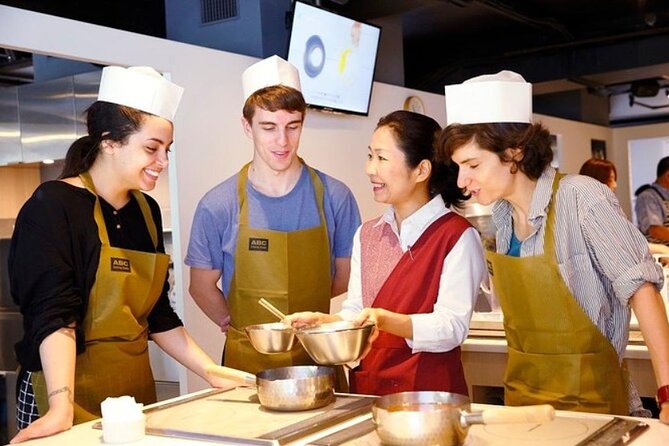
Participants begin the Onigiri Cooking Class by learning the proper techniques for shaping and molding the rice balls.
The instructor demonstrates how to shape the rice into triangular, circular, and cylindrical forms. They’re taught to wet their hands and work the rice gently to avoid compacting it too tightly.
Next, they carefully stuff the rice with the flavorful fillings – pickled plum and bonito flakes. Participants take turns crafting their own unique onigiri, guided by the instructor’s feedback.
The perfectly formed rice balls are then arranged on plates, ready to be savored during the included lunch.
Filling the Onigiri
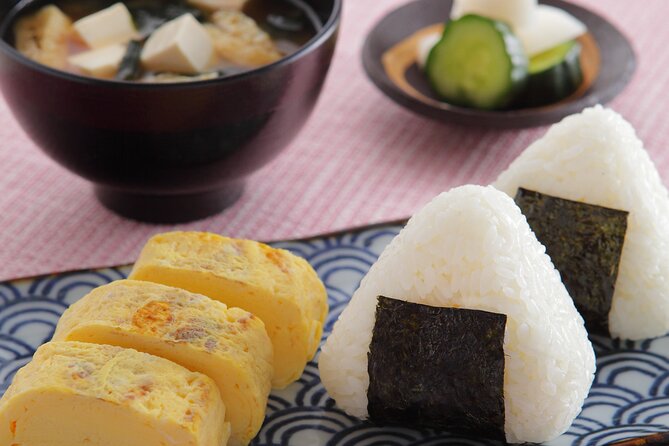
After shaping the rice into the desired forms, participants set about filling the onigiri with the flavorful fillings.
The instructor demonstrated how to properly portion and place the fillings, such as the tangy pickled plum and savory bonito flakes, into the center of the rice balls.
With focus and care, the travelers followed along, ensuring the fillings were neatly tucked inside without spilling out.
The aroma of the fillings mingling with the warm, comforting rice filled the air, whetting appetites and heightening anticipation for the final product.
Shaping the Onigiri
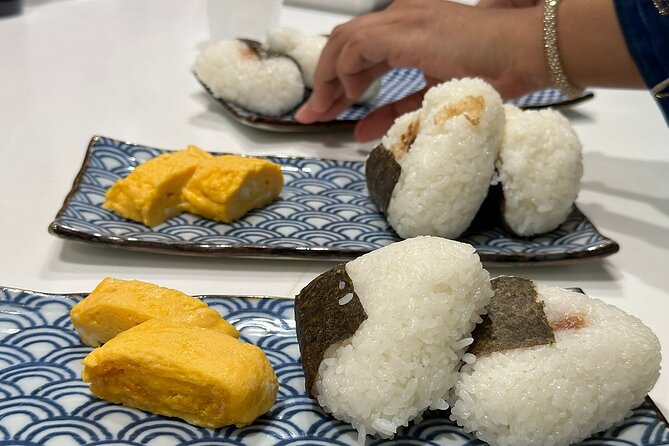
With the fillings properly portioned, the travelers now turned their attention to shaping the onigiri.
Grabbing a handful of cooked rice, they gently molded it into a triangular or round shape. Using a bit of water on their palms, they smoothed the surface, creating a uniform texture.
Placing the desired filling in the center, they carefully wrapped the rice around it, sealing the edges to prevent leakage. The instructors provided guidance, ensuring each traveler’s onigiri took on the traditional aesthetic.
Soon, a plate of beautifully crafted rice balls sat before them, ready to be savored.
Accompaniments: Tamagoyaki and Pickled Vegetables
As the travelers completed their onigiri, the instructors turned their attention to preparing the accompanying dishes.
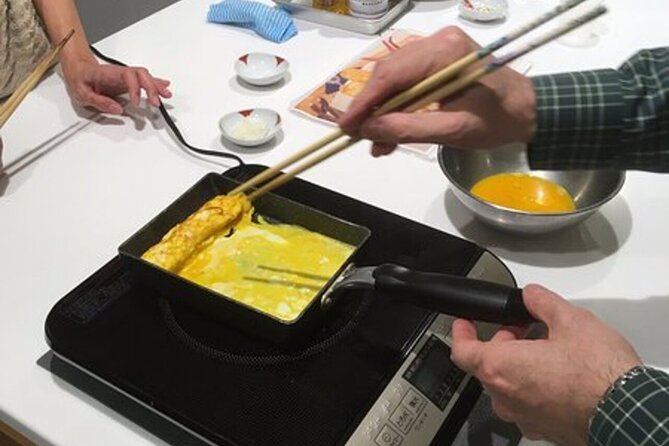
First, they demonstrated how to make tamagoyaki, the Japanese-style rolled omelette. Using a special square pan, they carefully layered thin sheets of seasoned egg, rolling them up into a sweet, savory log.
Alongside the tamagoyaki, the instructors prepared a selection of pickled vegetables – daikon radish, carrots, and cucumbers. These colorful, crunchy bites provided a refreshing contrast to the warm, sticky rice balls.
The travelers eagerly watched, learning new techniques to elevate their homemade onigiri experience.



Miso Soup Preparation
The instructors now turned their attention to the final component of the meal – miso soup. They explained the simplicity of the classic Japanese broth:
- Bring water to a boil in a small pot
- Add miso paste, stirring gently to dissolve
- Toss in sliced green onions and cubes of soft tofu
- Simmer for 2-3 minutes, careful not to boil the soup after adding the miso
- Ladle the savory, umami-rich broth into individual bowls, garnished with a sprinkle of sesame seeds
The miso soup’s earthy flavors would perfectly complement the flavorful onigiri rice balls and tangy accompaniments.
Enjoying the Homemade Meal
Now that the miso soup’s earthy flavors had been expertly prepared, it was time for the participants to sit down and savor the homemade meal they’d created.
With the onigiri rice balls, tamagoyaki, and pickled vegetables laid out before them, the group eagerly dug in.
The salty-sweet fillings of the onigiri and the rich, savory egg omelet complemented each other perfectly.
The pickled veggies provided a refreshing contrast, cleansing the palate between bites.
As they ate, the participants shared stories and exchanged cooking tips, bonding over their shared experience of mastering traditional Japanese cuisine.
Wrapping Up the Experience
After the satisfying meal, it was time for the participants to wrap up their onigiri cooking experience. They:
Removed their aprons and chef’s hats, neatly folding them away.
Cleaned their workstations, ensuring the area was spotless.
Gathered their handmade onigiri, tamagoyaki, and pickled veggies, carefully packing them for the trip home.
Expressed gratitude to the instructor for the engaging lesson and delicious cuisine.
Departed the studio, brimming with a newfound appreciation for the art of traditional Japanese cooking.
The class had provided a memorable hands-on experience, leaving the participants eager to recreate the tasty onigiri in their own kitchens.
Frequently Asked Questions
What Is the Dress Code for the Onigiri Cooking Class?
The dress code for the Onigiri Cooking Class is casual clothing and comfortable shoes. The organizers recommend this attire as it’s suitable for the hands-on cooking activities during the class.
Can Participants Bring Their Own Recipes for the Onigiri?
No, participants cannot bring their own recipes for the onigiri. The class follows a set menu and ingredients provided by the cooking studio. Participants will learn to make the traditional onigiri fillings of pickled plum and bonito flakes.
Is Transportation Provided to the Meeting Point?
Yes, the activity includes transportation back to the meeting point after the cooking class. The package covers all necessary transportation, so participants don’t need to arrange their own travel to the studio location.
Can the Onigiri Fillings Be Customized?
The onigiri fillings cannot be customized as the menu is set. The class provides the traditional fillings of pickled plum and bonito flakes. Participants will learn to make the onigiri rice balls with these standard ingredients during the cooking session.
Are There Any Dietary Restrictions Accommodated?
The cooking class accommodates dietary restrictions. Travelers can inform the English-speaking instructor about any allergies or dietary needs, and the class will provide alternative ingredients to ensure a safe and enjoyable cooking experience for all participants.
The Sum Up
Participants will leave the class with a newfound appreciation for the art of onigiri-making. They’ll have mastered the techniques to craft these delightful rice balls and enjoyed a shared meal filled with homemade Japanese delicacies. The experience offers a delicious and enriching way to take in the culinary traditions of Tokyo.