If you’re visiting Kyoto and want to see its spiritual side beyond the usual sightseeing spots, this guided walking tour of Tofuku-ji Temple and Komyo-in offers an authentic peek into Zen traditions and garden artistry. While it’s not a quick glance, the experience is thoughtfully curated to balance historical insights with peaceful, visually striking environments.
What makes this tour stand out? First, we love the chance to walk beneath Japan’s oldest surviving Zen main gate, the Sanmon. Next, the garden designs by Mirei Shigemori are a highlight, blending traditional symbolism with bold, modern aesthetics. Lastly, crossing the Tsutenkyo Bridge over a forested ravine turns into a visual feast—especially during the seasons, with autumn’s crimson leaves or spring’s lush greens.
However, it’s worth noting that the tour involves quite a bit of walking, which might be tiring for some. It’s best suited for those comfortable on their feet, eager to learn about Zen garden philosophy and enjoy stunning scenery. If you’re seeking a quiet, contemplative experience that goes beyond typical temple visits, this walk is well worth the price of $71.
- Good To Know
- A Deep Dive into the Tour Experience
- Starting at the Sanmon Gate
- Exploring the Hojo Gardens
- Crossing Tsutenkyo Bridge
- The Hidden Treasure: Komyo-in and Hashin-tei Garden
- Philosophical Insights and Practical Tips
- Value and Practical Considerations
- Who Should Consider This Tour?
- Notable for:
- Summary and Final Thoughts
- FAQ
- The Best Of Kyoto!
- More Walking Tours in Kyoto
- More Tours in Kyoto
- More Tour Reviews in Kyoto
- Not for you? Here's more nearby things to do in Kyoto we have reviewed
Good To Know
- Authentic Zen Experience: A guided tour focused on the spiritual and artistic elements of Tofuku-ji and Komyo-in.
- Historic Architecture: See Japan’s oldest Zen main gate and learn its significance.
- Impressive Gardens: Mirei Shigemori’s bold garden designs emphasize abstraction, silence, and space.
- Beautiful Scenic Crossings: The Tsutenkyo Bridge offers picturesque views, especially in different seasons.
- Hidden Gem: Komyo-in remains under-visited, providing a quiet space for reflection.
- Expert Guidance: Insights into Zen philosophy and garden design deepen your appreciation of the sites.

👉 See our pick of the 25 Best Workshops And Classes In Kyoto
A Deep Dive into the Tour Experience
You can also read our reviews of more walking tours in Kyoto



Starting at the Sanmon Gate
The journey begins at the Kusaka Gate (Kusakamon) of Tofuku-ji Temple, where your guide, holding a yellow “DeepExperience” sign, welcomes you. Standing beneath the Sanmon Gate, which is Japan’s oldest surviving Zen main gate, you immediately sense the historical weight of this entrance. Built in the 16th century, the gate itself is a piece of living history, offering a sense of continuity through centuries of Zen practice. The guide will share insights into its architecture and symbolism, helping you understand its role as the threshold into a space of calm and reflection.
Reviewers often mention how this gate feels more than just an entry—it’s a portal into a different mindset, which sets the tone for the entire experience. One noted, “Standing beneath the Sanmon, I could feel the centuries of meditation and devotion that have taken place here.”
Exploring the Hojo Gardens
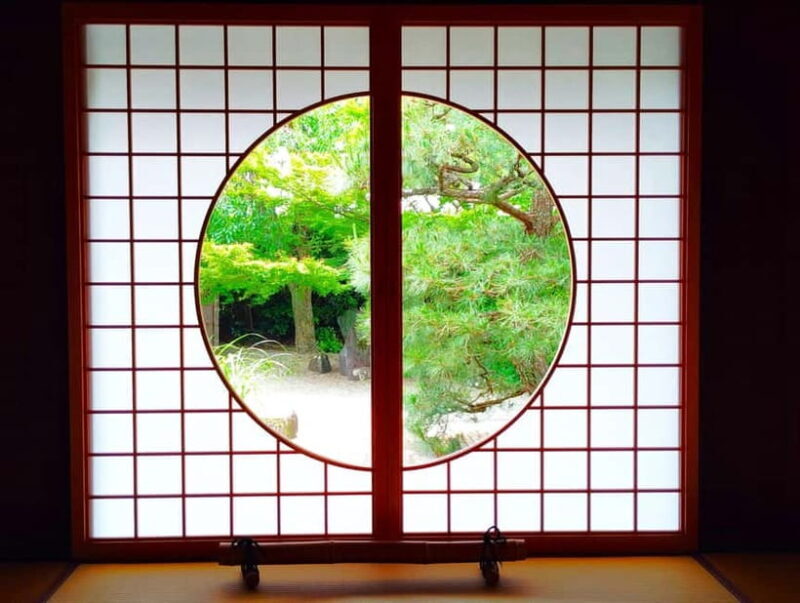
Next, you move into the Hojo gardens, designed by the legendary landscape architect Mirei Shigemori. These gardens are a masterclass in blending tradition with bold modernity. We loved the way Shigemori’s geometric dry landscape gardens around the abbot’s quarters use stones, gravel, and moss to create abstract representations of nature rather than literal scenes.
Each of the four gardens has its own character, designed to evoke meditation and introspection. These spaces aren’t meant for casual strolling—they’re designed to distill the essence of natural landscapes into minimalist, symbolic forms. As one reviewer pointed out, “The gardens are meditative with their simplicity, yet each one offers a different mood and reflection point.”
Crossing Tsutenkyo Bridge
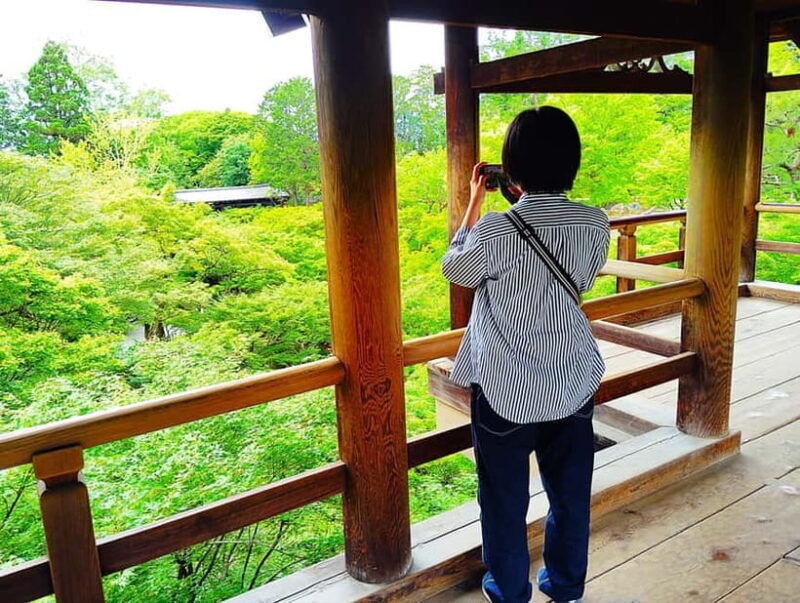
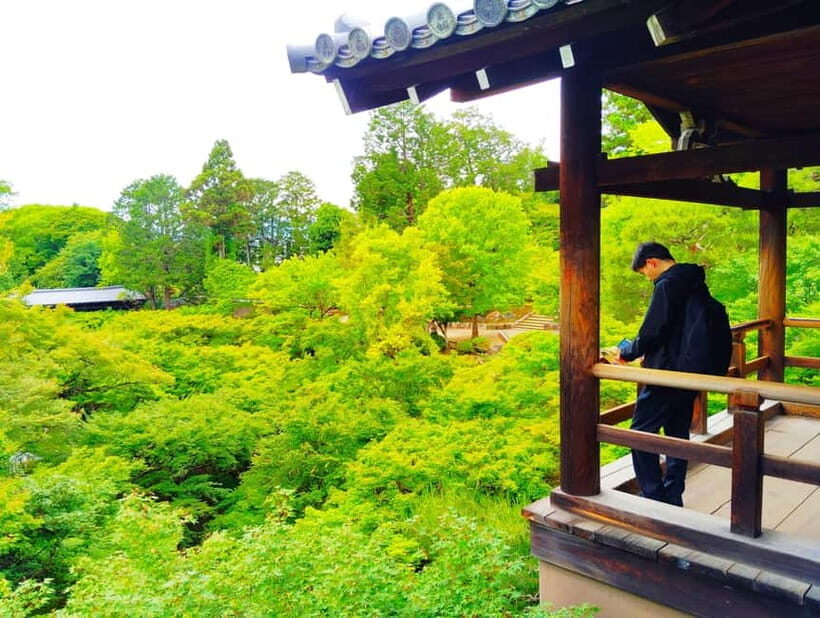
The Tsutenkyo Bridge is a highlight, offering an elevated wooden corridor that curves gracefully over a forested ravine. It’s a perfect spot to pause and take in the lush surroundings. You’ll appreciate how the architecture and landscape blend seamlessly—this isn’t just a bridge, but a living painting that shifts with the seasons.
During autumn, the bridge is framed by fiery maples, while in spring, soft greens dominate. Early mornings might find mists rolling over the ravine, adding a mysterious, calming quality to the view. Reviewers have noted that “the bridge makes you feel like you’re walking through a living, breathing art piece.”
More Great Tours NearbyThe Hidden Treasure: Komyo-in and Hashin-tei Garden
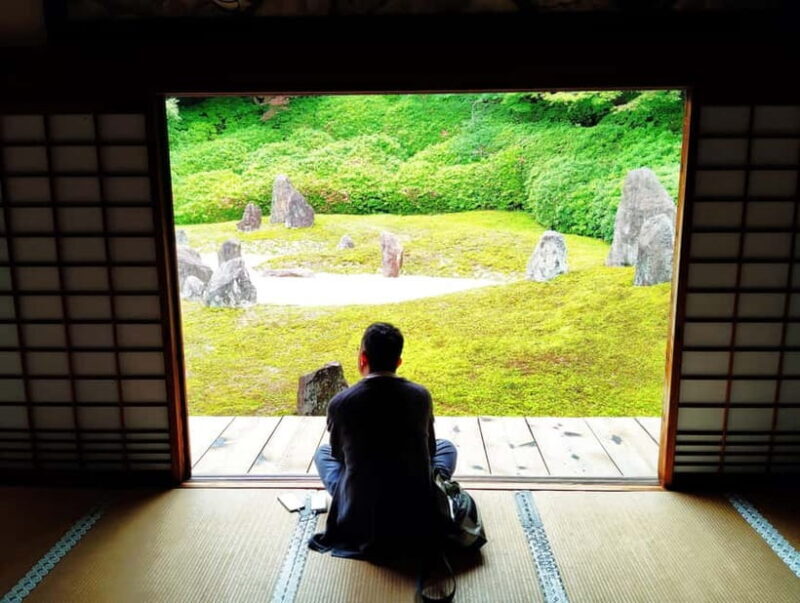
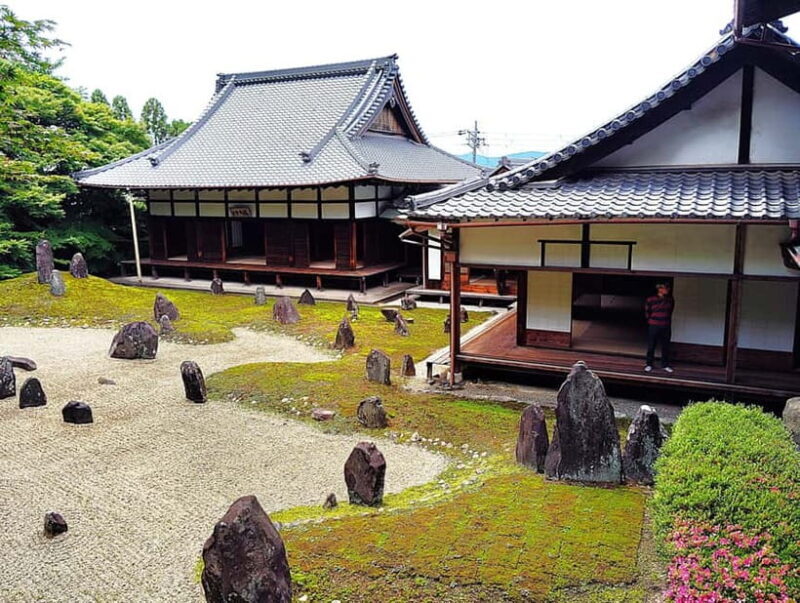
After crossing the bridge, you arrive at Komyo-in, a relatively quiet and rarely crowded sub-temple. It’s often overlooked by travelers, which makes it feel like a genuine hidden gem. Here, the Hashin-tei Garden — also designed by Shigemori — offers an intimate, contemplative space.
The garden’s asymmetrical stones sit amidst moss and raked gravel, resembling islands in a still sea. It’s a place that encourages quiet reflection and inward focus. One guest remarked, “It’s the kind of garden that makes you want to sit quietly for hours, just soaking in the tranquility.”
You can also read our reviews of more guided tours in Kyoto





Philosophical Insights and Practical Tips
Throughout the tour, your guide will share fascinating insights into Zen philosophy and how the gardens embody principles of impermanence, balance, and space. Expect to hear stories about how Shigemori’s designs go beyond aesthetics—they’re intended as spaces of meditation and spiritual insight.
The tour lasts approximately 2 to 2.5 hours, covering a good amount of walking and standing. Comfortable shoes are strongly recommended, along with water and weather-appropriate clothing. Photography is permitted but should be respectful—touching plants or disturbing the serenity is discouraged.
Value and Practical Considerations
For $71, this guided walk offers a thoughtful, immersive experience that combines history, art, and spirituality. The price is reasonable considering the depth of insights provided and the access to spaces that are not typically crowded. The small group setting (often limited and intimate) enhances the experience, allowing for personalized attention and meaningful engagement.
Since transportation to the meeting point isn’t included, plan to arrive a few minutes early at the Kusaka Gate. The tour ends back at the same spot, making it easy to continue exploring the surrounding areas or head to nearby attractions.
Who Should Consider This Tour?
It’s perfect for travelers interested in Japanese culture, Zen Buddhism, and landscape architecture. It suits those who appreciate quiet, contemplative environments and enjoy learning about the meaning behind natural forms. If you’re physically able to handle a fair amount of walking, this tour will be both enriching and visually stunning.
Notable for:
- A focus on garden design philosophy
- Access to less touristy, peaceful spaces
- Expert guides with insightful commentary
- Stunning seasonal views, especially in spring and autumn
Summary and Final Thoughts
This Kyoto walking tour of Tofuku-ji and Komyo-in offers a rare opportunity to experience Zen gardens in their thoughtful, artistic essence. It’s a journey that rewards patience, curiosity, and a keen eye for detail. You’ll leave with a deeper appreciation for how landscape design can serve as a form of meditation and artistic expression.
The tour’s strength lies in its combination of historical architecture, breathtaking scenery, and philosophical insights. It’s a peaceful escape from busy city streets, perfect for those eager to understand Japanese culture beyond the surface.
While the walking might be demanding for some, the serenity and beauty of the gardens make it worthwhile. Overall, it’s a meaningful experience—one that stays with you long after you leave the quiet grounds of Tofuku-ji and Komyo-in.
FAQ
Is transportation to the meeting point included?
No, transportation isn’t included, so plan to arrive at Kusaka Gate on your own. The meeting point is easy to find with the guide holding a yellow sign.
What should I wear for the tour?
Comfortable shoes are a must since there’s a good amount of walking. Weather-appropriate clothing and a water bottle are also recommended.
Can I take photos during the tour?
Yes, photography is permitted. Just be mindful not to touch the plants or disturb the peaceful environment.
How long does the tour last?
The tour runs about 2 to 2.5 hours, covering the main sites and walking between them.
Is the tour suitable for children or those with mobility issues?
It’s best suited for those capable of walking comfortably on gardens and temple grounds. People with mobility challenges might find the terrain difficult.
What makes the gardens special?
The gardens by Mirei Shigemori blend traditional symbolism with modern geometric design, creating spaces that are both meditative and visually striking.
Do I need to reserve in advance?
Yes, reservations are recommended, especially during peak seasons. You can cancel up to 24 hours in advance for a full refund.
What is included in the price?
The guided walk and expert insights into Zen philosophy and garden design.
Is this experience available in multiple languages?
Yes, the tour is offered in both English and Japanese.
To sum it up, if you’re after a peaceful, culturally rich experience that highlights Kyoto’s Zen garden artistry, this tour offers excellent value. It’s ideal for travelers who love thoughtful scenery, historical architecture, and quiet moments of reflection. Whether you’re a seasoned Japanophile or simply curious about Zen practices, this walk provides a meaningful window into Japan’s spiritual and aesthetic traditions.
You can check availability for your dates here: More Great Tours Nearby