As the world becomes captivated by the latest crime drama series, a coincidental discovery reveals a forgotten chapter in the chilling tale of Jack the Ripper.
While the spotlight has always been on the infamous serial killer, the untold story of the women who fell victim to his brutal crimes often gets overshadowed. Who were these women? What were their lives like? And what impact did their deaths have on the community of East London?
In this article, we will uncover the forgotten voices and shed light on the tragic fate of Jack the Ripper’s victims. Prepare to be captivated as we journey through the dark streets of Victorian-era London, exploring the lives and struggles of these forgotten women.
- Good To Know
- Victims of Jack the Ripper
- Historical Context of Victorian London
- The Murders and the Investigation
- The Lives of the Women
- The Impact on East London
- Remembering the Victims
- Common Questions
- How Many Victims Did Jack the Ripper Have?
- What Was the Motive Behind the Murders?
- Were Any of the Victims Ever Identified?
- What Measures Were Taken by the Authorities to Catch Jack the Ripper?
- How Did the Murders Impact the Perception of East London During That Time Period?
- The Sum Up
- The Best Of London!
- More Tour Reviews in London
- Not for you? Here's more nearby things to do in London we have reviewed
Good To Know
- The victims of Jack the Ripper were vulnerable women who worked as prostitutes.
- The social conditions in East London during that time, such as poverty and inequality, contributed to the vulnerability of these women.
- The police investigation into the murders faced significant challenges and ultimately failed to identify the true identity of Jack the Ripper.
- Remembering the victims and raising awareness about historical violence against women is important in honoring their memory and recognizing their humanity.

👉 See our pick of the 25 Best Workshops And Classes In London
Victims of Jack the Ripper
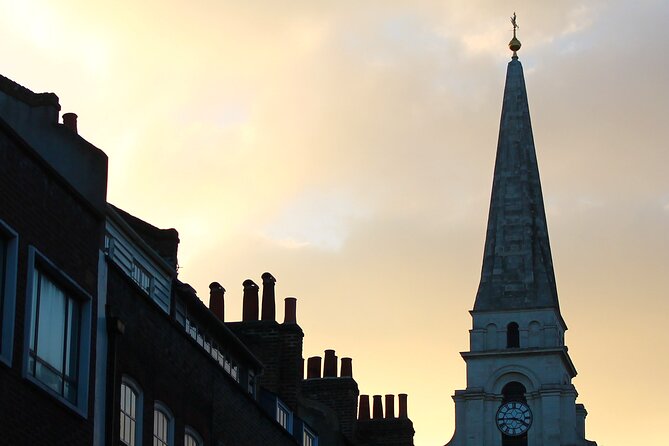
The victims of Jack the Ripper were a group of women whose lives were tragically cut short in the streets of East London. Their murders are still considered one of the greatest unsolved mysteries in criminal history.
Jack the Ripper, one of the most infamous serial killers of all time, terrorized the Whitechapel district in the late 1800s, preying on vulnerable women who worked as prostitutes.
The exact number of victims is disputed, but it’s believed that at least five women fell victim to his brutal attacks. These women, often referred to as the ‘Canonical Five,’ were Mary Ann Nichols, Annie Chapman, Elizabeth Stride, Catherine Eddowes, and Mary Jane Kelly.
Their murders shocked Victorian society and sparked a frenzy of fear and speculation.
The identity of Jack the Ripper remains unknown to this day, leaving this dark chapter in history shrouded in mystery.
You can also read our reviews of more tours and experiences in London.



Historical Context of Victorian London
During the Victorian era in London, a time of great social and cultural change, the streets of East London were a vivid reflection of the stark contrasts and challenges faced by its inhabitants.
Social conditions were harsh, with poverty and overcrowding rampant. The industrial revolution brought rapid urbanization, leading to squalid living conditions and widespread inequality.
Gender inequality was pervasive, with women facing limited opportunities for education and employment. They were often relegated to domestic roles, with their worth measured by their ability to marry and bear children. The Victorian moral code placed strict expectations on women’s behavior, further limiting their freedom and autonomy.
These social conditions and gender inequalities created a fertile environment for the Jack the Ripper murders, as the vulnerable and marginalized women of East London became easy targets for the infamous killer.
The Murders and the Investigation
The chilling murders of Jack the Ripper sent shockwaves through Victorian London, captivating the city and sparking an intense investigation into the identity of the notorious killer. The public reaction was one of fear and outrage, as the brutal nature of the murders left the community in a state of panic. The police, overwhelmed by the number of suspects and the lack of evidence, struggled to make progress in the case. Despite the efforts of investigators, the true identity of Jack the Ripper remains a mystery to this day. The table below provides a glimpse into the suspects that were considered during the investigation:
| Suspects | Description |
|---|---|
| Montague John Druitt | A barrister and teacher who was found dead shortly after the last murder. Some believed he may have been driven to madness. |
| Aaron Kosminski | A Polish immigrant who was known to have a violent personality and lived in the area where the murders took place. |
| Francis Tumblety | An American quack doctor who had a criminal history and was in London at the time of the murders. |
| Severin Klosowski | A Polish barber who was known to have a violent temper and had a history of mistreating women. |
| James Maybrick | A cotton merchant who allegedly confessed to the murders in a diary that was discovered years later. |
Despite the lack of concrete evidence, the Ripper murders had a lasting impact on society. They highlighted the vulnerability of women in Victorian London and sparked discussions about social reform and the treatment of prostitutes. The investigation into Jack the Ripper became a symbol of the failures of the police force, and the case continues to fascinate and intrigue people around the world.
The Lives of the Women
Life for women in Victorian London was filled with challenges and limited opportunities, making them vulnerable to the dangers lurking in the shadows of East End streets. From a feminist perspective, it’s important to examine the social conditions that shaped their lives. Here are four key aspects to consider:
Limited Education: Women in the lower classes had minimal access to education, limiting their chances for upward mobility and economic independence.
Low Wages and Long Hours: Many women found themselves in low-paying jobs with grueling hours, working in factories, sweatshops, or as domestic servants.
Lack of Legal Protection: Women had few legal rights and were often subjected to abuse and exploitation, with little recourse for justice.
Restricted Social Roles: Society expected women to conform to traditional gender roles, relegating them to the domestic sphere and denying them opportunities for personal and professional growth.
Understanding the lives of these women helps shed light on the vulnerabilities they faced and the systemic issues that contributed to their victimization.
The Impact on East London
East London was profoundly affected by the reign of terror brought on by Jack the Ripper. The gruesome murders and the fear they instilled had a lasting impact on the area, both socially and culturally. One significant consequence was the process of gentrification that took place in the aftermath of the killings. As the reputation of the East End declined, wealthier residents began to move out, and the area became associated with poverty and crime. However, in recent years, there has been a resurgence of interest in the history of Jack the Ripper, leading to a revitalization of the area. Today, East London is a vibrant and diverse community, with its past as the backdrop for numerous cultural events and attractions.
| Gentrification | Cultural Significance |
|---|---|
| Decline in reputation | Resurgence of interest |
| Wealthier residents moving out | Revitalization of the area |
| Association with poverty and crime | Backdrop for cultural events |



Remembering the Victims
After exploring the impact of Jack the Ripper on East London, it’s important to turn our attention to the victims and the significance of remembering their lives. Remembering the victims is crucial for several reasons:
Honoring their memory: By remembering the victims, we acknowledge their lives and the tragedy they endured. It’s a way to honor their memory and recognize their humanity.
Acknowledging the injustice: Remembering the victims helps us to acknowledge the injustice they faced. It serves as a reminder that these women were innocent victims of a heinous crime and should never be forgotten.
Raising awareness: Commemorating the victims raises awareness about the violence and oppression that women have historically faced. It prompts us to reflect on the progress that has been made and the work that still needs to be done to ensure the safety and equality of all women.
Preventing future violence: By remembering the victims, we can learn from their tragic stories and work towards preventing similar acts of violence in the future. It serves as a reminder of the importance of creating a society where such atrocities don’t occur.
Remembering the victims of Jack the Ripper isn’t only an act of remembrance but also a call to action to strive for a more just and equal society.
Common Questions
How Many Victims Did Jack the Ripper Have?
Jack the Ripper is believed to have had at least five victims. The victims’ profiles, along with various theories and suspects, have been extensively studied and debated by experts and enthusiasts alike.
What Was the Motive Behind the Murders?
The motive behind Jack the Ripper’s murders remains a mystery. Despite various theories, the psychological profile of the killer suggests a deep-seated rage and a desire for power and control over his victims.
Were Any of the Victims Ever Identified?
Victim identification in the Jack the Ripper case remains one of the unsolved mysteries. Despite extensive investigations, none of the victims have been definitively identified, adding to the intrigue surrounding these tragic events.
What Measures Were Taken by the Authorities to Catch Jack the Ripper?
The authorities implemented various measures to catch Jack the Ripper, including increased police presence, offering rewards for information, and conducting extensive investigations. Despite their efforts, the identity of the infamous serial killer remains unknown.
How Did the Murders Impact the Perception of East London During That Time Period?
The murders in East London during that time period had a profound impact on the perception of the area. Fear and paranoia gripped the community, leading to social and economic repercussions that lasted for years.
The Sum Up
To sum it up, the story of Jack the Ripper is incomplete without acknowledging the women who tragically lost their lives. Their lives, struggles, and impact on the East London community shouldn’t be forgotten.
By exploring the streets where they lived, worked, and met their untimely demise, we can honor their memory and shed light on the dark past of Victorian-era London.
It’s crucial to remember and honor these forgotten victims, ensuring that their stories aren’t overshadowed by the infamous serial killer.