Ikebana, the traditional Japanese art of flower arranging, offers a serene and captivating glimpse into the profound connection between nature and human expression. With its rich history rooted in Buddhist practices, Ikebana has blossomed into a sophisticated art form that transcends mere floral decoration. Discover the intricate techniques, symbolic meanings, and cultural significance that make Ikebana a revered tradition, inviting individuals to explore the delicate balance between simplicity and elegance in each meticulously crafted arrangement.
- Good To Know
- History of Ikebana
- Ikebana Styles and Schools
- Ikebana Tools and Materials
- Step-by-Step Ikebana Arranging
- Ikebana and Japanese Culture
- Ikebana Etiquette and Symbolism
- Ikebana Workshops and Classes
- Ikebana Tips and Tricks
- Frequently Asked Questions
- Can I Bring My Own Flowers to an Ikebana Workshop?
- Are There Any Age Restrictions for Participating in Ikebana Classes?
- Is It Necessary to Have Prior Experience in Flower Arranging?
- Can I Take Home the Ikebana Arrangement I Create in a Workshop?
- Are There Any Specific Dress Code Requirements for Ikebana Classes?
- The Sum Up
- The Best Of Kyoto!
- More Tour Reviews in Kyoto
- Not for you? Here's more nearby things to do in Kyoto we have reviewed
Good To Know
- Originated in Japan as a Buddhist practice.
- Evolved into a revered art form.
- Emphasizes minimalism, harmony, and nature.
- Various schools with distinct styles exist.
- Tools like Kenzan and Hasami are essential.
👉 See our pick of the 25 Best Workshops And Classes In Kyoto
History of Ikebana
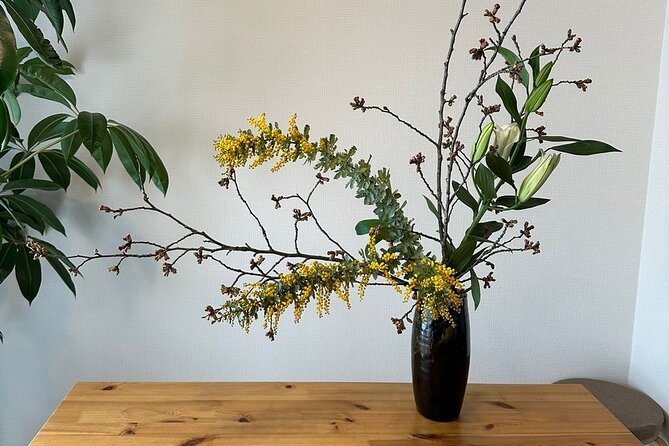
Originating in Japan, Ikebana, the traditional art of flower arranging, has a rich history dating back centuries. Initially practiced by Buddhist monks to decorate altars with floral offerings, Ikebana evolved over time to become a highly esteemed art form embodying deep cultural and philosophical meanings.
Its roots can be traced to the 6th century when floral arrangements were used to communicate messages non-verbally. With influences from Shintoism and Taoism, Ikebana emphasizes minimalism, asymmetry, and the harmony between nature and humanity.
Over the years, various schools of Ikebana have emerged, each with its unique styles and techniques. Today, Ikebana continues to captivate enthusiasts worldwide, celebrating the beauty of simplicity and the artistry of nature.
You can also read our reviews of more tours and experiences in Kyoto.

Ikebana Styles and Schools
Exploring the diverse world of Ikebana, one encounters a myriad of styles and schools that showcase unique approaches to floral arranging.
From the minimalist and elegant Sogetsu School to the intricate and symbolic Ikenobo School, each style carries its own traditions and philosophies.
The Ikenobo School, one of the oldest Ikebana schools, focuses on traditional forms and naturalistic representations, embodying a deep connection to nature.
In contrast, the Sogetsu School, founded in the early 20th century, embraces modernity and creativity, allowing for more experimental and avant-garde arrangements.
Other prominent schools like Ohara and Sogestsu offer their interpretations, emphasizing innovation and individual expression within the art form.
These diverse styles and schools contribute to the rich tapestry of Ikebana, captivating enthusiasts worldwide.
Ikebana Tools and Materials
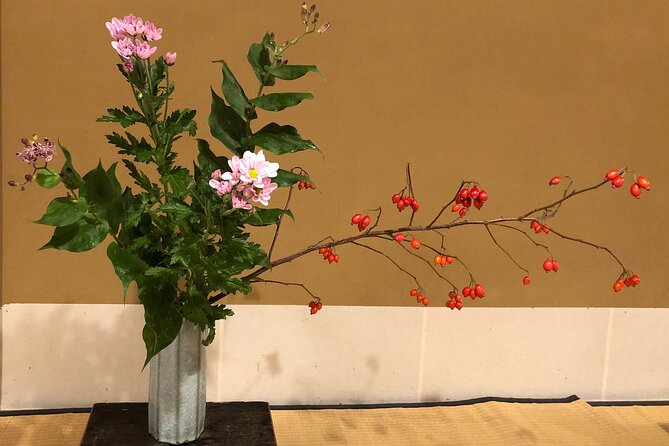
When practicing the art of Ikebana, selecting the right tools and materials is crucial for creating harmonious and balanced floral arrangements. The following list highlights key tools and materials essential for Ikebana:
Kenzan (Frog): This metal pin holder helps to keep stems in place and allows for precise positioning.
Hasami (Scissors): Sharp and precise cutting tools designed for trimming stems and branches with ease.
Suiban (Water Basin): A shallow container used to hold water and support the arrangement of flowers and branches.
Jushi (Ruler): An essential tool for measuring and ensuring the proportions and balance of the arrangement are just right.
Carefully choosing these tools and materials will enhance the beauty and elegance of your Ikebana creations.
Step-by-Step Ikebana Arranging
In Ikebana arranging, the process unfolds with a deliberate and mindful approach, guided by the principles of balance and harmony.
To start, select a vase that complements the flowers and foliage you’ve chosen.
Next, trim the stems at various lengths, considering the lines and angles that will create a dynamic arrangement.
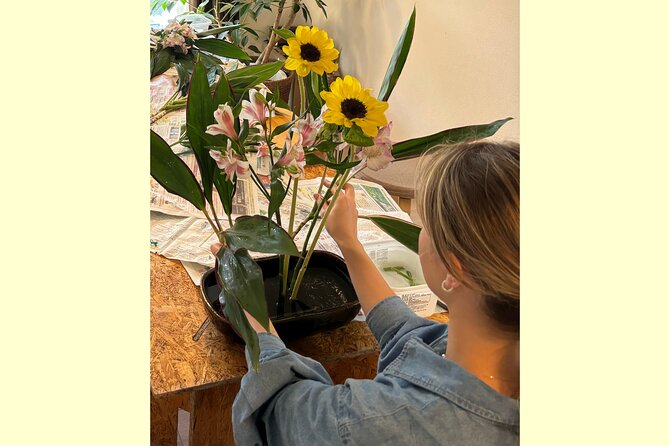
Begin placing the longest stem first, representing heaven, followed by the medium stem symbolizing humanity, and finally the shortest stem for earth.
As you place each element, focus on creating space between them to emphasize the beauty of simplicity.
Ikebana encourages a deep connection with nature and a sense of presence in the moment, making each arrangement a unique expression of creativity and contemplation.
Ikebana and Japanese Culture
Immersing oneself in the world of Ikebana reveals profound insights into the essence of Japanese culture, encapsulating grace and mindfulness in every floral arrangement.
Ikebana reflects the Japanese principle of ‘wabi-sabi’, finding beauty in imperfection.
Each element in Ikebana symbolizes a deeper meaning, connecting with nature and spirituality.
The meditative process of Ikebana fosters inner peace and a sense of harmony with the surroundings.
Ikebana teaches respect for nature and the seasons, embodying the Japanese value of ‘mono no aware’, the awareness of impermanence.
Through Ikebana, one not only learns the art of flower arranging but also delves into the rich cultural tapestry of Japan, where beauty is found in simplicity and the fleeting nature of existence.

Ikebana Etiquette and Symbolism
Discover the intricate etiquette and profound symbolism embedded within the art of Ikebana flower arranging.
In Ikebana, each element holds deep meaning; the container symbolizes heaven, the branches represent man, and the flowers embody earth.
When arranging, respect for nature and the materials is paramount. Before starting, practitioners purify themselves to show reverence for the art form.
Every step, from selecting the materials to the final placement, follows strict guidelines.
Respect for balance and harmony guides the arrangement process, reflecting the principles of simplicity and elegance in Japanese culture.
Through Ikebana, individuals learn patience, mindfulness, and a deeper connection with nature, creating arrangements that speak volumes without uttering a single word.
Ikebana Workshops and Classes
Explore the hands-on opportunities available through Ikebana workshops and classes to deepen your understanding and mastery of this traditional Japanese art form. These workshops offer a unique chance to learn about the world of Ikebana and unleash your creativity through floral arrangements.
Here’s what you can expect:
- Guided Instruction: Receive personalized guidance from experienced Ikebana instructors.
- Hands-On Practice: Engage in practical sessions to hone your skills and techniques.
- Cultural Immersion: Enjoy the rich history and symbolism of Ikebana.
- Community Connection: Connect with like-minded individuals who share a passion for Ikebana.
Embark on this journey of self-expression and cultural exploration through Ikebana workshops and classes.
Ikebana Tips and Tricks
Enhance your Ikebana skills with practical tips and tricks that elevate your floral arrangements to new levels of beauty and creativity.
When creating Ikebana arrangements, consider the concept of ma, or negative space, which is essential for achieving balance and harmony.
Experiment with different vase heights and shapes to add dimension and visual interest to your composition.
Incorporating various textures and colors of plant material can create dynamic contrasts and focal points within your arrangement.
Remember to trim stems at an angle and change the water regularly to ensure the longevity of your flowers.
Lastly, embrace asymmetry and imperfection, as they’re key elements of Ikebana that reflect the beauty of nature.
Frequently Asked Questions
Can I Bring My Own Flowers to an Ikebana Workshop?
Yes, participants can bring their own flowers to an ikebana workshop. It’s a chance to infuse personal creativity into the traditional art form. The activity offers customization and a unique touch, enhancing the overall experience for attendees.
Are There Any Age Restrictions for Participating in Ikebana Classes?
There are no age restrictions for participating in ikebana classes. All individuals, regardless of age, can enjoy the art of flower arranging. It’s a wonderful activity that can be appreciated by people of all generations.
Is It Necessary to Have Prior Experience in Flower Arranging?
No, prior experience in flower arranging is not necessary for participating in Ikebana classes. Beginners are welcome to explore this traditional art form under the guidance of skilled instructors. Dive into the beauty of Ikebana today!
Can I Take Home the Ikebana Arrangement I Create in a Workshop?
Yes, participants can take home the Ikebana arrangement created in the workshop. It’s a lovely memento of the experience. The hands-on nature of the activity allows for a personal touch, making the arrangement even more special.
Are There Any Specific Dress Code Requirements for Ikebana Classes?
For Ikebana classes, there are no specific dress code requirements, allowing participants to dress comfortably. This flexibility ensures that you can fully enjoy the art of flower arranging while feeling at ease.
The Sum Up
To sum it up, Ikebana isn’t just a traditional Japanese art form, but a way of connecting with nature and finding inner peace through the beauty of flowers.
With its rich history, diverse styles, and meditative process, Ikebana offers a unique way to appreciate the changing seasons and impermanence of life.
Whether you’re a beginner or a seasoned practitioner, Ikebana workshops and classes provide a wonderful opportunity to explore this ancient art and cultivate your creativity.
Dive into the world of Ikebana and let your creativity bloom!