
Hue Imperial City Walking Tour (Maximum 12 Pax): An In-Depth Review
Traveling to Hue? You’ll find that exploring the Imperial City on foot is one of the most rewarding ways to connect with Vietnam’s regal past. This small-group walking tour, limited to just 12 participants, offers a blend of historical sites, cultural insights, and a relaxed pace that’s perfect for those who want a more intimate experience.
What makes this tour stand out? First, you get to see a curated list of Hue’s major landmarks with a knowledgeable guide alongside. Second, the tour strikes a great balance between sightseeing and storytelling, making history feel alive. Third, it’s priced very reasonably at just $18, offering value for money given the depth of the experience.
That said, a possible consideration is the walking itself—some stops involve uneven steps and moderate walking, which might be a bit challenging if you’re less mobile. This tour is best suited for history buffs, culture lovers, or anyone wanting a well-rounded, authentic introduction to Hue’s imperial past.
Good To Know
- Small-group intimacy ensures personalized attention and less crowded sites.
- Expert local guides bring Hue’s history to life with engaging stories and insights.
- Comprehensive itinerary covers both iconic and lesser-known imperial sites.
- Affordable price point offers excellent value for a deep cultural experience.
- Flexible timing allows for an immersive, relaxed pace.
- Comfortable meeting point at the Cu V Thn Công (Nine Dynastic Cannons).
Discovering Hue’s Imperial Majesty
.jpg)
Hue’s Imperial City is a treasure trove of Vietnamese history, and this tour aims to unlock its stories in just about 2.5 hours. It’s a compact yet comprehensive experience, perfect for travelers who want to see the highlights without feeling rushed. The small-group size fosters a friendly, more engaging atmosphere, where questions are encouraged, and stories come alive through your guide’s enthusiasm.
The tour begins sharply at the Nine Holy Cannons, cast in 1803 during Emperor Gia Long’s reign. These impressive bronze cannons aren’t just relics—they symbolize Hue’s military might of the past. Our guide, whose passion clearly shines through, shares fascinating tidbits about their significance, making this stop an ideal opener.
Next, the Flag Tower offers a quick but poignant view of Hue’s ceremonial heart. This site was once the stage for major Nguyen Dynasty events, such as festivals and announcements. Standing here, you get a sense of Hue’s role as a political and cultural hub.
The Noon Gate (Cua Ngo Mon) is a highlight, as it was exclusively for the emperor and his entourage—remarkably resilient after surviving wars and time. Its striking architecture and historical importance make it a must-see. The guide explains its unique design, emphasizing its role as a symbol of imperial authority.
Exploring the Heart of the Imperial City
.jpg)
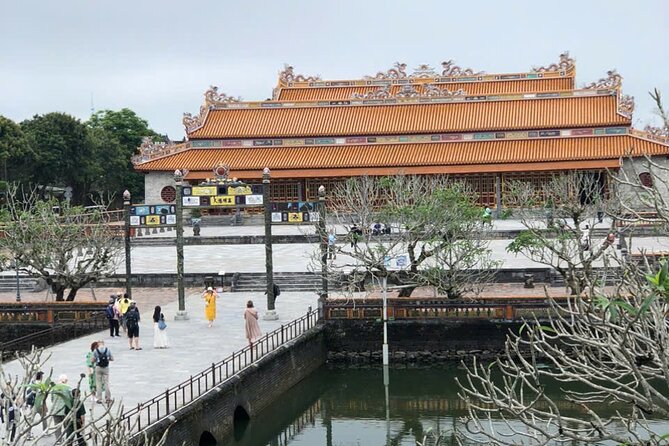
The Thai Hoa Palace is next—a grand structure that hosted imperial ceremonies. It’s the most important building in the complex, and its majestic facade and vast interior give a real sense of royal grandeur. Our guide points out intricate details, sparking vivid images of court life centuries ago. You’ll spend about 20 minutes here, soaking in the atmosphere and the stories.
Then, the Nine Dynastic Urns, bronze structures built during Emperor Minh Mang’s reign, catch your eye. These monumental urns, each standing around 2.3 meters tall, symbolize the power and legacy of the Nguyen emperors. The guide highlights their craftsmanship and symbolism, adding a layer of appreciation for Vietnam’s cultural artistry.
The Mieu Temple follows—a quieter, contemplative space built in 1804 that served as a worship site for Nguyen emperors and officials. It offers insight into the spiritual side of royal life, making it a vital stop for understanding the depth of Vietnamese tradition.
The Regal Residences and Hidden Corners
.jpg)
The Kien Trung Palace was built in 1923 and served as the residence for the last two emperors, Khai Dinh and Bao Dai. Visiting here provides a glimpse into the final chapter of the Nguyen Dynasty, blending traditional architecture with early 20th-century influences.
Next, the Truong Lang (Long Corridor) within the Purple Forbidden City showcases the spatial organization of the imperial complex. This corridor facilitated communication and movement, and your guide shares stories about palace life and its strict hierarchy.
The Hall of Peace (Thai Binh Lau), a tranquil retreat where emperors would rest and reflect, is a peaceful stop that offers a break from the more bustling sites. Its serene atmosphere allows for a moment of quiet appreciation of palace architecture and design.
Adding a cultural touch, the Duyet Thi Duong Theater was one of four theaters built during the Nguyen Dynasty for artistic performances. It’s a reminder of the court’s vibrant artistic scene and the importance placed on cultural expression.
Finally, the Hien Nhon Gate at the eastern side of the Imperial City, built in 1805, is considered one of the most beautiful gates. Renovated over the years, it exemplifies the architectural beauty and resilience of Hue’s fortifications.
Practical Aspects and Experience Quality
.jpg)
The tour begins at the Ca Ngan Gate and concludes back at the same spot, making logistics straightforward. The guided walks are designed to be informative yet relaxed, with a total duration of around 2.5 hours. The group size, capped at 12, ensures you’re not just another face in the crowd and can ask plenty of questions.
The tour price of $18 per person is reasonable, especially considering all entrance fees are included. The guide, whose enthusiasm is noted in reviews, is a key part of the experience, providing detailed insights into each site’s historical and cultural significance.
One review mentioned that the walking involved uneven steps and some moderate walking, which might be a consideration if mobility is an issue. However, most found the pace manageable, and the small group size helps keep the experience intimate and engaging.
The tour’s meeting point is convenient to access via public transportation, and the mobile ticket system streamlines the check-in process. Note that transportation to and from the meeting point isn’t included, so plan accordingly.
Why This Tour Is a Great Choice
.jpg)
This itinerary is thoughtfully curated to give a holistic view of Hue’s imperial past within a manageable time frame. It combines major landmark visits with interesting anecdotes that make history accessible and engaging. The knowledgeable guides enhance the experience, turning facts into stories that stick.
The small-group format ensures a more personalized, relaxed environment, allowing for deeper conversations and questions. The cultural sites, like the temples and palaces, are preserved beautifully, providing authentic glimpses into royal life.
Pricing makes this tour attractive—offering substantial value for a comprehensive exploration. It’s ideal for history enthusiasts, culture lovers, and travelers who prefer a more intimate, less rushed experience.
Who Will Love This Tour?
.jpg)
If you’re someone eager to understand Hue’s royal heritage without the hassle of large crowds or overly commercialized experiences, this tour is perfect. It’s especially suitable for those who appreciate detailed storytelling and authentic cultural encounters.
Travelers with moderate walking ability will find the pace comfortable, as long as they’re prepared for some uneven steps. It suits visitors looking for a meaningful, well-organized introduction to the Imperial City in a short timeframe.
Final Thoughts
.jpg)
This Hue Imperial City walking tour offers a compelling blend of history, architecture, and local insights—all in just a few hours. The small-group setup fosters a warm, informative environment, making history feel closer and more personal.
The tour’s price point is attractive, especially considering the inclusion of all entrance fees and the expertise of guides like Duy, who bring stories of Hue’s past vividly to life. It’s a smart choice for those who want a balanced mix of sightseeing and storytelling with minimal hassle.
While walking involved might challenge some, most found it manageable and well worth the experience. The stops chosen are meaningful and illustrate Hue’s grandeur, resilience, and cultural depth.
If you desire an authentic, engaging, and affordable way to explore Hue’s imperial legacy, this tour is a solid pick — especially for those who value personalized touches and expert guiding.
FAQ
.jpg)
What is the duration of the tour?
The tour lasts approximately 2 hours 30 minutes, covering multiple sites at a relaxed pace.
How many people are in each group?
A maximum of 12 participants ensures an intimate experience and personalized attention.
Where does the tour start and end?
It begins at the Cu V Thn Công (Nine Dynastic Cannons) located at Ngan Gate and ends back at the same point.
Is the tour suitable for all ages?
Most travelers can participate, but be prepared for some walking and uneven steps that might be challenging for those with mobility issues.
Are entrance fees included?
Yes, all site entrance fees are covered in the $18 cost.
Do I need to arrange transportation to the meeting point?
Transportation isn’t included; you’ll meet the guide at the designated spot, which is accessible via public transit.
Is there a guide who speaks English?
Yes, an English-speaking guide will accompany your group, providing detailed explanations.
Can I cancel the tour?
Yes, cancellations are free up to 24 hours before the start time for a full refund.
Is food or bottled water included?
No, bottled water isn’t included, so it’s recommended to bring some along if needed.
This tour offers a genuinely enriching way to explore Hue’s imperial heritage, combining historical sites with storytelling in a comfortable, small-group setting. Whether you’re a history aficionado or a curious traveler, it’s a memorable way to uncover the stories behind Vietnam’s royal past.