Hoi An’s coffee culture comes into focus one cup at a time in this hands-on class, held in a floating hut beside a lake. You learn to make five Vietnamese coffee styles using manual methods, with water heated on a wood-fired clay stove rather than a modern appliance.
I like the useful mix of coffee-making practice and local context, and the chance to taste the drinks you prepare. The setting also offers a quiet change of pace from Hoi An’s busy streets. One thing to plan for: the stated duration is two hours, while the sample schedule runs from 10:00 to 12:30, so check the timing attached to your chosen departure.
- What makes this coffee class worth considering
- Five Vietnamese coffees, one small lakeside classroom
- From phin coffee to the final layered cup
- Why the wood-fired stove and floating hut matter
- What the two-hour class feels like
- The host, instruction and take-home value
- Price, timing and booking details
- Who should book this Hoi An coffee class
- Should you book it?
- FAQ
- How long does the coffee-making class last?
- Which coffees will I learn to make?
- Is the class suitable for beginners?
- What language is the class taught in?
- What is included in the price?
- Where is the meeting point?
- What departure times can I choose?
- What is the minimum age, and how early should I arrive?
- The Best Of Hoi An!
- More Coffee Experiences in Hoi An
- More Tours in Hoi An
- More Tour Reviews in Hoi An
- Not for you? Here's more nearby things to do in Hoi An we have reviewed
What makes this coffee class worth considering
 1 / 6
 2 / 6
 3 / 6
 4 / 6
 5 / 6
 6 / 6
- Five distinct drinks: Make traditional phin, egg, coconut, salt and four-layer coffee.
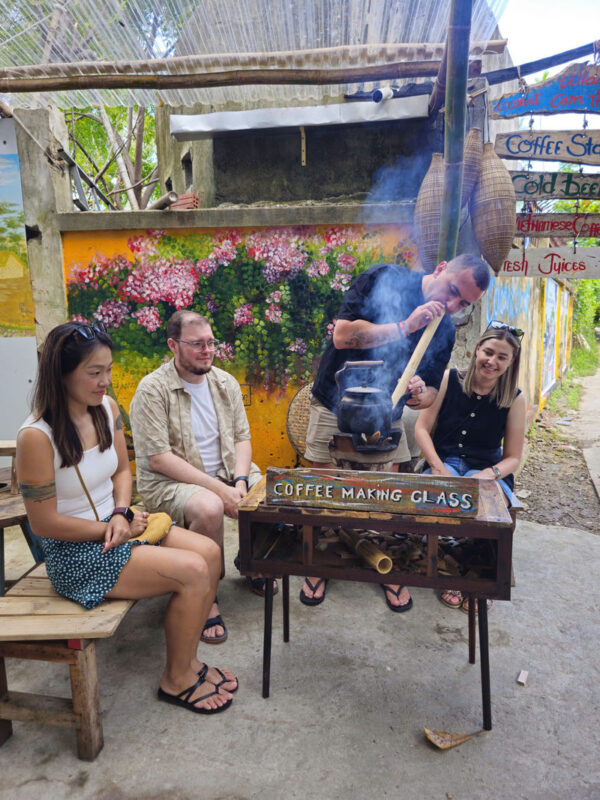
- Manual brewing: Follow the process by hand, with water boiled on a traditional wood-fired clay stove.
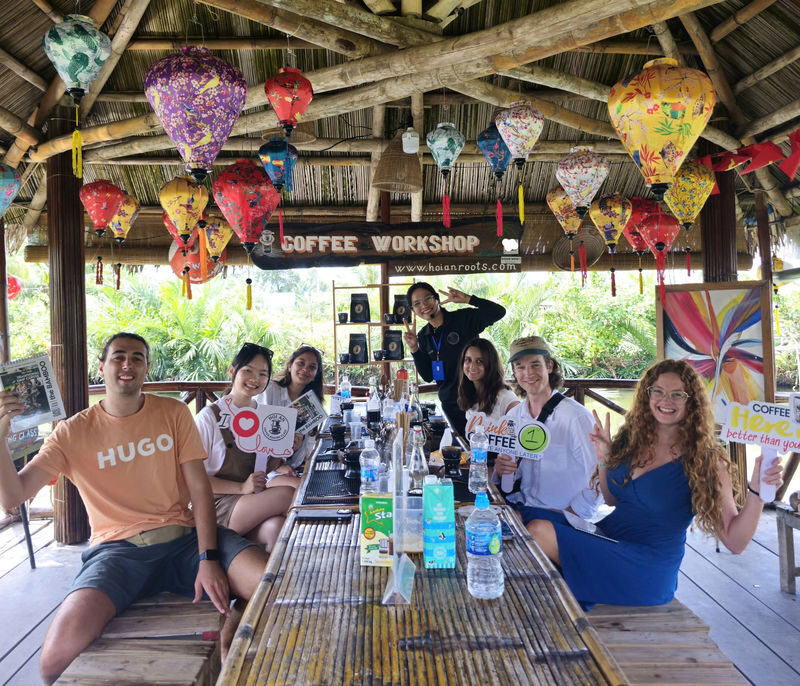
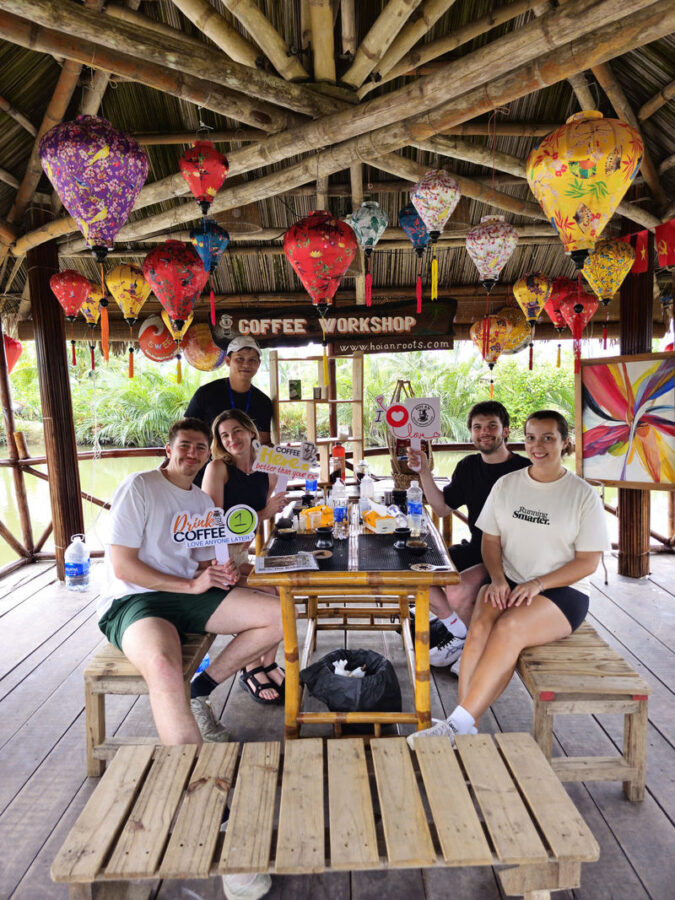
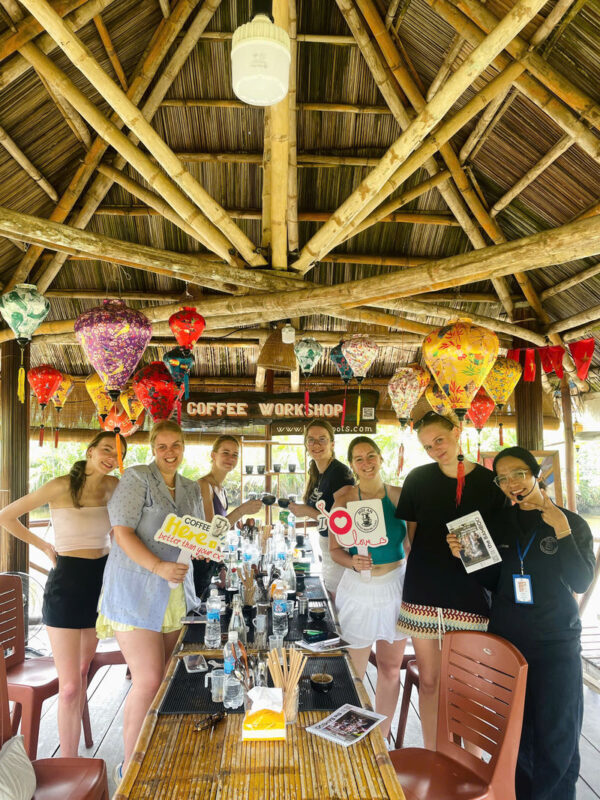
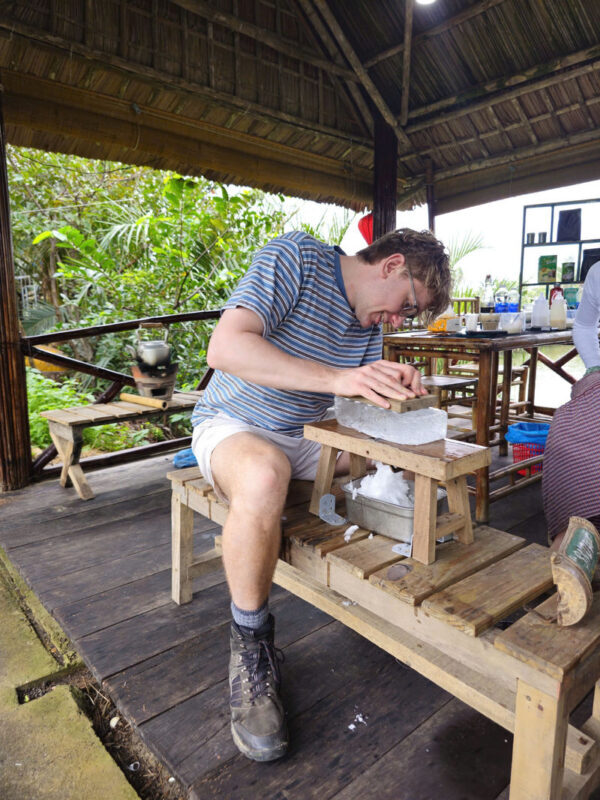
- A lakeside classroom: Learn in a floating shelter surrounded by nature, rather than in a conventional café.
- A local host and cultural context: An English-speaking guide explains the methods and the stories behind the drinks. Sam is named as one of the hosts.
- Coffee you make yourself: Taste your creations during the class, then take a complimentary recipe booklet home.

👉 See our pick of the 25 Best Shopping Tours In Hoi An
Five Vietnamese coffees, one small lakeside classroom
This is less a quick tasting than a compact introduction to how Vietnamese coffee can change with its brewing method and additions. You make five well-known versions, so the class gives you several points of comparison: a straightforward phin brew, creamy egg coffee, coconut coffee, salt coffee and a layered drink.
That variety is useful if you know Vietnamese coffee mainly as a strong brew served with condensed milk. The class lets you see how different ingredients and preparation choices produce drinks with their own character. You are not just handed a tray and asked to pick a favourite. You take part in making each one.
The experience is beginner-friendly, and you do not need prior coffee skills. The guide leads the process and explains the techniques as you go. English instruction makes it easier to follow both the practical steps and the cultural background, especially if coffee is new territory for you.
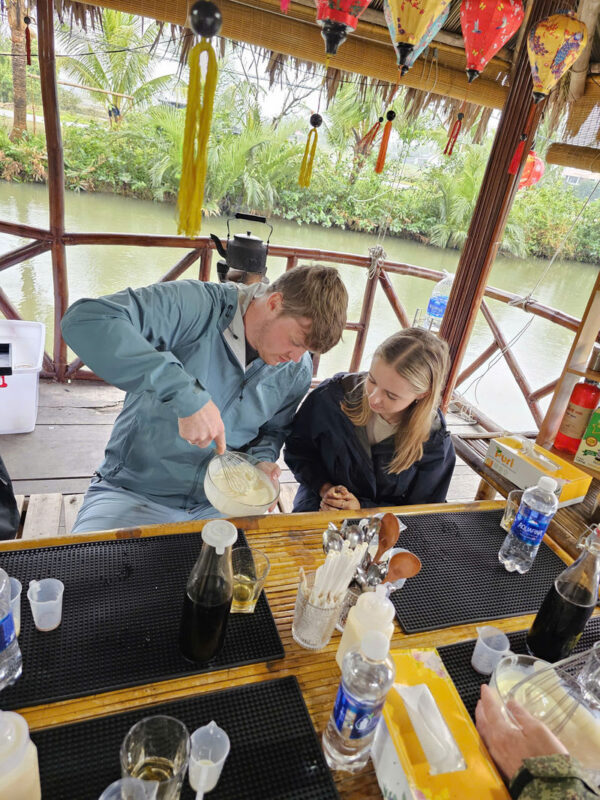
The focus on 100% manual techniques is part of the appeal. You can learn a repeatable method rather than watch a machine do the work. The class also uses a traditional wood-fired clay stove to boil water, adding a tangible link between the preparation and older, hands-on ways of making coffee.
You can also read our reviews of more tours and experiences in Hoi An



From phin coffee to the final layered cup
The class covers five styles in a fixed sequence or guided format, though the exact order is not specified. You can expect to work through traditional phin coffee, egg coffee, coconut coffee, salt coffee and four-layer coffee, with the host introducing the method and ingredients for each.
Phin coffee is the natural place to begin. The phin is a small Vietnamese drip filter that sits over a cup. Watching coffee brew slowly gives you a feel for the unhurried side of the process, and the method is one of the most practical skills to carry home. The class promises manual brewing, but the exact equipment and quantities are not detailed, so use the session to ask your host for the measurements you want to remember.
Egg coffee brings a different texture and style to the table. It is a useful first taste for anyone who has heard of the drink but has not tried it. One participant’s favourite was coconut coffee, while another tried egg coffee for the first time. Those are personal preferences, of course, but they underline the value of sampling several styles rather than assuming one familiar cup tells the whole story.
Coconut and salt coffee add more contrast. The class explains how the drinks are made and lets you taste your own work, which is a better way to judge them than reading a menu description. The four-layer coffee is the most visual of the group. Its stacked appearance also makes a good photo, though the pleasure here is in making and tasting it, not just photographing the glass.
You should arrive ready to participate. This is not simply a demonstration, and the promise of hands-on work means you will be involved in the preparation. You are given the chance to taste what you make, so the class is also a small tasting session, though it does not specify serving sizes.
Why the wood-fired stove and floating hut matter
The setting helps make this class feel distinct from a lesson in a regular café. The workshop takes place in a floating hut in a lake-side natural setting, away from the busiest parts of Hoi An. That quieter backdrop gives you room to focus on the steps, talk with the host and take photographs.
The stove is more than a decorative detail. Boiling water over a traditional wood-fired clay stove gives you a direct, practical connection to the process. It also means the class is not built around speed or automated equipment. You get to see how heat, timing and preparation fit into a manual brew.
There is a trade-off. A natural setting and a small shelter may not offer the same level of climate control or polished café comfort as an indoor venue. The supplied details do not describe shelter conditions, so if weather is a concern, check with the operator before booking. The activity can be affected by weather, and the schedule may change accordingly.
For photos, the hut and lake provide a distinctive backdrop. Just remember that the main point is learning and tasting. If you spend the whole session framing pictures, you may miss a useful step or the host’s explanation.
What the two-hour class feels like
The activity is organized around a departure, a guided session in Hoi An and a return. The advertised duration is two hours, while the sample schedule lists a 10:00 departure and 12:30 return. The itinerary notes that timing can shift with traffic and weather, so treat the exact length as something to confirm for your selected slot.
You can choose a 10:00 or 14:00 departure, subject to availability. The return time shown for one option is 12:30, but return arrangements can vary with the departure time and itinerary length. Confirm the details on your voucher rather than assuming every session follows the same clock.
The core of the visit is the guided coffee-making workshop. The English-speaking host covers the methods and cultural traditions behind the drinks, and the class is designed to be interactive. You make the coffees, then taste them. A recipe booklet rounds out the session, giving you something practical to refer to after the class.
The class is suitable for participants aged 12 and older. Because it is beginner-friendly, you do not need to arrive with specialist knowledge or equipment. If you already know a little about coffee, you may find the cultural stories and the chance to compare five recipes more rewarding than basic brewing instruction alone.
The host, instruction and take-home value
A good teacher matters in a short class. You have limited time to learn five drinks, so clear demonstrations and well-paced guidance make a real difference. Sam is named as one of the hosts, and the class is presented in English. The teaching style is described as engaging, informative and humorous, which suits a session that mixes practical work with cultural explanation.
The recipe booklet is a useful extra, not just a souvenir. You can use it to revisit the methods at home and remember which ingredients go with each style. The available details do not specify whether every ingredient or exact measurement is included, so make notes during the workshop if you want to recreate a particular drink precisely.
I would treat the class as a cultural activity with a coffee lesson at its center, rather than a professional barista course. The aim is to introduce five iconic drinks, their stories and manual preparation. You are unlikely to leave with advanced coffee credentials, but you can leave with a better sense of how the drinks differ and the confidence to try them again.
You can also read our reviews of more tours and experiences in Hoi An





Price, timing and booking details
The listed starting prices differ: the experience summary gives a price from US$15.75, while the package information lists a starting price of US$14.29. Prices can vary, so check the amount shown for your selected date and package before paying.
At either listed starting point, the value depends on more than the number of drinks. The fee covers a guided, hands-on class, instruction in five preparations, the coffee you make and taste, and a recipe booklet. The unusual lakeside setting and wood-fired stove add character that a simple café tasting would not provide. If you are interested in Vietnamese coffee, this is a practical way to spend a couple of hours rather than just ordering one drink and moving on.
The meeting point is listed as V8XX+FQP, An My, Hoi An Dông, Dà Nang 550000, Vietnam, under the name Hoi An Coffee Making Class. Follow the map and the address on your booking confirmation, since the location wording may look unfamiliar if you are searching by street name. Arrive 10 minutes before your chosen departure. Late arrivals and no-shows are not refundable.
You receive a mobile voucher, and the voucher is valid only for the date and time booked. Confirmation is expected within minutes. If your preferred time is full, the staff may suggest another slot. Changes are generally allowed until 24 hours before the activity, with some booking types excluded. A full refund is available for cancellations at least 24 hours before the activity date; weather-related cancellations may lead to a reschedule or refund, subject to the operator’s policy.
Who should book this Hoi An coffee class
This class is a good fit if you enjoy coffee, want a practical cultural activity, or are looking for something quieter than a walking tour through central Hoi An. It also works well for curious beginners because you are guided through the process and do not need prior experience.
Coffee lovers will get the most from comparing all five preparations and asking questions as they work. Culture seekers may appreciate the stories behind the drinks and the traditional stove. If you are travelling with someone who is not especially interested in coffee, consider whether the setting and hands-on format are enough to make the session appealing to both of you.
It is less suited to anyone who wants a brief tasting without participation, or who needs a strictly timed activity with no possible schedule changes. The stated age minimum is 12, and weather or traffic can affect the schedule.
Should you book it?
I would book this if you want to understand Vietnamese coffee through making it, not only drinking it. Five recipes, an English-speaking host, the lakeside hut and the wood-fired stove make the class more distinctive than a standard café stop, while the take-home booklet gives the lesson a practical afterlife.
Before you commit, confirm the final price and duration for your selected time. If the 10:00 or 14:00 slot fits your day and you are happy to spend a couple of hours making and tasting coffee, this is a worthwhile Hoi An activity. If you have little interest in coffee or prefer a fast, drop-in experience, save the time for something else.
Hoi An: Vietnamese Coffee Culture & Hands-On Coffee Making Class
“A really good experience and thoroughly enjoyable. Learning how to make the 5 versions of the coffee, about their culture and history, was informat…”
FAQ
How long does the coffee-making class last?
The activity is described as two hours. One sample schedule runs from 10:00 to 12:30, and timing may change with traffic and weather, so check the details for your selected departure.
Which coffees will I learn to make?
You will learn to make traditional phin coffee, egg coffee, coconut coffee, salt coffee and four-layer coffee.
Is the class suitable for beginners?
Yes. The activity is described as beginner-friendly, and you do not need prior coffee-making experience.
What language is the class taught in?
The class includes an English-speaking guide.
What is included in the price?
The package includes the guided class, instruction in making five Vietnamese coffees using manual techniques, and the coffee you make. A complimentary recipe booklet is also provided.
Where is the meeting point?
The listed meeting address is V8XX+FQP, An My, Hoi An Dông, Dà Nang 550000, Vietnam. The meeting point is named Hoi An Coffee Making Class.
What departure times can I choose?
The available departure times are 10:00 and 14:00, subject to availability. The return time can vary depending on the departure and itinerary.
What is the minimum age, and how early should I arrive?
Participants must be at least 12 years old. Arrive at the meeting point 10 minutes before your scheduled start time.