Meijiawu puts you close to the work behind West Lake Longjing: you pick tender leaves, watch or try hand-frying them in a hot wok, then taste the tea. The process makes a cup more than a drink. You see how careful picking and skilled hands shape what ends up in it.
I like two things in particular: the chance to learn picking standards such as one bud and one leaf, and the contrast between fresh Longjing brewing and Song Dynasty diancha, or whisked tea. The optional tea ceremony adds a different kind of tea culture to the same outing.
One consideration: tea gardens bring mosquitoes, and the picking involves real outdoor work. A past participant called out painful bites, so bring insect repellent and wear comfortable clothes you do not mind getting a little marked.
- What makes this Meijiawu tea experience worth considering
- A tea village with a working tradition
- Picking leaves, one bud at a time
- At the wok: the craft of hand-frying Longjing
- Tasting Longjing, with attention to the details
- Optional Song Dynasty tea whisking
- Timing, language, and price
- Who should book this half-day outing?
- FAQ
- How long does the experience take?
- Where does the activity take place?
- What time can I depart?
- What is included in the standard package?
- What is added in the Song Dynasty tea ceremony package?
- Are guides available in languages other than Chinese?
- Is tea picking hands-on?
- What should I know about cancellation?
- The Best Of Hangzhou!
- More Half-Day in Hangzhou
- More Tours in Hangzhou
- More Tour Reviews in Hangzhou
- Not for you? Here's more nearby things to do in Hangzhou we have reviewed
What makes this Meijiawu tea experience worth considering
 1 / 4
 2 / 4
 3 / 4
 4 / 4
- Pick Longjing leaves yourself: A tea farmer shows you how to identify the standards of one bud and one leaf or one bud and two leaves.
- See tea-making at the wok: Watch a tea master hand-fry leaves, with a chance to try selected steps within safe limits.
- Compare two tea traditions: The standard package includes Longjing tasting; the upgraded option adds Song Dynasty whisked tea.
- Learn the details behind the cup: A tea artist introduces tea shape, aroma, flavor, water temperature, and brewing tools.
- Allow for a flexible finish: The garden and workshop session is described as about 1.5 hours, with a further tasting segment and a return time that can shift.
- Expect a countryside setting: Meijiawu is a protected West Lake Longjing production area, but outdoor conditions include mosquitoes.

👉 See our pick of the 25 Best Tours In Hangzhou
A tea village with a working tradition
Meijiawu is one of the five core West Lake Longjing production areas, grouped with Lion Peak, Longjing Village, Yunqi, and Hupao. The village is known for tea growing, and this experience makes that setting part of the lesson rather than a scenic backdrop alone.
The focus is hands-on. You do not just hear that Longjing tea is carefully picked and pan-fried. You handle the leaves, see the tools and methods, and then taste tea with those earlier steps in mind. That connection is what I find valuable, especially if you have ever bought Longjing without knowing what separates one style or grade from another.
The experience is based at Meijiawu Tea Culture Village, in Hangzhou. It is a half-day outing, but the hands-on program itself is relatively compact. The core picking, frying, and tasting session is described as around 1.5 to 2 hours, while the schedule also sets aside about an hour for the tasting portion. In practice, leave room for the timing to vary.
You can also read our reviews of more tours and experiences in Hangzhou
Picking leaves, one bud at a time
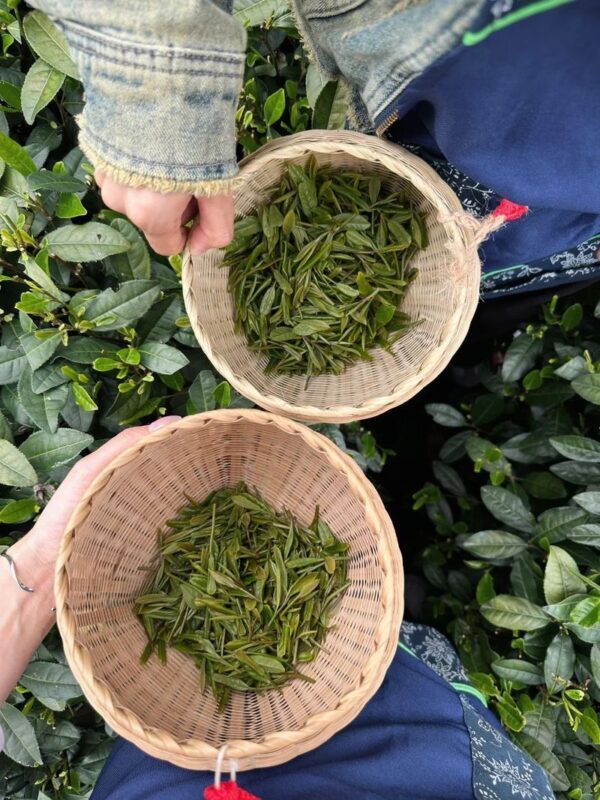
The first part takes you into the tea garden with a basket and hat. A tea farmer explains how to choose leaves, including the standards called one bud and one leaf and one bud and two leaves. These terms refer to the number of young leaves picked with a bud, and the difference helps you understand why not every green leaf is equally suited to tea production.
You then try picking for yourself. It is a small task, but it gives you a clear sense of the care involved. The process is not simply plucking whatever looks fresh: the farmer teaches you what to look for and how to pick it. That practical lesson makes the tea’s quality standards easier to understand than a quick explanation in a shop.
The garden setting is part of the appeal. One participant described the air as fresh and the mountain picking as a highlight, and the open-air portion gives the activity a different pace from a tasting room. There is also a practical trade-off: mosquitoes can be a nuisance. Bring repellent, and consider covering your arms and legs if that suits the weather.
Costumes are provided for photos, according to one account of the experience. That can be a fun extra if you want a keepsake, though it is not the heart of the activity. The more lasting souvenir may be the ability to recognize how a tea leaf is picked and handled.
At the wok: the craft of hand-frying Longjing
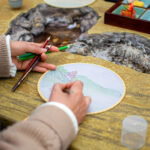
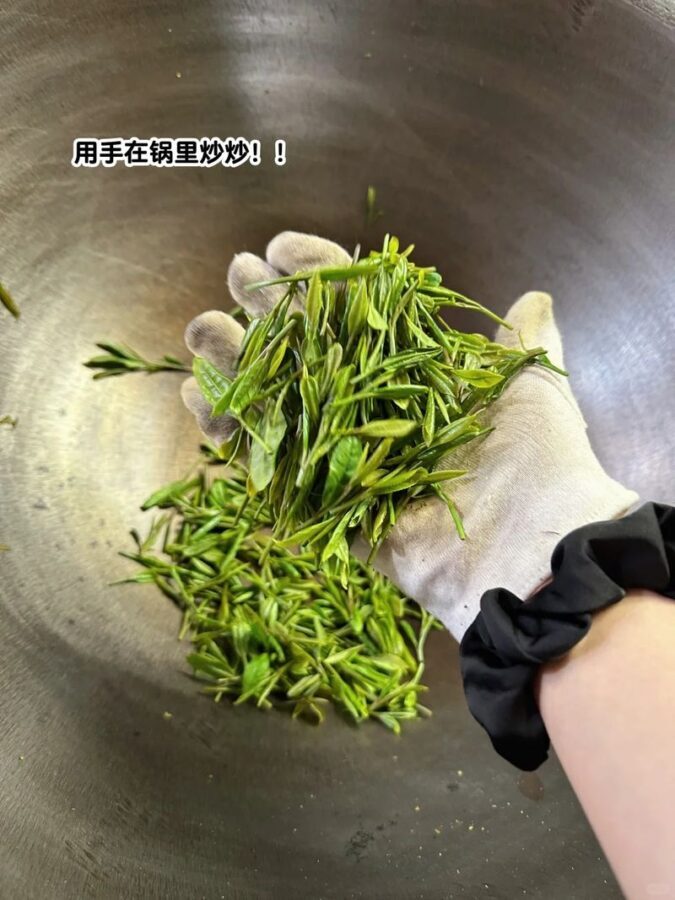
After picking, you visit a traditional tea-frying workshop. Here, the tea leaves are heated and shaped by hand in an iron wok. A tea master explains the techniques and demonstrates the movements that turn fresh leaves into finished Longjing.
The traditional sequence includes actions translated as shaking, piling, pressing, nipping, tossing, grabbing, pushing, buttoning, pressing, and grinding. The names alone do not make the technique easy to master, which is why the chance to watch closely matters. You may be able to try selected steps under guidance, within safe limits. The wok is hot, so this is not an unsupervised craft session.
The most interesting part is seeing how much depends on touch and timing. The tea master adjusts the leaves as they heat, and you can observe changes in their shape and aroma. The workshop gives context to the idea that hand-frying is an intangible cultural heritage practice: it is a set of learned skills, not just a recipe or machine setting.
Expect an introduction and demonstration, not a full apprenticeship. You are unlikely to leave ready to fry a batch of Longjing on your own. But even a short hands-on turn can make the process feel less mysterious, and it helps explain why skilled tea production takes effort.
Tasting Longjing, with attention to the details
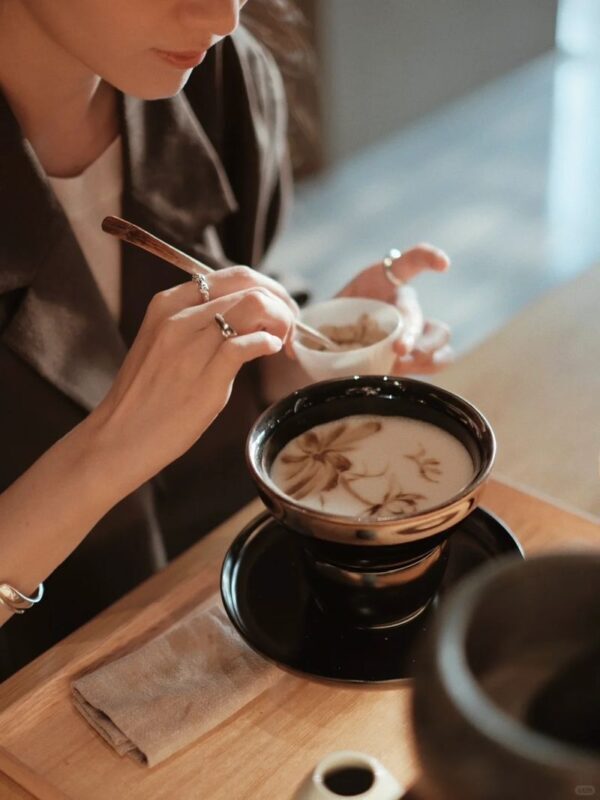
The tasting brings the garden and wok together. A tea artist guides you through the tea’s appearance, aroma, flavor, and overall character. You learn about Longjing’s four qualities: green color, fragrant aroma, sweet taste, and beautiful shape. It is a useful framework if you want to compare teas rather than simply decide whether you like a cup.
The session may include different grades or frying styles, such as Mingqian and Yuqian Longjing. These terms distinguish tea picked before the Qingming Festival and before Guyu, respectively. The exact selection can vary, but the point is to notice differences in the leaf and the brewed tea, not just to hear a list of names.
You also get guidance on brewing: water temperature and the choice of vessel affect the result. That makes the tasting practical. You can take the lesson back to your own tea-making, instead of leaving with only a pleasant memory of a cup in a tea room or garden viewing spot.
The tea house may also have food options and souvenirs for sale. Treat those as useful extras, not guaranteed highlights of the tea program. If you are hoping to make a meal of the visit, check what is available when you arrive rather than assuming a particular menu.
Optional Song Dynasty tea whisking
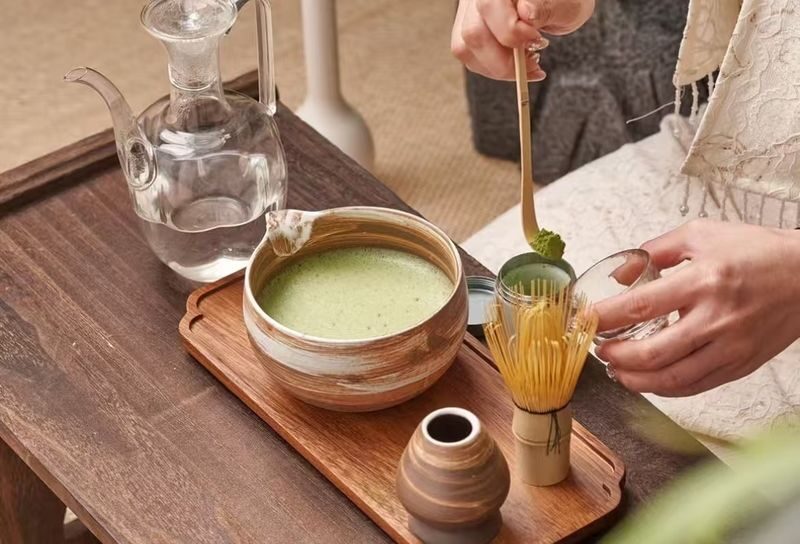
The upgraded package adds diancha, a style of tea preparation associated with the Song Dynasty. A tea artist explains its historical background, introduces the tools, and demonstrates the process. The hands-on element includes whisking tea with a bamboo whisk and learning a three-pour method.
This is a different experience from brewing modern Longjing. The Longjing tasting emphasizes a light, fresh cup, while diancha is described as thicker and denser. Comparing them gives you a more rounded introduction to Chinese tea culture: not one correct way to make tea, but different approaches with their own tools and tastes.
Choose this option if the cultural and ceremonial side of tea interests you as much as picking and frying. It costs more than the basic package, so it is less compelling if your main goal is simply to handle tea leaves and taste Longjing. The extra session is a good reason to choose the longer package, not an essential part of the core tea-making experience.


Timing, language, and price
Departure choices are listed at 09:00 and 13:00, with the exact meeting time confirmed after booking. The return is to your hotel or personal address, and the end time can vary by about 30 minutes. The listed return options depend on your departure time and the program selected, so avoid scheduling a tight connection immediately afterward.
Package prices vary by language and content. Chinese-guided picking, frying, and tasting starts at $27.45. The version with Song Dynasty tea whisking starts at $32.89. English, Japanese, Korean, German, or Russian explanation services are listed from $73.10 for the standard experience and $78.59 with the tea ceremony. A separate headline price is shown from $36.25, so check the specific package and language before booking.
The price is easiest to justify if you value instruction and participation, not just a ride to a tea village. Picking, wok-side demonstrations, and a guided tasting are distinct parts of the outing. The language upgrade is a substantial jump, but it may be worthwhile if you want detailed explanations and do not speak Chinese. Chinese-speaking staff are included in the Chinese-guided option.
There is no age limit stated. The activity is outdoors for part of the time and includes work near a hot wok, so use your judgment about whether the format suits everyone in your party. Changes are allowed up to 24 hours before the activity in eligible bookings, and cancellations at least 24 hours ahead receive a full refund. Severe weather or unforeseen events may lead the operator to cancel and offer a reschedule or refund.
Who should book this half-day outing?
I would choose Meijiawu if you are curious about the steps between tea garden and teacup, or if you want a hands-on cultural activity beyond Hangzhou’s better-known city sights. The garden, workshop, and tasting form a coherent sequence, and the optional diancha session adds a clear reason to spend a little more.
It is especially suitable for tea drinkers who want to understand picking grades and hand-frying, and for families or small groups looking for an activity with a practical element. One participant singled out guide 张云 for being attentive, helpful, and generous with explanations. Guide quality can vary, but that account points to the value of having someone who can make the steps understandable.
Skip it if you want a long hike, a full-day countryside tour, or a guaranteed polished performance with no outdoor discomfort. This is a short tea-focused visit, and mosquitoes are a real possibility. For a straightforward introduction to Longjing production, book the basic package. For a fuller cultural comparison, choose the Song Dynasty tea ceremony option, and allow a little flexibility in your schedule.
Hangzhou Meijiawu Tea Culture Half-Day Experience
“It was a great experience picking leaves. We can empathise that it was indeed a hard job. Other than the mosquito painful bites, it was overall a g…”
FAQ
How long does the experience take?
The picking and frying portion is described as about 1.5 hours, with a separate tasting segment listed as about an hour. The overall experience is described as roughly 1.5 to 2 hours, and the return time may vary by about 30 minutes.
Where does the activity take place?
It takes place in Meijiawu Tea Culture Village, a core West Lake Longjing tea production area in Hangzhou.
What time can I depart?
Departure options are listed at 09:00 and 13:00. Your exact time is confirmed after booking, and you should attend at the time selected.
What is included in the standard package?
The standard Chinese-guided package includes tea picking, tea frying, and tea tasting. Chinese-speaking staff are included.
What is added in the Song Dynasty tea ceremony package?
It adds a diancha tea-whisking experience. You learn about Song Dynasty tea culture and tools, and practice whisking tea with a bamboo whisk using a three-pour method.
Are guides available in languages other than Chinese?
Yes. English, Japanese, Korean, German, and Russian explanation services are listed, at higher starting prices than the Chinese-guided options.
Is tea picking hands-on?
Yes. A tea farmer teaches you picking standards such as one bud and one leaf or one bud and two leaves, then you pick leaves in the garden.
What should I know about cancellation?
A full refund is available if you cancel at least 24 hours before the activity date, based on local destination time. In unforeseen events or extreme weather, the operator may cancel and offer a reschedule or full refund.