Guangzhou is a big city, and this bus gives you a seat while you get your bearings. I like the four-route network, which links old and new parts of town, and the low starting price, from US$5.79, can make a full day of short hops good value.
The main catch is that a sightseeing bus cannot outrun Guangzhou traffic. Stops are fixed, waits can stretch, and the audio system may not work as expected, so treat this as a flexible way to see the city, not a tightly timed sightseeing schedule.
- Four routes, one pass: The all-day ticket allows unlimited rides on the sightseeing network for its valid date.
- Old and new Guangzhou: Routes connect city districts and pass areas including Beijing Road, Haizhu Square and Lychee Bay.
- More than 30 advertised sights: The bus can help you choose where to spend time, but it does not guarantee a stop at every major attraction.
- Four lines to plan around: The routes are identified by colors, and some journeys may involve changing buses.
- Audio and map included: You are meant to receive a map and headphones, but ask staff for the headphones when exchanging your ticket.
- A separate food outing: Morning-tea bus options depart at 9:00 or 11:30, include Cantonese-style food and take about 90 minutes.
- Start with a city overview, not a checklist
- Four routes link old streets and newer districts
- Beijing Road makes a practical starting point
- Haizhu Square and Lychee Bay offer different views
- The upper deck is enclosed, not open-top
- Audio commentary can add context, but bring a backup plan
- A full day is more realistic than a quick circuit
- The morning-tea bus is a different kind of outing
- The price is attractive if you use the bus more than once
- Should you book the Guangzhou sightseeing bus?
- FAQ
- How many routes does the sightseeing pass cover?
- How long is the pass valid?
- Where do I exchange my voucher for a physical ticket?
- Are headphones and a map included?
- Do children ride free?
- Can I cancel or refund the ticket?
- The Best Of Guangzhou!
- More Tours in Guangzhou
- More Tour Reviews in Guangzhou
- Not for you? Here's more nearby things to do in Guangzhou we have reviewed
Start with a city overview, not a checklist
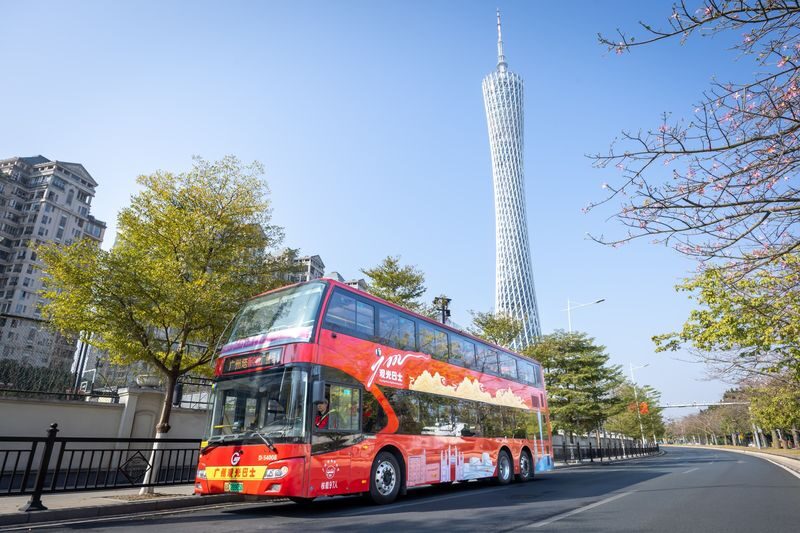
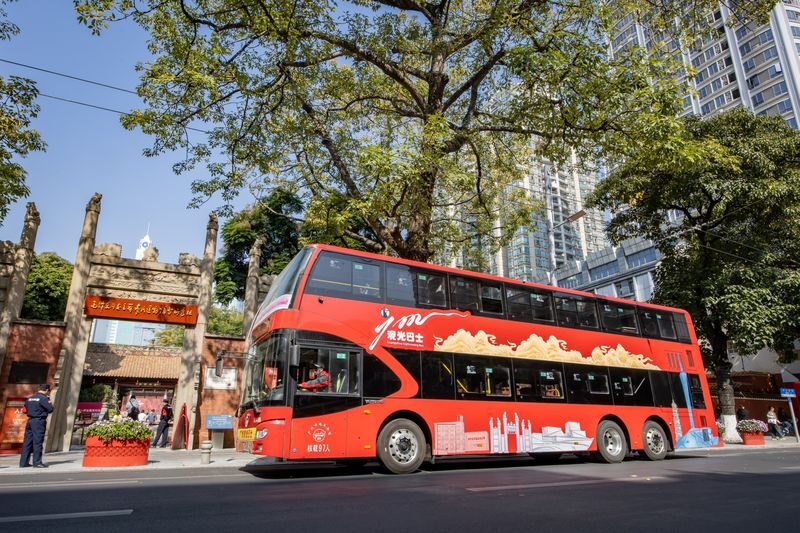
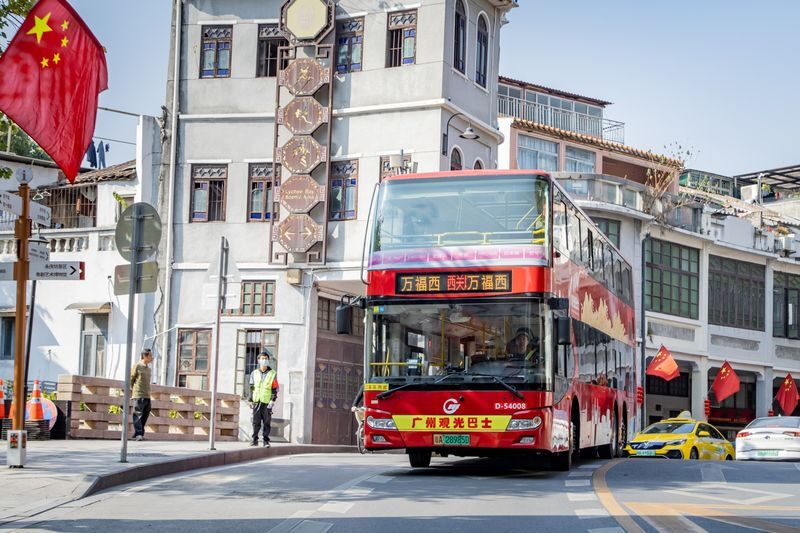
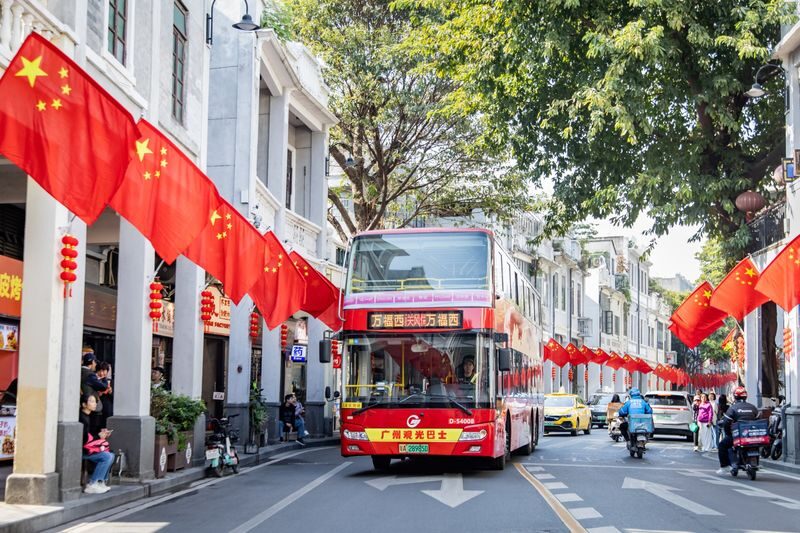
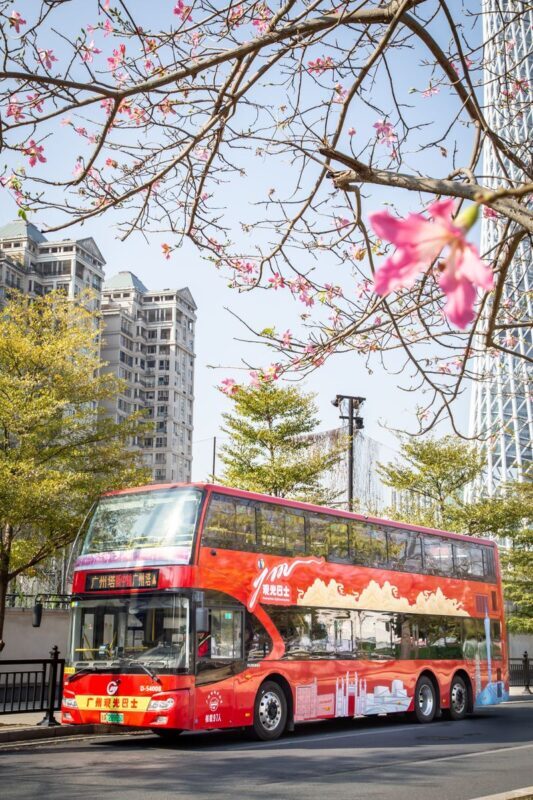
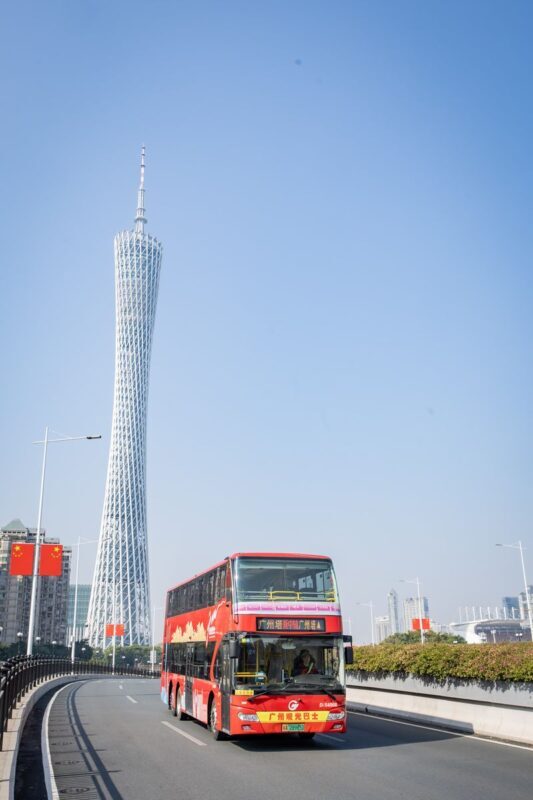
The best use of the sightseeing bus is to see how Guangzhou fits together before choosing a few places to explore on foot. From the upper deck, you can watch the city shift between older streets, commercial districts and modern towers, all without working out each leg on the metro.
That overview has real value in a city this large. You can ride a route first, note the areas that interest you, then hop off at a designated stop and give one neighborhood more time. It is a more relaxed introduction than trying to cross town on foot, particularly if you are traveling with children or prefer to limit walking.
Just keep your expectations grounded. The bus is a transport option with sightseeing commentary, not a guided walking tour, and traffic can turn a short ride into a long one. If you have timed museum bookings or only a few hours, the metro may be the safer way to keep your day on track.

👉 See our pick of the 16 Best Shopping Tours In Guangzhou
Four routes link old streets and newer districts
The pass is described as covering four routes and more than 30 popular sights. The stated highlights include Beijing Road, Haizhu Square and Lychee Bay, with the wider network intended to connect Guangzhou’s older and newer districts.
That broad coverage is the point: you can use the bus to move between areas rather than pay for separate taxi rides or plan every transfer. But do not assume every famous attraction is directly served. The available route information does not guarantee a stop at Canton Tower, so check the current route map before buying if that is a must-see.
Routes use color names, including red, blue, orange and green. A schedule reported for the service lists red and blue buses from 9:30 a.m. to 5 p.m., and orange and green buses from 9:30 a.m. to 9:30 p.m. Treat those hours as a planning clue, not a substitute for checking the timetable on your travel date.
Some journeys may require a change of bus. That is manageable if you have time and know which line you need next, but it can eat into a day if you are trying to cover every route. I would choose two or three areas that matter most to you, then use the remaining time for a leisurely ride or an extra stop rather than trying to complete the entire network.
You can also read our reviews of more tours and experiences in Guangzhou.


Beijing Road makes a practical starting point
Beijing Road is one of the clearest named areas on the route, and it is also linked to the stated ticket redemption point. The boarding stop is described as beside Exit B of Beijing Road Subway Station, on the westbound side of Wanfu Road at the Wanfu West bus stop.
There is a wrinkle: directions for ticket exchange can be inconsistent. Some instructions name Wanfu West, while other directions identify a location near Tee Mall at 168 Beijing Road. Check the pickup point on your voucher before setting out, and allow extra time to find the staff member who exchanges the voucher for a physical ticket.
Beijing Road is useful as a starting point because you can get a feel for a central part of the city before deciding where to get off. It is also a reminder to plan around designated stops: this is not a regular city bus where you can simply flag down the driver or get off wherever a sight catches your eye.
Haizhu Square and Lychee Bay offer different views
Haizhu Square is among the named route highlights. It gives you a look at another part of central Guangzhou and helps make the bus useful as more than a ride around Beijing Road. If you want an overview before choosing where to spend more time, passing through this area can help you see the city’s scale.
Lychee Bay is another named highlight, and it points toward a different sort of city scene from the modern high-rise districts. The bus ride is a preview, though, not a substitute for getting off and exploring. If the route and timetable allow, use a stop as a jumping-off point, then leave time to return to the correct boarding point.
The trade-off is that a list of 30-plus sights does not tell you how much time you will have at each one. Traffic, bus frequency and transfers all affect the day. Think of the pass as a way to connect selected places, not as a promise that you can thoroughly visit them all in one ride.
The upper deck is enclosed, not open-top
Do not book this expecting the open-roof buses found in some other cities. This is a double-decker bus, but the upper deck is enclosed, and views can be limited by windows, seat position and what is outside the bus. If the upper deck matters to you, try to get a seat near the front for a clearer look.
Conditions inside the buses can vary. Some rides have been described as clean and air-conditioned, while others have been dusty, hot or poorly ventilated. Guangzhou can be very hot, and one account described a ride in temperatures of 35 to 37°C, so keep water with you and avoid planning a long bus stretch in peak heat if you are sensitive to warmth.
The bus can still be a relief from walking, especially for older visitors, families and anyone who wants to save their energy for exploring on foot. But I would not count on every bus having the same comfort level. If the bus is crowded or traffic stalls, an air-conditioned metro ride may be more pleasant.
Audio commentary can add context, but bring a backup plan
The ticket is supposed to include a sightseeing map and a set of headphones on your first boarding. The audio system is described as offering commentary in eight languages, which could help you understand what you are passing rather than just watch buildings slide by.
In practice, the audio may be unavailable, out of sync or less informative in English than you hoped. Ask for the headphones when you exchange your voucher, since they may not be handed over automatically. If the commentary does not work, the map still gives you a basic way to follow the routes, but you may need to use your own guidebook or notes for more detail.
Stop announcements are another point to watch. Do not assume the driver will announce each stop clearly in English, or that every stop will be obvious from the road. Keep the route map open, note the name of the stop where you board, and check your position as you approach the place you want to visit.


A full day is more realistic than a quick circuit
The ticket is promoted as a 24-hour unlimited pass, but buses run to operating schedules, not through the night. The reported hours vary by line, with some routes ending at 5 p.m. and others at 9:30 p.m. That makes the pass most useful when you start early and leave room for delays.
Do not expect to ride all four lines and spend meaningful time at every stop in a single day. A full circuit can take longer than expected in traffic, and waiting for the next bus or changing lines adds more time. During major holidays, including Chinese New Year and National Day, road delays may be especially severe.
A sensible plan is to choose one or two priority areas, then use the bus to connect them. If you have a fixed appointment at a museum or other attraction, confirm its booking requirements separately. The bus ticket does not include admission, and a ride pass does not guarantee entry to places that require advance reservations.
The morning-tea bus is a different kind of outing
If you are more interested in an enjoyable ride with food than in hopping between stops, consider the separate morning-tea bus. It has departures at 9:00 a.m. and 11:30 a.m., includes Cantonese-style catering and commentary, and takes about 90 minutes.
The bus passes nearly 20 named scenic spots, including Haizhu Square, Beijing Road and Lychee Bay. Unlike the all-day pass, this is a set-length ride rather than a flexible way to get on and off throughout the day. The food is a central part of the experience, so it suits you if trying Cantonese specialties while seeing the city sounds more appealing than building your own route.
English commentary may be less detailed than Chinese commentary, so do not choose this package solely for an in-depth English-language account of Guangzhou. The morning-tea options start at US$21.29, considerably more than the basic sightseeing pass, but that price includes food and a hosted ride.
The price is attractive if you use the bus more than once
At a starting price of US$5.79, the all-day pass can be a bargain if you ride several times and use it to reach areas you planned to visit anyway. It can also save effort when your group wants to see a broad stretch of the city without repeatedly arranging separate rides.
The value falls if you spend most of the day waiting, sit in traffic or only use one route. A single metro journey may be faster, especially when roads are congested. The bus is best understood as a low-cost sightseeing and transport combination, not automatically the quickest or most comfortable way to get around.
One child measuring 1.4 meters or less can ride free with each adult ticket, but the free fare does not guarantee a seat. Children measuring 1.4 meters or taller pay the adult price. The voucher is valid only on the date selected, and the stated terms do not allow cancellations or refunds, so choose your date carefully.
Should you book the Guangzhou sightseeing bus?
Book it if you want an inexpensive overview, have a flexible day and value seeing several districts without walking between them. It is especially useful for a first visit, a family outing or a low-pressure day when you can adapt your plans to traffic and bus waits.
Skip it if you need precise arrival times, expect an open-top bus, depend on reliable English commentary or want a guaranteed stop at a particular landmark. Before you pay, check the current route map, confirm the physical ticket exchange point and ask for your headphones at redemption. With those expectations set, the bus can be a practical way to get a first look at Guangzhou, even if the metro wins on speed.
Guangzhou Sightseeing Bus
“The Guangzhou city tour bus is a great option for visiting various attractions around the city. You need to plan your trip carefully, as you can on…”
FAQ
How many routes does the sightseeing pass cover?
The all-day pass is described as covering four routes. The routes are identified by colors, including red, blue, orange and green.
How long is the pass valid?
It is sold as a 24-hour unlimited-ride pass, but the voucher is valid only on the date you select. Bus operating hours vary by route, so the pass does not mean buses run around the clock.
Where do I exchange my voucher for a physical ticket?
The stated offline exchange point is Wanfu West, beside Exit B of Beijing Road Subway Station on the westbound side of Wanfu Road. Directions can differ, with some identifying Tee Mall at 168 Beijing Road, so confirm the exact point on your voucher before you go.
Are headphones and a map included?
Yes. Each ticket is meant to include a sightseeing map and headphones on the first boarding, for the eight-language audio commentary. Ask staff for the headphones when exchanging your ticket.
Do children ride free?
One child measuring 1.4 meters or less can ride free with one adult ticket. A free child is not guaranteed a seat, and children measuring 1.4 meters or taller pay the adult price.
Can I cancel or refund the ticket?
No. The stated terms allow no cancellations or refunds, and the voucher is valid only for the selected date.