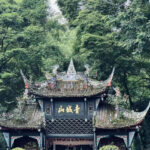
Du Fu Thatched Cottage preserves the place where one of China’s best-known Tang Dynasty poets lived in exile for nearly four years. He wrote more than a hundred poems here, and the site turns that literary story into a walk through halls, pavilions, old trees, and a restored thatched residence.
I like two things in particular: the chance to follow Du Fu’s story through distinct buildings, rather than just read a plaque, and the calm garden setting beside Huanhua Stream. The poems inscribed around the grounds also reward a slower visit, even if you can’t read every line.
One consideration: this is a large park, and its paths can be easy to mix up. Bring your own map or photograph one at the entrance, and allow more time than you would for a quick look at a single historic house.
Key points
- Du Fu’s Chengdu years: The poet lived here for nearly four years and wrote more than a hundred poems.
- A route with a story: Daya Hall, the Poetry History Hall, the Ministry of Works Temple, and the thatched residence each mark a different part of the visit.
- Gardens are part of the attraction: Ancient trees, pavilions, and the setting by Huanhua Stream make this as much a garden walk as a literary stop.
- Give it time: Plan around three hours if you want to see the main buildings and wander without rushing.
- Visit in the morning: The recommended window is 9 to 11 AM, when the light is considered best.
- Bring your passport: Foreign visitors need a passport, or a Hong Kong, Macao, or Taiwan travel permit, to exchange for entry tickets.

👉 See our pick of the 11 Best Shopping Tours In Chengdu
- Key points
- Why Du Fu’s former home matters
- Follow the central path from the main gate
- Find the cottage and the smaller garden corners
- Make time for the gardens, not just the halls
- Pick the right time and pace
- Is the ticket good value?
- Getting there and exchanging your ticket
- Who should put it on the Chengdu plan?
- FAQ
- How long should I plan to visit Du Fu Thatched Cottage?
- What is the recommended route through the park?
- What does the ticket include?
- When is the best time to visit?
- What identification do foreign visitors need?
- Are children admitted free?
- Can I cancel my ticket?
- The Best Of Chengdu!
- More Tours in Chengdu
- More Tour Reviews in Chengdu
- Not for you? Here's more nearby things to do in Chengdu we have reviewed
Why Du Fu’s former home matters
 1 / 7
 2 / 7
 3 / 7
 4 / 7
 5 / 7
 6 / 7
 7 / 7
Du Fu was a major poet of the Tang Dynasty, and this Chengdu site is closely tied to the years he spent living in exile. He stayed here for nearly four years and composed over a hundred poems. That gives the grounds a clear focus: this is not simply a collection of attractive old buildings, but a place built around a writer’s life and work.
The cottage you see today has been restored several times, from the Song through the Qing dynasties. So it is best understood as a memorial site shaped and renewed over centuries, not an untouched home preserved exactly as Du Fu left it. That distinction does not lessen the visit. It helps explain why the park contains halls, shrines, pavilions, and exhibition spaces alongside the modest cottage itself.
If you have read Du Fu, the site gives his writing a physical setting. If you have not, you can still appreciate the careful sequence of buildings and the quiet garden paths. The experience is strongest when you take time to notice the poetry inscriptions rather than treating the grounds as a photo stop.
You can also read our reviews of more tours and experiences in Chengdu.


Follow the central path from the main gate
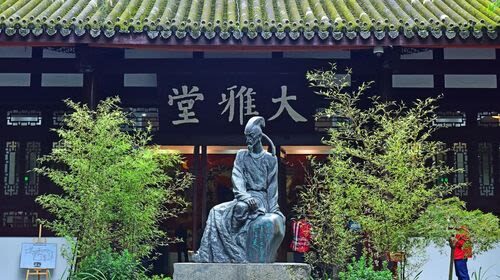
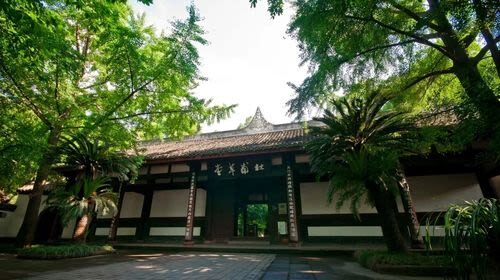
The main buildings sit along a central axis, arranged from south to north. A sensible route begins at the main gate and continues to Daya Hall, the Poetry History Hall, the Ministry of Works Temple, and the Thatched Cottage Residence. Huanhua Temple is another recommended stop on the way through the grounds.
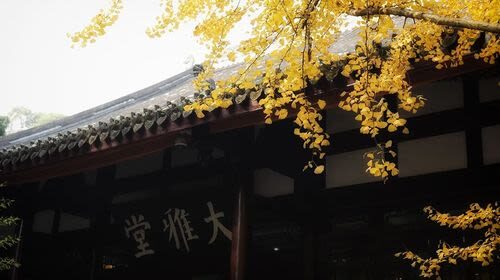
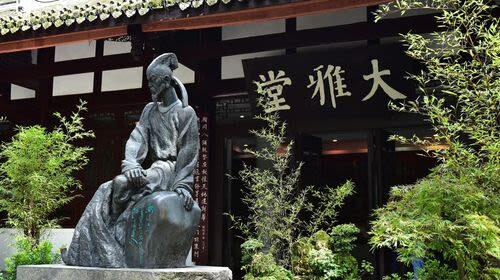
Daya Hall is a useful first pause. It introduces the site’s cultural purpose and gives you a moment to get oriented before moving into the more specific story of Du Fu. From there, the Poetry History Hall is the natural place to focus on the poet’s legacy. Inscriptions and displays connect the buildings to the poems that made the cottage a revered place in Chinese literary history.
The Ministry of Works Temple, also known as Gongbu Shrine, continues the memorial sequence. The building name may sound like a government office, but here it is part of the site’s tribute to Du Fu. Take a moment to look around before moving on: the grounds are not one long museum corridor, and the shifting mix of halls, trees, and open paths is part of what makes the visit pleasant.
Find the cottage and the smaller garden corners
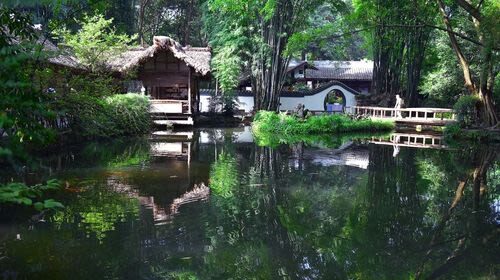
The thatched cottage lies northeast of Gongbu Shrine, near the Shaoling Stele Pavilion. This is the heart of the visit for many people: the modest residence gives the larger park a human scale. After the formal halls, it is easier to picture the poet’s everyday surroundings, even with the understanding that the cottage has been restored over time.
East of the cottage, the Penjing Garden offers a change of pace. To the south, you can continue toward Huanhua Shrine and Flower Path, as well as the Thatched Cottage Exhibition Room near the south gate. These smaller stops help make the grounds feel like a sequence of distinct places, not just a single route to the cottage and back.
The site includes several poetry inscriptions. I would not rush past them, even if you can only read a few. They are among the most direct links between the poet and the garden around you. You can pause, take in the setting, and let the visit be about more than ticking off buildings.
Make time for the gardens, not just the halls
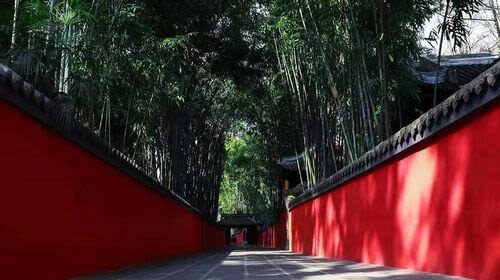
The cottage sits by Huanhua Stream, outside Chengdu’s old west gate. Within the grounds, pavilions and tall, old trees soften the formal layout. The gardens are frequently described as beautiful and well kept, and they are a large part of the site’s appeal. If you need a break from indoor displays, the paths give you space to slow down.
The park is spacious enough to absorb time. A visit of about three hours gives you room to follow the recommended route, stop at the main buildings, and still wander a little. You can make it shorter, but a hurried circuit risks reducing the place to a few halls and a quick look at the cottage.
The grounds are also notably clean, and the calm atmosphere suits the subject. On a quieter day, that can make the experience feel reflective rather than crowded. But don’t assume every turn is obvious: the site is large, and it is easy to lose your sense of direction. Photograph the map when you enter, follow it through the main route, then explore side paths once you know where you are.
Pick the right time and pace
The recommended visiting window is 9 to 11 AM, when the light is best. Morning is a good choice if photographs matter to you, or if you want to take in the garden before the day’s plans begin. The supplied information does not give seasonal opening hours or a visit limit, so check current details before setting out.
Keep your schedule flexible. The main buildings give the visit structure, but the inscriptions and garden paths are where you may want to linger. A practical plan is to start with the central route, make time for the cottage and nearby pavilion, then decide whether to continue to Huanhua Temple and the southern garden stops.
There is no transportation required inside the park. Everything included in the ticket is within the grounds, so comfortable shoes and a little time are more useful than arranging a ride between attractions. If you are visiting with someone who prefers a slower pace, the gardens make it easy to break the outing into shorter stretches.


Is the ticket good value?
Admission starts at $10.70, and the ticket includes the Thatched Cottage, Daya Hall, and the former residence area, along with the other attractions inside the park. For a site that can fill roughly three hours, that is reasonable value, especially if you enjoy historic gardens, Chinese poetry, or traditional architecture.
The value depends on how you like to visit. If you want a quick look at one small cottage, the grounds may feel larger than necessary. If you enjoy walking through a historic site at your own pace, reading inscriptions, and seeing several related buildings, the ticket covers a full outing rather than a single room.
Souvenirs are not included. There is no need to budget for transport between the attractions once you enter, since you walk between them inside the park. The ticket is valid only for the selected date, so choose a day you can keep.
Getting there and exchanging your ticket
The meeting address is listed as 28 Cao Tang Lu, Qing Yang Qu, Chengdu, while another address for the attraction is given as No. 37, Qinghua Road, Qingyang District. To avoid confusion, use the destination name Du Fu Thatched Cottage when navigating rather than relying on one street number alone.
By subway, take Line 4 to Caotang North Road Station, leave from Exit D, and walk about ten minutes. If you are driving, navigate to the Du Fu Thatched Cottage parking lot. The supplied directions say to exchange your voucher at the visitor center, while entry guidance also points foreign visitors to the ticket office. Bring your passport, or the relevant Hong Kong, Macao, or Taiwan travel permit, and ask staff where to exchange it at your chosen gate.
The ticket is date-specific. Free cancellation is available if you cancel more than 24 hours ahead; cancellations within 24 hours incur a 30 percent fee. Same-day cancellations or expired unused tickets incur a 100 percent fee, and tickets cannot be refunded once you have entered the park.
Who should put it on the Chengdu plan?
This is a strong choice if you want a quieter cultural stop between Chengdu’s larger attractions. It suits anyone with an interest in Chinese poetry, history, traditional buildings, or gardens. You do not need to be a Du Fu specialist to enjoy the grounds, but knowing that he lived here and wrote more than a hundred poems gives the halls and cottage a clearer meaning.
Families can visit too. Children under six enter free, and child tickets apply to minors aged six to eighteen. The park’s size means you should allow time for walking and pauses rather than expecting a short indoor visit.
I would book if you can give the site at least a couple of hours and are happy to explore on foot. If your Chengdu schedule is tight and poetry or garden settings are not a priority, you may prefer to spend that time elsewhere. For a measured, self-guided look at one of the city’s most significant literary sites, Du Fu Thatched Cottage is an easy recommendation.
Du Fu Thatched Cottage
“beautiful cottage. need to exchange for tickets using your ID or passport for foreigners. faster through Klook as pre registered.”
FAQ
How long should I plan to visit Du Fu Thatched Cottage?
Allow about three hours to see the main buildings, the cottage, and the garden paths without rushing. You can make a shorter visit, but the grounds are large.
What is the recommended route through the park?
Start at the main gate and continue to Daya Hall, the Poetry History Hall, the Ministry of Works Temple, the Thatched Cottage Residence, and Huanhua Temple. A photo of the park map can help you stay oriented.
What does the ticket include?
The ticket includes the attractions inside the park, including the Thatched Cottage, Daya Hall, and the former residence area. You walk between the attractions; no transportation inside the park is needed.
When is the best time to visit?
The recommended time is 9 to 11 AM, when the light is best.
What identification do foreign visitors need?
Bring a foreign passport, or a Hong Kong, Macao, or Taiwan travel permit, to exchange for an entry ticket. The stated exchange point is the visitor center, though directions also refer to the ticket office.
Are children admitted free?
Children under six are free. Child tickets apply to minors aged six to eighteen.
Can I cancel my ticket?
You can cancel for free more than 24 hours in advance. Cancellations within 24 hours incur a 30 percent fee; same-day cancellations and expired unused tickets incur a 100 percent fee. Tickets are non-refundable once you have entered the park.