Mexico’s National Museum of Anthropology holds far more than you can take in during one visit. This 2.5-hour tour gives you a focused route through the Aztec, Maya, and Teotihuacan galleries, with a guide to connect the objects to the people and ideas behind them.
I like two things about the format: the guide turns a huge collection into a clear story, and the small-group approach leaves room for questions. Many tours are led by Jonathan, also called Jona, whose lively explanations and pop quizzes have become part of the experience.
The trade-off is that you see a selection, not the whole museum. If you want to linger over every gallery or move at your own pace, a guided visit may feel brisk. For a first visit, though, it gives you a useful map of what matters.
Key points
- Three major cultures in one visit: The route focuses on the Aztec, Maya, and Teotihuacan galleries.
- Iconic objects with context: Highlights include the Stone of the Sun, the Penacho of Moctezuma, and a Maya ritual mask made of imperial jade.
- A guide who teaches through stories: Jonathan, often called Jona, is known for clear explanations, questions, and an engaging pace.
- Useful before other sights: The tour can help you recognize the cultures and themes you encounter later at Teotihuacan or around Mexico City.
- Entry and a small snack are included: Expect museum admission, a bottle of water, and a protein bar.
- A focused visit, not a full museum tour: Plan on about 2.5 hours, with some tours running longer.
👉 See our pick of the 11 Best Shopping Tours In Mexico City
- Key points
- Why Start Mexico City With This Museum
- Meeting Your Guide at the Museum Entrance
- The Aztec Gallery and Its Major Emblems
- Teotihuacan and the Pyramid Feature
- The Maya Gallery and a Jade Ritual Mask
- A Big Story in About Two and a Half Hours
- What the Price Includes
- Practical Details Before You Go
- Who Will Get the Most From This Tour
- Should You Book It?
- FAQ
- How long is the tour?
- What languages are available?
- Which galleries does the tour visit?
- Is museum admission included?
- What is included besides the guide and entry?
- Are there any museum rules I should know?
- The Best Of Mexico City!
- More City Tours in Mexico City
- More Tours in Mexico City
- More Tour Reviews in Mexico City
- Not for you? Here's more nearby things to do in Mexico City we have reviewed
Why Start Mexico City With This Museum
 1 / 8
 2 / 8
 3 / 8
 4 / 8
 5 / 8
 6 / 8
 7 / 8
 8 / 8
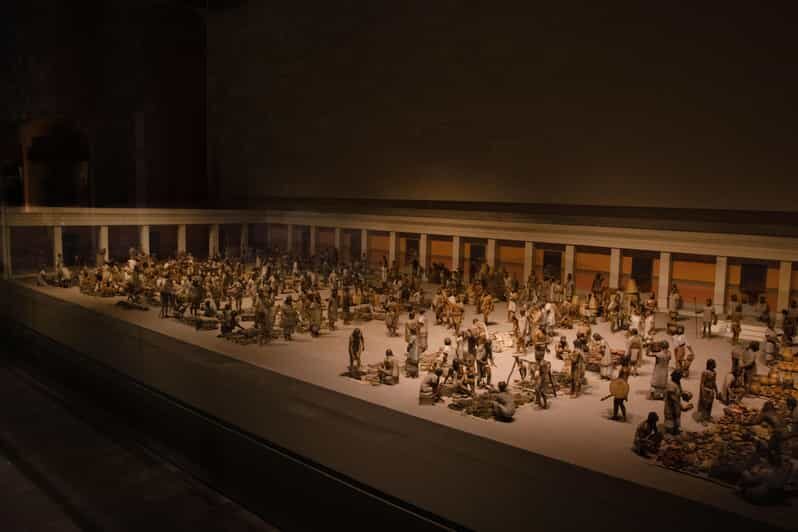
The museum makes a strong first stop because it gives you a framework for the rest of your visit. Instead of meeting ancient Mexico as a string of impressive ruins and unfamiliar names, you begin with three civilizations and the objects that help explain them.
The tour focuses on the Aztec, Maya, and Teotihuacan collections. Your guide introduces the importance of pre-Hispanic art, the capitals associated with each civilization, and the ways their empires ended. The point is not to cram in every date. It is to help you see how the objects fit into larger stories about power, belief, daily life, and change.
That context can pay off later. If you visit Teotihuacan after the museum, you will have already encountered its culture and architecture in the gallery. If you go to the Zócalo or explore other parts of the city, you will have a better sense of the older traditions beneath modern Mexico.
I would book this early in a Mexico City stay if ancient history interests you. It gives you useful background before you visit related sites, rather than asking you to piece together the story afterward.
You can also read our reviews of more city tours in Mexico City


Meeting Your Guide at the Museum Entrance
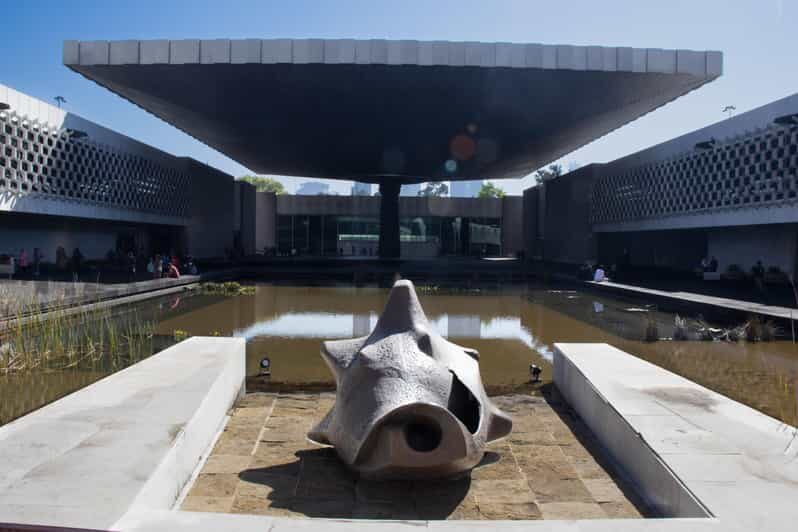
The tour begins at the entrance to the Museum of Anthropology. You meet your guide there, then set off on foot through the galleries. No transport is included or needed as part of the activity itself.
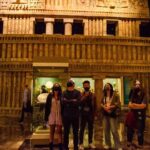
The experience is offered in English and is designed for a private party or a small group, with a stated maximum of seven people per tour. That size matters in a museum full of detail. You can hear the guide, ask questions, and stay close to the group without feeling you are following a flag through a crowd.
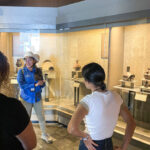
Jonathan, also known as Jona, is the guide name most often associated with the tour. His style is interactive: he asks questions, checks that people are following the thread, and welcomes detailed questions. Some visitors describe pop quizzes as part of the fun. You do not need to arrive with a history degree, but you should be willing to take part rather than treat the guide as background audio.
Guide assignments can vary, so do not assume a particular person is guaranteed unless the booking details confirm it. The main advantage to look for is a live English-speaking guide who can explain the objects and respond to the interests of your group.
The Aztec Gallery and Its Major Emblems
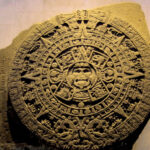
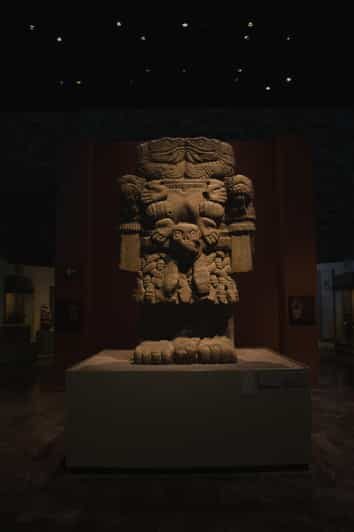
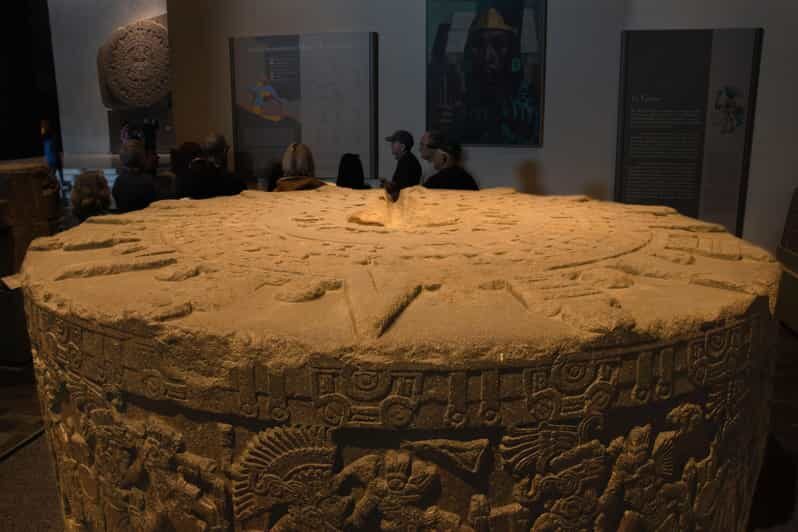
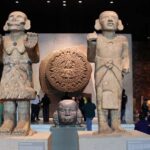
The Aztec gallery is one of the main reasons to book. The route includes the Stone of the Sun and the Penacho of Moctezuma, two objects that draw attention even before you know their full stories.
A guide helps turn these famous pieces into more than photo stops. The tour places them within wider discussions of Aztec beliefs, political power, worship, and the end of the empire. It also addresses why human sacrifice took place, a subject that can be reduced to shock value when it is presented without context. Here, the aim is to understand the beliefs and social world around the practice, not just react to it.
The guide’s explanations are especially useful if you have limited time or find museum labels difficult to follow. Most of the written material is in Spanish, so an English-speaking guide can give you the main ideas without making you stop at every panel. The trade-off is that you will not have time to read everything yourself. If one object catches your interest, ask the guide to pause or make a note to return to it later.
Teotihuacan and the Pyramid Feature
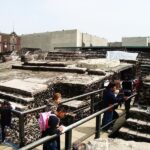
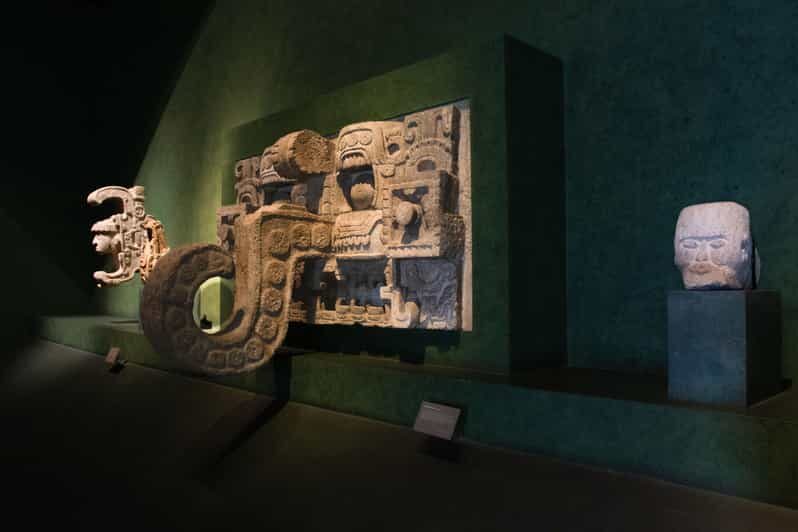
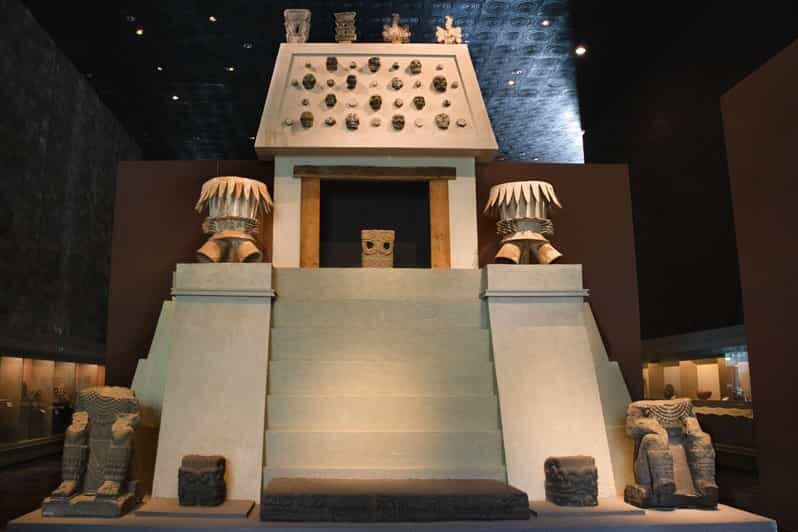
The Teotihuacan gallery brings another major pre-Hispanic culture into the story. A listed highlight is the chance to go inside the Quetzalcoatl Pyramid feature in the gallery. The tour uses this stop to explain the civilization and its capital, then connect its art and architecture to the wider history of ancient Mexico.
This visit can be particularly useful if a trip to the Teotihuacan archaeological site is on your plans. The gallery gives you an introduction before you see the ruins themselves, and the objects are easier to place when you already have some context. One visitor specifically found the museum visit helped make a later visit to the pyramids more meaningful.
The museum tour is not a substitute for seeing Teotihuacan in person. It is a primer, not a day trip, and it does not include transport to the archaeological site. Think of it as the history lesson that helps the place make more sense when you get there.
More Great Tours NearbyThe Maya Gallery and a Jade Ritual Mask
The Maya gallery adds a different set of objects and ideas to the route. Among its highlights is a ritual mask made of imperial jade. The material and craftsmanship make it worth a closer look, while the guide’s explanation helps place it within Maya traditions.
The tour also explores everyday life, not only rulers and ceremonial objects. You may hear about diet, alcohol, gambling, and music, alongside the religious and political themes. That range matters. A museum can easily make ancient people feel remote, but ordinary routines give you a more human way into their world.
The Maya stop is still only one part of a short tour. If Maya history is your main interest, you may want more time in that gallery afterward. The route is built to compare three civilizations, not to provide an exhaustive account of any one of them.
You can also read our reviews of more museum experiences in Mexico City

A Big Story in About Two and a Half Hours
The advertised duration is 2.5 hours, enough to cover the core galleries without turning the visit into an all-day commitment. Some tours have run closer to three hours or longer, depending on the group and the pace. If you have a firm appointment afterward, leave a little breathing room rather than planning a tight connection.
The pacing is one of the experience’s strengths. The guide moves through key objects and broader themes, while pauses and questions keep the tour from feeling like a lecture. There is a lot to absorb, but the focus on selected rooms helps prevent the museum’s scale from becoming overwhelming.
You will not see every collection or every label. That is the sensible compromise. The museum is large, and an attempt to cover it all in a few hours would likely leave you with a blur of names and objects. This tour gives you the main points and a way to continue exploring on your own.
What the $39 Price Includes
At $39 per person, the price includes museum entry, a certified guide, a small bottle of water, and a protein bar. The important value is the guide and admission together. You are paying for a route through a very large museum and for someone to explain why the objects matter, rather than simply getting through the entrance.
That can be a good use of money if you have limited time, want an English-language explanation, or are new to pre-Hispanic history. The tour can also help you avoid spending your visit trying to decide which rooms to prioritize. If you already know the collections well, speak Spanish, and prefer to explore independently, the guide may be less essential.
The snack is practical rather than a meal. It is a small kindness during a long stretch of walking and listening, but you should not count on it to replace breakfast or lunch. The tour includes a bottle of water as well.
Practical Details Before You Go
Wear comfortable shoes. You will spend the tour on your feet inside the museum, and there is enough to see that uncomfortable footwear can become a distraction. The museum has a free wardrobe service, which can be helpful if you arrive carrying more than you need.
You do not need an ID to enter, according to the activity information. Flash photography and touching the exhibits are not allowed, so keep your camera flash off and give the objects space.
The activity offers reserve-now, pay-later booking and free cancellation up to 24 hours in advance. Check the available start times when choosing a date. These options can help if your plans are still shifting, but the most important choice is to leave enough time for the full museum visit.
Who Will Get the Most From This Tour
This is a strong fit for first-time visitors who want a clear introduction to ancient Mexico. It also suits anyone planning to see Teotihuacan, or anyone who likes learning through conversation rather than reading every display panel alone.
Families and curious older children may appreciate the guide’s questions and interactive approach, though the activity information does not set a specific age range. People who enjoy detailed questions can make good use of the small-group format. You can ask about an object or theme and get a response in the moment.
It may be less suitable if you want silence, solitude, or a long stretch to sketch and study individual pieces. The route has a teaching focus and a set duration. You can return to galleries afterward if the museum schedule and your plans allow, but do not expect the guided portion to cover everything.
Should You Book It?
If this is your first visit to the Anthropology Museum, I would book the tour. The museum’s scale and the density of its collections make a guided introduction useful, and the focus on the Aztec, Maya, and Teotihuacan galleries gives you a sound base for the rest of your time in Mexico City.
Choose it especially if you want an English-language explanation, enjoy an engaging guide, or plan to visit Teotihuacan afterward. Skip it if you would rather explore at your own pace and already feel comfortable interpreting the collections. At $39, the tour offers its best value to visitors who want the museum to tell a connected story, not just display a set of famous objects.
Mexico City: Anthropology Museum with Historian
FAQ
How long is the tour?
The stated duration is 2.5 hours. Some tours may run longer, so allow extra time if you have plans afterward.
What languages are available?
The live guide is listed as English-speaking.
Which galleries does the tour visit?
The route focuses on the Aztec, Teotihuacan, and Maya galleries.
Is museum admission included?
Yes. Museum entry is included in the $39 per-person price.
What is included besides the guide and entry?
You receive a small bottle of water and a protein bar.
Are there any museum rules I should know?
Flash photography and touching the exhibits are not allowed. Comfortable shoes are suggested, and the museum offers a free wardrobe service.
You can check availability for your dates here: