
Cali’s historic center makes the most sense when you hear the stories behind its music, food and public spaces. This shared walk connects colonial-era landmarks with the city’s Afro-descendant cultural legacy, salsa’s rise and the social struggles that still shape local life.
I like the tour’s broad, candid view of Cali: it sets the city’s cultural pride alongside hard subjects such as discrimination and drug trafficking. I also like that guides including Cristian, Fernando, Juliana and Lem bring distinct local perspectives to the walk.
The main consideration is the distance and timing. Expect about 7 km on foot; the stated duration is 150 minutes, while the tour description also says approximately three hours, so leave room in your plans.
- What makes this Cali walk worth your time
- From La Merced into Cali’s early story
- Plazas that reveal how Cali works
- Architecture outside, stories inside
- Food, music and the legacies of three cultures
- Salsa, the cartels and Cali’s difficult chapters
- What the walk feels like in practice
- The guides are a major part of the value
- Is a fair price?
- Should you book the Cali history walk?
- FAQ
- How long does the tour last?
- How far will I walk?
- What language is the tour in?
- Where is the meeting point?
- Is transportation included?
- Are food and drinks included?
- Do I need to pay for museum or landmark entry?
- What should I bring?
What makes this Cali walk worth your time
 1 / 10
 2 / 10
 3 / 10
 4 / 10
 5 / 10
 6 / 10
 7 / 10
 8 / 10
 9 / 10
 10 / 10
- La Merced sets the scene: Begin in front of the archaeological museum and church, where the guide introduces the city’s origins.
- Plazas and landmarks make history visible: Walk past sites including Cayzedo Square, the River Boulevard, the Municipal Theater and the Ermita.
- Cali’s culture comes with context: Learn how African-descendant communities helped shape local gastronomy, music and dance, alongside the contributions of the city’s three ethnic groups.
- Salsa is part of the city’s story, not just its nightlife: The guide connects the growth of salsa and La Feria de Cali with the city’s wider social and political history.
- Expect walking, not museum entry: The experience focuses on outdoor sightseeing and storytelling. Admission tickets and transport are not included.
- A small taste may be included: Chontaduro is offered when available, and the guide can point you toward local places for food, coffee and souvenirs.
From La Merced into Cali’s early story
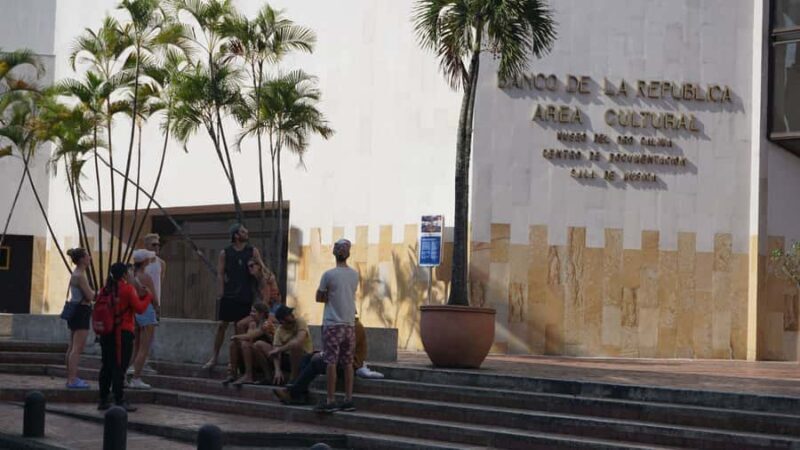
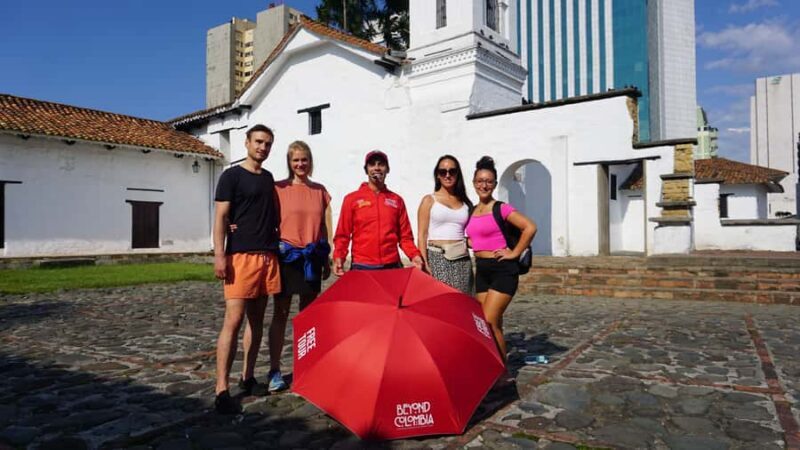
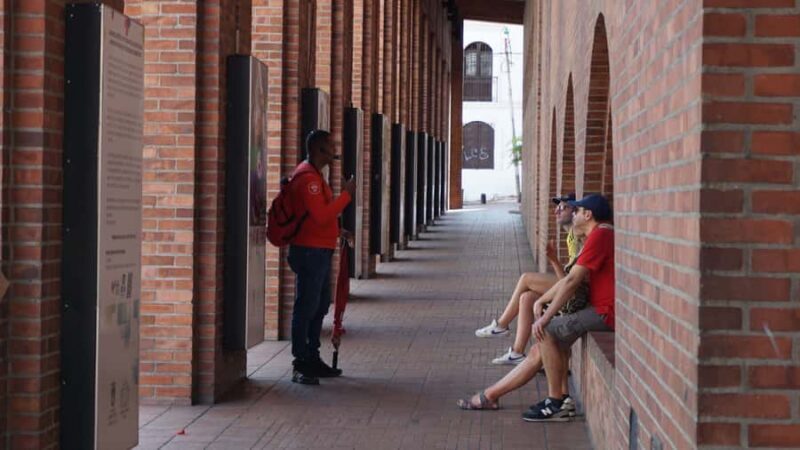
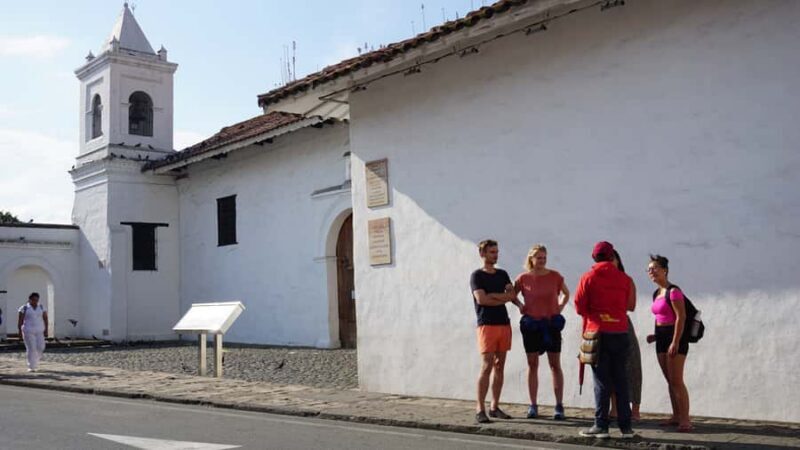
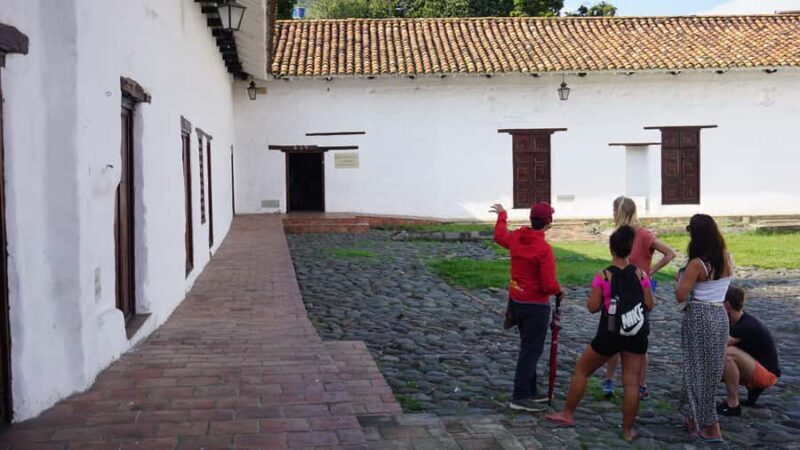
Meet the Beyond Colombia guide in front of Museo Arqueológico La Merced, marked by the group’s red umbrellas. The starting point places you beside La Merced Church and the archaeological museum, giving the guide a natural setting to introduce how Santiago de Cali began.
This opening is useful because the walk is not just a roll call of old buildings. It asks how the city developed and how its past shaped the Cali you see today. The tour connects the region’s importance, the city’s socioeconomic development from the 17th century onward, and the customs and expressions that remain part of everyday life.
The Calima Gold Museum is part of the route’s historical frame. The tour information does not promise an indoor visit, so think of this as a chance to hear about the city’s early context rather than a museum ticket or guided gallery tour. That distinction matters if you are hoping to spend time with exhibits.
Your guide also introduces the role of the region known as El Valle. The emphasis is on why this geographical area matters to Cali, not on a nature excursion: the day stays in the historic center, with the city’s streets and architecture as its main setting.
Plazas that reveal how Cali works
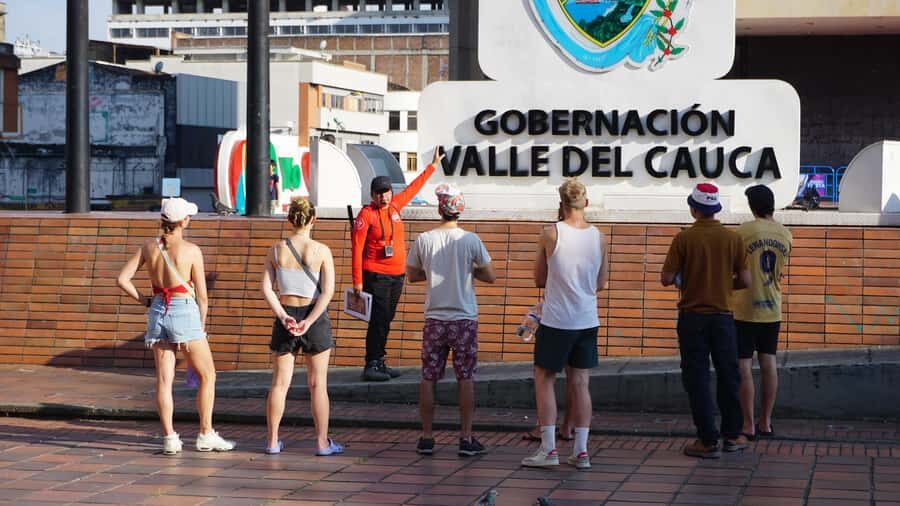
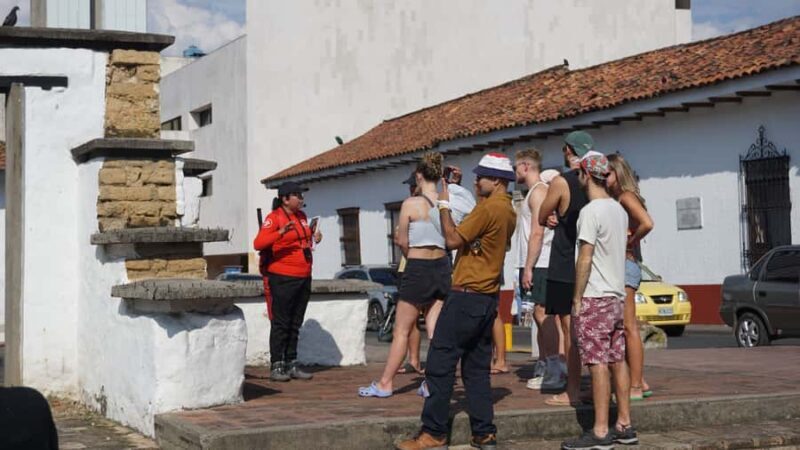
The River Boulevard, San Francisco Square and Cayzedo Square give the walk its public-space rhythm. Here, the guide can link historic development with the ways people gather and express themselves in the city. These are not just places to pause for a photograph; they help make Cali’s civic life part of the story.
Cayzedo Square is among the city’s key central spaces, while San Francisco Square adds another stop in the historic center. The River Boulevard brings the route into a more open public area. The experience is a walking tour, so expect to move between sites and stop to listen rather than settle in for long visits at each one.
Jairo Varela is another named stop, tying the route to Cali’s musical identity. Salsa is central to the city’s public image, but the tour gives it historical context, including its growth during the years of the cartels and its connection to La Feria de Cali. That makes the subject more interesting than a simple claim that Cali is a salsa city. You hear how music and dance became part of a broader local identity.
The guide also discusses soccer. Salsa and soccer both matter in Cali’s social life, and hearing about them in the same walk helps explain how culture extends beyond formal monuments. The tour’s aim is to show the city from more than one angle, including the pride and the complications.
Architecture outside, stories inside
The route passes several architectural landmarks: the Ermita, the Municipal Theater, St. Peter’s Cathedral, Jorge Isaacs Theater and Puente Ortiz, among others. The descriptions promise sightseeing, not entry, so you should not count on seeing interiors or attending performances.
That outdoor focus has practical value. You can cover a good portion of the center in one outing without paying separate admission fees, and the guide can help you understand why these buildings matter as you see them. The trade-off is that your time at each site is shaped by the group’s walking pace and the guide’s explanation.
The Municipal Theater and Jorge Isaacs Theater open a path into Cali’s cultural life beyond salsa. The tour considers how literature, cinema and theater have helped shape the city’s evolving identity. That broader view is welcome: a city is more than the art form it is best known for, and Cali’s creative life includes several forms of expression.
The Ermita, cathedral and bridge offer different points of reference as you move through the center. You will see a range of city landmarks, but the route is not described as a specialist architecture tour. If architectural detail is your main interest, use the walk as an introduction and plan to revisit particular sites on your own.
Food, music and the legacies of three cultures
One of the tour’s most valuable threads is how it treats food and music as history. The guide explains how African slaves helped nurture Cali’s culture through gastronomy, music and dance, and discusses the legacy left by the city’s three ethnic groups. This gives familiar cultural markers a deeper context without reducing the city to a dance lesson or a menu.
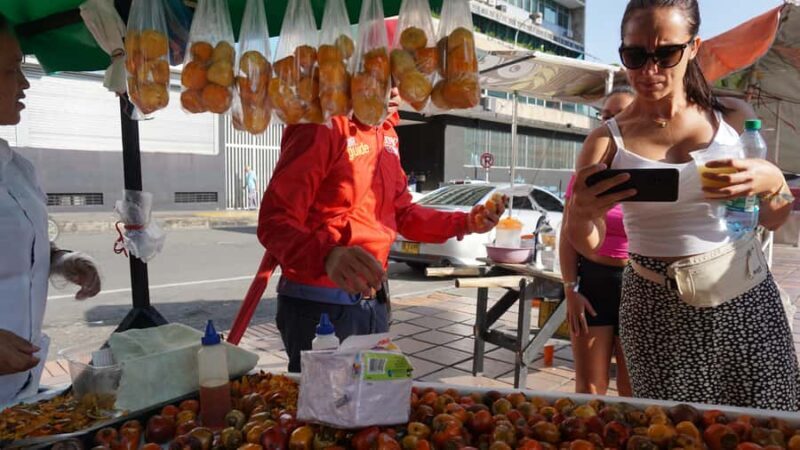
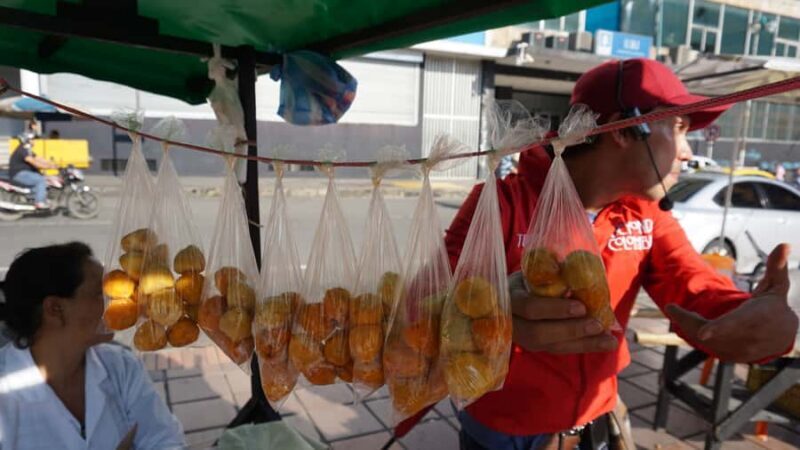
A chontaduro tasting may be included when available. It is a small, practical addition rather than a meal, and it comes with an honest caveat: availability is not guaranteed. Food and drinks beyond that are not included, but the guide can recommend local spots for lunch, coffee and other purchases.
The tour also pays attention to local slang and songs from the Pacific. These details help you notice how culture travels through speech, sound and daily habits, not just through a museum label. An open mind helps here, especially when the conversation moves into questions of discrimination and cultural resistance.
The guide’s approach is intended to be accurate and objective, without taking sides. That promise is especially important when a walk tackles difficult periods in Cali’s history. Expect discussion rather than a tidy verdict: the goal is to understand how events affected the city and its people.
More Great Tours NearbySalsa, the cartels and Cali’s difficult chapters
Cali’s salsa identity is inseparable from its wider history. The tour explores the music’s growth during the years of the cartels and the place of La Feria de Cali in the city’s cultural life. The point is not to glamorize that period, but to look at how music and public celebration developed alongside a painful and complicated reality.
Drug trafficking’s impact and consequences in daily life are also part of the conversation. This is a useful counterweight to the easy postcard version of Cali as all rhythm and nightlife. You get a fuller sense of why the city’s cultural confidence can exist alongside serious social challenges.
The tour also discusses civil wars, discrimination and social resistance. It follows the story into more recent times, including social revolts during and after the pandemic. These subjects can make the walk feel weightier than a sightseeing loop, but they are central to its purpose: to explain how history continues to affect the present.
If you prefer a light outing with little historical discussion, this may not be your best choice. If you want to understand why Cali’s people and culture are often described through both warmth and a fighting spirit, these conversations are among the most meaningful parts.
What the walk feels like in practice
Plan for around 7 km on foot, with stops to hear the guide. Wear comfortable shoes and clothes, and bring water or another preferred drink. Cali’s weather can change, so carry an umbrella or rainproof layer; the tour provider cannot control the rain, a rare but useful reminder from a walking outfit.
The published duration is 150 minutes, but the tour description also calls it approximately three hours. Recent outings have been described as lasting two to three hours, so avoid scheduling a tight connection immediately afterward. The pace includes stops, but it is still a substantial city walk.
This is a shared tour, not a private guide service. You will be part of a group, which can be a pleasant way to meet other people, but the guide’s attention and the pace are shared. The group format also means you should keep your belongings close in crowded areas. The advice is direct: do not give papaya, a local warning to avoid making yourself an easy target.
The experience is listed in English and is not suitable for people over 70. No transportation is provided to or from your hotel, or during the walk. There are no included tickets or entrances, and the route is presented as sightseeing rather than a string of paid attractions.
The guides are a major part of the value
The human guide matters a lot on a walk built around interpretation. Guides named in recent tour experiences include Cristian, Fernando, Juliana, Lem and Adriana Alvarez. Cristian is repeatedly singled out for energy, clear explanations and an engaging manner; Fernando is praised for friendliness and local tips; Juliana is valued for her connection to Cali and command of its history; Lem brings a strong interest in salsa.
That does not guarantee a particular guide on your date, but it gives you a sense of the tour’s character. The strongest guide style seems to be lively and conversational, with room for questions and interaction rather than a long, memorized speech. One visitor even found a replacement market food tour offered when the scheduled walk did not happen, a reminder that plans can change, though the named experience here is the downtown walk.
The overall rating is 4.8 from 143 reviews, and the repeated praise centers on the guides, the breadth of the history and the value of seeing many sites in a few hours. One practical downside also comes through clearly: some people find the walk long. The distance and the many themes make that understandable.
Is $13 a fair price?
At $13 per person, the value rests on the guide and the amount of ground covered, not on included meals or attraction tickets. You get a live English-language guide, historical context, outdoor sightseeing at central landmarks, and local recommendations. A chontaduro tasting may be included when available, but food, drinks, souvenirs and transport are extra.
I consider that a sensible price if you want a structured introduction to Cali and are happy to walk. You are paying for a local perspective that joins architecture, salsa, food, social history and current cultural identity in one route. The guide’s ability to make those subjects clear is central to what you get.
It is less suitable if you want a slow, private visit to each building, indoor museum time, or a short and easy stroll. There are no included entrances, and the pace covers a sizeable distance. Think of this as a moving orientation to the historic center, not a full museum day or a dance class.
Should you book the Cali history walk?
Book it if you want to understand Cali beyond its salsa reputation, and if you are ready for a substantial walk and frank discussion of difficult history. The route gives you a clear first look at the center, while the guide helps connect its buildings and plazas to the people and cultural forces that shaped the city.
Skip it if 7 km on foot is too much, if you need a private pace, or if you are looking mainly for entertainment without serious historical subjects. For most visitors with a free half-day and comfortable shoes, the mix of landmarks, local culture and candid context makes this a strong-value way to get oriented. Keep the afternoon flexible, carry water and rain protection, and use the guide’s local recommendations to decide where to eat or explore next.
Shared Tour Cali’s Historical Downtown
FAQ
How long does the tour last?
The stated duration is 150 minutes. The tour description also says approximately three hours, so allow some flexibility in your schedule.
How far will I walk?
You will walk about 7 km, with stops to listen to the guide.
What language is the tour in?
The live tour guide speaks English.
Where is the meeting point?
Meet in front of Museo Arqueológico La Merced, where Beyond Colombia guides use red umbrellas.
Is transportation included?
No. Transport to and from your hotel and transport during the tour are not included. The route is walked.
Are food and drinks included?
Food and drinks are not included. A chontaduro tasting may be offered when available, and the guide can recommend places for lunch and coffee.
Do I need to pay for museum or landmark entry?
Tickets and entrance fees are not included. The tour is described as sightseeing at key historic-center sites, with no paid stops required.
What should I bring?
Wear comfortable shoes and clothes, and bring water or another drink. An umbrella or rainproof coat is recommended.
You can check availability for your dates here: