The night in the desert is the heart of this two-day trip: you can watch the dunes turn gold, try an optional camel ride, and gather around a campfire for music and sand-baked bread. I like that the route pairs this open-air night with landmark stops at El Jem and Kairouan, and that a licensed guide helps make sense of the long ride between them.
I also like the chance to visit a Berber family in Matmata and see a troglodyte home, a living part of the region’s story rather than just a photo stop. The trade-off is distance: this is a packed trip, with roughly 1,000 kilometers or more on the road, so you should be ready for long stretches in the vehicle and short visits at some stops.
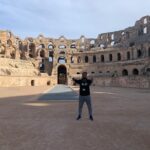
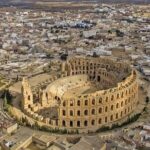
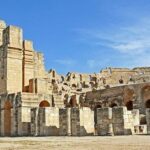
- El Jem’s Roman amphitheater opens the trip with one of the best-preserved examples of its kind.
- Matmata’s underground homes offer a glimpse of local life, with a possible visit to a Berber family and the Star Wars-linked Sidi Idriss hotel.
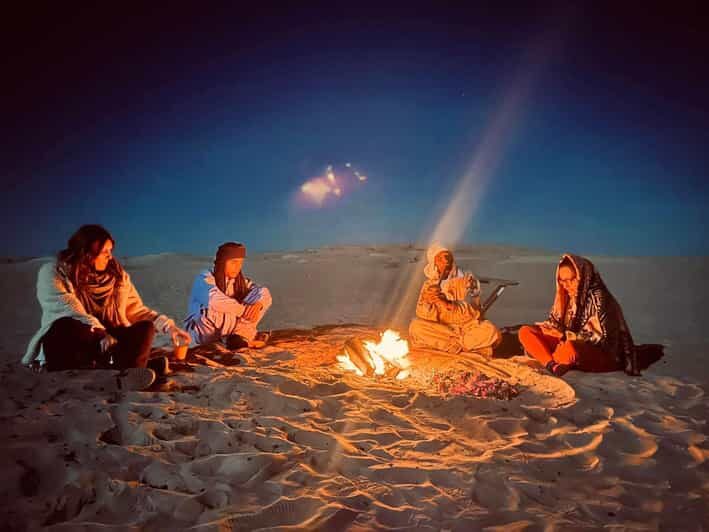
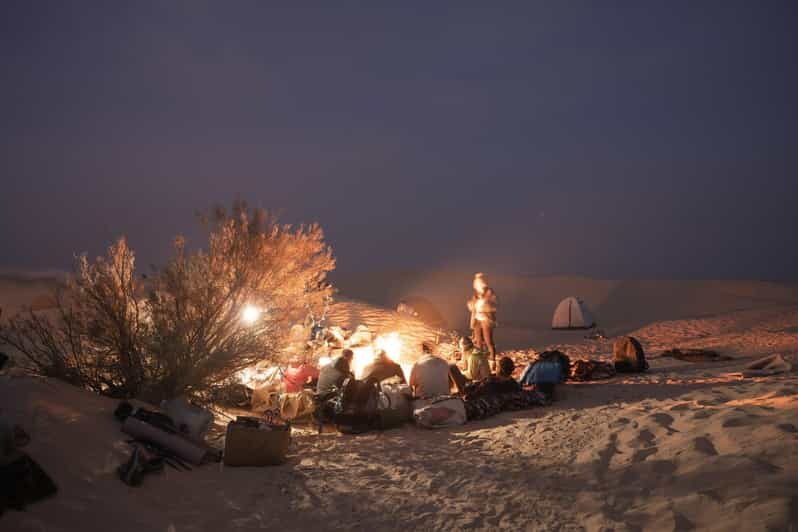
- The desert camp night includes a tent, meals, sunset time, and a campfire gathering with traditional music.
- Sunrise at Chott Djerid brings an early start and a different kind of desert scenery: a vast salt flat.
- Chebika and Kairouan add an oasis walk and an important Islamic landmark to the return journey.
- The $169 price covers transport, a guide, the camp night, and meals, but not drinks, site entry fees, or optional activities.
- A fast route from Roman El Jem to the Sahara
- El Jem’s amphitheater makes a grand first stop
- Matmata brings you into underground Berber life
- Douz and the camp turn the trip toward the desert
- Pack warm clothes for a night under the stars
- Chott Djerid begins day two before breakfast settles
- Kairouan adds a cultural finale, but time is tight
- What 9 covers, and what it does not
- Who will get the most from this two-day trip
- Should you book it?
- FAQ
- Where does the tour meet in Tunis?
- What languages are available for the guide?
- What meals are included?
- Are entrance fees included?
- Is the camel ride included?
- What facilities are available at the desert camp?
- Can I cancel for a refund?
- The Best Of Tunis!
- More Evening Experiences in Tunis
- More Tours in Tunis
- More Tour Reviews in Tunis
- Not for you? Here's more nearby things to do in Tunis we have reviewed
A fast route from Roman El Jem to the Sahara
 1 / 8
 2 / 8
 3 / 8
 4 / 8
 5 / 8
 6 / 8
 7 / 8
 8 / 8
This is a broad sweep of southern Tunisia, not a slow stay in one place. In two days, you move from the coast toward the desert, then return via an oasis and Kairouan. That variety is the appeal: Roman history, Berber culture, open desert, and a major religious center all fit into one trip.
It also means plenty of time in an air-conditioned vehicle. The distance is substantial, and the schedule is designed to keep moving. Many people find the driving comfortable, with bathroom breaks along the way, but you should not expect long, unhurried visits at every stop. If you prefer to linger over a museum, explore a town on foot, or take frequent breaks, a longer trip may suit you better.
The tour is offered from Tunis, Sousse, and Hammamet, with pickup options to check when booking. The stated Tunis meeting point is in front of Hotel El Hana International in the city center. Look for the guide near the main entrance with a sign for the excursion, and confirm your own pickup details rather than assuming the Tunis meeting point applies to every departure.
You can check availability for your dates here: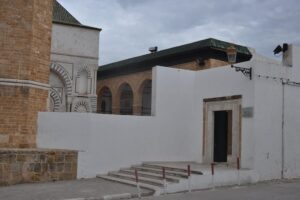
👉 See our pick of the 14 Best Guided Tours In Tunis
El Jem’s amphitheater makes a grand first stop
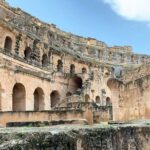
The first major visit is El Jem Coliseum, a Roman amphitheater admired for its state of preservation. Even a relatively short stop gives you a sense of its scale and the engineering behind an arena built for public spectacles nearly two millennia ago. It is a strong opening because the monument is visually striking and gives your guide plenty to explain as you begin crossing the country.
Entrance fees to archaeological sites and museums are not included in the tour price. Keep some money aside for any admission you choose to pay, along with drinks and personal expenses. The exact time available at El Jem depends on the day’s schedule, so treat this as an introduction rather than a full archaeological visit.
You can also read our reviews of more evening experiences in Tunis
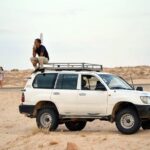
Matmata brings you into underground Berber life
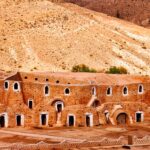
In Matmata, you visit a troglodyte village, where homes are built into the earth. The design is a practical response to the region’s heat, and seeing a home gives you a more grounded sense of daily life than simply looking at desert scenery from a vehicle. The visit may include meeting a Berber family, a chance to hear about local customs and how people have adapted to this environment.
The route also includes Sidi Idriss, a troglodyte hotel known for its connection to the Star Wars films. It is a fun stop if you recognize the setting, though its appeal is more cinematic than historical. Taken together, these visits make Matmata one of the most culturally distinctive parts of the first day.
Douz and the camp turn the trip toward the desert
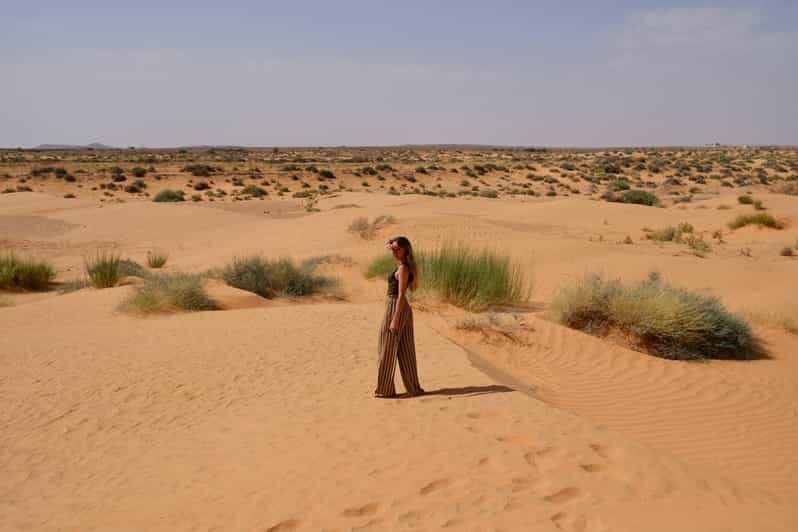
From Matmata, you continue toward Douz and the desert camp. Once you arrive, there is time to settle into your tent and take in the surroundings. The camp is a major reason to choose this trip: you are not simply driving out for a quick look at the dunes, then heading back. You spend the night there, with time to watch the light change and enjoy the quiet after a full day on the road.
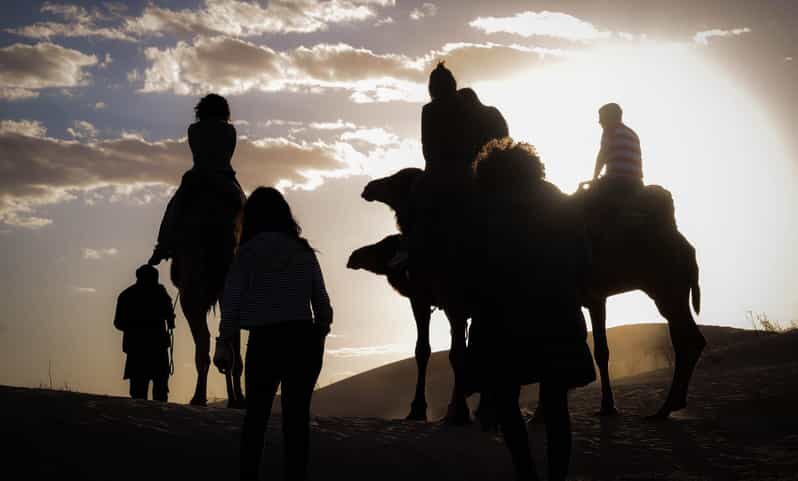
A camel ride is offered as an optional activity. It gives you a slower way to experience the sand and the open views, but it is not included in the price. Extra activities booked on site are also excluded, so check the cost before saying yes if you are keeping to a budget.
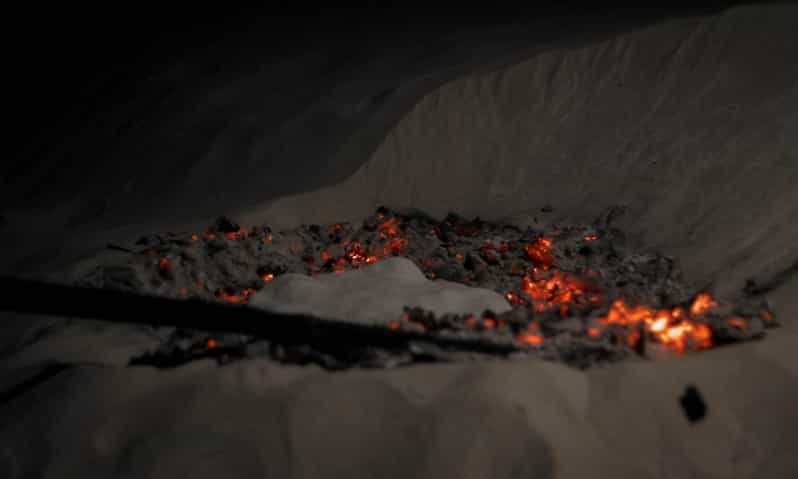
As the sun drops, the dunes are at their most memorable. Then comes the traditional preparation of bread in hot sand, followed by food and a campfire evening with local music. The exact entertainment can vary, but the planned experience centers on Bedouin-style hospitality, music, and time together outdoors. It is a lively finish to a day that has covered a lot of ground.
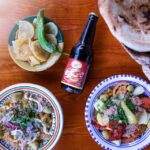
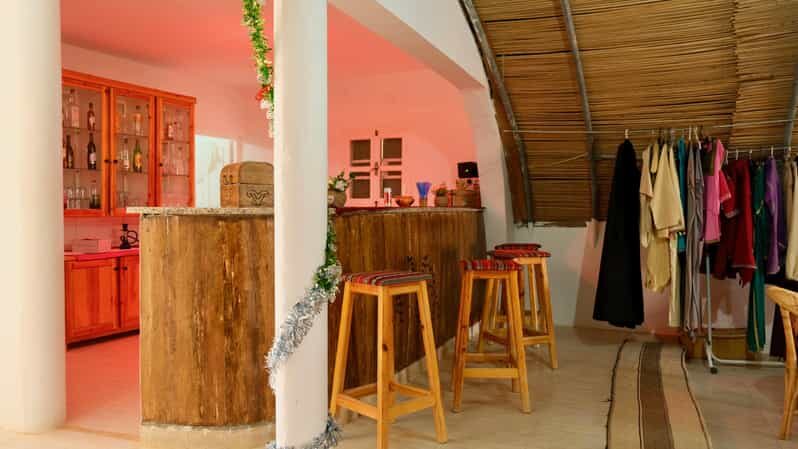
The camp is comfortable by desert-camp standards, not a hotel in the dunes. Tents, toilets, and small showers are available, and some people have found Wi-Fi there. Facilities and comfort levels can vary, so pack for a night outdoors rather than expecting resort amenities. The food is often a pleasant surprise, though vegetarian choices may be limited, and dinner can be served late.
Pack warm clothes for a night under the stars
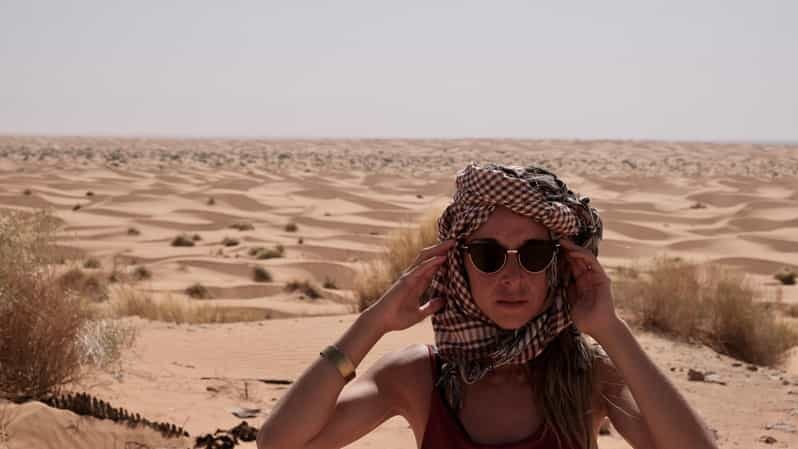
Desert nights can be cold, even after a hot day. Bring warm layers, especially if you are travelling in winter or during a cool season. A tent offers shelter, but you will still feel the temperature when you are outside for the campfire or looking at the night sky.
That contrast is part of the experience. After a long day of stops and driving, the camp gives you time to slow down, eat, listen to music, and look up at a sky with little light pollution. The night is not about luxury; it is about being somewhere quiet and open, far from the city. If that sounds appealing, the tent stay may be the part you remember longest.
More Great Tours NearbyChott Djerid begins day two before breakfast settles
The second day starts early, with sunrise over Chott Djerid, Tunisia’s largest salt flat. The flat’s wide horizon and changing light make for a striking start, but the early hour is real: set an alarm and keep warm clothes within reach. The timing is intended to catch the sunrise, so this is not a morning for a leisurely lie-in.
After Chott Djerid, the route continues to Chebika, a mountain oasis. You can expect a walk through the oasis area, with views that differ sharply from the dunes and salt flat. A small waterfall is part of the appeal, though the stop is brief. If you enjoy walking and scenery, you may wish there were more time here. Wear shoes you are comfortable walking in, and follow your guide’s timing so you are ready to leave with the group.
You can also read our reviews of more tours and experiences in Tunis

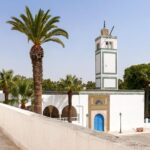

Kairouan adds a cultural finale, but time is tight
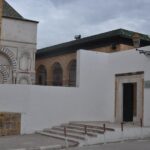
The final major stop is Kairouan, a UNESCO World Heritage site and one of the most revered centers in the Islamic world. The itinerary includes the Great Mosque, an important landmark that adds religious and architectural context to the desert-focused first day. Visitors who want to explore the mosque and the medina in depth may find the allotted stop short. Some may also want time to see local carpet workshops, but do not count on a leisurely shopping visit.
Site entry fees are not included, so budget for them separately. The visit is still valuable even when brief: Kairouan gives the tour a final chapter beyond desert scenery and helps show how varied Tunisia is within a short distance. From there, you return to your hotel. The full day and long drive can make the end of the tour feel late, so avoid scheduling anything important for that evening.
What $169 covers, and what it does not
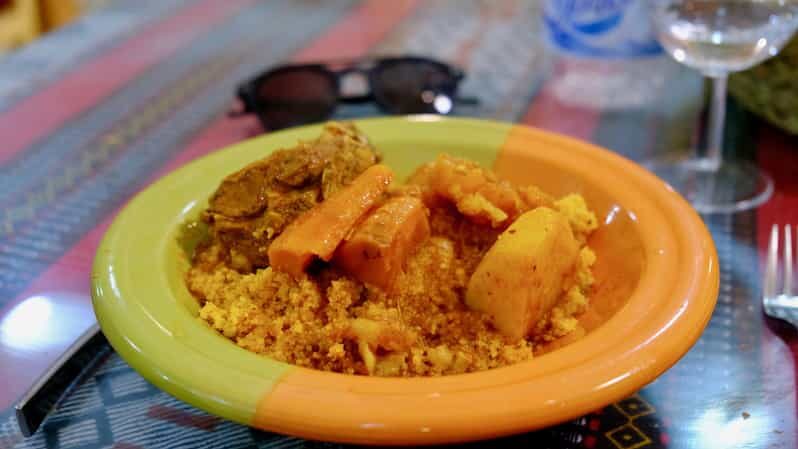
At $169 per person, the price includes air-conditioned transport, a licensed guide, one night at a desert camp on a half-board basis, midday lunches during the tour, and 24/7 assistance. Drinks are not included with lunch, and you should also budget for archaeological site and museum entry fees, personal expenses, and optional activities such as the camel ride.
The value comes from fitting many distant places into two days without arranging several drivers, meals, and overnight logistics yourself. The camp stay and guided visits add more than a simple transfer to the desert. If you are already in Tunisia for a short visit and want a wide-ranging introduction, this is a practical way to cover a lot.
The price does not buy a leisurely pace. A three-day excursion may be a better choice if available to you and if you would rather spend more time at the oasis, mosque, or desert camp. On this two-day version, the best approach is to see the drive as part of the trip and accept that some stops will be brief.
Who will get the most from this two-day trip
I would choose this tour if you want a strong overview of southern Tunisia, enjoy varied stops, and are comfortable spending much of the day on the road. It also suits solo visitors who like meeting people on a small group outing, couples, and families able to manage the pace. Guides on recent departures have included Ali, Momo, Adel, and Nasser, with English, French, German, and Italian listed as available languages. The guide assigned to your departure may differ.
The driver matters on a route this long, and a good one helps the hours feel safer and more relaxed. Still, confirm the details of your own departure, including pickup and language, especially if you need a particular language. One departure had an organizational problem with a promised guide, so it is sensible to check that your language request is confirmed rather than assumed.
I would look elsewhere if you dislike long drives, need generous time at every site, or want a quiet night in a hotel. This outing has a full schedule, outdoor conditions, and a camp atmosphere. Its reward is the change of scenery and the chance to see several sides of Tunisia in one go.
Should you book it?
Book this trip if the desert night is your priority and you want Roman ruins, Matmata, an oasis, and Kairouan folded into the same journey. The camp, camel option, bread cooked in sand, and early salt-flat sunrise make it more than a sightseeing bus ride. Just bring warm layers, budget for fees and extras, and go in knowing the road time is substantial.
If you can spare an extra day, a slower itinerary would give you more breathing room at the oasis and Kairouan. If you have only two days and want a generous sampling of the south, $169 is good value for the transport, guide, overnight stay, and included meals.
From Tunis Sousse & Hammamet: 2 Day desert tour & tent night
FAQ
Where does the tour meet in Tunis?
The stated meeting point is in front of Hotel El Hana International in Tunis city center. The guide waits near the main entrance with a sign for the tour. Pickup options may also be available, so check your departure details.
What languages are available for the guide?
The listed live-guide languages are English, French, German, and Italian. Confirm your preferred language when arranging your place, as the guide assigned to a departure may vary.
What meals are included?
The price includes one night at the camp on a half-board basis and midday lunches during the tour. Drinks are excluded, and food choices for vegetarians may be limited.
Are entrance fees included?
No. Entry fees to archaeological sites and museums are not included in the $169 price. Drinks, personal expenses, and extra activities booked on site are also excluded.
Is the camel ride included?
The camel ride is an optional activity and is not included in the stated price. Extra activities booked at the camp are also paid for separately.
What facilities are available at the desert camp?
The camp provides tents, toilets, and small showers. Wi-Fi has also been available at the camp, but you should plan for an outdoor stay rather than hotel-level facilities.
Can I cancel for a refund?
You can cancel up to 24 hours in advance for a full refund. A reserve-now, pay-later option is also offered.
You can check availability for your dates here: