Kakum’s high canopy bridges and the grim rooms of two coastal castles make for a day of sharp contrasts. I like that you get both a rainforest walk and serious historical context in one trip, and that your guide stays with you on the long drive, helping connect the places along the way.
The main trade-off is the distance. The drive is often longer than the stated three hours each way, and roadworks, traffic, or rough stretches can turn a 10-hour outing into a very long day. Bring patience, a little stamina, and room to process what you see.
- Seven canopy bridges at Kakum: Walk above the forest on Ghana’s best-known canopy route. The height can be a challenge, but you can take it bridge by bridge.
- Two castles, one difficult history: Visit Elmina Castle and Cape Coast Castle, with their dungeons and museum, and learn about the Trans-Atlantic slave trade.
- A guide for the whole road trip: Guides such as Moses, Eben, Thompson, Fred, and George have been praised for sharing context, checking on comfort, and keeping the journey engaging. Your assigned guide may differ.
- A long drive, not a quick outing: Accra to the Central Region can take longer than the estimated three hours each way, especially with traffic or road construction.
- Useful inclusions, with lunch extra: Hotel pickup and drop-off, an air-conditioned vehicle, bottled water, WiFi, a dedicated English-speaking guide, and activity costs are included. Accommodation and lunch are not.
- Why this day matters
- Leaving Accra for the Central Region
- Walking high above Kakum National Park
- Facing Elmina Castle’s history
- Cape Coast Castle and a moment to reflect
- Lunch, timing, and what the 0 covers
- Who should book this tour?
- FAQ
- How long is the tour?
- Where does the tour start and end?
- What places does the tour visit?
- How many bridges are on Kakum’s canopy walkway?
- Is lunch included?
- What is included in the price?
- Is the tour suitable for someone afraid of heights?
- Is the tour suitable for everyone?
- What language is the tour guide’s commentary in?
- Can I cancel for a refund?
- The Best Of Accra!
- More Tours in Accra
- More Tour Reviews in Accra
- Not for you? Here's more nearby things to do in Accra we have reviewed
Why this day matters
 1 / 7
 2 / 7
 3 / 7
 4 / 7
 5 / 7
 6 / 7
 7 / 7
This tour puts three very different experiences into one demanding day. Kakum National Park offers a physical, scenic start; the castles bring you face to face with the history of the slave trade; and the drive gives your guide time to introduce Ghana beyond the sites themselves.
That combination is the tour’s strongest argument. If you have only a short stay in Accra, it brings the Central Region’s major stops within reach without asking you to plan transport and entry arrangements yourself. The trade-off is clear: less time at each place than you would have on an overnight trip, and a lot of time in the vehicle.
The castles are not easy sightseeing. Their rooms, dungeons, and stories can be emotionally heavy. Several guides have made a point of checking in with the group after the castle visits, a thoughtful practice that gives you space to talk or sit quietly before moving on. Go ready to listen, and do not feel obliged to treat the day as a checklist.
You can check availability for your dates here:
👉 See our pick of the 11 Best Shopping Tours In Accra
Leaving Accra for the Central Region
Pickup is from your location in Accra, with timing set around traffic, road conditions, weather, and where other participants are staying. The tour includes welcome refreshments, and the drive south is described as about three hours. In practice, you should allow for a longer trip: roadworks, traffic, and roadblocks have stretched the return to six hours for some groups.
That difference matters when you plan your day. A 10-hour advertised duration is an estimate, not a firm promise that you will be back in Accra by a particular hour. One group left around 5:30 a.m. and returned around 8:30 p.m. If you have a flight, dinner reservation, or another fixed commitment that evening, leave a generous buffer.
The vehicle is air-conditioned, and bottled water and onboard WiFi are included. Groups have ranged from a handful of people to a small mixed group, with vehicle size varying accordingly. The guide usually stays with the group through the day, and people have appreciated clear pickup updates, comfort checks, and conversation during the drive.
This is also a chance to ask about Ghana beyond the three main stops. Guides including Moses, Eben, Thompson, and Fred have been singled out for sharing useful context and answering questions. Those names are examples, not a promise of who will lead your tour. The castle sites also provide their own guides, so you hear directly from people who explain the places on site.
You can also read our reviews of more tours and experiences in Accra.
Walking high above Kakum National Park
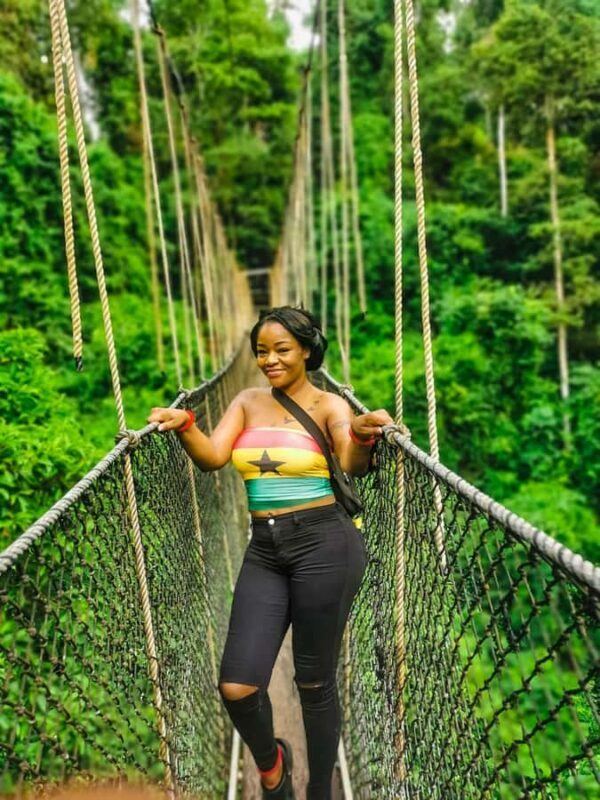
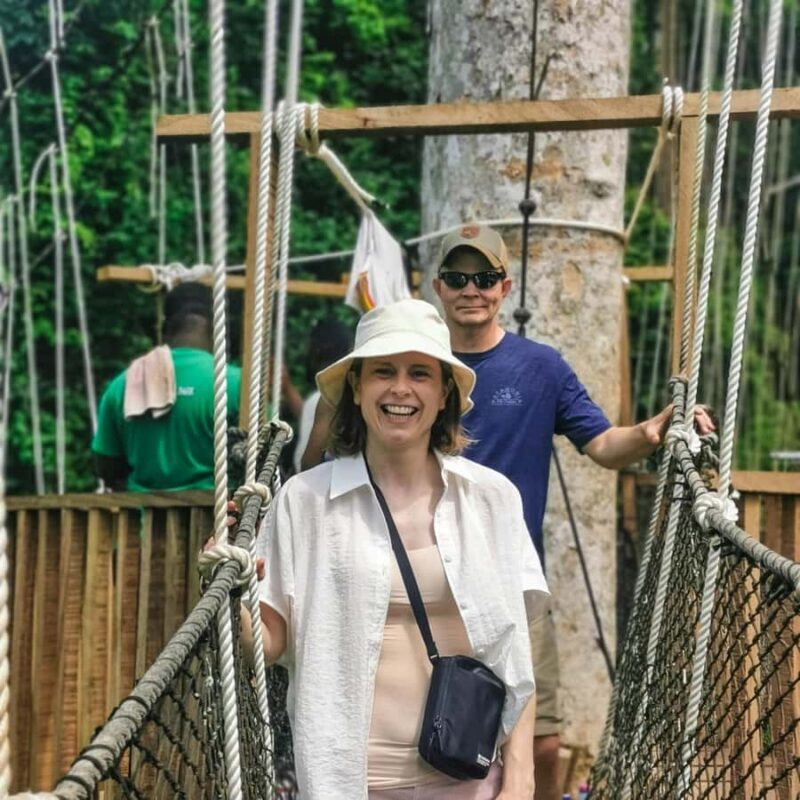
Kakum is the day’s most active stop. Its famous canopy walkway is suspended above the forest, with seven bridges to cross. From up high, you get a different view of the trees and the park’s plant life, and the narrow, swaying route can feel like a small adventure even if you are not usually nervous about heights.
You do not need to be a thrill-seeker to enjoy it, but you should be comfortable with a walk and with being elevated above the ground. One visitor who feared heights managed all seven bridges with encouragement from the guide and felt proud afterward. Another visitor’s mother crossed them all while the visitor chose not to. That is a sensible way to approach it: go at your own pace and do not let the group’s enthusiasm set your limits.
The walk is not just a photo stop. It adds a change of pace before the castle visits, and the greenery and open-air setting offer a contrast to the enclosed spaces you will see later. The tour description refers to a hike in the park as well as the canopy route, so expect some walking underfoot, not only time on the bridges.
Facing Elmina Castle’s history
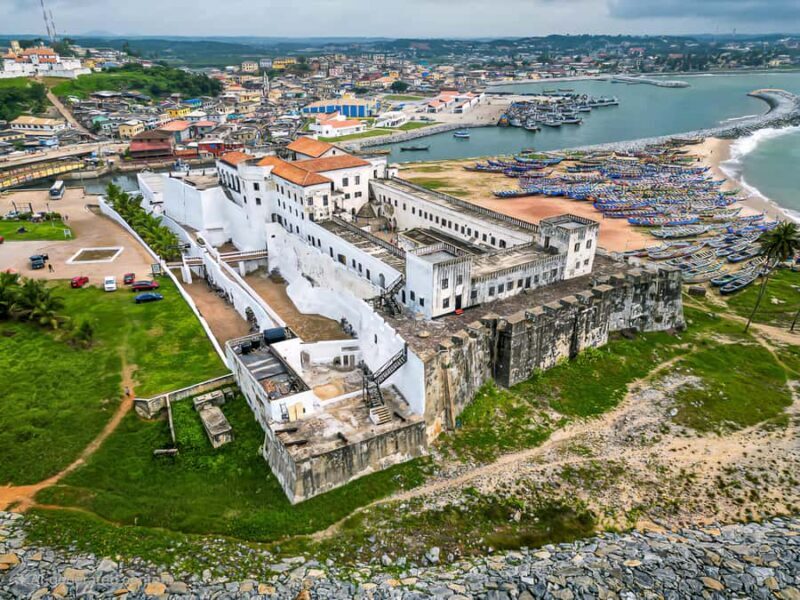
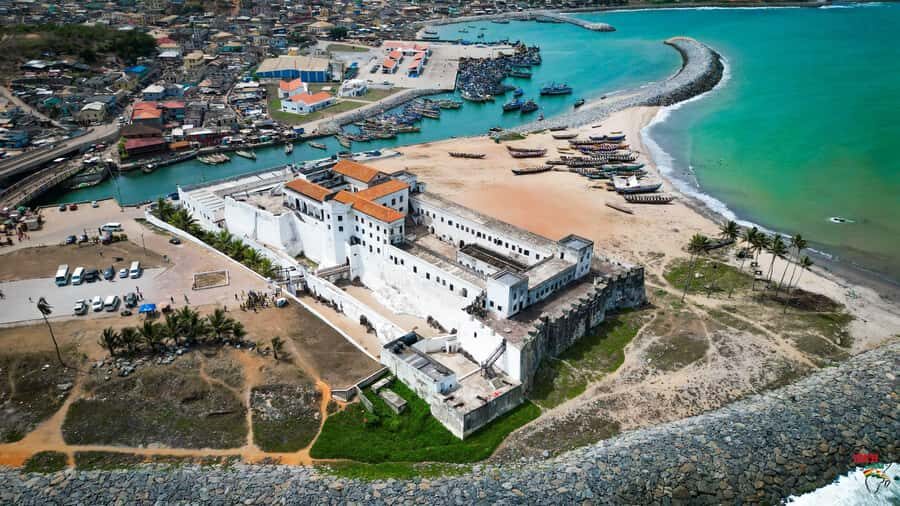
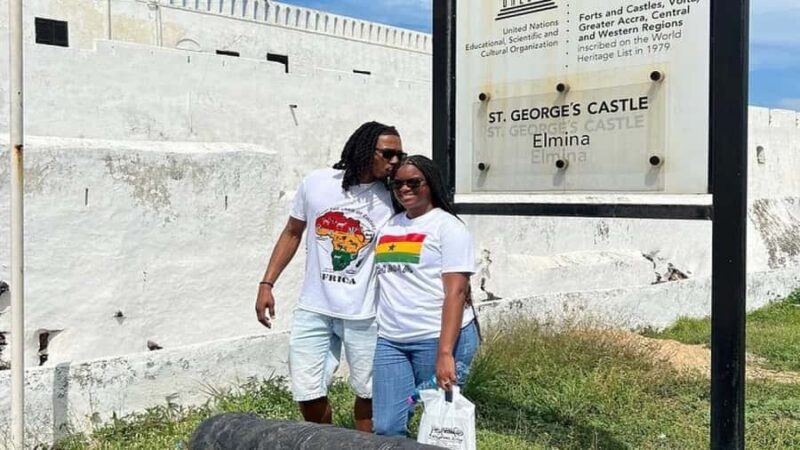
Elmina Castle, also known as St. George’s Castle, was the first European-built structure in sub-Saharan Africa. Its setting and architecture may catch your eye, but the reason to visit is the history the site holds. The tour takes you through the slave dungeons and explains the castle’s role in the Trans-Atlantic slave trade.
The contrast between the building’s appearance and what happened within it is hard to ignore. A guide’s explanations help place the rooms in context, but this is not a light museum visit. Expect difficult material and give yourself time to listen rather than rushing through to take pictures.
The guide who accompanies you from Accra can help connect the visit with the rest of the day, while a local site guide leads the tour inside. Having both kinds of context is useful: one follows the broader journey, the other focuses on the castle itself.
Cape Coast Castle and a moment to reflect
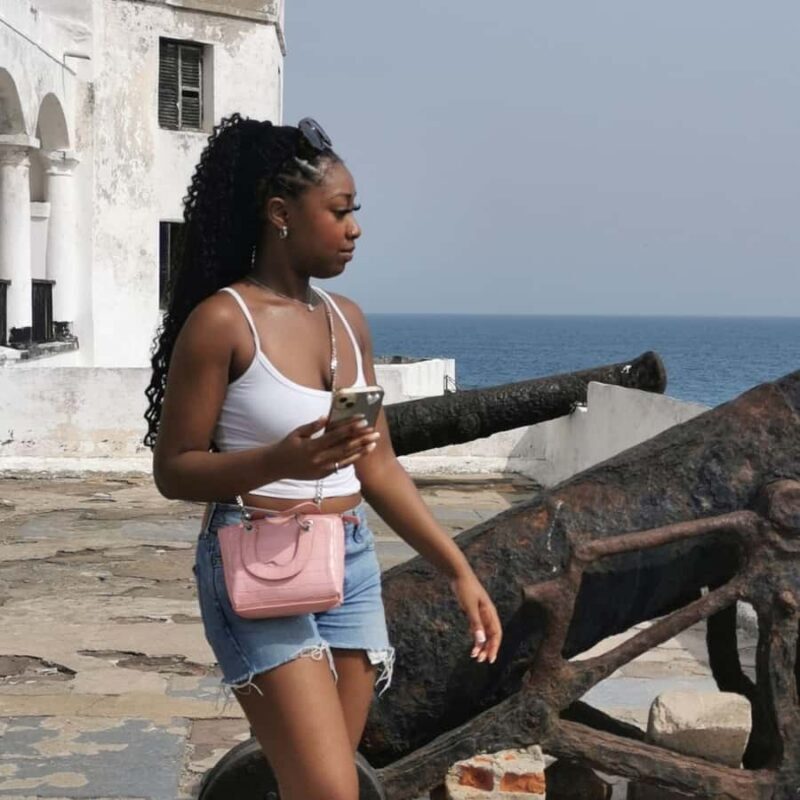
Cape Coast Castle is the second major historical stop. Here you visit the slave dungeons and museum and learn about the city’s place as Ghana’s first capital. The castle is a powerful place to encounter the history of the trade, and many people find the visit unsettling as well as educational.
Do not expect the two castle visits to feel interchangeable. Seeing both in one day builds a fuller picture of the region’s history, but it also means the emotional weight accumulates. Some guides make space for a check-in after the castle visit, inviting the group to talk about what they have heard. That can help, especially if you are traveling with people who may respond to the history in different ways.
There may also be people outside the sites trying to sell things, and one person found the approach aggressive. Keep your attention on your belongings and your group, and do not feel pressured to buy. The tour itself is centered on the sites and their interpretation, not shopping.
Lunch, timing, and what the $110 covers
At $110 per person, the value depends on how much you want handled for you. The price includes hotel pickup and drop-off, an air-conditioned vehicle, a dedicated English-speaking guide, bottled water, WiFi on board, and the cost of activities in the itinerary. You are paying for transport over a long distance as well as visits to three major stops, not just a seat in a van.
Lunch is not included, and accommodation is not part of the package. A meal stop is commonly made, and one reported example put lunch at about 200 to 250 Ghanaian cedis per person for jollof rice, a protein such as fish or chicken, and a drink, with vegetarian options costing less. Treat that as a guide rather than a fixed menu or price. Snacks are worth bringing, particularly because the day can run long.
The timing of lunch and the order of activities may change. Guides have adjusted the sequence when needed, and clear updates can make those changes easier to follow. The tour also advertises a separate entrance to skip the line, though the day’s exact pace depends on conditions at each stop.
For a solo visitor, a couple, or a small group, having transport, coordination, and a guide in place can be worth the price. If you prefer to linger at a site or move at your own pace, arranging an overnight stay in the region may suit you better.
Who should book this tour?
This trip suits you if you want to see Kakum and both castles but have limited time outside Accra. It is also a good choice if you value a guide’s context during the drive and want someone else to coordinate the transport between distant stops. Solo visitors have found the guided format reassuring, and the mix of group conversation and site visits can make a long road day feel less isolating.
It is less suitable if you need a relaxed pace, are uncomfortable with long drives, or want ample time to explore each stop independently. The operator lists the tour as not suitable for pregnant women, people with back problems, or people over 95 years old. Kakum’s bridges may also be challenging if heights make you uneasy, though you can choose how far to go.
Book it for the combination of nature and serious history, not for a restful day. Keep your evening open, bring snacks, and prepare to listen carefully at the castles. If that sounds right, the long ride is a fair price for a memorable and important introduction to Ghana’s Central Region.
From Accra: Cape Coast, Elmina Castle & Kakum Park Day Tour
FAQ
How long is the tour?
The stated duration is 10 hours. The drive can take longer than the estimated three hours each way, so the full day may run well beyond that.
Where does the tour start and end?
Pickup is in Accra, and the tour returns to Accra. Pickup and start times may vary with traffic, road conditions, weather, and pickup locations.
What places does the tour visit?
The main stops are Kakum National Park, Elmina Castle, and Cape Coast Castle.
How many bridges are on Kakum’s canopy walkway?
The canopy route has seven bridges.
Is lunch included?
No. Lunch is not included. A reported meal cost was about 200 to 250 Ghanaian cedis per person for a meal and drink, with vegetarian options costing less.
What is included in the price?
The tour includes bottled water, a dedicated English-speaking guide, hotel pickup and drop-off, WiFi on board, an air-conditioned vehicle, and activity costs in the itinerary.
Is the tour suitable for someone afraid of heights?
The canopy walkway is suspended above the forest, so it may be uncomfortable if you fear heights. You can choose how far to go across the bridges.
Is the tour suitable for everyone?
The tour is listed as not suitable for pregnant women, people with back problems, or people over 95 years old.
What language is the tour guide’s commentary in?
The live tour guide speaks English.
Can I cancel for a refund?
Yes. You can cancel up to 24 hours in advance for a full refund. Reserve now and pay later is also offered.
You can check availability for your dates here: