Lantau’s appeal lies in the change of pace: you leave Tung Chung by cable car, pass the monumental Big Buddha, then reach a fishing village where daily life still unfolds in houses built above the water. I like the tour’s mix of major sights and local encounters, and the contrast between busy Po Lin Monastery and a quieter temple gives the day more meaning than a standard sightseeing circuit.
The main trade-off is the pace and physical effort. You’ll walk a good deal, climb 268 steps to the Buddha, and rely on several transfers between stops. Hot, humid weather can make the day feel longer, and transport arrangements may involve separate taxis rather than one vehicle for the whole group.
- The day’s highlights
- A cable car start with a view of modern Hong Kong
- The Big Buddha, from the plaza to the upper platform
- Po Lin Monastery and the cost of becoming a major attraction
- A quieter stop at Kwun Yum Temple
- Tai O: stilt houses and a local point of view
- Transport, timing and the value
- Who will get the most from this Lantau tour?
- Should you book it?
- FAQ
- Where does the tour start and finish?
- How long is the tour?
- What language does the guide speak?
- Is the cable car ride included?
- How many steps are there to the top of the Big Buddha?
- Is the Tai O stilt-house visit part of the tour?
- The Best Of Hong Kong!
- More Fishing Tours in Hong Kong
- More Tours in Hong Kong
- More Tour Reviews in Hong Kong
- Not for you? Here's more nearby things to do in Hong Kong we have reviewed
The day’s highlights
 1 / 8
 2 / 8
 3 / 8
 4 / 8
 5 / 8
 6 / 8
 7 / 8
 8 / 8
- Priority boarding for Ngong Ping 360 helps you avoid the regular cable car queue.
- The Big Buddha’s 268 steps lead to a close look at the statue, its hand gesture and a sacred relic.
- Po Lin Monastery and Kwun Yam Temple offer a useful contrast between a major religious site and a quieter sanctuary.
- A local stilt house visit lets you see how a Tai O resident’s home is arranged and ask about village life.
- A Tai O boat ride adds a view of the village from the water.
- The six-hour route starts and ends at Tung Chung MTR station, with guided explanations and transport between several stops.
👉 See our pick of the Best Historical Tours In Hong Kong
A cable car start with a view of modern Hong Kong
Meet your guide at Tung Chung MTR station, where the day begins with a short introduction to Lantau. The island’s story is tied to major changes in Hong Kong, including the building of the new airport and the effect that development had on the livelihoods of its indigenous population. That context helps make sense of the contrast you’ll see later between transport infrastructure, religious sites and a long-established fishing community.
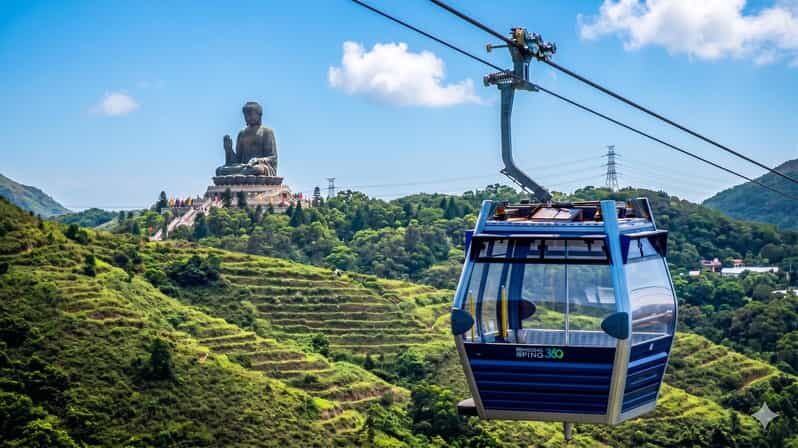
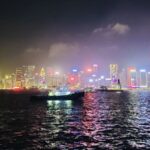
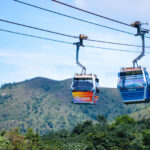
The Ngong Ping 360 ride is one of the day’s big visual moments. From the cable car, you’ll look across Lantau toward Hong Kong International Airport and the Hong Kong-Zhuhai-Macao Bridge. On a clear day, China and Macao may appear on the horizon, though weather and visibility make that a bonus rather than a promise.
Priority boarding is a practical advantage here. The cable car is popular, so skipping its regular queue can save time and help keep the six-hour schedule on track. One standard cable car ride is included. Check the booking details for the exact ticket arrangement, as the included item is described as a single standard cable rather than a round-trip ticket.
The ride is described as lasting about 20 minutes in the tour plan, while the stop schedule allows longer for the cable car experience. Either way, expect a substantial, scenic crossing rather than a quick lift. If the cable car is closed for maintenance, the tour has used taxis as a substitute. That keeps the day moving, but you should not count on the aerial views if the service is down.
You can also read our reviews of more tours and experiences in Hong Kong

The Big Buddha, from the plaza to the upper platform
After bypassing Ngong Ping Village, the tour begins its main religious-site visit at Po Lin Monastery. That choice keeps the focus on the monastery and Buddha rather than the shops and visitor facilities in the village. Ngong Ping is a major visitor destination, so the area can feel busy. A guide’s explanations help give the surroundings context instead of leaving you to treat the statue as a photo stop.
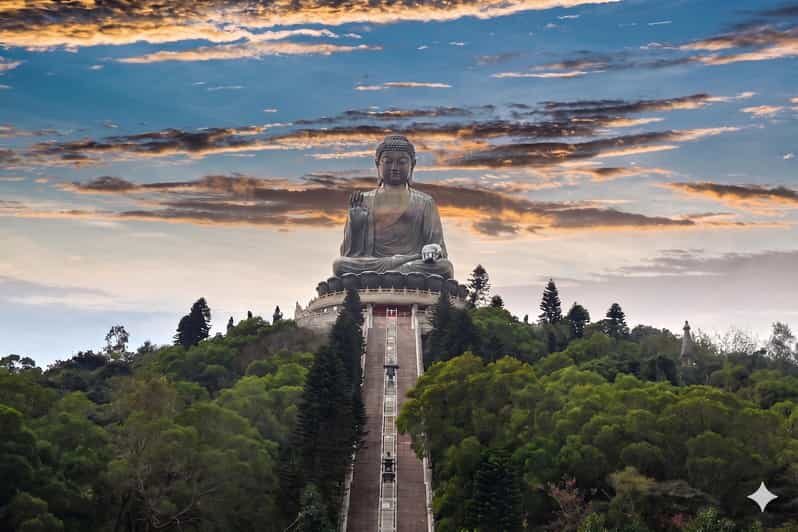
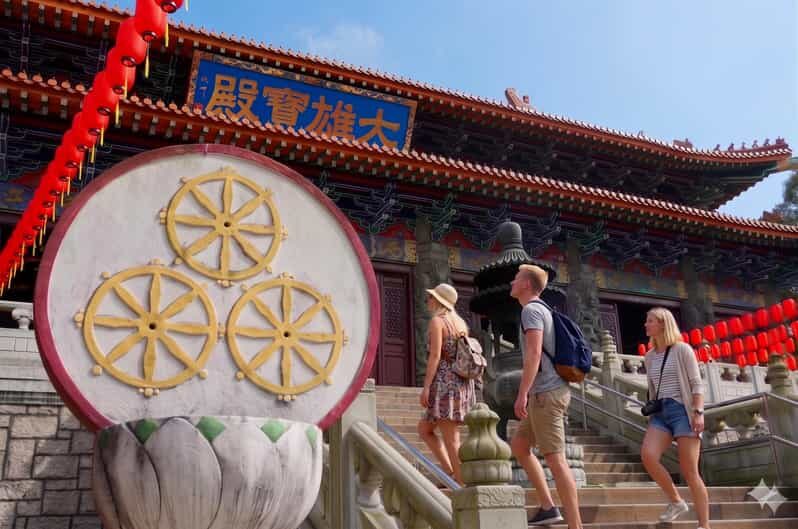
The Tian Tan Big Buddha is the day’s most imposing sight. You’ll have time for photos at its base, then climb 268 steps to reach the upper level. The climb is manageable for many people, but it is a real staircase, not a token handful of steps. If your knees, balance or stamina are a concern, take the ascent at your own pace and consider whether this stop suits you.
At the top, your guide explains the meaning of the Buddha’s hand gesture and the engineering challenges involved in constructing the statue. You’ll also have the opportunity to view a sacred relic and hear why it matters. Those details turn a dramatic monument into a place with religious significance, while still leaving room to appreciate its scale and setting.
The visit is guided, but it is also a chance to pause and look around. The statue’s size is difficult to grasp from a photograph; the stairs bring you close enough to take in its details and see the surrounding landscape from above. Allow time for the climb, photos and explanation, rather than planning a quick in-and-out visit.
Po Lin Monastery and the cost of becoming a major attraction
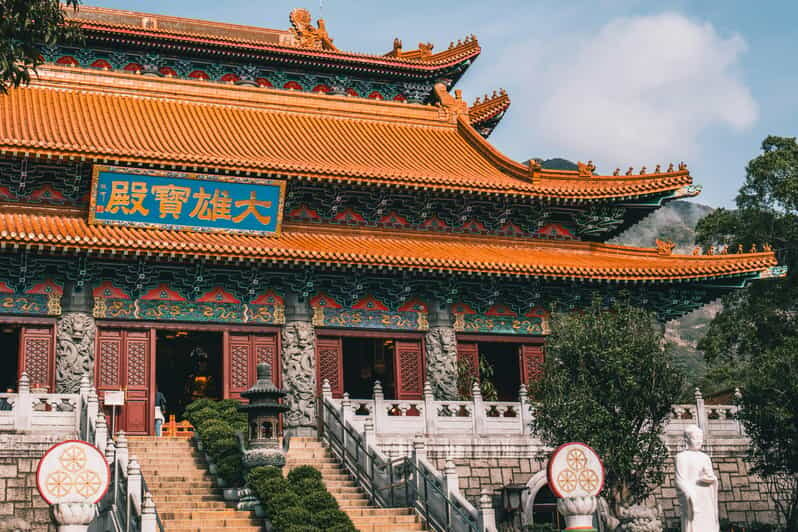
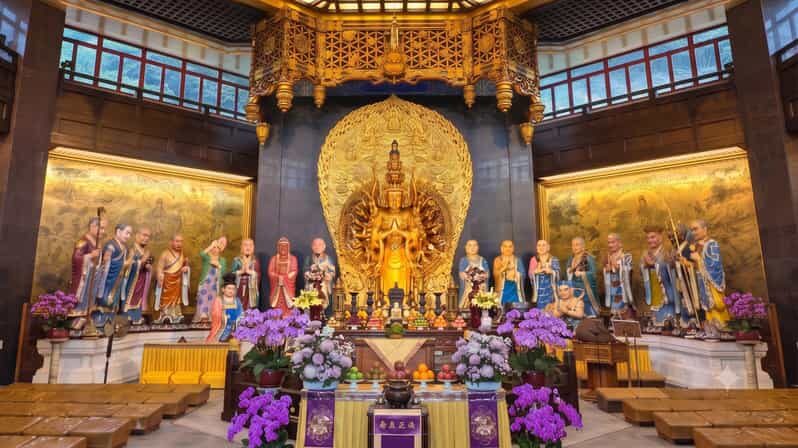
Po Lin Monastery provides a different kind of interest. Your guide points out how Chinese Buddhist architectural design reflects religious beliefs, and the monastery’s buildings give the visit a more grounded focus after the scale of the Buddha. The guided stop is scheduled for around 30 minutes, so expect a concise introduction rather than an extended visit to every part of the complex.
The monastery’s story also touches on money and growth. Your guide explains how it went from severe financial hardship, with reported assets of just HK$14, to assets valued at HK$1.3 billion today. The scale of that change raises a fair question: how does a religious institution balance its spiritual purpose with the demands and income of a famous visitor attraction?
That question is part of the tour’s appeal. The day does not present Po Lin simply as a beautiful temple or dismiss it as commercialized. Instead, you hear how its fortunes changed and can judge the contrast for yourself. The tour’s framing invites you to consider how religious places adapt when large numbers of visitors arrive.
There is a lunch break at Po Lin Monastery. The tour information does not list lunch as included, so plan to pay separately for food. Use this pause to eat and rest before the afternoon transfers. A full day of steps, walking and heat is easier when you do not treat lunch as an afterthought.
A quieter stop at Kwun Yum Temple
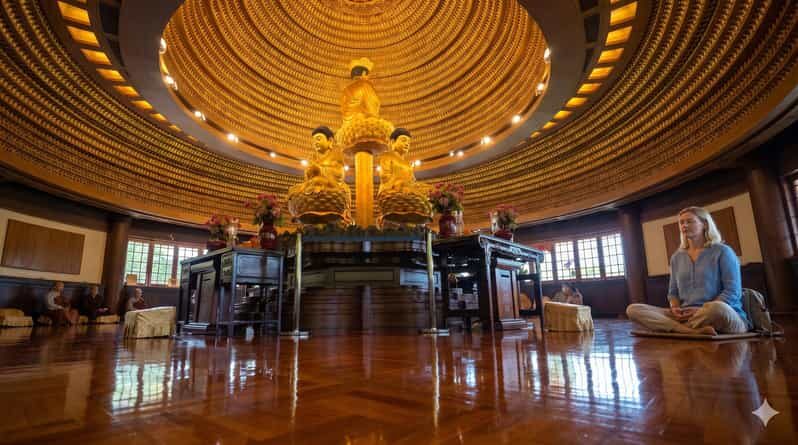
After Po Lin, a private taxi takes the group to Kwun Yum Temple, described as a sanctuary that sees little tourism. This is a useful change of scene: Po Lin is a major draw, while this stop offers a more subdued setting in which to hear about Lantau as a place of religious refuge. Your guide discusses why monks historically chose the island for that purpose and how the smaller temple differs from the monastery.
Depending on timing, you may be able to take part in a religious ritual and a short meditation inside the temple. These activities are not guaranteed, so approach them as a possible part of the visit rather than the day’s fixed centerpiece. If they are available, follow your guide’s instructions and treat the temple as an active place of worship, not just a sightseeing stop.
The visit is short, scheduled for about 20 minutes. That is enough to make the contrast clear, but not enough for a lengthy independent exploration. I like the inclusion of a second temple because it gives the day a more thoughtful rhythm: you see both the public face of religious tourism and a quieter place with a different atmosphere.
More Great Tours NearbyTai O: stilt houses and a local point of view
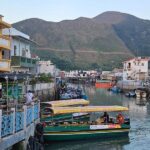
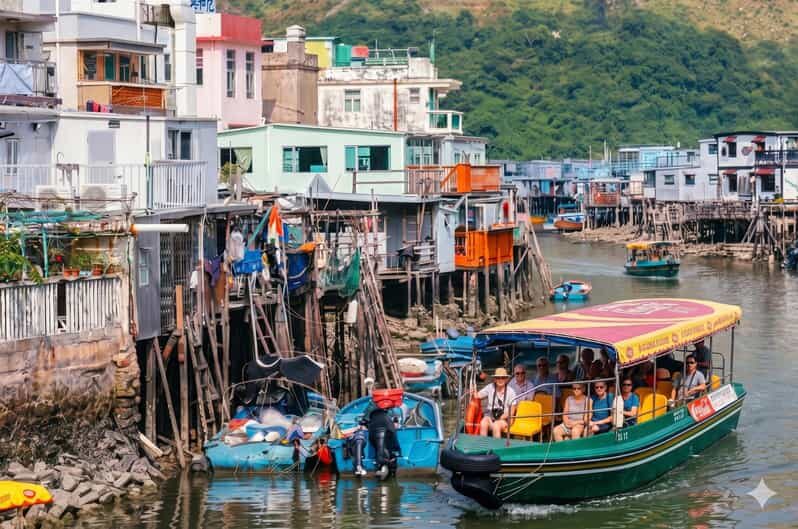
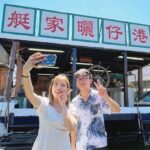
A second taxi transfer brings you to Tai O, a fishing village known for its stilt houses. Your guide explains why the village developed and why its residents built homes above the water. The setting is distinctive, but the most revealing part is the chance to enter a local fisherman’s home and see how someone lives there.
The visit is more than a walk past the houses. You can look through the home, ask questions about village life and hear about the challenges faced by the resident and her family. The experience is personal, so approach it with respect: you are being welcomed into somebody’s home, not entering a museum exhibit. The informal exchange is one of the tour’s clearest connections with everyday life on Lantau.
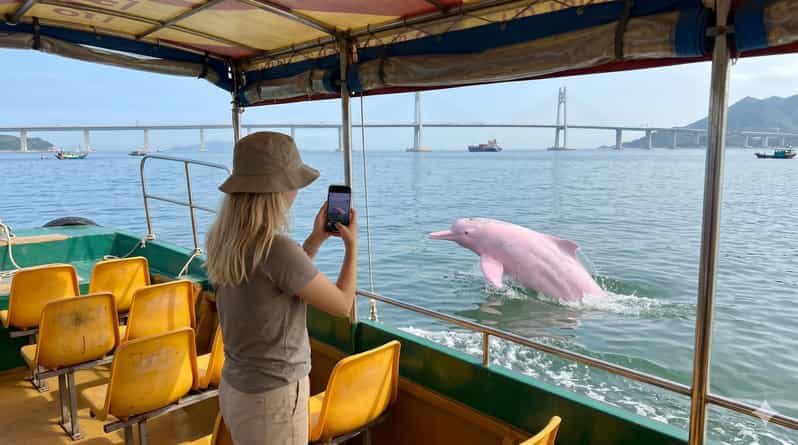
A boat ride at Tai O gives you another angle on the village and its waterfront houses. It is a welcome change after walking, and it helps you see why stilt-house construction matters in this setting. Some people have spotted a pink dolphin during the boat trip, but wildlife sightings are not guaranteed. Enjoy the ride for the village views, and treat any dolphin encounter as luck.
Tai O is scheduled as a relatively brief guided stop, around 20 minutes, though the full visit includes the house and boat ride. The short window means your time is structured. If you want to linger, browse at length or explore every lane independently, this tour may feel too tightly planned. If you want a guided introduction without having to work out the route yourself, the structure is useful.
- The Peak Tram Fast-Track Combo Tickets: Peak Tram, Sky Terrace 428, Madame Tussauds HK
★ 4.5 · 49,191 reviews




Transport, timing and the $70 value
At $70 per person, this tour bundles a cable car ride, guiding, transport to Kwun Yum Temple and Tai O, a stilt-house visit and a boat ride into one half-day outing. The value is strongest if you want to see several sides of Lantau in a single visit. Organizing the cable car, temple transfers, village visit and return to Tung Chung on your own would require more planning and careful timing.
The tour runs from about 10 a.m. to 4 p.m. and returns to Tung Chung MTR station. Its schedule includes a bus or coach journey of about 45 minutes on the return leg. The middle transfers may use private taxis, and the group can be split between vehicles. That arrangement can mean a little waiting while everyone regroups.
It is worth knowing that transport is not always perfectly smooth. One person may find a taxi driver’s style uncomfortable, and a longer drive can make that more noticeable. If you are prone to motion sickness, consider preparing for the taxi legs. A cable car closure can also mean a taxi substitute, which changes the character of the day even if the tour continues.
The experience has a 4.9 rating from 592 reviews, and the recurring strengths are clear: guides who explain Hong Kong’s history and culture, thoughtful organization, and the chance to meet a resident in Tai O. Guides named on the tour have included Stephen, Alice, Judy, Lok Lok, Simone, Michael, Wind, Jason, Hazel and Hody. Names and availability can change, but the guide’s role matters here: much of the value comes from connecting each stop to local life and religious context.
Who will get the most from this Lantau tour?
I’d choose this outing if you want more than a Big Buddha photo. The temples, local home visit and village boat ride make it a broader introduction to Lantau, while the guide takes care of a route that combines several transport modes. It is especially useful on a first visit to Hong Kong if you would rather have the day explained as you go than piece the stops together yourself.
It also suits anyone interested in the contrast between modern development and older ways of life. The airport, bridge, monasteries and fishing village all belong to the same island, but they tell very different stories. A local guide can connect those pieces in a way that is easy to miss when you travel between stops without context.
Be realistic about the physical demands. You’ll walk a lot, climb 268 steps at the Buddha and spend time outdoors. Several people have found the heat and humidity tiring, so bring water and wear shoes suitable for walking. The tour is not suitable for babies under one year or people over 95, according to its stated restrictions.
The day is also not designed for someone who wants long stretches of free time at every stop. The itinerary is full, and transfers take up part of the six hours. You get variety and convenience in exchange for moving along with the group.
Should you book it?
Book this tour if you want the Big Buddha, Po Lin Monastery, a quieter temple and a meaningful look at Tai O without arranging each leg yourself. The home visit and local guide add the most distinctive value, while priority cable car boarding helps with the day’s most popular attraction.
Skip it if you need a slow pace, want to spend hours at one site or find stair climbing and multiple transfers difficult. For a curious, reasonably mobile visitor with six hours to spare, it is a well-rounded way to see how Lantau combines religious landmarks, modern infrastructure and village life.
Hong Kong: 6-Hour Cable Car, Big Buddha & Fishing Village Tour
FAQ
Where does the tour start and finish?
It starts at Tung Chung MTR station and returns to Tung Chung MTR station at the end of the six-hour tour.
How long is the tour?
The tour lasts six hours, from about 10 a.m. to 4 p.m.
What language does the guide speak?
The live tour guide speaks English.
Is the cable car ride included?
One standard cable car ride is included, and priority boarding is provided to skip the regular cable car line.
How many steps are there to the top of the Big Buddha?
There are 268 steps to climb to reach the top.
Is the Tai O stilt-house visit part of the tour?
Yes. The tour includes a visit inside a local fisherman’s stilt house, as well as a boat ride at Tai O.
You can check availability for your dates here:The Best Of Hong Kong!

More Fishing Tours in Hong Kong

More Tours in Hong Kong
- The Peak Tram Fast-Track Combo Tickets: Peak Tram, Sky Terrace 428, Madame Tussauds HK
★ 4.5 · 49,191 reviews
More Tour Reviews in Hong Kong
- The Peak Tram Fast-Track Combo Tickets: Peak Tram, Sky Terrace 428, Madame Tussauds HK
★ 4.5 · 49,191 reviews