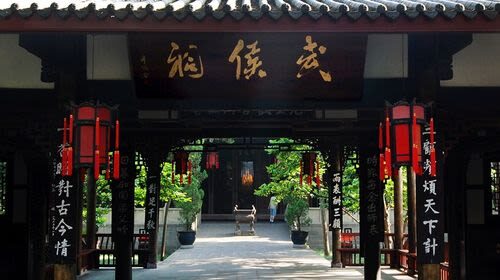
Wuhou Temple is more than a quiet place to pay respects to Zhuge Liang. This Chengdu complex brings together a ruler’s temple, a minister’s shrine, a tomb and halls filled with figures from the Shu Han kingdom, all set among old cypress trees and red walls.
I like two things here: the unusual pairing of Liu Bei and Zhuge Liang, and the chance to see Three Kingdoms stories made tangible in halls, statues and stone inscriptions. The visit also fits neatly with Jinli Ancient Street, just outside the temple grounds.
One consideration: the site is larger than a quick photo stop, and it can get crowded, especially around public holidays. You’ll need to exchange your ticket at the visitor center with your passport or eligible travel permit, so buying ahead does not remove every bit of entry planning.
Key points to know
- Four places are covered by one ticket: the Han Zhaolie Temple, Wuhou Shrine, Huiling Tomb and Sanyi Temple.
- The focus is the Shu Han kingdom: 50 statues honor Liu Bei, Zhuge Liang and other heroes.
- The best suggested photo window is 10 AM to noon: arrive early if you want more breathing room.
- A guide is optional: group service costs about 100 yuan, while the ticket itself does not include one.
- Jinli is right next door: it makes an easy second stop on the same day.
- Entry requires a ticket exchange: bring a foreign passport or a Hong Kong, Macao or Taiwan travel permit.
👉 See our pick of the 11 Best Shopping Tours In Chengdu
- Key points to know
- Why Wuhou Temple tells a bigger story
- Follow the route from Liu Bei to Zhuge Liang
- Look closely at the statues and stone inscriptions
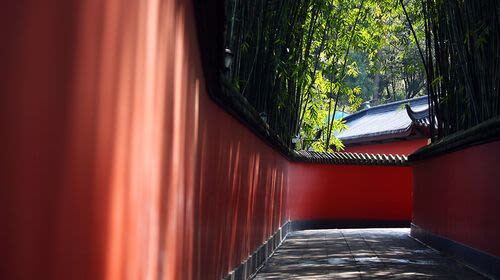
- Find the calm behind the red walls
- What the ticket covers, and what it costs
- Getting there and making the entry work
- Add Jinli without rushing the shrine
- Who will get the most from this visit?
- Should you book Wuhou Temple?
- FAQ
- What does the Wuhou Temple ticket include?
- How much does admission cost?
- What are the opening hours?
- When is the best time to visit?
- How do I get to Wuhou Temple by metro?
- Do I need to exchange my ticket before entering?
- Is a guided tour included?
- Can I visit Jinli Ancient Street on the same day?
- Are there child tickets?
- What happens if I cancel my ticket?
- The Best Of Chengdu!
- More Tours in Chengdu
- More Tour Reviews in Chengdu
- Not for you? Here's more nearby things to do in Chengdu we have reviewed
Why Wuhou Temple tells a bigger story
 1 / 8
 2 / 8
 3 / 8
 4 / 8
 5 / 8
 6 / 8
 7 / 8
 8 / 8
Wuhou Temple is devoted to the people and memory of Shu Han, one of the kingdoms of the Three Kingdoms era. Its most famous figures are Liu Bei, the kingdom’s emperor, and Zhuge Liang, his minister and military strategist. The site’s layout makes that relationship part of the visit: you move among buildings that honor both ruler and adviser, rather than seeing a single shrine in isolation.
The story begins in 221 AD, when Liu Bei’s tomb, Huiling, was being built. The Han Zhaolie Temple, dedicated to Liu Bei, was built at the same time. Wuhou Shrine was moved beside the tomb and temple around 500 AD, and the three parts were joined into one complex in 1390.
That history helps explain the name. Zhuge Liang became especially important in popular memory, so the entire complex came to be commonly known as Wuhou Shrine, even though Liu Bei and other Shu Han figures are also honored here. You don’t need to arrive with a detailed grasp of the period to appreciate the place, but knowing this makes the paired halls feel more purposeful.
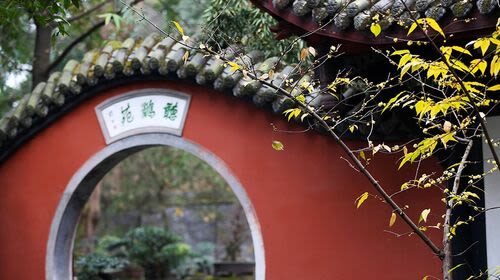
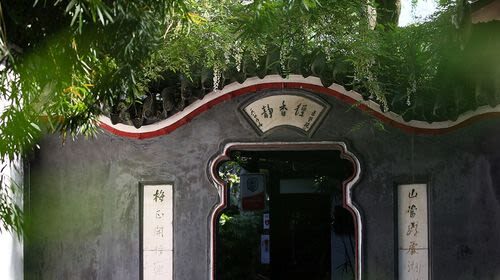
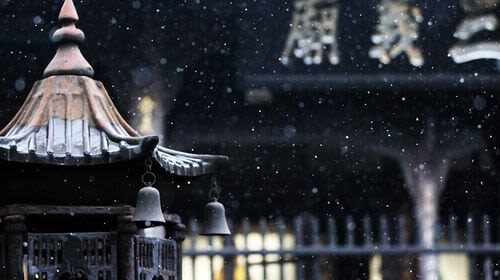
Expect a traditional temple setting, not a museum arranged around a single exhibit. Courtyards, gates, halls, old trees, statues, plaques and inscriptions are the substance of the visit. The appeal lies in moving through the setting at your own pace and noticing how the complex keeps the kingdom’s people and stories together.
You can also read our reviews of more tours and experiences in Chengdu.



Follow the route from Liu Bei to Zhuge Liang
A useful route begins at the Han Zhaolie Temple, then continues to Wuhou Shrine, Huiling Tomb and Sanyi Temple. This order takes you through the central story before you reach the tomb and the hall devoted to the sworn brotherhood of Liu Bei, Guan Yu and Zhang Fei.
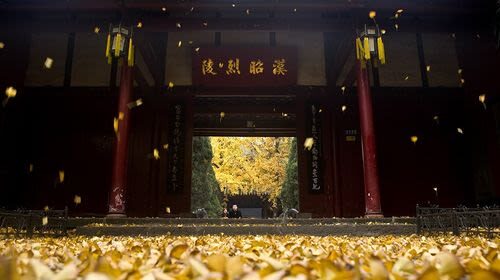
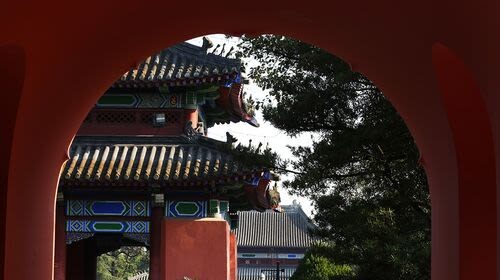
The temple buildings are arranged along a central axis. From the main gate, you pass through the second gate to Liu Bei Hall, then the transition hall and Zhuge Liang Hall, with Sanyi Temple also part of the complex. The sequence gives your visit a natural shape, though you can slow down or retrace your steps if a particular hall catches your attention.
In Liu Bei Hall, the focus is the ruler whose tomb lies within the grounds. The adjoining story of Zhuge Liang gives the site much of its emotional pull: he is remembered not only for strategy, but for loyalty and service. If you have read the Three Kingdoms stories, you’ll recognize names and relationships; if you haven’t, the labels and setting still give you a clear sense that this is a place of remembrance.
Wuhou Shrine is the central draw for many visitors. Across the complex, 50 statues represent Shu Han heroes, including Liu Bei and Zhuge Liang. Their presence turns a long list of historical names into a set of distinct figures, though the experience is more rewarding if you take time to look rather than hurry from hall to hall.
Look closely at the statues and stone inscriptions
The statues are one of the site’s most immediate features. Civil and military figures line the halls, and their varied faces and postures give the memorial a human scale. You can move between them without needing to know every name, then use the details to build a clearer picture of the people grouped around the Shu Han court.
For a more focused stop, look for the stele corridor and the stone carving of Chu Shi Biao, also known as the Memorial on Going to War. It is associated with Zhuge Liang and his appeal to serve the kingdom. Even if you can’t read the inscription, its place among the memorials helps explain why visitors remember the site as a place devoted to duty as well as military skill.
Plaques and steles add another layer to the visit. They connect the buildings to later generations who preserved and honored the Three Kingdoms story. That is part of what makes Wuhou Temple different from a simple collection of old architecture: the site records not only people from the kingdom, but the long life of their reputation.
Give yourself space to pause. The complex is larger than some first-time visitors expect, and trying to cover every hall at a brisk pace can turn a meaningful setting into a checklist. There is no stated visit duration, so plan according to your interest in the period and how much time you want for the grounds.
Find the calm behind the red walls
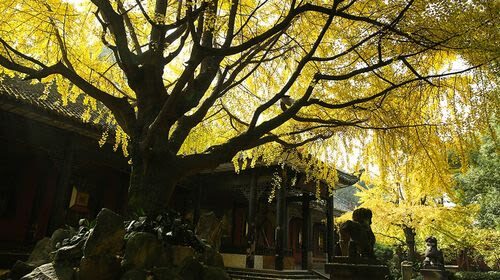
The old cypress trees and courtyards offer a quieter counterpoint to Chengdu’s city streets. Visitors describe a strong shift in mood on entering the shrine, and the layout makes that easy to understand: the gates and halls lead you into a place designed for reflection, with the trees and memorial buildings setting a slower pace.
That calm is not guaranteed at every hour. Wuhou Temple is a major attraction, and crowds gather at the entrance and through the grounds, with public holidays such as the May Day period especially busy. If you want a less pressured visit, go early rather than turning up at the busiest part of the day.
For photographs, the suggested window is 10 AM to noon, when the light is suitable. That timing can work well if you arrive early enough to handle the ticket exchange and enter before the grounds feel crowded. In practice, the best choice depends on your priorities: early arrival helps with crowds, while midmorning is the stated pick for lighting.
Some visitors prefer an afternoon visit, followed by Jinli in the evening. That is a sensible way to pair the temple’s quiet courtyards with a livelier nearby street, though you should check your own schedule against the temple’s closing time. The site is open year-round from 8:30 AM to 6:30 PM.
What the ticket covers, and what it costs
Tickets start at $10.70. One admission covers the Wuhou Shrine, Han Zhaolie Temple, Huiling Tomb and Sanyi Temple, so you are paying for the full cultural relics area rather than just one hall. For a visitor interested in the Three Kingdoms, that breadth gives the ticket its clearest value.
The price may feel less compelling if you are comparing it with smaller temples that charge much less. Wuhou Temple’s value depends on your interest in Shu Han and the complex’s role in preserving its history. If Liu Bei, Zhuge Liang and the Three Kingdoms are a major reason for your Chengdu visit, the connected sites and statues make the admission more worthwhile; if you mainly want temple architecture, you may find the cost harder to justify.
A guided tour is not included. Optional group guide service costs about 100 yuan, which may be useful if you want help connecting the figures, buildings and inscriptions. No guide names or specific tour language details are provided, so confirm those points before paying if they matter to you.
The ticket is valid only for the date and time selected, if a time applies. Children under 6 enter free, while the child ticket applies to minors aged 6 to 18. Souvenirs are extra.





Getting there and making the entry work
The address is 231 Wuhouci Avenue, Wuhou District, Chengdu. By public transport, take Metro Line 3 to Wuhou Temple Station, use Exit B and walk about five minutes. If you are driving, navigate to the Wuhou Temple parking lot.
Allow time at the entrance to exchange your ticket. Holders of foreign passports or Hong Kong, Macao and Taiwan travel permits are instructed to exchange tickets at the visitor center before entering. Advance booking can help you avoid confusion about where to buy admission, but it does not replace that exchange step.
The booking offers instant confirmation and can be made for the following day. Cancellation is free more than 24 hours in advance; cancellations within 24 hours incur a 30 percent fee. Same-day cancellations or expired unused tickets incur a 100 percent fee, and tickets cannot be refunded once you are inside the park.
Add Jinli without rushing the shrine
Jinli Ancient Street is connected to Wuhou Temple, making the pair an easy same-day plan. The contrast is part of the appeal: inside the temple, the focus is memorial halls, statues and old trees; outside, Jinli offers a different setting for a stroll after the historic site.
A practical plan is to visit the temple first, then continue to Jinli. That keeps the more reflective stop within its 8:30 AM to 6:30 PM opening hours and leaves the nearby street as a flexible add-on. If you want to take photographs in the temple, aim for the suggested 10 AM to noon window, then give yourself enough time to see the halls and tomb before heading next door.
Don’t treat Jinli as a substitute for the temple or vice versa. They serve different purposes. Wuhou Temple gives context to Chengdu’s Three Kingdoms heritage; Jinli adds a nearby street visit. Together, they make a fuller outing, but the shrine deserves enough time to stand on its own.
Who will get the most from this visit?
This is a strong choice if you follow Three Kingdoms history, especially the story of Shu Han. The site gives you a physical setting for the figures you may know from books and popular culture, with Liu Bei, Zhuge Liang and other heroes represented in one connected complex.
It also suits you if you enjoy traditional architecture, historic memorials and unhurried walks through courtyards. You can appreciate the old trees and orderly halls even without knowing the period in detail, though the statues and inscriptions mean more if you have a little background.
Families can visit, with free entry for children under 6 and child tickets for ages 6 to 18. If your group wants more context, consider the optional guide service. If you are short on time or have little interest in the Three Kingdoms, keep expectations measured: this is a cultural site, not a performance or an attraction built around interactive activities.
Should you book Wuhou Temple?
Book it if the Three Kingdoms are part of what brought you to Chengdu, or if you want a calm, substantial cultural stop that pairs easily with Jinli. The combination of Liu Bei’s temple, Zhuge Liang’s shrine, Huiling Tomb, Sanyi Temple and the 50 statues gives the visit a clear focus and enough variety to reward a careful walk.
If you are mainly looking for the cheapest temple admission or have no interest in the Shu Han story, weigh the price against your priorities. For most history-minded visitors, booking ahead is a useful way to avoid the ticket-buying muddle at the entrance. Just remember that you still need your passport or eligible travel permit to exchange the ticket before entering.
Wuhou Temple
“The entrance gets crowded, so it's easy to get lost trying to figure out where to buy tickets! It's absolutely essential to buy them in advance!! I…”
FAQ
What does the Wuhou Temple ticket include?
It includes the Wuhou Shrine, Han Zhaolie Temple, Huiling Tomb and Sanyi Temple.
How much does admission cost?
Tickets start at $10.70. The exact price may depend on the selected package.
What are the opening hours?
The site is open year-round from 8:30 AM to 6:30 PM.
When is the best time to visit?
The suggested time for suitable photo lighting is 10 AM to noon. Arriving early can also help you avoid heavier crowds.
How do I get to Wuhou Temple by metro?
Take Metro Line 3 to Wuhou Temple Station, leave through Exit B and walk about five minutes.
Do I need to exchange my ticket before entering?
Yes. Holders of foreign passports or Hong Kong, Macao and Taiwan travel permits should exchange their tickets at the visitor center.
Is a guided tour included?
No. Guided service is optional and costs about 100 yuan per group.
Can I visit Jinli Ancient Street on the same day?
Yes. Jinli Ancient Street is connected to Wuhou Temple, so you can visit both on the same day.
Are there child tickets?
Children under 6 enter free. Child tickets apply to minors aged 6 to 18.
What happens if I cancel my ticket?
Cancellation is free more than 24 hours in advance. A 30 percent fee applies within 24 hours, and same-day cancellations or expired unused tickets incur a 100 percent fee. Tickets are non-refundable once you enter the park.