
Taroko is the reason to come, but this tour adds a useful sweep of Hualien’s mountain-and-sea sights in one day. You’ll visit safe, open areas of the gorge, then make time for Xiangde Temple and the Tabido Forest Trail, before heading to the Pacific at Qingshui Cliff and Qixingtan.
I like two things here: the variety of stops, which mixes geology and coastal views with Indigenous history and Xincheng’s old streets, and the convenience of a guide and round-trip transport from Hualien. The main caveat is that post-earthquake access is still subject to change, so don’t book expecting a long hike or a fixed route through the gorge.
- At a glance
- A day built around changing Taroko access
- First, get the Taroko story at the visitor center
- Xiangde Temple and the Tabido woodland walk
- Archway, old street and a lemon-juice stop
- Qingshui Cliff and Qixingtan: the coast-side finish
- What the van ride and group pace mean
- Food, timing and practical details
- Is this Hualien day tour worth booking?
- FAQ
- What time does the tour depart?
- When does the tour return to Hualien Railway Station?
- Is an English-speaking guide available?
- Are meals included?
- Can the route change on the day?
- Are Taroko’s trails open?
- Is there a minimum group size?
- Do children need to be included in the booking?
- Can I bring luggage on the tour bus?
- What should I wear and bring?
- The Best Of Hualien!
- More Tours in Hualien
- More Tour Reviews in Hualien
- Not for you? Here's more nearby things to do in Hualien we have reviewed
At a glance
 1 / 2
 2 / 2
- Taroko access depends on conditions: You’ll see the gorge from areas open and considered safe on the day, not necessarily the trails you may have seen in older photos.
- The day combines mountain and coast: Expect gorge viewpoints, a temple and forest walk, historic Xincheng, Qingshui Cliff and a stop at Qixingtan.
- The forest stop has cultural context: Tabido Trail and Wentanxiang Park connect a gentle woodland walk with the history of the Truku Indigenous people.
- The pace includes frequent stops: A small-group van can cover a lot, but repeated getting in and out may feel tiring.
- Pack food before departure: Meals are not included, and options inside Taroko are limited.
- Confirm language and return time: Tour information gives mixed details about English guiding and the expected return to Hualien Railway Station.

👉 See our pick of the 13 Best Tours In Hualien
A day built around changing Taroko access
The tour leaves Hualien at 8:15 a.m. and is scheduled to return in the late afternoon. The order of stops may change with traffic, weather and official access rules. That flexibility matters in a mountain park still recovering from the April 2024 earthquake. Major road repairs are described as largely complete, but some sections and trails remain in a natural recovery phase.
This is not a promise of a full-day trek through Taroko. Think of it as a guided circuit of the region, with short walks and scenic stops where access allows. One recent group found that only one trail was open to the public, while other stops involved brief walks from the vehicle. The route may look different by the time you go, so check current conditions and be ready for adjustments.
The tour is offered as a join-in or private option. The join-in rate is shown from US$83.45, and the private option from US$407.79. A separate headline price says from US$58.45, so prices may vary by date or package. Check the total shown for your chosen option before paying. At the join-in rate, the value comes from covering distant stops without arranging separate transport, not from spending hours on a single trail.
You can also read our reviews of more tours and experiences in Hualien.



First, get the Taroko story at the visitor center
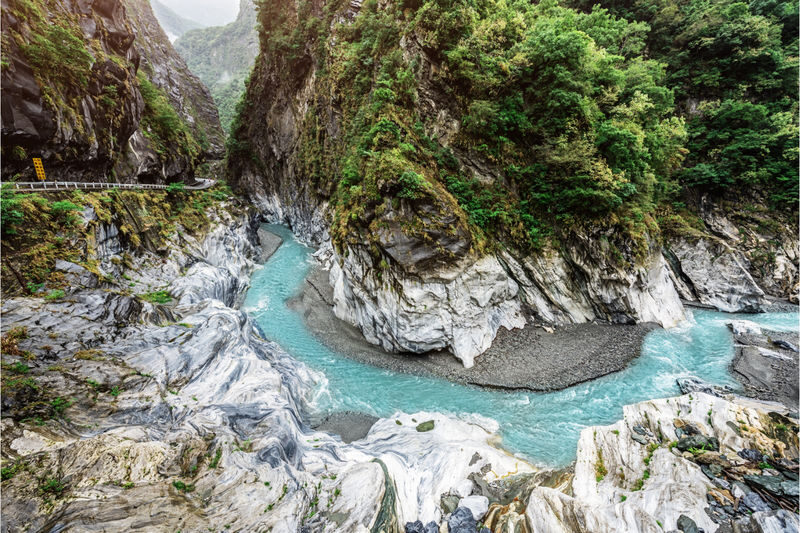
The Taroko National Park Visitor Center is the first stop, with about an hour set aside. Its exhibits cover the park’s geology, ecology and changes after the earthquake. That context can help you read the gorge as more than a pretty view: the Liwu River has cut through hard rock over time, while earthquakes and repair work continue to reshape how people can move through the area.
The center is also a sensible place to start before seeing the gorge itself. If parts of the park are closed, you’ll have a clearer idea of why access changes and what the day can safely include. The tour then takes you to open areas for views of the canyon. Don’t count on a specific trail or overlook being available; officials may restrict access based on road conditions, rainfall or seismic activity.
A guide can make these short visits more meaningful by explaining what you’re looking at. Past groups have appreciated guides such as Vincent, Alicia and Lion for clear commentary and careful pacing. But the quality of the explanation can vary by guide and language. If you want detailed English commentary, confirm what is available for your date rather than assuming every departure has an English-speaking guide.
Xiangde Temple and the Tabido woodland walk
At Tianxiang, the tour allows about 35 minutes at Xiangde Temple. You cross a suspension bridge to reach the temple area, where a nine-story pagoda and Bodhisattva statue overlook the gorge. The stop offers a different kind of perspective from the road viewpoints: it is quieter, with religious architecture set against steep mountain walls.
The time is limited, so focus on the bridge, the temple grounds and the views rather than trying to linger. Conditions and walking access may affect how much you can see. The route continues to Wentanxiang Park and Tabido Trail, with about an hour for a forest walk. This is the tour’s clearest chance to stretch your legs and spend time among trees rather than rushing between roadside viewpoints.
The trail is described as a place to learn about the Truku Indigenous people and their connection to the area. It is not a demanding trek in the way a longer mountain hike would be, but the exact walking available depends on which paths are open. Wear walking shoes, and keep in mind that a promised trail visit can change if access or safety conditions shift.
Archway, old street and a lemon-juice stop
The Taroko Archway is a short, roughly 15-minute photo stop. Its palace-style form makes it an easy marker for the trip, though it is more of a quick pause than an attraction that needs a long visit. If you’re taking photos, be ready when the group arrives.
Xincheng Old Street gets about 70 minutes, enough time to break up the drive and explore at an unhurried pace by tour standards. The planned stops include Xincheng Photo Studio, where you can make a DIY postcard, and Jia Xing Lemon Juice, a local drink worth trying if you want a small taste of Hualien rather than another snack from a chain shop. These are modest pleasures, but they add a human-scale stop between the grand cliffs and mountain scenery.
The tour also includes a 20-minute visit to Xincheng Catholic Church. Together, the old street and church offer a look at local town life and architecture. They are not substitutes for a full walking tour of Xincheng, but they give the day a welcome change of pace. If you’re hoping for extensive shopping or a long meal here, the schedule may feel short.
Qingshui Cliff and Qixingtan: the coast-side finish
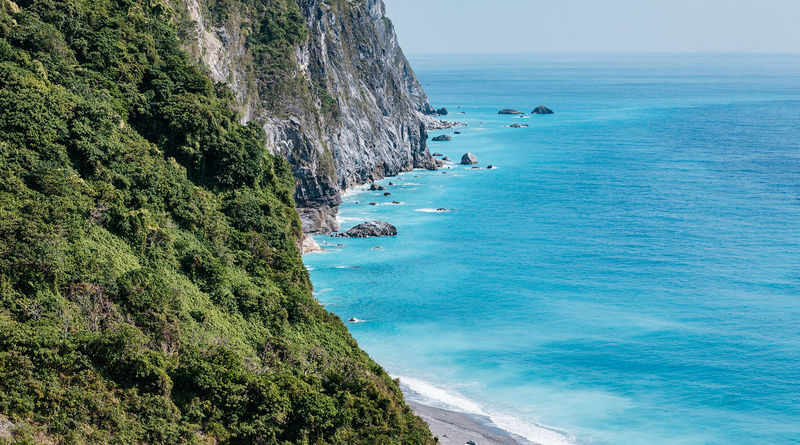
Qingshui Cliff is one of the day’s major scenic stops. From the observation deck, you look toward steep cliffs meeting the Pacific, with the sea shifting through shades of blue. The stop is scheduled for about 20 minutes, which is enough for a look and photos if conditions are clear, but not a long coastal walk. Weather and visibility will shape the view, and the exact stopping point may depend on access.
Qixingtan Beach brings the day to a gentler close. This crescent-shaped beach is covered in pebbles rather than sand, and the Pacific surf is a large part of the experience. You have around 30 minutes to listen to the waves, take in the mountain-and-sea view and walk along the shore. It’s a good place to slow down, though the short visit won’t suit anyone hoping for a long beach stay.
The sequence is a thoughtful one: the day moves from gorge and forest to town and open coast. The balance is also why this works better as an overview than as a deep exploration of Taroko alone. You trade extended time at any single place for a wider look at the Hualien region.


What the van ride and group pace mean
Round-trip transfers are included from the Hualien meeting point, and the guide meets the group in a yellow uniform. Arrive 15 minutes before the 8:15 departure; late arrivals cannot be accommodated. The tour has a minimum of four participants. A recent group of eight rode in a mini van and found it a bit crowded, so don’t assume there will be room to spread out or store large luggage.
The van makes the route practical. Public transport between these stops would take more planning, and the tour handles the driving through a region where road access can be affected by repairs and one-way traffic controls. One group had to wait at a one-way passage, which cut into time at early stops. That is a reminder that a tightly scheduled day can shift for reasons no guide can control.
A recurring strength of the experience is the guide’s role in keeping the group moving and explaining the stops. Names praised in past accounts include Vincent, Alicia, Lion and Peter. Some guides have been noted for warm service, clear history and help with photos. On the other hand, commentary may be hard to hear from the back of the van, and some guides may offer less explanation than you want. If learning is a priority, ask about the language arrangement and try to sit where you can hear.
There is conflicting language information: the tour details say an English- or Chinese-speaking guide is included, while the FAQ says an English-speaking guide is not currently available and mentions an English iPad guide instead. Confirm the language option directly before booking. That small check can make a big difference to how much you get from the cultural and geological stops.
Food, timing and practical details
Food and drinks are not included. Since dining choices inside Taroko are limited, buy lunch or snacks at Hualien Railway Station before departure. The route includes time in Xincheng, but you should not rely on an unplanned meal stop to solve hunger during the park portion.
The schedule lists a return to Hualien Railway Station at 5:15 p.m., while the FAQ gives an approximate arrival time of 4:30 p.m. Treat the return time as an estimate and confirm the details sent by the operator the day before. That email is also expected to include vehicle and itinerary instructions, so check your spam folder if it does not arrive.
Casual clothes and walking shoes are recommended. Children and infants count in the passenger total and are charged the same rate. Children aged four or younger, or under 18 kg, must use a child safety seat under Taiwanese law; the stated additional charge is TWD 300 per seat, so request one when booking. Strollers can be placed in the vehicle, but valuable items should stay with you. The operator does not accept responsibility for lost or damaged luggage.
Is this Hualien day tour worth booking?
Book it if you want a convenient first look at Taroko and the Hualien coast, and you’re comfortable with short visits, a van-based day and route changes. It is especially useful if you don’t have a car and want to pair the gorge with Qingshui Cliff, Xincheng and Qixingtan without organizing each transfer yourself.
Skip it if your main goal is a long hike or a slow, focused day inside Taroko. Open trails and access can change, and the full circuit means time is divided among many stops. Before booking, confirm the language offered, the current gorge access, the total price and the expected return time. With those details clear, this is a practical way to see a broad slice of Hualien in one day.
Taroko Gorge and Qingshui Cliff, Qixingtan Day Tour from Hualien
“The places that our tour guide Vincent brought us around was really beautiful and great! He explained all our destinations in detail and was knowle…”
FAQ
What time does the tour depart?
Departure is scheduled for 8:15 a.m. Arrive at the meeting point 15 minutes early and look for a guide in a yellow uniform. Late arrivals cannot be accommodated.
When does the tour return to Hualien Railway Station?
The return time is listed as 5:15 p.m., while the FAQ gives an approximate arrival of 4:30 p.m. Confirm the expected timing with the operator before departure.
Is an English-speaking guide available?
The tour details say an English- or Chinese-speaking guide is included, but the FAQ says an English-speaking guide is not currently available and offers an English iPad guide. Confirm the language option for your chosen date.
Are meals included?
No. Meals and beverages are not included. Dining choices inside Taroko National Park are limited, so buy lunch or snacks at Hualien Railway Station before leaving.
Can the route change on the day?
Yes. Traffic, weather, road conditions, safety concerns and official regulations may lead the operator to adjust the route or restrict gorge access.
Are Taroko’s trails open?
Trail access can change. The tour visits safe, accessible areas, and some trails may remain under repair or restricted. Check current conditions before booking and do not assume a particular trail will be open.
Is there a minimum group size?
Yes. The activity requires at least four participants. If the minimum is not met, you can request a different date or a full refund.
Do children need to be included in the booking?
Yes. Infants and children must be included in the passenger headcount, and the same price applies to all ages. Children aged four or younger, or under 18 kg, must use a child safety seat for an additional TWD 300 per seat.
Can I bring luggage on the tour bus?
The operator advises leaving luggage at your accommodation and keeping valuables in your personal bag. It is not responsible for stolen or damaged items.
What should I wear and bring?
Wear casual clothing and walking shoes. Bring lunch or light snacks, since food options inside the park are limited.


