Jervis Bay trades streetlights for surf and a wide, dark sky. On this 90-minute beach session, an astronomer uses a laser to point out stars and constellations, then turns the sky into a map of planets, satellites and, when conditions allow, the Milky Way.
I like two things here: you learn practical ways to find your bearings by the stars, and the telescope and binoculars give you a closer look at objects you have just heard about. The storytelling also reaches beyond familiar zodiac signs to older constellations and ideas from other cultures.
The main consideration is the weather and the Moon. Clouds can cancel the session, while a bright Moon can make faint stars harder to see. Bring warm clothes and a blanket or gloves, and keep your evening plans flexible.
- A real beach setting: Hear the waves while you look up from Nelson’s Beach.
- Astronomy for beginners: Learn to locate constellations, the Milky Way, satellites and the International Space Station.
- More than a laser talk: Binoculars and a telescope offer closer views of selected celestial objects.
- Science with stories: Guides explain star formation and the history and cultural meanings of constellations.
- A compact evening outing: The advertised session lasts 90 minutes, with departure around 17:30 and return around 19:00.
- The Jervis Bay sky, without the city glow
- From the meeting point to the beach
- Learning to read the sky
- Binoculars, telescope and a changing menu of sights
- What the price includes
- Weather, warmth and other practical details
- Who will enjoy this beach stargazing?
- Should you book it?
- FAQ
- How long is the stargazing experience?
- Where does the tour meet?
- What time should I arrive?
- What can I see through the telescope?
- Is the tour suitable for beginners?
- What should I wear or bring?
- What happens if the sky is cloudy?
- Are children allowed, and what do they cost?
- Is transport included?
- The Best Of Jervis Bay!
- More Tours in Jervis Bay
- More Tour Reviews in Jervis Bay
- Not for you? Here's more nearby things to do in Jervis Bay we have reviewed
The Jervis Bay sky, without the city glow
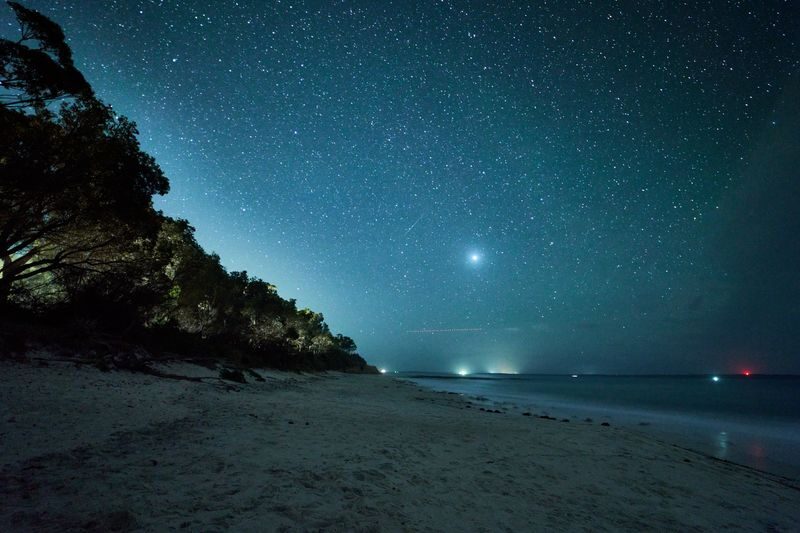
The appeal is simple: you settle on a beach, the sound of the sea is nearby, and your guide helps turn a scatter of bright points into a sky you can read. Nelson’s Beach is the named setting for the stargazing, with laser-guided explanations delivered at sunset and into the evening.
This is not an observatory visit or a long astronomy course. It is a short, approachable introduction outdoors, built around what is visible on the night. Your guide can point out constellations and planets, explain how to use stars for navigation, and help you identify satellites, including the International Space Station and China’s Tiangong Space Station.
That mix of place and instruction matters. Looking up on your own can be lovely, but it is easy to mistake one bright point for another or miss a constellation’s shape entirely. A laser pointer gives the group a shared reference, while the guide adds the context that makes the view memorable.
The experience is described as suitable for all ages and levels, and it is beginner-friendly. You do not need to know the names of stars in advance. Curiosity is enough.
👉 See our pick of the 6 Best Tours In Jervis Bay
From the meeting point to the beach
The advertised schedule begins at 17:30 and returns at about 19:00, allowing 90 minutes for the session. The exact timing may shift with traffic and weather, so treat the stated hours as a guide rather than a hard promise.
There is some uncertainty in the meeting details. Plantation Point Reserve in Vincentia is named as a meeting and return point, while Moona Moona Beach playground in Huskisson also appears in the directions. The beach address is kept secret until the day before the session. Read the final message from the operator carefully and confirm the precise pickup point before setting out.
Arrive 15 minutes early. Late arrivals and no-shows are not refundable, and there is no hotel pickup or drop-off, so plan your own transport to the meeting place. The tour has space for one to 20 participants, a small enough group to ask questions, though the view through a telescope will naturally be shared.
You can also read our reviews of more tours and experiences in Jervis Bay.

Learning to read the sky
The first part of the session is naked-eye astronomy, with a laser guiding your attention across the sky. You may learn how to use stars to navigate, how to recognize familiar constellations, and how to distinguish stars from moving satellites.
The guide’s explanations go beyond naming patterns. The program includes star signs, Orion, antique constellations, the history of constellation-making and stories from other cultures. That cultural range is a welcome change from treating the night sky as a set of labels. You hear how people in different places have interpreted the same stars, and why those patterns mattered.
There is also accessible science woven into the storytelling. Dimitri, one of the named guides, has a PhD in astronomy. In one session he explained how stars are born and how astronomers estimate their ages, alongside the constellations and planets. John has also led sessions, with Cody assisting at the telescope. Guide assignments can vary, but the format gives you room to ask questions rather than simply listen to a fixed lecture.
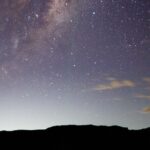
The laser-guided portion is useful for beginners, but it depends on conditions. Cloud cover can obscure the sky, and even on a clear evening some objects may be faint. A bright Moon can wash out dimmer stars, as it did during one session when the Milky Way was visible but subtle. If your priority is the fullest possible view of faint stars, ask about the Moon phase when choosing a date, while remembering that weather remains the biggest unknown.
Binoculars, telescope and a changing menu of sights
After learning the broad shapes overhead, you can get closer views with astronomy binoculars and a telescope. The program may include the Moon, Saturn, Jupiter, Mars, the Orion Nebula, star clusters, double and triple stars, and galaxies. What is available depends on the season and time of night, so do not expect a fixed checklist.
That flexibility is normal in astronomy. Planets move through the sky over the year, and some objects are easier to see at certain hours. The Moon can be a spectacular target, while its brightness can also make faint stars less visible. The guide chooses from what is actually up and suited to the conditions.
A session has included views of Jupiter, the Moon and star clusters, with Saturn appearing as an extra treat on another night. The telescope offers a more detailed look than naked-eye viewing, while binoculars make it easier to scan a broader patch of sky. Neither replaces the beach setting; they add another layer to it.
The equipment is provided, and binoculars and telescope eyepieces are wiped before or after each person handles them. You can also ask the astronomer questions during the session. That Q&A is valuable if you want more than a quick look: ask how a planet differs from a star, how astronomers study distant objects, or how to find a constellation again later.
What the price includes
The 90-minute experience starts at US$57.79 per person. That price covers an English-speaking guide, necessary equipment, binocular viewing, access to the telescope when appropriate, a question-and-answer session, and a complimentary digital night photography souvenir.
For a short outing, the value rests on the guide and the setting as much as on the equipment. You are paying for someone to interpret the sky, bring the right tools and help you make sense of what is visible. If you already own astronomy gear and know your way around the stars, you may find the session less essential. For a beginner, or for a family wanting a structured evening outdoors, the guided format makes the experience easier to enjoy.
Meals, drinks, personal expenses, tips and transport are not included. There is no hotel transfer, so add the cost and time of getting to Vincentia or Huskisson to your plans. Children aged 15 and older pay the adult rate; children from zero to three are free, but infants and children still need to be included in the passenger count.
The operator also offers a complimentary digital photography souvenir. Treat that as a keepsake, not a promise of a dramatic Milky Way portrait: night photography depends on the sky and conditions, and the main draw is the guided viewing itself.
Weather, warmth and other practical details
Jervis Bay may be mild by day, but a beach evening can feel chilly when you are sitting still. Wear warm layers and bring gloves or a blanket. Mats and blankets have been provided during a session, but bringing your own warm layer is the sensible choice rather than relying on loan equipment.
Cloud is the key risk. If the sky is overcast, the operator may cancel and contact you on the day. The information provided gives two different notification times, 14:00 and 15:00, so check your booking message for the current procedure. If the operator cancels for cloudy skies, you can choose a transferable voucher or credit valid for three years, or request a refund. For extreme weather or other unforeseen events, the operator may offer rescheduling or a full refund.
Standard cancellations by the customer are not refundable, so be sure about your date before booking. Changes made at least 24 hours before the activity are free. The activity is not wheelchair- or stroller-accessible, and alcohol and cigarettes are prohibited. Anyone who appears intoxicated may be refused service without a refund.
The activity is closed on Tuesdays, Wednesdays and Thursdays. Check the available date before building it into a tightly planned evening.

Who will enjoy this beach stargazing?
This is a good fit if you are new to astronomy, want a relaxed outdoor activity, or are travelling with family members who enjoy asking questions. The guide-led format makes it approachable, and the combination of laser pointers, binoculars and a telescope keeps the session from becoming a lecture beneath a dark sky.
It also suits anyone who likes the idea of the coast after sunset. The surf gives the evening a sense of place that an indoor planetarium cannot reproduce. You may spot a shooting star, and bioluminescence is also possible, but neither is guaranteed. Book for the astronomy and seaside setting, not for a particular rare sight.
It may be less suitable if you need a firm schedule, dislike the cold, or are counting on clear skies. The 90 minutes can feel brief if you want a detailed astronomy course, and the changing sky means no guide can promise a specific planet or galaxy. A Moonlit night may still offer excellent lunar or planetary viewing, but it is not ideal for faint stars.
Should you book it?
I would book this if you want an easy introduction to the night sky with an astronomer, and you can stay flexible about weather and what you will see. The beach, practical star-finding tips and telescope viewing give the outing substance beyond a pretty view.
Before paying, confirm the exact meeting point, check the Moon phase if faint stars are your main goal, and dress for a cool evening. Go expecting a guided look at whatever the sky offers, rather than a guaranteed checklist. That is the right way to make this short Jervis Bay outing worthwhile.
Jervis Bay Stargazing on the Beach
“It was a wonderful experience sitting by the beach and gazing at the stars in Jervis Bay. Our guides made sure we were kept nice and warm and provi…”
FAQ
How long is the stargazing experience?
The experience is described as 90 minutes. The schedule lists a departure at about 17:30 and a return around 19:00, though timing may change with traffic and weather.
Where does the tour meet?
Plantation Point Reserve in Vincentia is listed as a meeting and return point, and Moona Moona Beach playground in Huskisson is also named in the directions. The exact beach address is shared the day before, so check the operator’s final message for your confirmed meeting place.
What time should I arrive?
Arrive 15 minutes before the scheduled departure. Late arrivals and no-shows are not refundable.
What can I see through the telescope?
Depending on the time of year and night, possible targets include the Moon, Saturn, Jupiter, Mars, the Orion Nebula, star clusters, double and triple stars, and galaxies. The exact objects are not guaranteed.
Is the tour suitable for beginners?
Yes. The activity is described as beginner-friendly and suitable for all experience levels. An astronomer guides the group and answers questions.
What should I wear or bring?
Wear warm clothing and bring gloves or a blanket, since beach nights can feel cold. The necessary astronomy equipment is provided.
What happens if the sky is cloudy?
The operator may cancel the session and contact you on the day. If it is cancelled for cloudy skies, you can choose a transferable voucher or credit valid for three years, or request a refund. Check your booking message for the notification time.
Are children allowed, and what do they cost?
The activity is suitable for all ages. Children aged 15 and older are charged the adult rate, while children aged zero to three are free. Infants and children must still be included in the passenger headcount.
Is transport included?
No. Hotel pickup and drop-off are not included, so you need to make your own way to the confirmed meeting point.