Snow peaks, high meadows and a sunset stop at Yuzixi give this three-day journey its draw, but the best part may be the contrast: one day you’re among the fir forests of Mount Siguniang, the next you’re drinking coffee with a view of Yala Snow Mountain. I like the small-group vehicle, which leaves an empty seat in the back row, and the mix of famous sights with brief local experiences such as butter tea in a herder’s tent.
There’s a lot of road time, and the last day can run late. You’ll also need to pay separately for several park tickets, shuttle buses and meals. At high altitude, the gradual climb can help you adjust, but it cannot prevent altitude sickness.
- Key points to know before you go
- Three days from Chengdu to the western Sichuan highlands
- Day one: Cat Nose Ridge and Shuangqiaogou Valley
- Day two: Yala views, stone park and coffee by the peaks
- Day three: horseback photos, Muya Temple and Tagong grassland
- Small-group comfort and the limits of the guide service
- What the price covers, and what you’ll pay extra
- Who should book this western Sichuan trip?
- FAQ
- How long is the tour, and where does it start?
- What time does the tour return to Chengdu?
- Are Shuangqiaogou tickets included?
- Are meals included?
- Is a professional tour guide included?
- What experiences are included in the price?
- Is the tour suitable for people concerned about altitude?
- More Guided Tours in Sichuan
- More Tours in Sichuan
- More Tour Reviews in Sichuan
- Not for you? Here's more nearby things to do in Sichuan we have reviewed
Key points to know before you go
- Shuangqiaogou is the big first-day stop: A park shuttle carries you through a valley of snow peaks, forests, meadows and streams, with less walking than a self-guided hike.
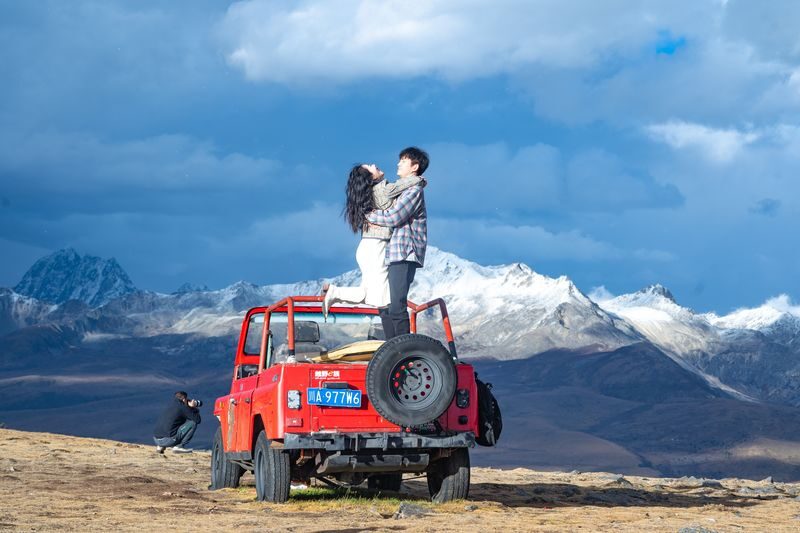
- The second evening is built around sunset: Yuzixi offers views toward Yala and Gongga snow mountains, but wind and weather can affect both comfort and access.
- Coffee comes with a mountain view: At Gulong Village, you get time to sit with a drink and look toward Yala Snow Mountain.
- The cultural stops are hands-on: You can try butter tea and dairy foods in a yak-hair tent, and take part in a short herding demonstration.
- The group stays small: Vehicles are matched to group size, with the middle seat in the last row left empty for comfort.
- Budget extra for admission and food: The starting price does not include the main park tickets, most meals or some local site fees.
Three days from Chengdu to the western Sichuan highlands
This is a compact road trip through western Sichuan, linking Mount Siguniang with Danba, Xinduqiao, Tagong and Yuzixi. You leave Chengdu early, travel through mountain country, and return to the city on the third evening.
The route is designed to rise in altitude gradually. Danba, the first night’s stop, sits at about 1,800 metres; the second night is in Xinduqiao, at roughly 3,400 metres. That slower progression may make the transition easier than a sharp jump, but you’ll still spend time at high-altitude viewpoints. Walk slowly, drink water and take any symptoms seriously.
Expect long stretches in the vehicle, even though the listed driving time for each day is moderate. Roads, weather and traffic can shift the schedule, and the final drive back to Chengdu is especially important to plan around. The operator advises booking onward transport for the following day, not the same night.
You can also read our reviews of more guided tours in Sichuan

Day one: Cat Nose Ridge and Shuangqiaogou Valley
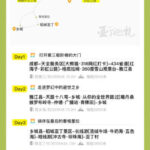
The first day begins with pickup in Chengdu between 6:00 and 7:00 a.m. The driver collects passengers in sequence, so have your bags ready and keep your phone on for the pickup message. The trip to Mount Siguniang is about 320 kilometres, with around six hours of driving before the day’s main visit.
At Cat Nose Ridge, you get about half an hour to look across at the four peaks of Mount Siguniang, including Yaomei Peak. It’s a short viewpoint stop, not a hike, and a good first chance to see how the mountain scenery opens up as you leave the city behind.
Lunch is at your own expense near the entrance to the scenic area. The schedule allows a short meal and rest before you enter Shuangqiaogou, so don’t count on a long sit-down lunch. Bringing snacks from Chengdu is sensible, particularly if you prefer familiar food or want something on hand between stops.
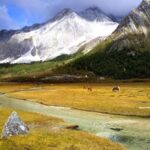
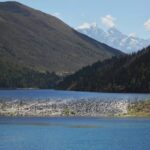
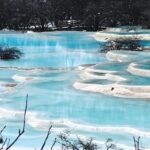
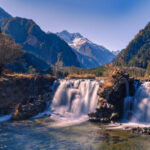
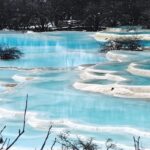
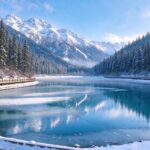
You’ll spend about four hours in Shuangqiaogou Valley. Snow-capped peaks, streams, fir forest and open meadows give the park its appeal, while a sightseeing bus reduces the amount of walking needed to see the valley. This makes the stop more manageable for people who want mountain views without a strenuous trek. It does mean that the visit follows a set route and depends on the park shuttle rather than your own pace.
The standard package includes neither the scenic-area entrance ticket nor the shuttle bus. The listed prices are 80 yuan for admission and 70 yuan for the bus. The tour requires the Shuangqiaogou ticket to be booked soon after the tour order; if tickets are unavailable, the operator may switch the stop to Changping Valley. If Shuangqiaogou is the main reason you’re booking, check that the ticket is secured.
After the visit, you continue to Danba for the night. The accommodation is a three-diamond hotel or an equivalent property. Dinner is not included, so you can choose a local restaurant and pay directly.
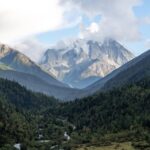
Day two: Yala views, stone park and coffee by the peaks
After breakfast, you leave Danba for a day of viewpoints and shorter stops. Breakfast is included, while lunch and dinner are not. The day’s driving is listed at about 150 kilometres and three hours, but the sightseeing stops stretch the day into evening.
At a Yala Snow Mountain viewpoint, you get around 30 minutes to take in the peak and take part in a Longda prayer-flag ritual. It’s a small, symbolic stop rather than a long cultural visit. Keep a warm layer close: high viewpoints can feel much colder than the drive below.
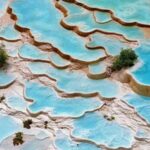
Moshi Park adds a striking change of scene. Its dark rock formations and patches of grass make it visually different from the snow-and-forest scenery around Mount Siguniang. You have about an hour and a half here. Admission is listed at 60 yuan, with a 20-yuan shuttle fee, both extra. The park’s bold shapes make it an easy place to photograph, though the visit is still a scheduled stop rather than an extended walk.
Later, at Gulong Village, the tour sets aside roughly two hours for coffee with a view of Yala Snow Mountain. This is one of the trip’s gentler moments. You can sit down, enjoy the setting and take a break from moving between viewpoints. The experience is included, but food and other drinks beyond what is specified may cost extra.
Yuzixi is the day’s final major stop, with about an hour for sunset views toward Yala and Gongga. The hope is to catch the peaks glowing in the evening light, but it’s weather dependent, not a guaranteed show. The viewing platform can be very windy, so bring a windproof layer even if Chengdu was warm when you left. If weather, traffic control or local conditions close the road, the stop may be adjusted.
You finish in Xinduqiao, where the second night is in a three-diamond hotel or equivalent. The day’s high-altitude stops and the roughly 3,400-metre elevation at Xinduqiao make this the point to pay close attention to how you feel. The tour supplies three portable oxygen cylinders per person, but oxygen is a backup, not a substitute for taking symptoms seriously.
Day three: horseback photos, Muya Temple and Tagong grassland
The third day starts with breakfast and a short drive to Sela Ranch. Here, a professional gives a brief introduction to mounting, holding the reins and riding at a slow pace. The included horseback experience lasts about 15 minutes, following 10 to 15 minutes of instruction. It’s a short taste of riding, not a long trail ride.
You can then choose one photo option: an equestrian-themed shoot or a Tibetan-costume shoot. The equestrian option includes three retouched images and nine original images; the Tibetan-costume option includes six retouched images and all 12 original images. The photography is part of the package, but the tour description does not promise a particular photographer or a specific delivery time for the edited files.
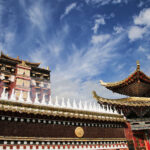
The route continues through Ge’rima Village to Muya Temple, also called Muya Monastery. Its red walls, golden roofs and white pagodas are set against the mountains. You get around 30 minutes at the temple, with admission listed at 16 yuan extra. This is a brief stop, so approach it as a glimpse of local religious architecture rather than an in-depth visit.
At a Tagong-area ranch, you can enter a traditional yak-hair tent, taste butter tea and dairy foods, and learn about making a traditional Tibetan food. The experience also includes a short introduction to nomadic life, with a chance to try using a sling to help herd animals. This is the trip’s most direct cultural encounter, though it is still a short, arranged activity rather than a long stay with a herding family.
Lunch is at your own expense on the way to Honghaizi. The tour then follows the S434 Snow Mountain Highway, with a stop at Honghaizi for about half an hour. In clear weather, the route can offer more views of the region’s snow peaks. Some smaller sites along the way may charge local cleaning or access fees, so keep a little cash available.
The drive back to Chengdu is long, and the estimated return is 8:00 to 8:30 p.m. Traffic and weather can push that later. Don’t schedule a flight, train or long-distance bus for that same night.
Small-group comfort and the limits of the guide service
The group size is advertised as two to seven people, with different vehicles assigned by passenger count. Two or three people travel in a five-seat SUV, four or five in a seven-seat business vehicle, and six or seven in a nine-seat business vehicle. The middle seat in the last row is kept empty, which matters on mountain roads where you may spend several hours in the vehicle.
Your driver also serves as a basic guide, sharing simple explanations and practical help, but does not enter the scenic areas with you. This is not a guided walking tour, and a professional guide is not included. The driver may help with photos and local logistics, but the level of commentary can vary. Some drivers speak Chinese only, so a translation app or a Chinese-speaking companion can be useful if you need detailed explanations.
The tour includes bottled water, three portable oxygen cylinders per person and one bottle of water per person per day. It does not include meals, drinks beyond the specified provisions, tips or personal expenses. Rooms are normally set up for two adults; a solo occupant pays a single-room supplement.
What the price covers, and what you’ll pay extra
The entry-level package starts at US$176.80 for two nights in three-diamond hotels and a small group tour. Higher-priced choices include one three-diamond and one four-diamond hotel night, two four-diamond nights, or options with an upgraded vehicle and photography tour leader. The most expensive listed package starts at US$296.75 for two four-diamond hotel nights, a large seven-seat van and a photography leader for groups of two to six.
The base fare covers the vehicle, driver-guide, two nights’ accommodation, breakfast and the listed experiences: horseback riding and one costume photo option, coffee at Gulong Village, the Longda ritual and the tent visit. It does not cover the key park tickets. Budget at least 150 yuan for Shuangqiaogou admission and shuttle, 80 yuan for Moshi Park admission and shuttle, and 16 yuan for Muya Temple, before meals and any local fees at smaller sites.
The value is strongest if you want transport, lodging and several arranged experiences bundled together, without having to manage mountain roads yourself. It is less of a bargain if you want a private guide, all meals included or long, flexible visits at each stop. Moving to a four-diamond hotel option costs more, but may be worth considering if room comfort matters more to you than keeping the fare low.
Who should book this western Sichuan trip?
Book it if you have three days, want to see several distinct mountain areas and prefer a small vehicle to a large coach. The combination of valley scenery, snow peaks, sunset viewing, coffee and short cultural activities gives the trip more variety than a simple drive to a single viewpoint.
It suits people who enjoy photo stops and don’t mind a busy schedule. It can also work for families with older children, though children’s fees exclude admission tickets, beds and breakfast. A child traveling with one parent must book a separate room and cannot use the child price.
This tour is not open to children under three, people over 65, pregnant women or people with the listed medical conditions, including heart, respiratory and cardiovascular diseases, diabetes, high blood pressure or high blood sugar. The operator also excludes people recovering from surgery or otherwise unsuitable for high-altitude environments. If you have health concerns, get medical advice before booking.
Sichuan Mt. Siguniang and Yuzixi 3-Day Tour (Upgradeable to Large 7-Seater Luxury Van / Photography Guide)
“At Gunong Village, I enjoyed coffee while gazing at Mount Yala. On Tagong Grassland, I shared yak butter tea with local herders. From the peak of Y…”
FAQ
How long is the tour, and where does it start?
It is a three-day, two-night tour departing from Chengdu. Pickup is between 6:00 and 7:00 a.m., usually around Shuhan Road East Metro Station, with hotel pickup available at other hotels within the Third Ring Road.
What time does the tour return to Chengdu?
The expected return is around 8:00 to 8:30 p.m. on day three. Traffic and weather can cause delays, so avoid booking onward transport for that night.
Are Shuangqiaogou tickets included?
No. Admission is listed at 80 yuan per person and the scenic shuttle bus at 70 yuan per person. Tickets need to be purchased soon after placing the tour order; if they are unavailable, the visit may be changed to Changping Valley.
Are meals included?
Breakfast is included. Lunches, dinners and other meals or beverages are at your own expense.
Is a professional tour guide included?
No. The driver also acts as a basic guide and can offer simple explanations, but does not enter scenic areas with you. A professional tour guide is not included.
What experiences are included in the price?
The package includes a short horseback lesson and ride with a choice of equestrian or Tibetan-costume photography, coffee at Gulong Village, a Longda prayer-flag activity and a visit to a yak-hair tent with butter tea and dairy foods.
Is the tour suitable for people concerned about altitude?
The route rises gradually, and portable oxygen cylinders are provided. However, altitude sickness is still possible. The tour does not accept people under three or over 65, pregnant women, or people with several specified medical conditions.