The museum packs an immense story into one visit: Earth’s 4.6-billion-year history, told through dinosaur skeletons, fossils and recreated habitats. I like the clear route through the exhibits, which gives you a useful framework, and the guide’s explanations and earpiece, which help make a large collection easier to follow.
The main catch is that the lowest-priced group option does not include admission, and a shared group may not suit every pace or interest. Check the ticket details before booking, arrive early, and be ready for a brisk two-hour visit rather than a full survey of the museum.
- What to know before you book
- A 4.6-billion-year story in two hours
- Dinosaurs in the River of Life
- From savanna herds to polar penguins
- Small science experiments with a big idea
- Fossils, shifting continents and a simulated eruption
- What the two-hour route leaves for later
- Choosing a package that fits
- Meeting, timing and ticket details
- Is this the right museum tour for you?
- FAQ
- How long is the guided tour?
- Which days is the museum closed?
- What languages are offered?
- Does every package include admission?
- What are the tour departure times?
- Where do I meet the guide?
- Is the dinosaur park included?
- What should I bring?
- The Best Of Shanghai!
- More Historical Tours in Shanghai
- More Tours in Shanghai
- More Tour Reviews in Shanghai
- Not for you? Here's more nearby things to do in Shanghai we have reviewed
What to know before you book
 1 / 3
 2 / 3
 3 / 3
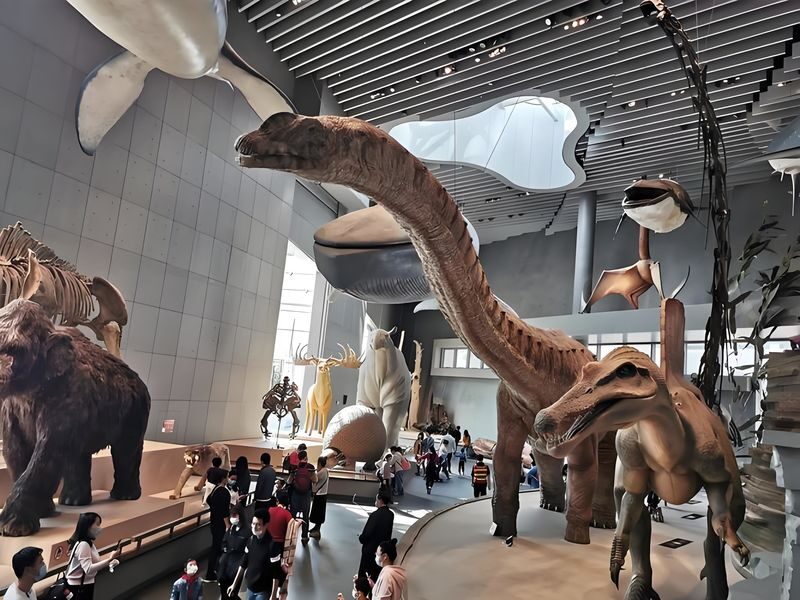
- Giant dinosaurs open the story: See restoration models of Mamenchisaurus and Tyrannosaurus rex, with displays about fossils and ancient habitats.
- The ecosystem hall brings distant places together: Panoramic projections feature wildlife from the African savanna to polar ice.
- Hands-on exhibits add variety: Try animal camouflage activities, view butterfly wing structures under a microscope, and explore DNA through AR.
- The standard guided visit lasts two hours: You can stay afterward to explore other areas on your own.
- Admission depends on your package: The shared Chinese tour without a ticket is the lower-cost option, while other packages include entry.
- Plan around the museum’s Monday closure: Tours meet at the museum entrance, and you should arrive 15 to 20 minutes early.

👉 See our pick of the 25 Best Guided Tours In Shanghai
A 4.6-billion-year story in two hours
Shanghai Natural History Museum sets out to explain how life changed from the early Earth to human civilization. That is a big subject for a two-hour visit, so the guide matters: instead of trying to read every label, you get a route and explanations that connect the displays.
The collection spans biological specimens, fossils and science exhibits. The tour moves through several themed areas, from dinosaurs and ecosystems to genetics and geology. It is a good fit if you want context and a clear starting point, especially on a first visit. It is less suited to anyone who prefers to linger at every display or follow a highly individual route.
The guided portion is described as a Chinese-language tour for the standard group option. English commentary is offered with a private tour package. Package names and prices can vary, so check both the language and ticket inclusion before paying. An earpiece is provided on the guided tour, which helps you hear the explanation while looking at the exhibits rather than standing close to the guide.
You can also read our reviews of more historical tours in Shanghai



Dinosaurs in the River of Life
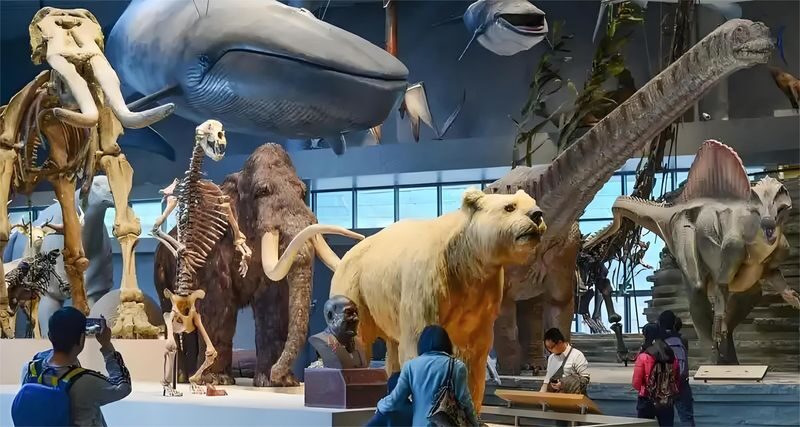
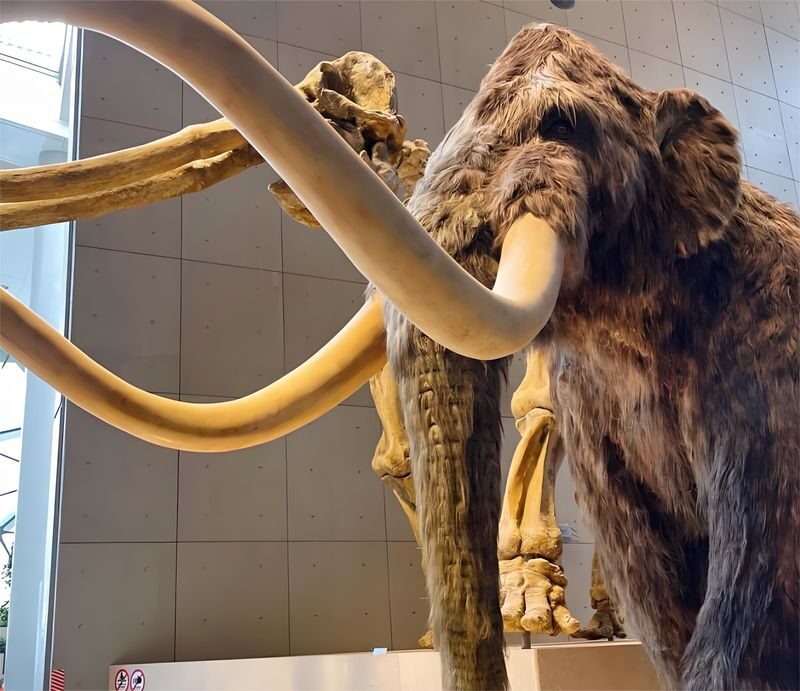
The first major stop is the River of Life area, where large dinosaur models give the ancient world immediate scale. Mamenchisaurus and Tyrannosaurus rex restorations are among the named displays. Even if you already know the basic dinosaur story, standing near skeletons and models makes the difference in size between species easier to grasp.
Interactive screens explain how fossils form, and the guide can describe the ancient settings in which these animals lived. That added explanation is useful because a skeleton alone tells you what an animal looked like, not how paleontologists piece together its life and environment.
The route includes a dinosaur park area, but access may require an additional ¥88 per person. Do not assume it is part of the standard admission or tour. Confirm the details for your chosen package, particularly if the dinosaur displays are the main reason you are booking.
From savanna herds to polar penguins
The Diversity of Ecosystems hall shifts the focus from ancient life to living habitats. Panoramic projections recreate scenes from places such as the African savanna and polar regions, including wildebeest migration and penguin families. The change of scale is welcome after the dinosaur displays: instead of one enormous animal, you see ecosystems and the relationships within them.
The hall is designed to engage the senses, with wildlife sounds and large-format imagery. An animal camouflage activity gives you a chance to think about how creatures such as chameleons and stick insects avoid detection. It is a useful stop for families, but the activities and projections can also help adults connect the idea of adaptation to specific examples.
A shared group can make this section feel less flexible. One visitor found their group was made up of children and chose to continue independently after part of the tour. That does not mean every group will be similar, but it is worth considering if you want an adult-focused discussion or a quiet, self-paced visit. A private option offers more control over the route, though you should confirm exactly what flexibility is included.
Small science experiments with a big idea
The Life Experiment Field section brings the tour down from planetary time to details you can study up close. You can view the structure of butterfly wings under a microscope and make a model inspired by wing design. The point is not just to admire an insect’s color, but to notice how natural structures can inform human ideas.
At the Genetic Code display, AR technology presents the shape of the DNA double helix. This is a more direct way into a subject that can otherwise feel abstract. The guide’s explanation can help you connect the model to heredity and life’s shared building blocks.
These hands-on elements break up the museum’s larger displays. If you are visiting with children, they offer a change from listening and looking. The tour is open to all ages, but the exact pace and group composition can affect how long you spend at each activity.
Fossils, shifting continents and a simulated eruption
Treasures of the Earth turns to geology and the forces that shape the planet. One distinctive feature is ancient marine fossils found in the Himalayas, a striking prompt to consider how land and sea have shifted over time. The guide links those fossils to continental drift, giving the displays a wider story than simply identifying rocks.
A volcanic eruption simulation adds a more active moment. It offers a way to picture the Earth’s internal energy without needing specialist knowledge. For anyone whose interest leans more toward animals than geology, this section may feel less personal than the dinosaur or wildlife halls, but it rounds out the museum’s account of how life and the planet developed together.
You can also read our reviews of more museum experiences in Shanghai




What the two-hour route leaves for later
The guided tour covers selected sections, not every corner of the museum. Afterward, you can continue independently, with the Big Bang astronomy hall and the Colorful Life Butterfly Pavilion among the areas suggested for a longer visit. One visitor spent about three and a half hours at the museum in total, including time after the guided portion.
That extra time is worth planning if you want to see more than the main route. The guide gives you a foundation, then you can return to displays that caught your eye or seek out sections the group did not visit. The two-hour format works well as an introduction, but it is not a substitute for a full museum day if you like to read every panel and try each activity.
Choosing a package that fits
The key decision is not only group versus private. It is also whether your package includes admission and which language the guide uses. The Chinese guided group without an entrance ticket is listed as the lower-cost option. Other choices include Chinese group tours with admission, a private Chinese-language tour with admission, and a private English-language tour with admission.
Listed prices begin around $27 for the group option without tickets, with other packages ranging roughly from $32 to $45. Prices can change, and the displayed starting price may not match the package you need. Compare the final price against what is included rather than choosing by the headline figure alone.
If you are comfortable following a set route and want a guide to explain the exhibits, a shared tour offers good value. If you want English commentary, more control over the route, or a quieter experience, the private English option may be worth the higher cost. A visitor noted that an AI guide can also be rented inside the museum, so independent visitors have another way to get explanations, though that is a different experience from having a guide lead the route.
Meeting, timing and ticket details
Tours depart at 9:30 a.m. or 1:30 p.m., with the corresponding end times listed as 11:30 a.m. or 3:30 p.m. Meet at the Shanghai Natural History Museum entrance and arrive 15 to 20 minutes early. The exact meeting details are confirmed after booking, and the tour ends at the entrance or disperses at the museum.
The museum is closed on Mondays, so choose another day. Bring a valid ID or passport; the stated requirement is a passport with at least six months of validity. Foreign visitors may need to redeem a physical ticket at the counter before entering, even when their booking is confirmed. Allow time for that step and check the ticket instructions for your package.
Transport, meals, drinks, tips and personal expenses are not included. You make your own way to the museum. The voucher is valid only for the date and time booked, and changes are allowed until 24 hours before the activity, subject to the stated booking restrictions.
Is this the right museum tour for you?
Book this tour if you want a guided introduction to the museum’s biggest themes, especially dinosaurs, global ecosystems and Earth science. The strongest reason to go with a guide is the structure: explanations link exhibits that might otherwise feel like a long sequence of specimens. The earpiece and clear, engaging delivery can make those two hours more useful.
Choose a self-guided visit if you prefer to set your own pace, or if you want to spend most of your time in sections outside the guided route. For a group booking, check the language, admission status and any extra charge for the dinosaur park before you commit. If those details suit your plans, this is a practical way to make a large museum feel more manageable.
Half-Day Tour of Shanghai Natural History Museum
“Tour guide: The explanation was very clear and engaging.”
FAQ
How long is the guided tour?
The guided portion lasts two hours. You can stay afterward and continue exploring the museum on your own.
Which days is the museum closed?
The Shanghai Natural History Museum is closed on Mondays. Choose another day for your visit.
What languages are offered?
The standard group tour is Chinese-speaking. A private tour with English commentary is also offered.
Does every package include admission?
No. The Chinese guided group option without entrance tickets does not include admission. Other listed packages include tickets, so check the selected option before booking.
What are the tour departure times?
The listed departure times are 9:30 a.m. and 1:30 p.m. The matching return times are 11:30 a.m. and 3:30 p.m., depending on your selected departure.
Where do I meet the guide?
The meeting point is the entrance of the Shanghai Natural History Museum. Arrive 15 to 20 minutes early, and check your confirmed meeting details after booking.
Is the dinosaur park included?
Access may require an additional ¥88 per person. Check the details for your package before your visit.
What should I bring?
Bring a valid ID or passport. The stated passport requirement is at least six months of validity.