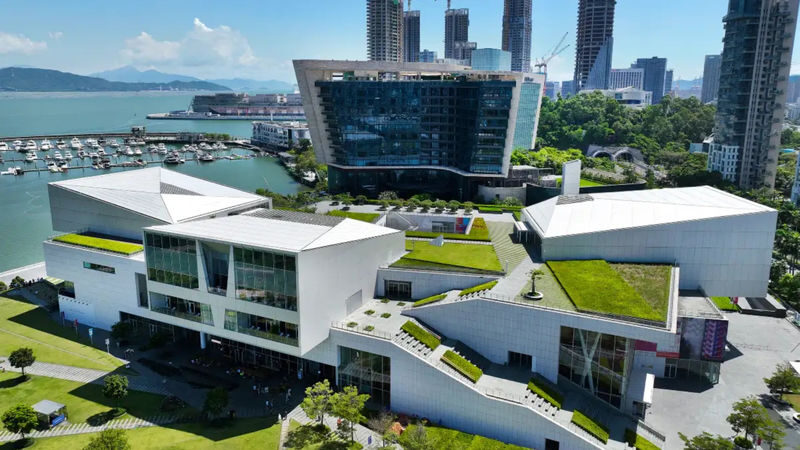
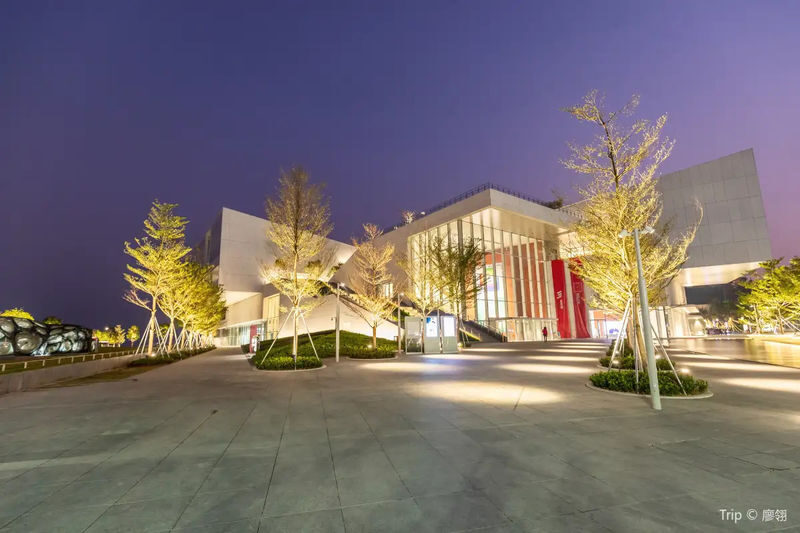
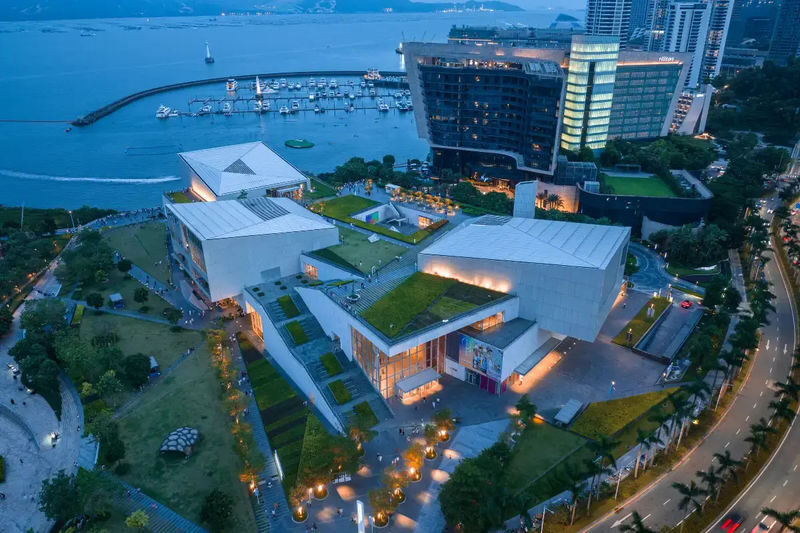
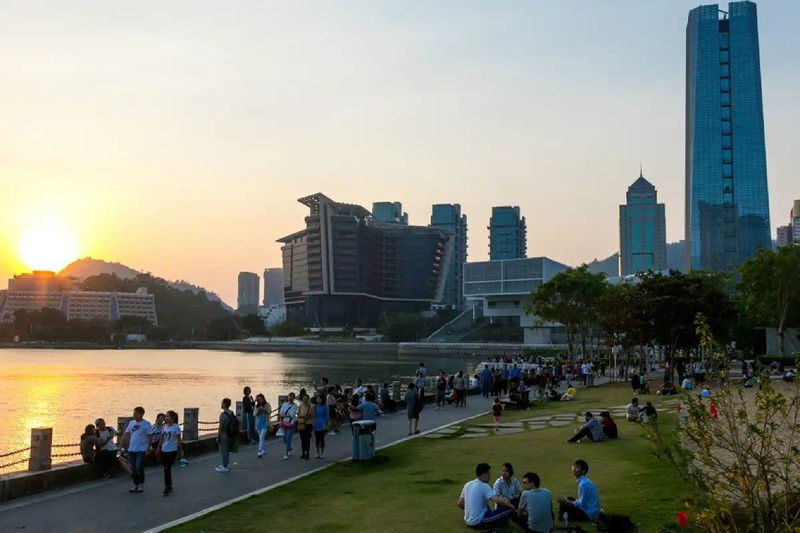
Shekou’s Sea World Culture and Arts Center puts architecture and art under one roof: five exhibition halls, five galleries, and a design by Pritzker Prize laureate Fumihiko Maki. It is a cultural venue, not an ocean-themed attraction, and its setting is designed to bring mountain, sea, and city into view.
I like the way the building’s open, connected spaces give the visit an architectural angle, and I like the pass’s breadth: you can explore a mix of halls and galleries rather than commit to one show. At a starting price of $10.35, that can be good value if several spaces are open.
One thing to plan around: the pass does not guarantee that every space will be operating on your chosen day. Exhibitions may be between shows, some galleries close on Mondays or Tuesdays, and the venue is large enough that you will want to allow time rather than rush through.
- What to know before you go
- A cultural stop in Shekou, not an amusement park
- Maki’s building makes the visit part of the experience
- Five halls and five galleries, with a schedule to check
- How to make a visit of it
- Hours, ticket value, and the fine print
- Practical details for families and groups
- Who will get the most from this pass?
- Should you book the Sea World Culture and Arts Center pass?
- FAQ
- Where is the Sea World Culture and Arts Center?
- What does the all-access pass include?
- What are the opening hours?
- Can I enter the same exhibition hall more than once?
- How do I redeem the voucher?
- Can I change or cancel my ticket after booking?
- The Best Of Shenzhen!
- More Tours in Shenzhen
- More Tour Reviews in Shenzhen
- Not for you? Here's more nearby things to do in Shenzhen we have reviewed
What to know before you go
 1 / 7
 2 / 7
 3 / 7
 4 / 7
 5 / 7
 6 / 7
 7 / 7
- Maki’s only work in China: The center’s design uses urban landscaping to connect the perspectives of mountain, sea, and city.
- Ten exhibition spaces are included: The pass covers five major halls and five galleries, subject to their actual opening schedules.
- The venue has a substantial cultural program: Since opening in 2017, it has hosted exhibitions, performances, and community events.
- Hours change by day and space: The center opens later on weekends, while partner galleries generally close earlier and may not open every day.
- Check the exhibition schedule first: Installation periods can leave some halls or galleries closed to the public.
- Your ticket is for one entry per space: Once the ticket stub for an exhibition hall is torn, that hall entry is used.

👉 See our pick of the 10 Best Tours In Shenzhen
A cultural stop in Shekou, not an amusement park
Sea World Culture and Arts Center, often shortened to SWCAC, sits at 1187 Wanghai Road in Shekou, Shenzhen. Its name can lead you to expect a marine attraction, but this is a cultural complex built around exhibitions, performances, community activity, and art commerce.
China Merchants Shekou developed the center as its first innovative cultural complex. It opened in December 2017 and has since become a major cultural venue in the Greater Bay Area, with more than 13.91 million visits recorded over its first eight years. It has hosted 324 exhibitions, 769 performances, and 2,010 events, while community activities have drawn more than a million participants.
Those figures tell you this is not simply a set of quiet galleries. The program has included a broad range of public events, though what you can see on your visit depends on the current schedule. The pass is best thought of as access to whatever participating exhibitions are open that day, not as a promise of a fixed itinerary.
You can also read our reviews of more tours and experiences in Shenzhen.
Maki’s building makes the visit part of the experience
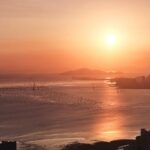
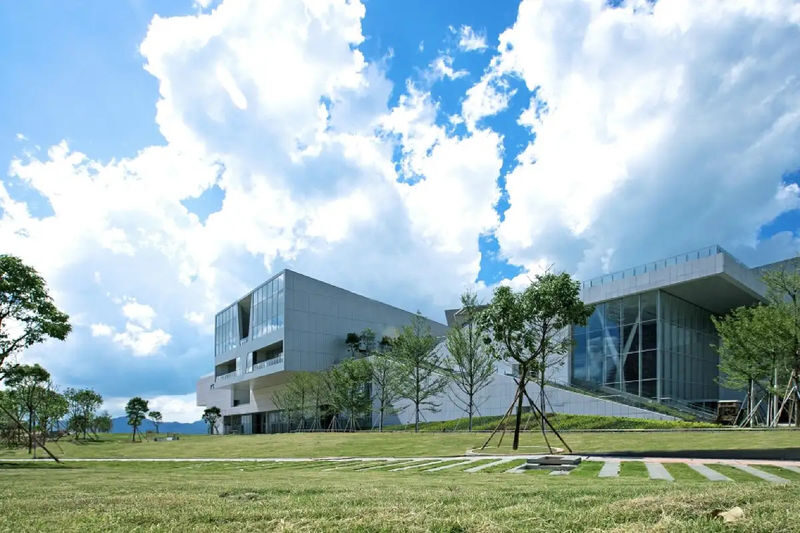
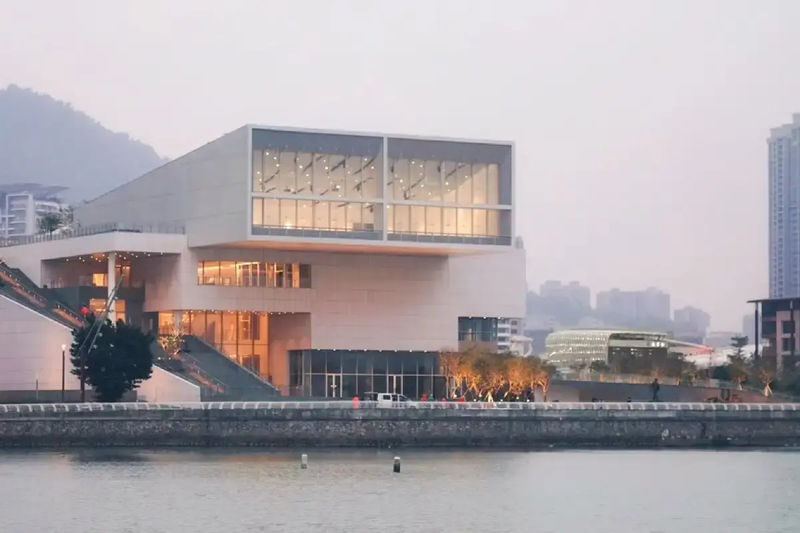
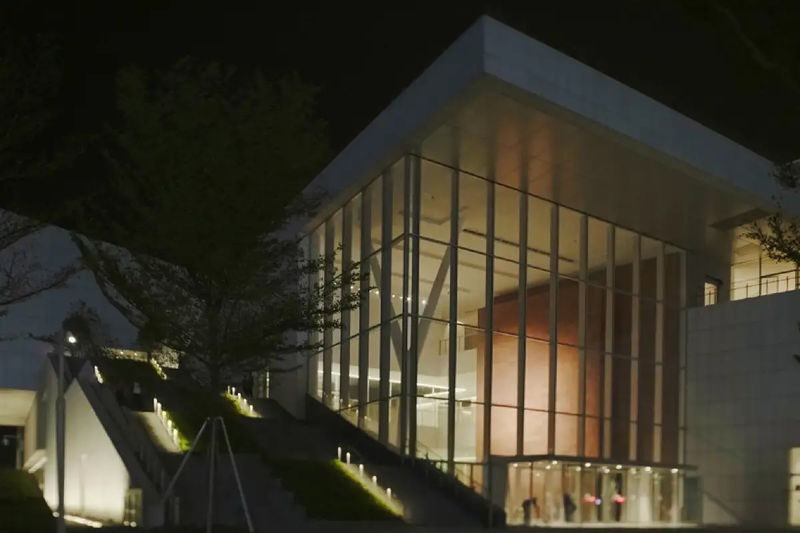
The center is the only work in China by Japanese architect Fumihiko Maki, a Pritzker Prize laureate. Its design uses open, linked spaces and urban landscaping to bring together three points of view: mountains, sea, and city.
That design concept gives the building a stronger sense of place than a generic exhibition hall. Shekou’s topography and location are part of the architectural idea, and the spaces are intended to encourage cultural exchange and interaction. You can pay attention to how the center connects its interior areas and public setting, even if you are not visiting for a specific exhibition.
I would not treat the building as a substitute for the exhibitions, but it adds a second reason to come. If you enjoy architecture, or want a cultural stop that feels tied to its neighborhood, the setting gives you something to notice between galleries.
Five halls and five galleries, with a schedule to check
The all-access pass covers five exhibition halls: the Main Exhibition Hall, V&A Exhibition Hall, and Binhai Exhibition Hall on Level 1; the UNESCO Exhibition Hall on Level 2; and the Garden Exhibition Hall on Level 3.
It also covers five galleries: 1979 Gallery on Level 1; Meicheng Space and Xiaoyan Art Academy · Nest Art Museum on Level 2; Rongbaozhai on Level 3; and Rongbaozhai Life on Level 4. The names give you a useful map of the spaces, but they do not tell you what will be on display. Exhibitions and opening dates can change, so check current notices before deciding how much time to set aside.
The L3 Yuan Geng Exhibition is free and is not included in this pass. That distinction matters if you are comparing ticket options: the pass is for the listed halls and galleries, while this separate exhibition does not require the all-access ticket.
During installation periods, halls or galleries may close. Partner galleries are generally open Tuesday through Sunday from 10:00 a.m. to 6:30 p.m., but some close on Tuesdays, and all partner galleries are closed on Mondays. Check the venue’s current announcements for the exact spaces open on your date.
How to make a visit of it
There is no fixed guided route or tour sequence described for this pass. You choose among the open spaces, so it pays to begin by checking the day’s exhibition information and identifying which floors are operating. Then you can plan a route around the shows that interest you instead of assuming all ten venues will be available.
A practical order is to start with the Level 1 spaces, then move through Levels 2 and 3, finishing at Level 4 if Rongbaozhai Life is open. That is a suggested way to organize the visit by floor, not a required route. Since each exhibition hall entry is single-use, check before leaving a space; exiting after your ticket stub has been torn means that entry is spent.
The center’s large footprint is part of its appeal, but it also argues against a rushed visit. One brief account of the experience praised the variety of themes and the size of the venue, and said it was worth returning. That is a useful way to think about the pass: you may find enough variety for a return visit, but the size means a quick stop can leave you choosing between spaces.
Hours, ticket value, and the fine print
The center’s listed hours are 10:00 a.m. to 7:00 p.m. Monday through Friday, and 10:00 a.m. to 9:00 p.m. on Saturday and Sunday. Entry stops 30 minutes before closing. Partner galleries have shorter hours, so a weekend visit does not mean every gallery stays open until 9:00 p.m.
Passes are offered as dated, open-date weekday, and open-date holiday options. The stated starting price is $10.35, but the amount you pay depends on the package and date selected. For that price, access to five halls and five galleries can be worthwhile if multiple spaces are open and you enjoy taking your time with exhibitions. If only a few are available, the value is less compelling, so confirm the schedule first.
The voucher is valid only for its specified date, and a selected date cannot be changed online. The ticket is nonrefundable. After arrival, show the QR code at the front desk to exchange it for a paper ticket, then present that ticket at each exhibition entrance. It is valid for one entry to each included space on the day it is issued.
Discounted admission is available for people aged 60 and over, full-time students or teachers with valid identification, and medical staff with valid work permits. Free admission applies to several specified groups, including children aged six and under or no taller than 1.3 meters, who must be accompanied by an adult. The venue also lists family ticket options for one adult with one child aged 1 to 16, and two adults with one child aged 1 to 16. Check the current conditions before booking.
Practical details for families and groups
Children under 14 must be accompanied by an adult. For a group with children, the adult-to-child ratio must be at least 1:5, and a children’s group must have at least two adults accompanying it throughout. Strollers and wheelchairs are permitted within specified size limits; the maximum extended dimensions are 110 centimeters long and 80 centimeters wide.
Large luggage must be checked, while valuables should stay with you. Food, drinks, smoking, and e-cigarettes are not allowed inside exhibition halls. The venue also bars items that could disturb the exhibition or affect safety, including selfie sticks, tripods, gimbals, umbrellas, animals, and items larger than 40 centimeters when expanded. Fragile paper works may be part of an exhibition, so follow staff instructions and do not handle exhibits unless invited.
Groups need to apply at the front desk 48 hours in advance. Capacity is limited, and the center gives priority to applications received first. Unauthorized commercial photography and live streaming are prohibited, so this is a place to look carefully, not to set up a shoot.
Who will get the most from this pass?
I would consider this pass if you are interested in contemporary cultural programming, architecture, or a flexible visit where you can choose from several exhibitions. It is also a good option if you are already spending time in Shekou and want a substantial indoor cultural stop rather than a single short exhibit.
It may be less useful if you need a guaranteed set of exhibitions, have only a narrow time window, or expect every gallery to be open. The center’s own schedule is the deciding factor. Check which halls and galleries are operating on your date, and compare that list with the ticket price before you commit.
Should you book the Sea World Culture and Arts Center pass?
Book it if several included spaces are open and the current exhibitions match your interests. You get the chance to see more than one part of Shenzhen’s cultural scene in a building with a distinctive architectural story, and the range of spaces gives the visit room to surprise you.
Hold off if you cannot confirm the exhibition schedule or if a closed gallery would make the pass poor value for you. I would plan a generous visit, check the hours for each space, and treat a return trip as a reasonable option rather than trying to cover every floor at speed.
FAQ
Where is the Sea World Culture and Arts Center?
It is at 1187 Wanghai Road in Shekou, Shenzhen, Mainland China.
What does the all-access pass include?
It includes one pass for five major exhibition halls and five galleries. Some spaces may be closed during exhibition setup, and the free L3 Yuan Geng Exhibition is not included.
What are the opening hours?
The center is listed as open from 10:00 a.m. to 7:00 p.m. Monday through Friday, and from 10:00 a.m. to 9:00 p.m. on Saturday and Sunday. Partner galleries generally open Tuesday through Sunday from 10:00 a.m. to 6:30 p.m., though some are closed on Tuesdays.
Can I enter the same exhibition hall more than once?
No. Each exhibition hall entry is single-use. Once the ticket stub is torn for that hall, you cannot use the pass to enter it again that day.
How do I redeem the voucher?
Show the ticket QR code at the front desk to exchange it for a paper ticket. Present the paper ticket at the entrance to each exhibition space.
Can I change or cancel my ticket after booking?
The voucher is valid only for the selected date, and the selected date cannot be changed online. The ticket is nonrefundable.