Muong Hoa Valley is the reason to take this trek: the route links Y Linh Ho, Lao Chai, and Ta Van, with rice terraces, mountain scenery, and a closer look at Black Hmong and Giay village life. Guides such as May, Sua, Pham, and Tamay have helped make the walk more than a succession of photo stops, explaining local customs and daily work as you go.
I like two things in particular: the village-to-village route gives you a feel for rural Sapa beyond town, and a good guide can turn details such as traditional cloth-making and farming into a human story. The main caution is the trail itself. It can mean several hours on foot, slippery or muddy ground, and an opening stretch beside traffic rather than rice fields.
- At a glance
- Walking from Sapa into Muong Hoa Valley
- The road section before the village paths
- Y Linh Ho and Lao Chai: fields, paths, and village life
- Ta Van: the village at the end of the walk
- What the guide brings to the experience
- How hard is the trek?
- Weather, views, and the right expectations
- Is .05 a fair price?
- Who should book this walk?
- FAQ
- How long does the trek take?
- Which villages does the route visit?
- How far do you walk?
- Is the trek difficult?
- What should I wear?
- Will I see rice terraces and mountain views?
- Which local communities will I encounter?
- Is transport back to Sapa included?
- Can I cancel for a refund?
- The Best Of Sapa!
- More Hiking & Trekking Tours in Sapa
- More Tours in Sapa
- More Tour Reviews in Sapa
- Not for you? Here's more nearby things to do in Sapa we have reviewed
At a glance
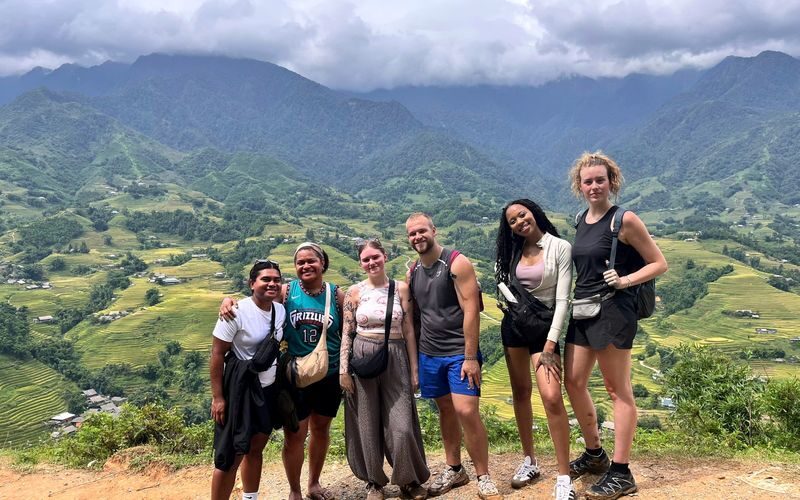 1 / 3
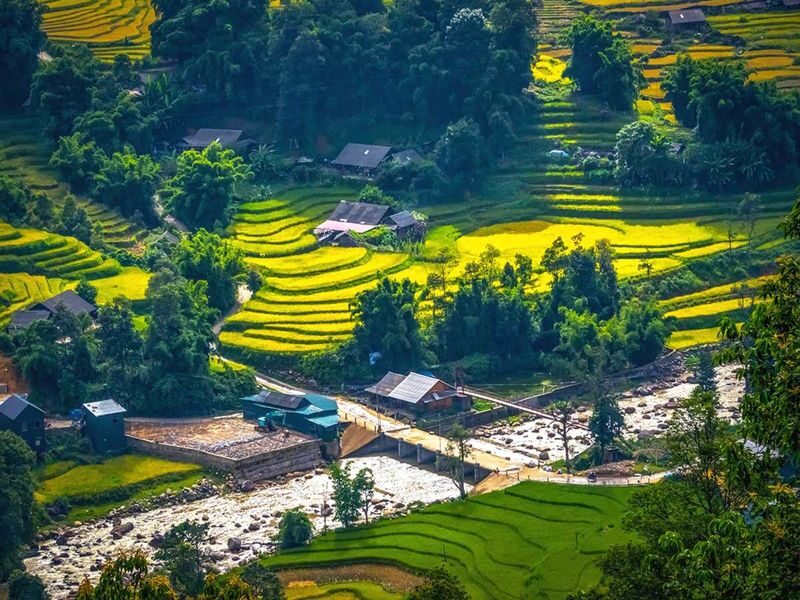 2 / 3
 3 / 3
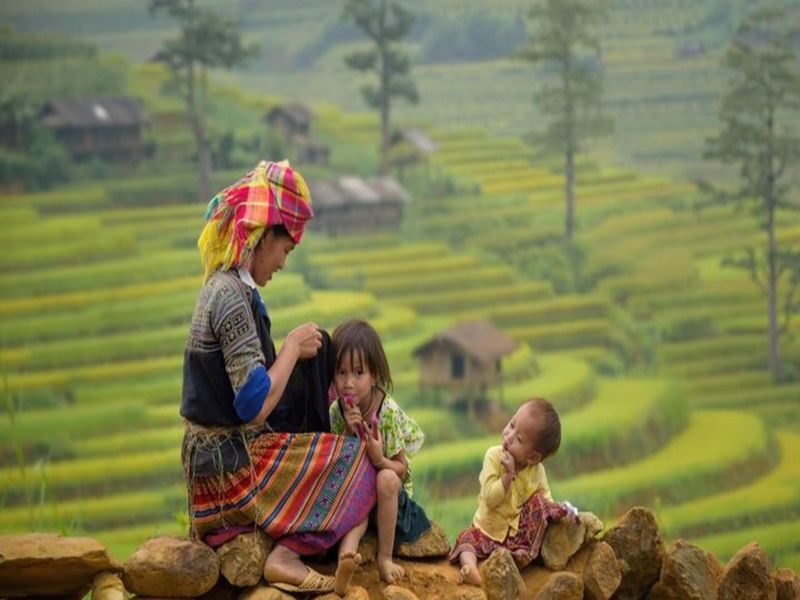
- Three villages, one valley: Walk through Y Linh Ho, Lao Chai, and Ta Van, with views of rice terraces and the surrounding mountains.
- Local guides add context: Guides including May, Sua, Pham, and Tamay have shared information about village life, traditions, farming, and crafts.
- Allow about four hours: Some walks take closer to four or five hours, and reported distances vary from roughly 8 km to 13 or 14 km.
- The opening can feel less scenic: Some routes begin with a walk along a road shared with cars, where dust and traffic can interrupt the rural feel.
- Traction matters: Mud and slippery sections are a recurring challenge, especially in wet weather. Wear sturdy walking shoes.
- The scenery depends on conditions: Fog can hide the valley, while rain changes the footing. Clear weather gives you a better chance of seeing the terraces and mountains.

👉 See our pick of the 18 Best Guided Tours In Sapa
Walking from Sapa into Muong Hoa Valley
This half-day trek takes you out of Sapa and toward three villages in Muong Hoa Valley. The appeal is not simply reaching a viewpoint. You spend much of the outing walking through a lived-in rural area, where cultivated slopes, village paths, and homes give the scenery a human scale.
Expect the walk to take around four hours, though some groups have taken four to five. The route is often described as moderate or intermediate, but that label can be misleading if you are not used to long walks. One account puts the distance at about 8 km, while others describe 10 km or as much as 13 to 14 km. Treat those figures as a guide rather than a fixed promise, and be ready for a substantial outing.
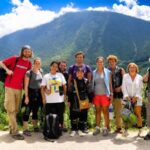
The experience is guided, and that matters here. The route passes through communities, not just empty countryside, so explanations can help you understand what you are seeing and how local life connects to the valley. Guides named May, Sua, Pham, and Tamay have been praised for being friendly, attentive, and clear. Your guide will vary, so do not book on the assumption that you will have a particular person.
You can also read our reviews of more hiking tours in Sapa



The road section before the village paths
Set your expectations early: the walk may begin on a road used by cars. Some accounts describe roughly 2.5 km on the road at the start, with dust and traffic and few of the views that make the valley famous. This is the least appealing part of the trek, especially if you pictured an immediate ramble through rice terraces.
The route details appear to vary, and some accounts also describe road walking near the end. Other groups report being driven back to Sapa by car or taxi after finishing. Because the exact arrangements are not fully specified, ask the operator what your booking includes and where the walk ends before you set out.
Once you reach the village paths, the character of the walk changes. Narrower trails lead among fields and settlements, and the surrounding scenery becomes a larger part of the experience. In wet weather, these sections can be slippery and muddy. Local people may walk alongside the group and help with difficult footing at the beginning, then expect you to buy something from them. If you accept their help, bring cash and decide in advance whether you are comfortable making a purchase.
Y Linh Ho and Lao Chai: fields, paths, and village life
Y Linh Ho and Lao Chai help make this a route rather than a single viewpoint outing. The valley’s rice terraces are the visual draw, but the villages are what give the walk its sense of place. You are moving through an area where people live and work, rather than looking at the countryside from a distance.
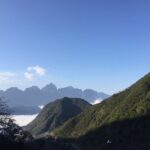
The terraces can look very different depending on season and weather. Photos of bright fields and far-reaching mountain views set high expectations, but fog can obscure the mountains, and the view may not match the images you saw before booking. That does not make the walk pointless: even in mist, you can still see village life and follow the route through the valley. But if sweeping views are your main reason for going, be realistic about how much the weather can affect them.
A guide’s explanations can make the villages more rewarding. Guides have talked about local traditions, farming, daily life, and crafts such as dyeing and weaving fabric for traditional Black Hmong clothing. You can ask questions as you walk, though the depth of explanation may depend on the guide and the group. If you want more cultural detail, ask specific questions rather than expecting a formal history lecture.
Ta Van: the village at the end of the walk
Ta Van is a highlight for many people because it gives the trek a clear destination. After walking through the valley, you reach another village with a different feel from the trail’s open stretches. The chance to explore the village and see local life up close is a good reason to choose this route over a short viewpoint stop.
The walk is not a museum visit, and you should not expect every part of village life to be explained in detail. What you get is a guide’s perspective along the way, plus time to notice the homes, fields, and paths around you. Some guides may offer choices about resting or stopping for lunch in Ta Van, but that is not guaranteed as a standard feature.
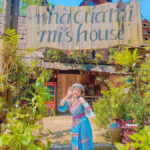
The tour introduces you to Black Hmong and Giay communities. Keep the encounter respectful and remember that this is people’s home, not a staged attraction. A thoughtful guide can help explain customs and answer questions, while your own curiosity and courtesy shape how meaningful the visit feels.
What the guide brings to the experience
The guide is one of the strongest reasons to book a guided walk instead of trying to follow a route on your own. Names that come up include May, Sua, Pham, Tamay, Nhu, Pang, Ellie, and others. These guides have been described as warm, patient, encouraging, and attentive. Several have explained local traditions and helped walkers understand the villages and the people who live there.
The best guiding here is practical as well as informative. On a muddy slope, a guide who sets expectations and helps the group move at a sensible pace can make the walk feel safer and less stressful. A guide who speaks clearly can also help you connect the scenery to local farming and craft traditions.
Still, a guide’s style can vary. Some people want a steady stream of historical and cultural detail; others are happy with short explanations and time to take in the scenery. If detailed interpretation is important to you, tell your guide early and ask questions as you go. The tour is a walking experience first, not a lecture with a trail attached.
You can also read our reviews of more tours and experiences in Sapa




How hard is the trek?
Think of this as a moderate walk that can become challenging in the wrong conditions. The distance and duration are significant for a half-day outing, and one report describes a 13 to 14 km walk lasting four to five hours. Another describes around 8 km. The exact route may differ, so do not assume the shorter figure applies to your departure.
The trail can descend for much of the route, which may be hard on sore knees. Mud and slippery ground add effort, especially in rain. If you are not used to walking long distances, or have physical limitations, consider whether you are comfortable spending several hours on uneven ground. This is not a good choice for a small baby, according to one account, and it may not suit anyone who needs an easy, flat stroll.
Wear comfortable walking shoes with reliable grip. Bring water and clothing that fits the day’s conditions; the useful lesson from the walk is to dress for a real hike, not just for photographs in town. Take care on wet sections and do not rush to keep up if the group is moving faster than feels safe.
Weather, views, and the right expectations
The valley’s scenery is a major part of the appeal, but weather has the final say. Fog has limited views for some groups, while clear or cloudy conditions have made for more rewarding walks. Rain can bring out the valley’s moody side, but it also makes the trail more slippery. A cloudy day may be comfortable for walking yet still hide the mountain views you hoped to see.
This is why I would book the trek for the full experience, not just for a perfect panorama. You get the walk, the villages, and a guide’s account of local life even when the mountains disappear into mist. If the weather is clear, the rice fields and valley views add a memorable visual payoff. If it is not, the village visits still give the outing purpose.
The operator may cancel in extreme weather or unforeseen circumstances, with the option to reschedule or request a full refund. That is a useful safeguard, but it does not mean ordinary fog will necessarily cancel the walk. If conditions matter greatly to you, check the forecast and be prepared for some uncertainty.
Is $20.05 a fair price?
The advertised starting price is $20.05. For a guided outing lasting around four hours, that can be good value if what you want is a structured walk through several villages with local context. A guide adds more than navigation: the right person can explain traditions, help you understand the route, and keep the group moving safely on difficult ground.
Value depends on what is included in your specific booking. The available details do not spell out every inclusion, and some people have described a car or taxi ride back to Sapa while others describe walking farther. Check the package terms rather than assuming transport, meals, or other extras are included.
There is also a small practical cost to consider: locals who help you through muddy areas may expect you to buy something. You are not obliged to make a purchase, but carrying cash lets you decide without being caught unprepared. At this price, the tour makes most sense if you value a guided cultural walk and are comfortable with a basic, sometimes rough trail.
Who should book this walk?
Book it if you want to see more than Sapa town, enjoy walking, and like having a local guide explain what you pass. It suits active visitors who can manage several hours on foot and who are curious about Black Hmong and Giay village life. It can also be a good way to spend a morning or half-day before moving on to other Sapa activities.
Think twice if you have sore knees, dislike muddy paths, or want a fully scenic trail from the first step. The road section can feel dusty and ordinary, and bad weather can block the wide views. Families with very young children and anyone with physical limitations should weigh the distance and uneven footing carefully.
At $20.05 and up, this is a sensible choice when you want a guided introduction to the valley rather than a polished, easy nature walk. I would book it for the villages and the guide’s local perspective, with the rice terraces as a bonus that depends on season and skies.
Sapa: Y Linh Ho, Lao Chai & Ta Van Village Half-Day Trekking Tour
“May was a very good tour guide. She will introduce the local culture along the hike, will recommend!”
FAQ
How long does the trek take?
Plan on about four hours. Some walks take closer to four or five hours, depending on the route and conditions.
Which villages does the route visit?
The tour goes through Y Linh Ho, Lao Chai, and Ta Van in Muong Hoa Valley.
How far do you walk?
Reported distances vary. Accounts describe roughly 8 km, about 10 km, and as much as 13 to 14 km, so confirm the expected route with the operator.
Is the trek difficult?
It is commonly described as moderate or intermediate. Mud, slippery trails, downhill sections, and a longer-than-expected distance can make it challenging.
What should I wear?
Wear comfortable walking shoes with good grip. The route can be muddy and slippery, particularly in wet weather.
Will I see rice terraces and mountain views?
Rice terraces and mountain scenery are part of the route, but weather and season affect what you can see. Fog has limited views for some groups.
Which local communities will I encounter?
The tour introduces you to Black Hmong and Giay communities in the villages along the route.
Is transport back to Sapa included?
Some people have been taken back by car or taxi, while route descriptions differ. Check your package details to confirm what applies to your booking.
Can I cancel for a refund?
You can receive a full refund if you cancel at least 24 hours before the activity date, using the destination’s local time. In extreme weather or unforeseen circumstances, the operator may cancel and offer a reschedule or full refund.