
Mojokerto offers a quieter look at East Java’s past: scattered temple remains and museum artifacts mark the former center of the Majapahit Kingdom. This seven-hour tour links those sites with a large Reclining Buddha and a stone-carving village, making a day out of places that are spread across the area.
I like the practical pairing of a guide and round-trip transport, since the archaeological sites are not all in one place. I also like that the day includes local food, with one reported meal served beside a rice field and koi pond.
The main consideration is the pace: seven hours must cover several stops, and the ruins are spread out. If you want to linger over every artifact or explore each site independently, the guided route may feel brisk.
- What makes this Mojokerto day trip worthwhile
- From Surabaya to the Majapahit heartland
- Reading Trowulan’s temple remains
- Museum objects and a wider view of Majapahit
- The Reclining Buddha and stone-carving village
- Local food, with a setting to remember
- Guides, pace, and family considerations
- Is .49 good value?
- Who should book this tour?
- FAQ
- How long is the Mojokerto tour?
- Where does the tour take place?
- Are transfers included?
- Which sights are included?
- Is local food part of the tour?
- What is the starting price?
- Can I book for today?
- What is the cancellation policy?
- Are guides available in English or Chinese?
- Is the tour suitable for a family with a toddler?
- More Tours in Mojokerto
- More Tour Reviews in Mojokerto
- Not for you? Here's more nearby things to do in Mojokerto we have reviewed
What makes this Mojokerto day trip worthwhile
 1 / 5
 2 / 5
 3 / 5
 4 / 5
 5 / 5
- Majapahit sites spread across Trowulan: A guided route helps connect archaeological places that are not clustered together.
- A guide adds context: Guides including Hermano, Ilgi, Rizky, and Iksal have led the tour. English and Chinese language ability has also been noted.
- The Reclining Buddha adds a striking change of scene: The statue gives the day a distinct landmark beyond the temple sites.
- A stone-carving village brings living craft into the itinerary: It offers a different perspective from viewing ruins and museum objects.
- Local food is part of the experience: One meal was served beside rice fields and a koi pond, a pleasant setting between historical stops.
- Transfers are included from Surabaya and surrounding areas: That makes this a simpler day trip than arranging transport between the sites yourself.
From Surabaya to the Majapahit heartland
Mojokerto is a worthwhile change of pace from East Java’s better-known outings. Instead of a day organized around a mountain or a single natural viewpoint, this tour focuses on archaeological remains, museum displays, a monumental Buddha, and local craft. The central draw is the chance to picture the scale of the Majapahit Kingdom through sites scattered across Trowulan.
The included round-trip transfers from Surabaya and surrounding areas matter here. The tour’s stops are spread out, so getting between them is part of the day, not an afterthought. Having a driver and guide together can save you the work of planning each leg and help keep a seven-hour visit moving.
The package is described as a seven-hour tour. That gives you a substantial day, but not unlimited time at each stop. I’d go in expecting a well-paced introduction rather than an archaeological expedition with hours to study every stone. If you are most interested in one particular temple or museum, tell your guide early and ask how much time the route allows there.
You can also read our reviews of more tours and experiences in Mojokerto.


Reading Trowulan’s temple remains
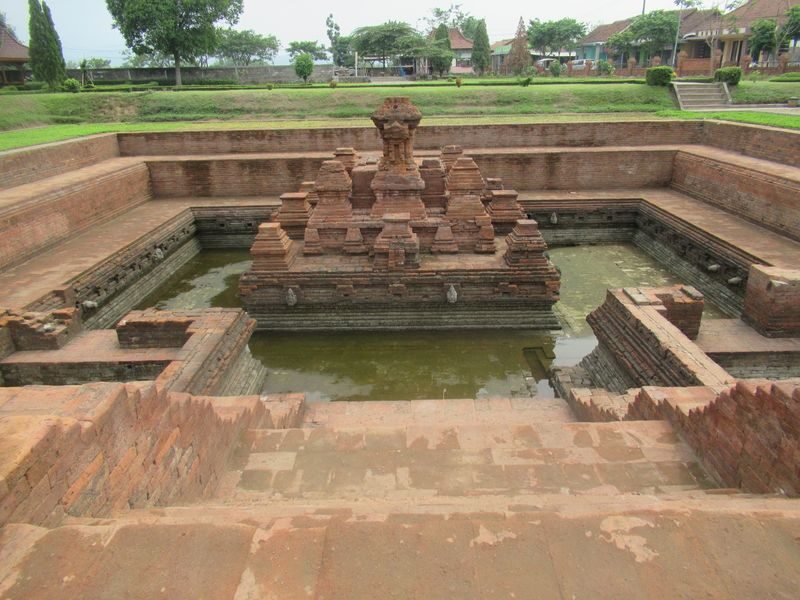
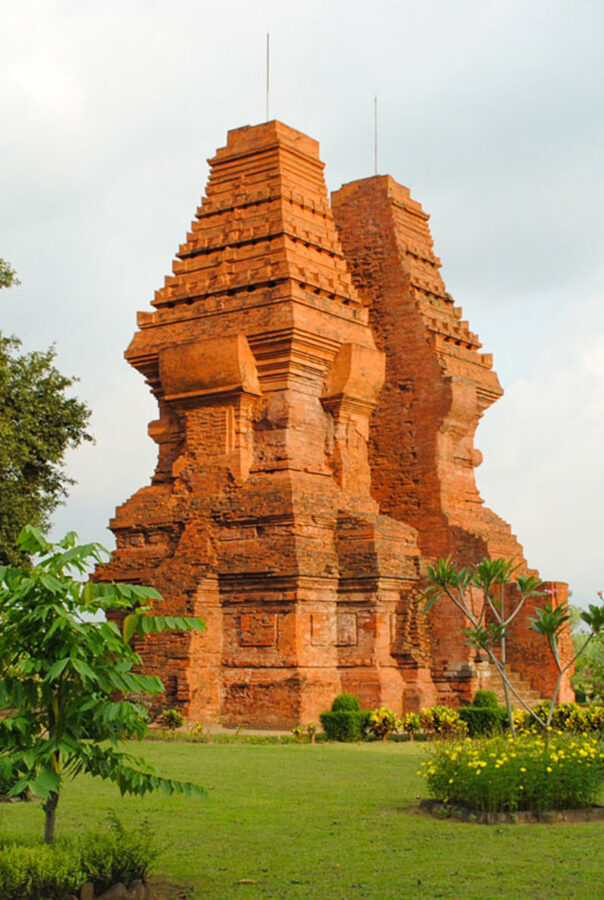
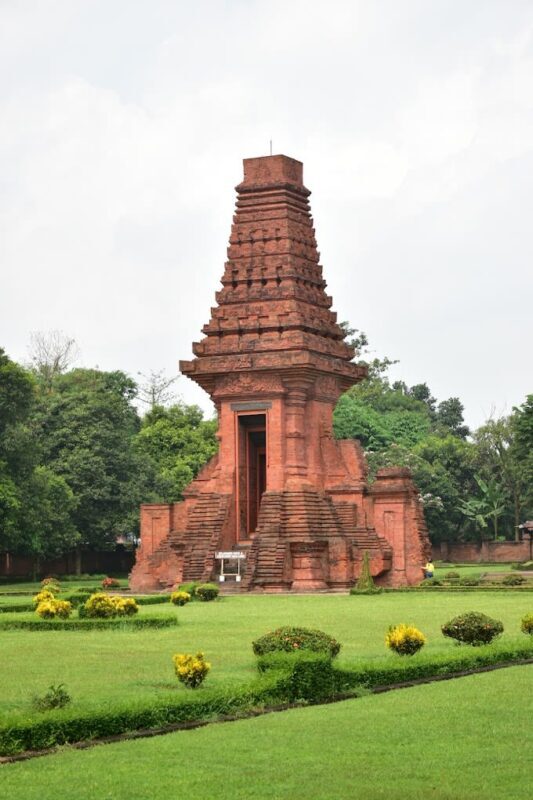
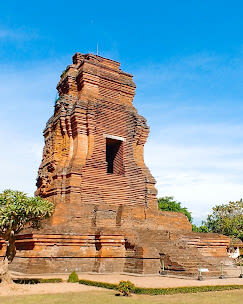
Trowulan’s archaeological sites are the heart of the day. The tour includes a Trowulan temple visit, with other historical stops in the area. The remains are not all together, which can make independent sightseeing more complicated. A guide can help turn separate visits into a connected account of the former Majapahit center.
That context is useful because ruins rarely explain themselves. A guide such as Hermano or Ilgi can describe what you are seeing and help you imagine how the sites related to one another. The tour’s value is not only in reaching the monuments, but in having someone explain why they matter.
The setting may feel unusually quiet compared with major, heavily visited attractions. That can make it easier to take your time and look closely, though quiet ruins also place more weight on good interpretation. If you arrive expecting fully restored buildings or a single grand palace, adjust your expectations: the day is about encountering the remains and artifacts that survive, and using explanation to build a picture of the past.
Museum objects and a wider view of Majapahit
The historical circuit includes a museum stop, where the guide can explain artifacts alongside the temple remains. That combination gives the day more depth than a quick photo stop at a monument. Objects in a museum can help make a vanished kingdom feel less abstract, while the outdoor sites show how its presence is marked across the area.
Guides have been praised for explaining the museum as well as the individual sites. That is especially useful if you are new to East Java’s history, or if you are traveling with family and want the day to be more than a sequence of place names. English-speaking guide Hermano has helped visitors follow the story in detail. Hans has also guided in fluent Chinese, a practical advantage for Chinese-speaking families who would otherwise need someone to translate.
You will get more from this part of the tour if you ask questions. The itinerary is broad, so a guide’s account can help you decide what deserves a closer look. Keep in mind that the exact time at each stop is not specified, and the day has several places to cover.
The Reclining Buddha and stone-carving village
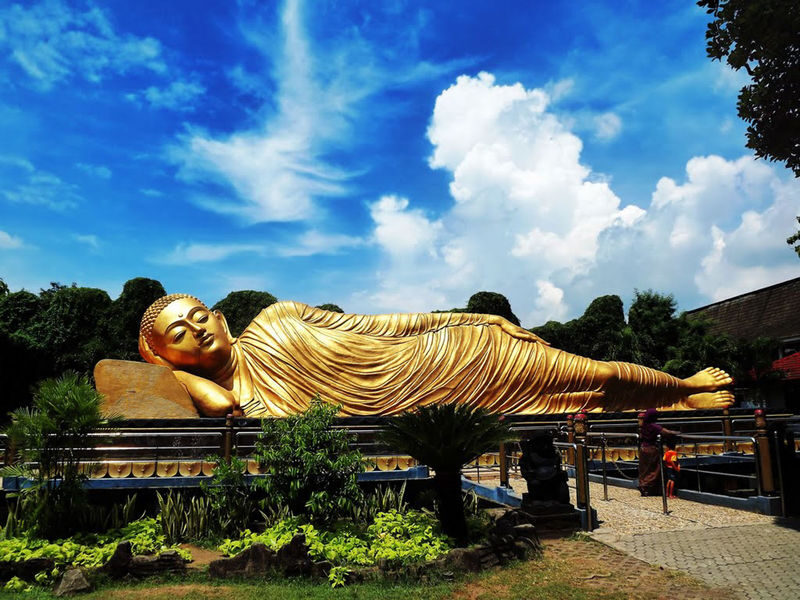
The Reclining Buddha, also known as Buddha Tidur, brings a different visual and cultural element to the route. Its scale makes it one of the day’s memorable stops, and it breaks up the temple-focused portion of the visit. The tour description does not give dimensions or a precise visit length, so treat it as a key stop rather than planning around a lengthy visit.
The stone-carving village adds another useful contrast. At the temples and museum, you are looking at traces of the past. In the village, the focus shifts to a craft still practiced in the area. That change can make the tour feel more connected to Mojokerto as a place people live and work, rather than a collection of archaeological sites.
The precise format of the village stop is not specified. You should not assume a workshop, hands-on lesson, or purchase opportunity is included. Think of it as a chance to see local stone-carving activity as part of the day, and ask your guide what is possible when you arrive.
Local food, with a setting to remember
Food is part of the tour’s appeal, and it is more than a convenient pause between sites. One meal was served at a restaurant beside rice fields and a koi pond. That kind of setting can make lunch feel like a genuine local interlude, especially after several hours of moving between historical stops.
The food has been described as tasty, and one guide, Pak Hirman, arranged a non-spicy meal for a toddler. If you have dietary needs or are traveling with a child, mention them before the meal rather than assuming every dish can be adjusted. The tour information does not list a fixed menu or confirm which dietary requests can be met.
The restaurant setting may also be a welcome chance to slow down. Historical touring can involve a lot of listening and looking, so a relaxed meal gives you room to absorb the day. The exact restaurant and menu are not specified, so take the reported rice-field view as a possible highlight, not a guaranteed feature of every departure.
Guides, pace, and family considerations
The guide can make a notable difference on a history-focused day. Names associated with the tour include Hermano, Ilgi, Igil, Rizky, Iksal, and Pak Hirman. The names vary by departure, so you should not expect a particular guide unless the operator confirms it. Several guides have been described as friendly and clear in their explanations, with English and Chinese language support noted.
For families, the tour may be more manageable than piecing together transport and meals independently. Pak Hirman made arrangements for non-spicy food for a toddler and helped keep the child comfortable. That is a useful example of the kind of flexibility you can ask about, but it does not guarantee every request can be accommodated.
The seven-hour duration calls for a little planning. The route covers several stops, and the archaeological sites are spread out. Bring the patience for a full day of moving and listening, and consider what pace works for your group. If you prefer slow, unstructured visits, you may find a private arrangement more comfortable, though the supplied details do not specify group sizes or confirm which departures are private.
Is $76.49 good value?
The tour starts at $76.49. For that price, the stated package combines a seven-hour guided outing, round-trip transfers from Surabaya and nearby areas, multiple historical and cultural stops, and local food. The main value is convenience: you avoid organizing transport between spread-out sites and get explanations that can make the ruins and museum more meaningful.
Whether that price feels worthwhile depends on your priorities. If you want a guided introduction to Majapahit history and a day that also includes the Reclining Buddha, local craft, and food, the package covers several interests in one outing. If you only want to see one temple or prefer to spend a long time at a single museum, a shorter or more focused option could suit you better.
The price is listed as starting at $76.49, so check the selected package details before booking. The activity offers instant confirmation and free cancellation with at least 24 hours’ notice, according to destination local time. Those terms can make planning easier, but they do not change the central question: do you want a structured historical day, or would you rather explore at your own pace?
Who should book this tour?
I’d choose this tour if you are curious about East Java’s past and want more than a quick stop at one monument. It suits history-minded visitors, families who value help with transport and explanations, and anyone looking for a quieter alternative to a day centered on a major natural attraction. The village and local meal also add variety to a route that could otherwise be all ruins and museum cases.
It is a less natural fit if your priority is independent exploration, a very slow pace, or a tightly defined list of stops with fixed time at each one. The available information does not spell out the order of visits, group size, or how long you spend at each location. If those details matter to you, confirm them before booking.
For a first look at Trowulan and Mojokerto’s cultural sights, the mix is appealing: archaeological remains, museum interpretation, Buddha Tidur, stone carving, and local food, with transport arranged from Surabaya. Book it for the guide-led context and the convenience of linking scattered places in one day. Go in ready for a full schedule, not a leisurely deep study of every stop.
Mojokerto Majapahit Trowulan & Buddha Tidur 7-Hour Tour with Local Flavors
“I would like to thank Pak Hirman for his services. As I am with a toddler, he ensured that my toddler was comfortable and made arrangements for non…”
FAQ
How long is the Mojokerto tour?
The tour lasts seven hours.
Where does the tour take place?
It takes place in Mojokerto Regency, Indonesia.
Are transfers included?
Yes. Round-trip transfers in Surabaya and surrounding areas are included in the package.
Which sights are included?
The tour description names Trowulan Temple, the Reclining Buddha statue, and a stone-carving village. The historical circuit also includes a museum stop.
Is local food part of the tour?
Yes. Local food is part of the experience. The specific menu is not provided.
What is the starting price?
The price starts at $76.49. Check the selected package details for the price that applies to your booking.
Can I book for today?
The activity is listed as available for booking on the same day, with instant confirmation.
What is the cancellation policy?
You can receive a full refund if you cancel at least 24 hours before the activity date, using destination local time.
Are guides available in English or Chinese?
English-speaking guides have led the tour, and a fluent Chinese-speaking guide has also been reported. The specific guide and language for your departure are not guaranteed in the supplied details.
Is the tour suitable for a family with a toddler?
A toddler has joined the tour, and a guide arranged non-spicy food. If you are traveling with a young child, share your needs with the operator in advance.