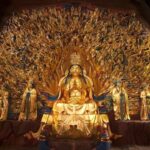
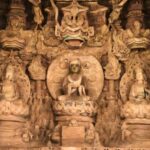
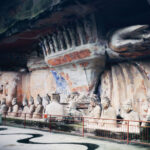
Dazu’s carvings make a striking change of pace from Chongqing’s high-rises: hundreds of years of religious art unfold along the rock face, with figures and scenes you can study at close range. I like that the tour pairs the quieter Beishan carvings with Baodingshan’s major works, and that a guide can help make sense of Buddhist images alongside Confucian and Taoist influences.
I also like the chance to visit the Dazu Museum, where the carvings’ history and techniques have more room for explanation than they do on the cliff. The trade-off is a very early start, a full day on a Chinese-speaking group tour, and optional stops that may not suit everyone, especially the lake cruise.
- At a glance
- Why Dazu is worth the early start
- The early departure and Longshui Lake
- Beishan: close details and a climb
- Baodingshan: Dazu’s showpiece carvings
- The museum: a useful pause, unless it is closed
- Lunch and Northern Song Dynasty Street
- What the price really covers
- Who should book this day trip?
- FAQ
- Is the tour guided in English?
- What time and where does the tour depart?
- Are the Longshui Lake boat ride and Baodingshan shuttle included?
- Is lunch included?
- Is the Dazu Rock Carvings Museum open every day?
- How much walking is involved?
- The Best Of Chongqing!
- More Tours in Chongqing
- More Tour Reviews in Chongqing
- Not for you? Here's more nearby things to do in Chongqing we have reviewed
At a glance
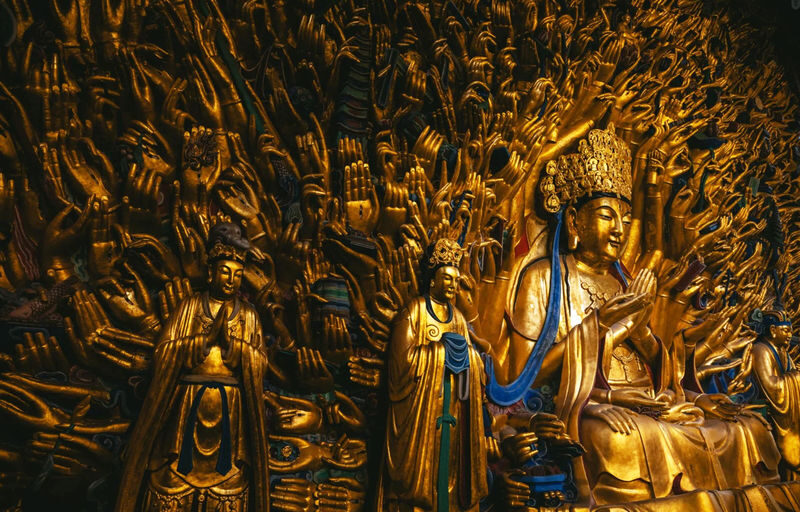
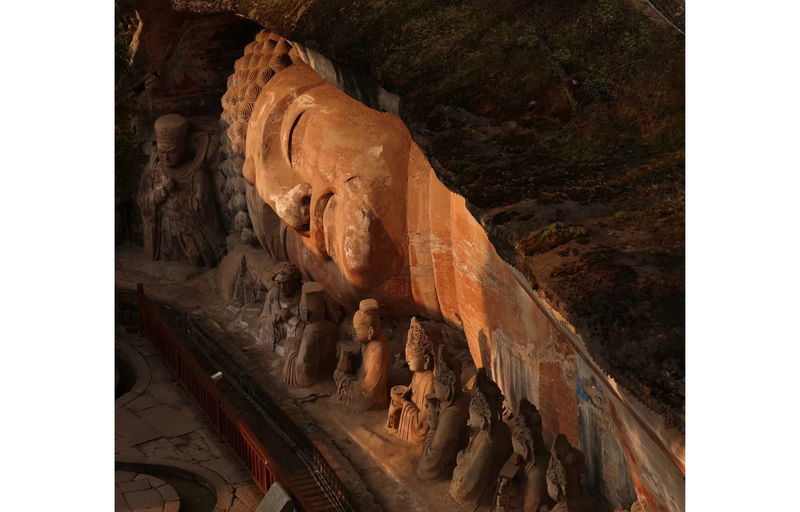
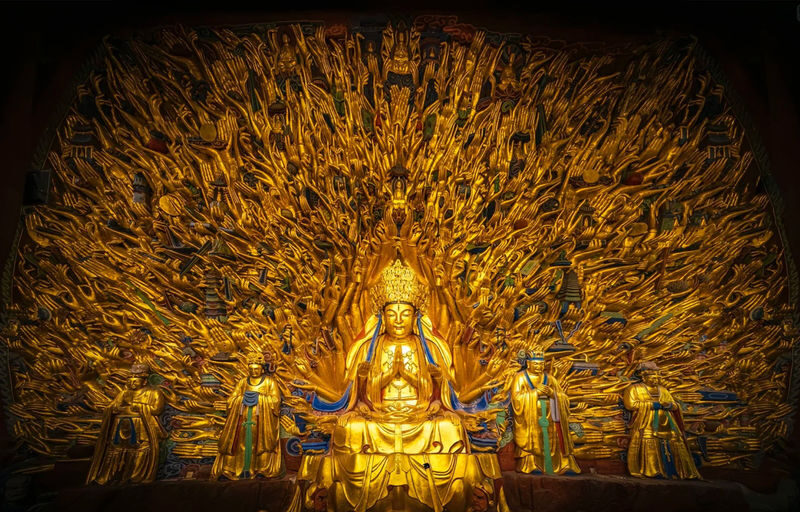
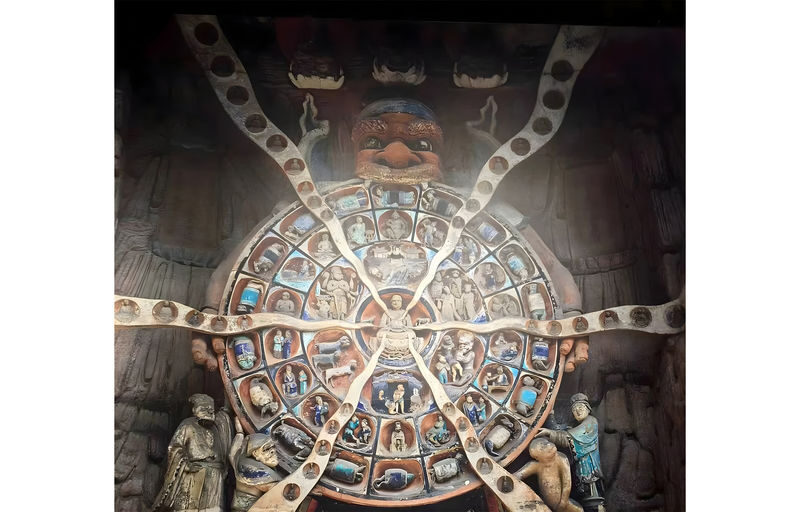
- Baodingshan’s famous scenes: Look for the Thousand-Hand Guanyin, the Six Paths of Reincarnation and the Herding Oxen Picture.
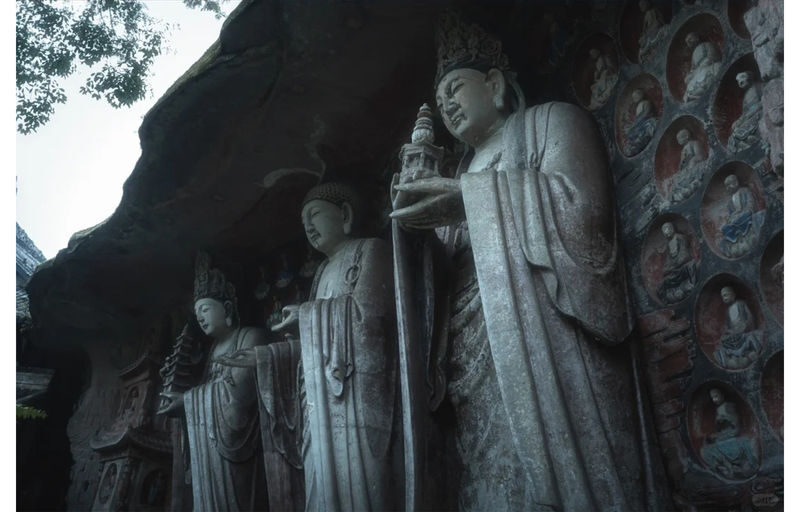
- A quieter first carving stop: Beishan’s smaller-scale figures reward close looking, and the site is generally less crowded than Baodingshan.
- A lake stop with an extra charge: The Longshui Lake cruise costs ¥60 per person and is optional.
- Plan on stairs and walking: A walking stick may be useful, particularly at Beishan.
- The guide speaks Chinese: There is no English interpretation, so prepare a translation app if needed.
- Two group sizes are offered: The classic tour starts at US$41.25 and the 2-to-8-person option at US$64.40, though the small-group size should be confirmed before booking.

👉 See our pick of the 3 Best 3 Day Tours In Chongqing
Why Dazu is worth the early start
Dazu’s rock carvings are a major cultural stop in Chongqing, and the appeal goes beyond the scale of the figures. The works combine Buddhist subjects with Confucian and Taoist ideas, as well as scenes of everyday life. That mix offers a useful window into how religious beliefs took on distinctly Chinese forms.
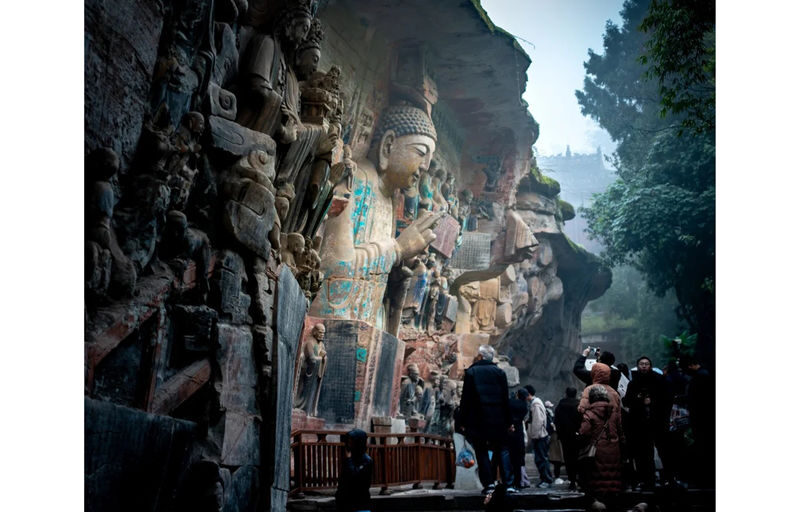
Baodingshan is the centerpiece. Its carvings were made during the Southern Song Dynasty, and the cliff area extends for about 500 metres. The artistry is fine, but the scale can be hard to take in all at once. You may be standing close to a figure and still struggle to fit the full scene into a photograph.
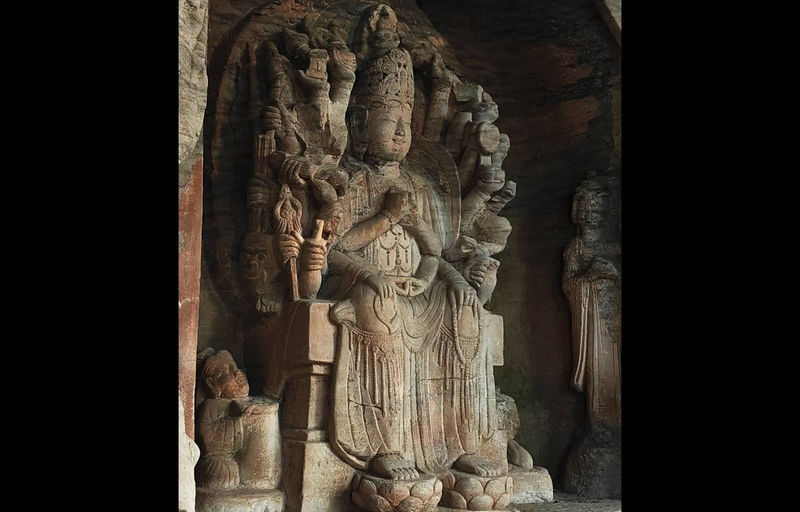
Beishan gives you a different kind of visit. Its statues are smaller and more delicate, with a focus on fine detail rather than monumental scale. Taken together, the two sites make the day more rewarding than visiting only one: you can compare the styles and subjects instead of treating the carvings as a single, uniform display.
You can also read our reviews of more tours and experiences in Chongqing.
The early departure and Longshui Lake
The day begins at 6:50 a.m. at the entrance of Jiefangbei Grand World Hotel. Be there at least ten minutes early. The pickup instructions warn that the vehicle cannot wait, and late arrivals or no-shows cannot be refunded. The tour is scheduled to return to the Liberation Monument area at about 4:30 p.m., though traffic and weather can alter the plan.
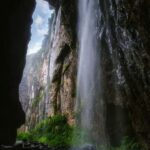
Longshui Lake is the first stop, around 8 a.m. The lake is dotted with 108 small islands and stretches for about 10 kilometres. It offers a pleasant change of scenery before the main cultural sites, but the boat ride is not included. It costs ¥60 per person, and you can decline it.
I would treat the cruise as an optional extra rather than a must-do. The lake and surrounding hills can be attractive, but the ride is slow and may feel like a long pause if your priority is the carvings. The schedule suggests that non-participants may have time to wait while others take the boat, so ask the guide how the stop will work that day before deciding.
Beishan: close details and a climb
At about 9 a.m., the group visits Beishan. Compared with Baodingshan, it is a quieter and less imposing site. Its figures are more compact, and their expressions and carved details are easier to examine at close range. The carvings include Buddhist figures alongside Confucian and Taoist subjects, reflecting the varied beliefs represented across Dazu.
The walk has stairs, especially at the beginning and end of the trail. Give yourself time, and consider bringing a walking stick if steep or uneven paths are difficult for you. The guide’s explanations matter here: without context, a row of figures can blur together; with an explanation, a small detail may reveal a story or a religious idea.
Guides have included Spring, Xiao Yuan and Ni, with descriptions of lively, careful interpretation and helpful group management. The guide on your date may be different, and the service is in Chinese. Some guides have helped foreign visitors use phone translation, but that is not a promised English service. If you do not understand Chinese, download a translation app and prepare for some of the commentary to be lost.
Baodingshan: Dazu’s showpiece carvings
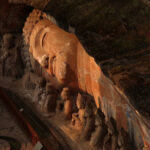
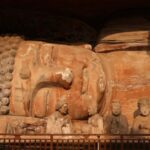
The group reaches Baodingshan around 10 a.m. This is the largest and best-preserved statue area in the Dazu complex, and it is where the tour’s most famous scenes are found. The Thousand-Hand Guanyin, the Six Paths of Reincarnation and the Sakyamuni Nirvana scene are among the works to look for.
The carvings tell stories, not just decorate the stone. Baodingshan combines Buddhist narratives with scenes of secular life, giving the site unusual breadth. The Herding Oxen Picture is a good example of why it helps to hear the guide’s interpretation: the imagery works on more than one level, and a quick glance can miss its meaning.
A shuttle bus inside the scenic area is mandatory and costs ¥22 per person, paid separately. This is an important addition to the base price. The carvings are impressive in person, but the crowded viewing areas and their scale can make it hard to appreciate a full composition at once. Take time to look at individual sections rather than trying to capture everything in one photo.
The site also has a visual link to the game Black Myth: Wukong. Some of the carved Buddhist scenes, including the airy poses of the Apsaras, recall the game’s mythic imagery. That connection may be a fun extra if you know the game, but the carvings are worth seeing on their own, whether or not you recognize the reference.
The museum: a useful pause, unless it is closed
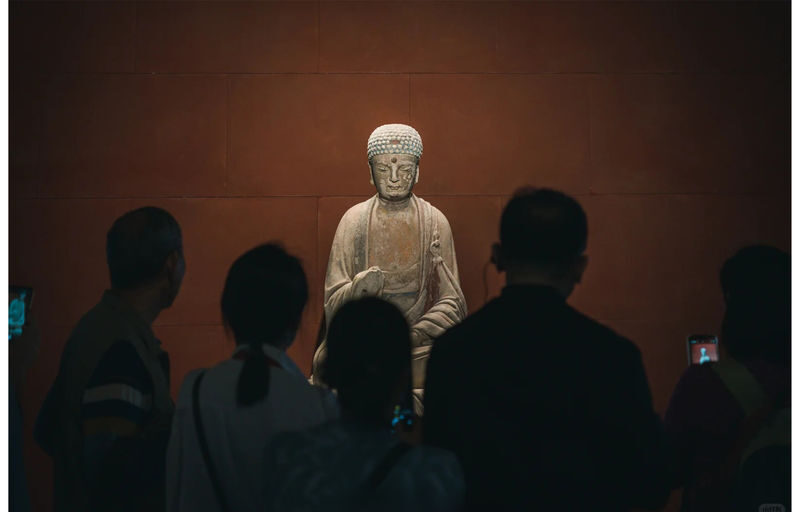
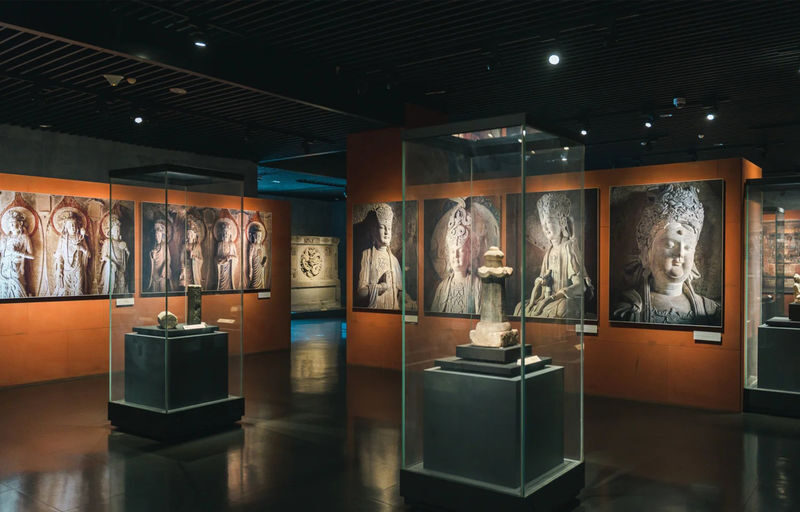
The Dazu Rock Carvings Museum is scheduled for about an hour. It brings together stone-carving objects such as statues, steles and inscriptions, with displays that explain the art and its historical setting. After seeing the works outdoors, the museum can help you connect individual images to the broader traditions behind them.
The visit is a matter of priorities. If you want context and enjoy museum displays, the hour is useful. If you would rather spend longer at the cliff carvings, the museum may feel like time taken from the main event. The museum is closed on Mondays, so check the schedule for your date rather than assuming this stop will be available.


Lunch and Northern Song Dynasty Street
Lunch is at your own expense around noon. The cost and menu are not included, and the food can vary. Some tour dates have featured a multi-dish meal with fresh vegetables; other meals have been less appealing. Ask the guide what is available and what it costs before ordering, particularly if you have dietary needs.
At about 2 p.m., the itinerary moves to Northern Song Dynasty Street. This is a developed attraction designed to recreate the feel of an old city, not a preserved Song Dynasty street. It serves as a supporting stop for the Dazu area and offers a change of pace after the religious sites. If historical architecture is your main interest, keep your expectations measured; the carvings are the clear reason to make the trip.
The return journey begins around 4:30 p.m. The advertised schedule is a guide, not a guarantee. Traffic, weather and delays within the group can affect your arrival time, so avoid arranging a tight connection or an important evening booking in Chongqing.
What the price really covers
The tour summary gives a starting price of US$47.39, while the package options list the classic group from US$41.25 and the exclusive 2-to-8-person option from US$64.40. Prices can vary by date and package, so check the price shown for your chosen day. The included admission covers the Baodingshan and Beishan sites, transport, a certified Chinese-speaking guide, and travel agency liability insurance.
Budget separately for the ¥22 Baodingshan shuttle, the optional ¥60 lake cruise and lunch. Personal expenses and travel accident insurance are also not included. With those additions, the tour costs more than its headline price, but it still offers practical value if you do not have a car: Dazu is difficult to reach independently, and the tour handles transport between the dispersed stops.
The classic group can use a vehicle with capacity for up to 50 passengers, excluding the driver. A smaller group option is available, but the advertised 2-to-8-person size is not something to take for granted without confirmation. Some bookings have not matched that expectation. If a quieter, more personal day is important to you, confirm the group size and vehicle arrangement before paying the higher price.
Who should book this day trip?
I would choose this tour if you want to see both major carving sites without arranging transport yourself, and if you value a guide’s account of the art and its religious context. It suits visitors with a full day to spare, an interest in Chinese history and art, and enough stamina for stairs and walking. The strongest parts are the carvings themselves and the chance to compare Beishan’s fine detail with Baodingshan’s grander scenes.
I would think twice if you need English commentary, dislike early starts, have difficulty with stairs, or want every hour spent at the rock carvings. The lake cruise and themed street are secondary stops, and the museum may compete with time at the main site. Ask about the boat, museum schedule, group size and pickup point before you book.
One-Day Tour to Dazu Rock Carvings and Longshui Lake in Chongqing
“Everything was well-arranged, and the tour guide was friendly.”
FAQ
Is the tour guided in English?
No. The tour includes a Chinese-speaking guide and provides no English interpretation. Prepare a translation app if you need help following the commentary.
What time and where does the tour depart?
Departure is at 6:50 a.m. from the entrance of Jiefangbei Grand World Hotel. Arrive at least ten minutes early because the vehicle cannot wait for late arrivals.
Are the Longshui Lake boat ride and Baodingshan shuttle included?
No. The Longshui Lake boat ride is optional and costs ¥60 per person. The Baodingshan scenic-area shuttle is mandatory and costs ¥22 per person.
Is lunch included?
No. Lunch is at your own expense.
Is the Dazu Rock Carvings Museum open every day?
No. The museum is closed on Mondays.
How much walking is involved?
The tour includes walking at the carving sites, including stairs at Beishan. A walking stick may be helpful if you find stairs or uneven paths difficult.