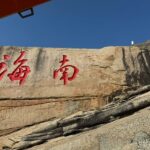
The great draw at Nanshan is the 108-meter Guanyin statue, rising beside the South China Sea with Mount Nanshan behind it. This is not just a temple visit: your ticket opens up a large cultural park of Buddhist halls, tropical gardens and coastal sights.
I like two things about this experience: the mix of impressive Buddhist architecture and open-air coastal scenery, and the included sightseeing train, which makes a sprawling site easier to cover. You can also visit the Golden Jade Guanyin Hall and find vegetarian food within the grounds.
The main drawback is scale. You have a lot of ground to cover, and indoor venues close at 5 pm. Arrive early, plan your stops, and do not expect a quiet temple visit once tour groups begin arriving.
- Nanshan at a glance
- The Sea Guanyin sets the tone
- What the ticket covers
- A sensible route through the grounds
- Inside the Tang-style temple
- Food, ritual and the spirit of Nanshan
- Getting there and managing the day
- Is the price worth it?
- Who should make the trip?
- FAQ
- What is included in the Nanshan Temple ticket?
- Where is Nanshan Temple?
- What time does the site open?
- When do the indoor venues close?
- What stops does the sightseeing train serve?
- Can I get on and off the sightseeing train more than once at each stop?
- How many QR codes should I look for?
- Can a taxi take me to the main entrance?
- Can I bring incense into the scenic area?
- Are pets allowed?
- The Best Of Sanya!
- More Tours in Sanya
- More Tour Reviews in Sanya
- Not for you? Here's more nearby things to do in Sanya we have reviewed
Nanshan at a glance
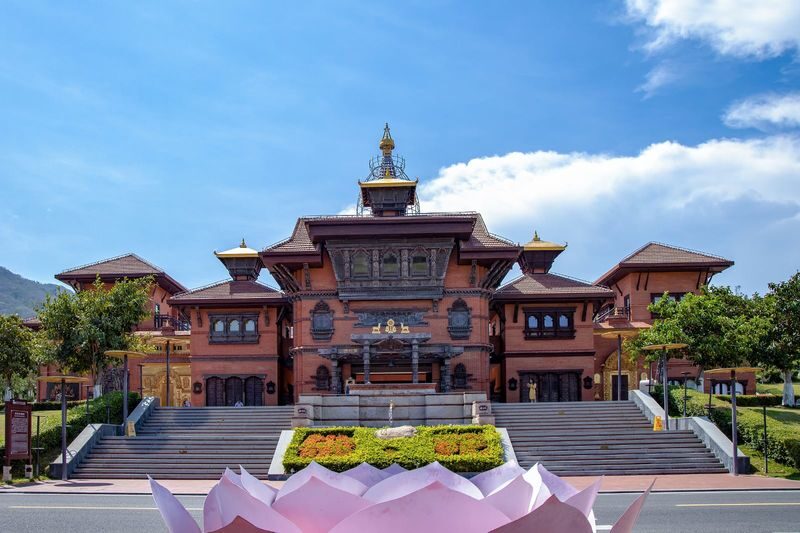
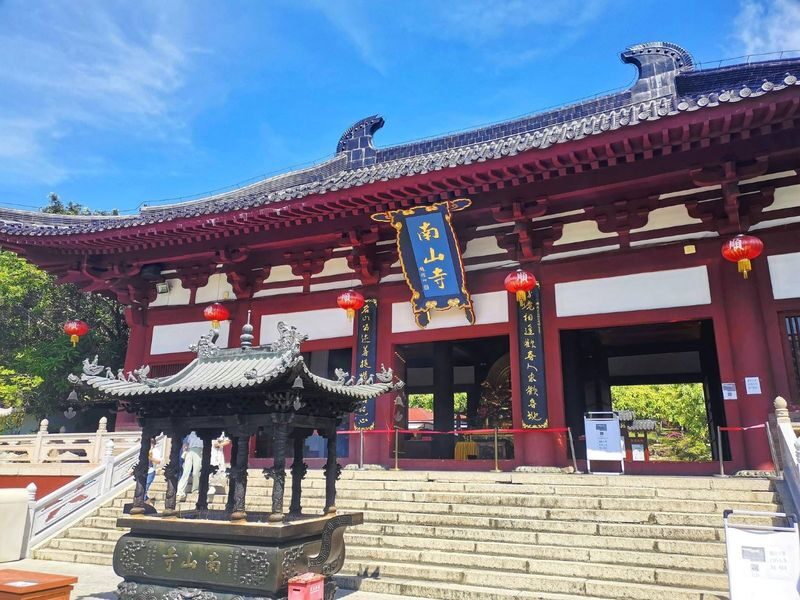
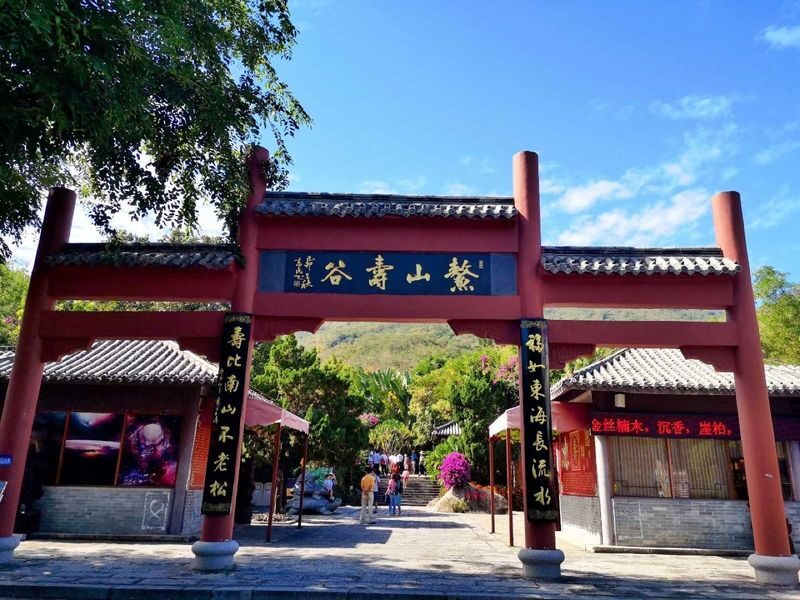
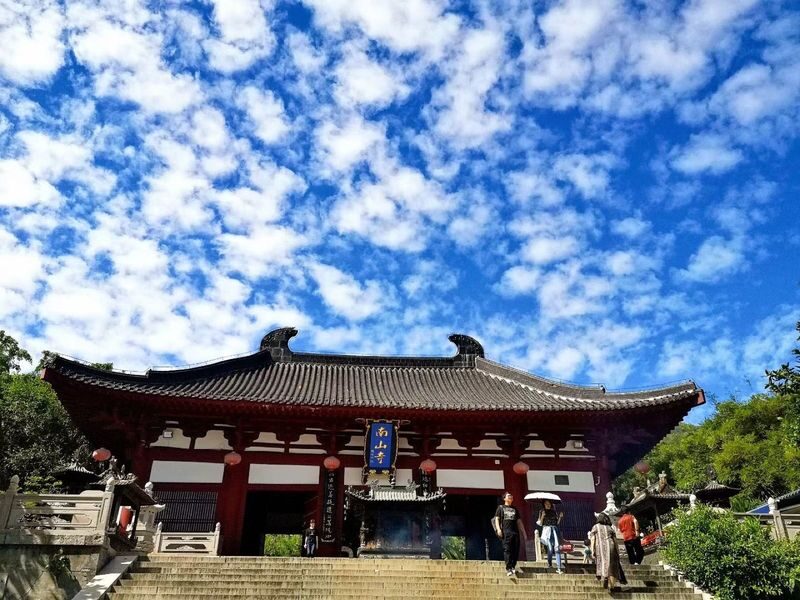
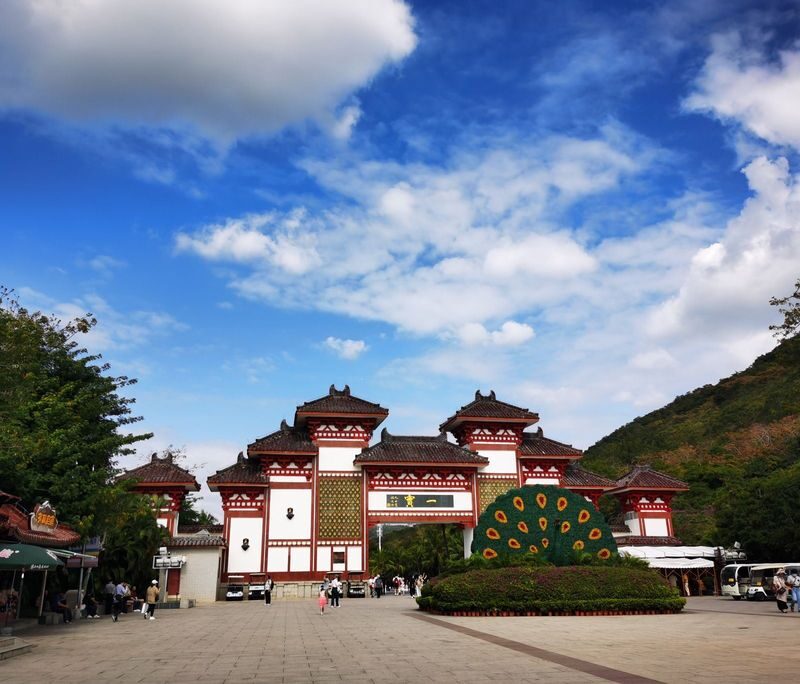
- The Sea Guanyin is the main landmark: At 108 meters, the statue is the visual and spiritual focus of the coastal complex.
- The ticket includes more than the temple: Admission covers the Nanshan Cultural Tourism Zone, including the Sea Guanyin, plus a sightseeing train ticket.
- The train runs a full loop: Stops include the Sea Guanyin, the Intangible Cultural Heritage Experience Center, Yuanqilou Vegetarian Restaurant, Nanshan Temple and Longevity Valley.
- Early arrival buys you breathing room: The grounds open at 8 am, and the visit tends to get busier from about 9:30 am as tour groups arrive.
- Indoor attractions shut at 5 pm: Make the halls and temple your priority before spending extra time outdoors.
- This is a self-guided visit: No guide is included, so a little advance planning helps you make sense of the site and its scale.

👉 See our pick of the 15 Best Tours In Sanya
The Sea Guanyin sets the tone
Nanshan Cultural Tourism Zone sits in Sanya’s Yazhou District, on the South China Sea and below Mount Nanshan. Its defining sight is the 108-meter Sea Guanyin, a monumental figure of the bodhisattva of compassion placed by the water. The statue gives the visit a clear center, even though the wider grounds cover a great deal of territory.
The setting is part of the appeal. You move between religious buildings, open-air views and tropical gardens, rather than spending the day inside one temple. That combination can make Nanshan meaningful for a Buddhist pilgrim and interesting for someone drawn more by architecture, scale or scenery.
Keep expectations in proportion. This is a major cultural tourism zone, not a small neighborhood temple where you can slip in for a few quiet minutes. The grounds bring together faith, sightseeing and visitor facilities, so the atmosphere may shift from contemplative to busy as the day goes on.
You can also read our reviews of more tours and experiences in Sanya.


What the ticket covers
The package includes admission to Nanshan Cultural Tourism Zone, including the 108-meter Sea Guanyin and Nanshan Temple, as well as a sightseeing train ticket. The listed starting price is $26.25. For a site this large, the train is a useful part of the value: it gives you a way to move among widely spaced stops instead of treating the whole visit as one long walk.
The train follows a circular route from Guangming Square, passing the Sea Guanyin, the International Intangible Cultural Heritage Experience Center, Yuanqilou Vegetarian Restaurant, Nanshan Temple, God of Wealth Temple, Nanshan Leisure Club and Longevity Valley before returning to Guangming Square. Your ticket allows you to get on and off once at each stop along the route on the day of use.
That wording matters when planning. The train is not an unlimited hop-on, hop-off pass. Choose your stops with care, and keep track of where you have already boarded and left the train. If you want to explore several areas at leisure, the included ride still helps, but it does not mean you can repeatedly circle back to a favorite stop.
The ticket is for a single entry to the zone. It is best suited to a full visit on the date you select, rather than a quick look followed by a later return.
A sensible route through the grounds
Start at opening time, listed as 8 am, and head first toward the Sea Guanyin. The earlier hours offer a better chance of seeing the main landmark before the site grows busier. One useful timing detail: the grounds are reported to become more crowded from around 9:30 am, when tour groups begin arriving.
Give yourself time at the statue rather than treating it as a quick photo stop. Its height and position by the sea make it the natural anchor for the visit, and it is the sight most likely to define your day. The Sea Guanyin Yuantong Hall is among the indoor attractions, so do not leave it until the end: indoor venues close at 5 pm.
From there, use the train route to choose the next stop that suits you. The Intangible Cultural Heritage Experience Center adds a cultural element beyond the Buddhist halls. Yuanqilou Vegetarian Restaurant is a practical pause for food, and the Nanshan Temple stop brings you to the complex’s central religious architecture. The route also serves the God of Wealth Temple, Nanshan Leisure Club and Longevity Valley, though the available information does not specify how long to spend at each.
The train’s circular route is helpful for orientation, but the site is not a guided itinerary. You will need to decide how much time to devote to each stop and keep the 5 pm closing time in mind. If temple interiors matter most to you, visit them before lingering in the outdoor areas.
Inside the Tang-style temple
Nanshan Temple is described as an ancient Tang-style temple, built on a large scale and arranged around a group of halls and towers. Its main buildings include the Hall of Heavenly Kings, Great Buddha Hall, East and West Side Halls, Bell and Drum Tower, and Revolving Sutra Pavilion.
The figures and Buddhas named for these spaces offer a useful thread to follow as you explore. The Hall of Heavenly Kings enshrines the Heng and Ha Generals. The Great Buddha Hall is associated with Sakyamuni Buddha, while Amitabha Buddha and Bhaisajyaguru are also represented within the temple complex. The Sixteen Arhats are enshrined in the Revolving Sutra Pavilion.
You do not need to know every figure in advance to appreciate the layout. The sequence of halls gives the visit a religious structure, and the contrast between ornate temple spaces and the coastal setting makes the complex more than a single landmark. Still, if you want to understand the symbolism in depth, keep in mind that this ticket does not include a guide.
The Golden Jade Guanyin Hall is another major draw, described as the world’s largest of its kind. It is one of several indoor attractions, alongside Nanshan Courtyard, the Sea Guanyin Yuantong Hall, Thirty-Three Guanyin Hall and the Intangible Cultural Heritage Center. These spaces close at 5 pm, so prioritize the ones you most want to see rather than assuming you can fit them in at the end.
Food, ritual and the spirit of Nanshan
Nanshan’s appeal is not limited to buildings and viewpoints. The zone brings together Buddhist culture, vegetarian cuisine and blessing ceremonies, with the broader idea of Longevity Nanshan shaping its identity. That gives the place a more layered purpose than a simple scenic stop: it serves pilgrims, people seeking blessings and visitors interested in the cultural setting.
Zen vegetarian cuisine is one of the distinctive features mentioned for the site, and Yuanqilou Vegetarian Restaurant has its own stop on the train route. That makes it easy to consider a meal as part of the day’s visit, though the available details do not give menu prices or opening hours. Treat it as an option to check on arrival, not a guaranteed timetable.
There are rules around incense. Bringing incense into the scenic area is prohibited under local restrictions, but environmentally friendly incense sticks are provided free at designated locations. If you plan to take part in a worship or blessing practice, follow the site’s directions rather than bringing your own supplies.


Getting there and managing the day
The address is Nanshan Cultural Tourism Zone, G225, Yazhou District, Sanya, Hainan Province. One practical wrinkle: traffic restrictions around the main entrance may prevent a taxi from dropping you directly at the entrance square. A free two-way shuttle runs between the P2 parking area and the main entrance square, so allow for that extra transfer if you arrive by car or taxi.
At entry, you can use your valid ID and electronic voucher. The sightseeing train ticket can also be verified with an ID card or electronic voucher. Keep an eye out for two separate QR codes if you have booked the package: one for admission and one for the train. Having both ready should make the entry process simpler.
The ticket is valid only on the selected date and allows one entry. The zone sells tickets from 8 am to 5 pm, and you must present your ID card or ticket to enter. Pets are not allowed. As the indoor halls close at 5 pm, arriving late leaves less time for the parts of the visit that require you to be inside.
The booking information lists the standard eligibility group as adults aged 18 to 59. Free admission is available for several other categories after valid identification is checked, including children up to 1.2 meters tall, children aged 6 and under, people aged 70 and over, people with disabilities, journalists, active military and fire and rescue personnel, and Buddhist adherents with the specified certificates. Some children, students, adults aged 60 to 69 and veterans can buy discounted tickets on-site. Eligibility and required documents are specific, so check the rules that apply to you before setting off.
Is the price worth it?
At a starting price of $26.25, the package’s value rests on two things: entry to a large, multi-part cultural site and the included train ride. If you plan to see the Sea Guanyin, temple halls and several other areas, having both admission and transport covered is practical. The train is especially useful because the complex is broad enough that choosing every stop on foot could make the day tiring.
If your only aim is a quick look at the statue, the package may be more than you need. The value improves when you give yourself time to visit multiple areas, see the temple interiors and pause for food or cultural exhibits. The listed price is a starting price, and the information provided does not spell out every possible price variation.
The overall customer rating shown is 5.0 from two reviews, with convenience the clearest point of praise. The useful lesson is practical rather than sweeping: booking in advance can spare you the ticket queue, and the separate QR codes make sense once you know to expect them. The small number of ratings is not enough to tell you everything about the day, but it supports the case for a low-fuss entry process.
Who should make the trip?
Nanshan suits you if you want a full day built around Buddhist culture, monumental architecture and coastal scenery. It is also a good fit if the Sea Guanyin is a must-see in Sanya and you would rather have transport around the grounds included than work out every transfer on your own.
It may be less appealing if you want a short, quiet temple visit or dislike large, organized sightseeing zones. The site’s scale, indoor closing time and later-morning crowds all reward planning. Arrive early, use the train thoughtfully and visit the indoor halls before 5 pm.
I would book this package if you want to see more than the statue and plan to use the train for several stops. If you only want a brief visit, first consider how much of the large complex you realistically want to cover.
Nanshan Temple
“easy to book your tickets from Klook. stress free.”
FAQ
What is included in the Nanshan Temple ticket?
The package includes admission to Nanshan Cultural Tourism Zone, including Nanshan Temple and the 108-meter Sea Guanyin, plus a sightseeing train ticket.
Where is Nanshan Temple?
It is in Nanshan Cultural Tourism Zone, G225, Yazhou District, Sanya City, Hainan Province, China.
What time does the site open?
The ticket sales hours are listed as 8 am to 5 pm.
When do the indoor venues close?
Indoor venues, including Nanshan Temple, Nanshan Courtyard, Sea Guanyin Yuantong Hall, Thirty-Three Guanyin Hall and the Intangible Cultural Heritage Center, close at 5 pm.
What stops does the sightseeing train serve?
Its circular route serves Guangming Square, Sea Guanyin, the International Intangible Cultural Heritage Experience Center, Yuanqilou Vegetarian Restaurant, Nanshan Temple, God of Wealth Temple, Nanshan Leisure Club and Longevity Valley.
Can I get on and off the sightseeing train more than once at each stop?
The ticket allows you to get on and off once at each stop along the route on the day of use.
How many QR codes should I look for?
Keep an eye out for two separate QR codes, one for admission and one for the sightseeing train.
Can a taxi take me to the main entrance?
Traffic restrictions may prevent a taxi from dropping you directly at the main entrance square. A free two-way shuttle runs between the P2 parking area and the main entrance square.
Can I bring incense into the scenic area?
No. Bringing incense into the area is prohibited. Environmentally friendly incense sticks are provided free at designated locations.
Are pets allowed?
No. Pets are not allowed in the Nanshan Cultural Tourism Zone.