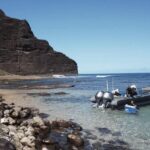
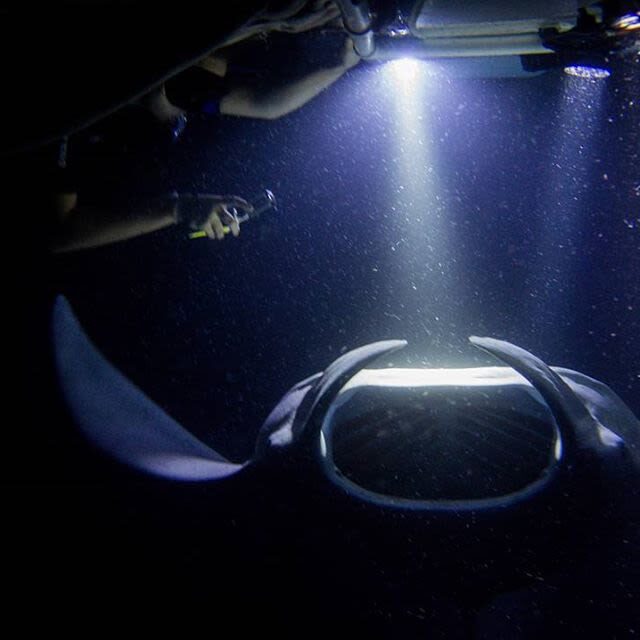
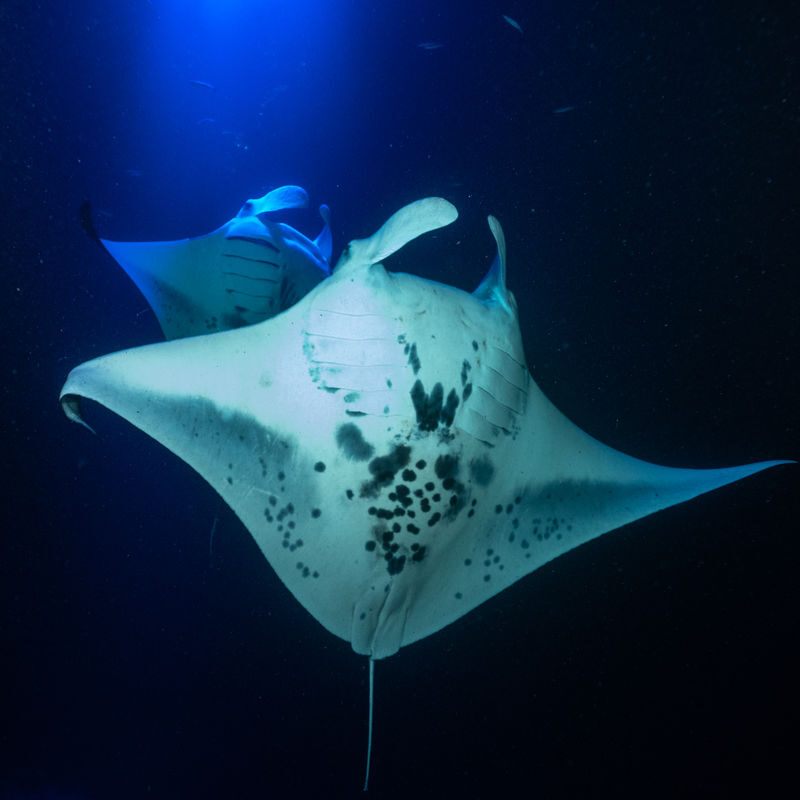
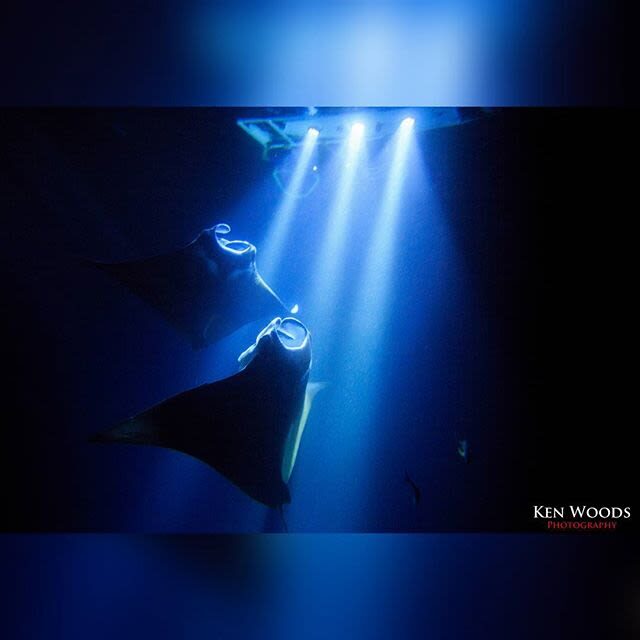
At night, Kona’s manta rays come to the lights, and you watch from the surface as they glide beneath you to feed. You hold a floating light board, so the focus is on looking down, staying steady, and letting the rays come close on their own terms.
I like two things here: the short boat ride keeps the trip focused on the snorkel, and the light board gives you a clear place to hold while you float. I also like that an in-water guide helps the group find a safe viewing position. One consideration: you need to be comfortable in open water at night, and the tour is not recommended for people with heart disease, asthma, or other serious medical conditions.
- Key points to know before you go
- A nighttime manta encounter, not a long snorkel
- From Honokohau Harbor to the viewing site
- What the 45 minutes in the water are like
- Why the format suits some snorkelers better than others
- The cost and what you get for it
- Prepare for check-in at the harbor
- Is this the right Kona night snorkel for you?
- FAQ
- How long does the whole tour take?
- Where does the tour depart?
- Which manta ray site will the boat visit?
- What equipment is included?
- What is the minimum age?
- What should I bring and wear?
- What happens if the tour is cancelled or I arrive late?
- More Evening Experiences in Hawaii
- More Tours in Hawaii
- More Tour Reviews in Hawaii
- Not for you? Here's more nearby things to do in Hawaii we have reviewed
Key points to know before you go
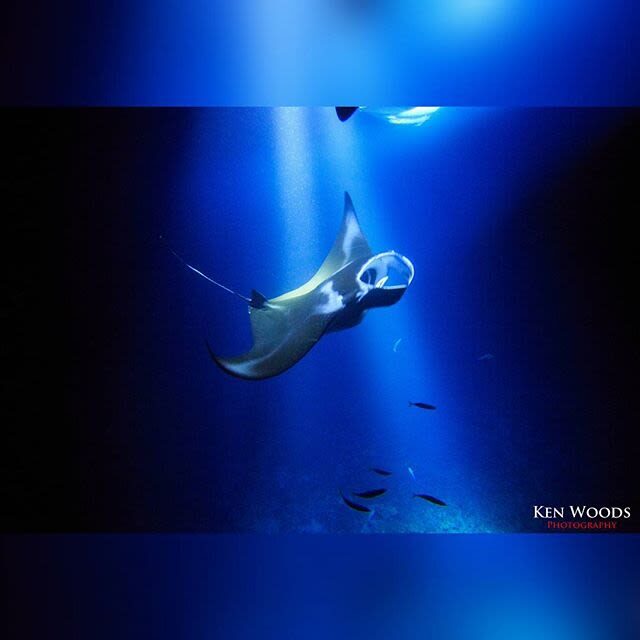
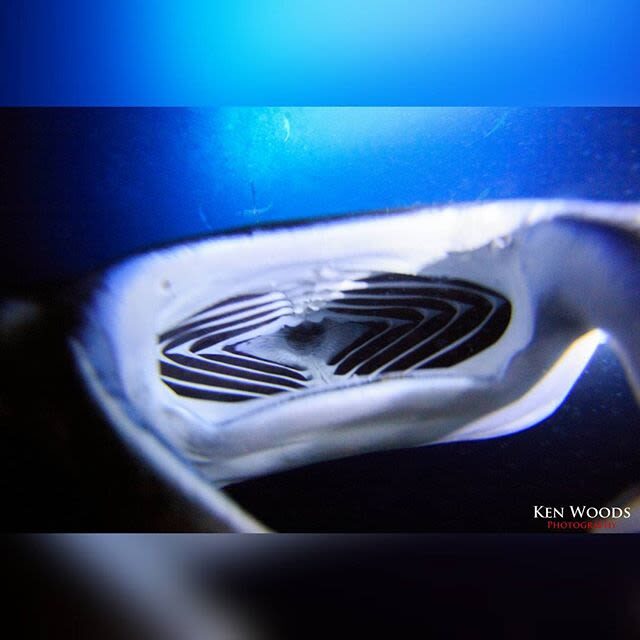
- Two possible manta sites: The boat heads to Garden Eel Cove, also called Manta Heaven, or Keauhou, known as Manta Village.
- About 45 minutes in the water: The full outing is scheduled for roughly 6:30 to 8:30 p.m., including the boat ride.
- A floating light board sets the scene: Its bright lights attract plankton, which draws feeding manta rays.
- Gear is supplied: Wetsuit and snorkel equipment are included, but prescription masks are not available.
- You must be at least 4: Children and infants must be counted in the passenger total, though infants cannot take part in the activity.
- One close-up account is encouraging, not a guarantee: A 2025 participant described seeing many mantas very close, but wildlife sightings can never be promised.
A nighttime manta encounter, not a long snorkel
This trip is built around one distinct event: watching manta rays feed beneath a floating light source after dark. It is not a broad coastal snorkel with several stops. You board at Honokohau Harbor, make a 15 to 20 minute boat ride, and spend about 45 minutes in the water at one of Kona’s manta viewing sites.
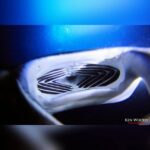
The idea behind the light board is simple. Bright lights draw plankton, and plankton draws manta rays looking for food. You hold onto the board and float flat on the surface while the guide helps the group get into a good position. A pool noodle adds floatation and helps keep your feet at the surface.
That setup matters if you are new to night snorkeling. You are not expected to swim around searching for rays in the dark. Instead, you stay with the group and watch from above as the lights gather plankton and the mantas feed below. The experience is active enough to feel special, but the basic position is calm and still.
The closest account available describes seeing many mantas very close. That is the kind of encounter the tour is designed to make possible, but it remains a wildlife activity: the animals are free to appear, approach, and leave as they choose. Treat the close viewing as a possibility, not a guarantee.
You can also read our reviews of more evening experiences in Hawaii

From Honokohau Harbor to the viewing site
The departure point is Snorkel Big Island at Honokohau Small Boat Harbor, at 74-380 Kealakehe Parkway in Kailua-Kona. The listed departure is 6:30 p.m., with a return around 8:30 p.m. Plan for the whole two-hour outing, even though the guided snorkel itself is listed as 45 minutes. The boat ride and getting into and out of the water take up the rest.
The ride to the site is about 15 to 20 minutes. The crew may take you north to Garden Eel Cove, called Manta Heaven, or south to Keauhou, called Manta Village. The tour information does not promise which location you will visit, so think of the destination as part of the evening’s plan rather than a choice you can make yourself.
The boat is described as spacious and comfortable, a plus on a trip where you want to arrive relaxed rather than cramped. The captain is USCG-certified, and the in-water guides are described as experienced, with Red Cross certification highlighted. You also get live commentary on board. Those details are useful, but the most important part for a first-time night snorkeler is the guide in the water, helping the group stay together and find a viewing position.
What the 45 minutes in the water are like
Once you reach the site, you put on the provided wetsuit and snorkel gear, then enter the water with the guide. You hold the floating light board and stay at the surface. The board’s high-powered lights bring plankton into view, creating the feeding opportunity that attracts the mantas.
The pool noodle is a small but practical touch. It gives you extra floatation and helps keep your feet up, which can make it easier to relax rather than constantly kick. The basic task is to hold on, keep your face in the water when you want to watch, and follow the guide’s directions.
The position also has a clear benefit for viewing. You are looking down from the surface as the rays move beneath the lights. A participant on an August 2025 outing described seeing many mantas very close, which speaks to the potential of the encounter. Still, the tour cannot control how many rays show up or how near they come. The wildlife is the star, and it follows its own schedule.
Respectful behavior matters here. Do not feed marine animals, walk on coral, or do anything that could harm the marine environment. The light board is there to attract plankton, not to turn the animals into performers. Give the guide your attention and let the manta rays move freely.
Why the format suits some snorkelers better than others
If you are uneasy about swimming in the dark, the guided, stationary format may feel more manageable than a free-swimming night snorkel. You have a board to hold, a noodle for extra floatation, and an in-water guide helping position the group. Those supports do not remove the need to be comfortable in the water, though. You should be able to follow directions and remain in the water for the guided portion.
The tour is for participants aged 4 and older. Infants must be included in the passenger headcount, but the minimum age means they cannot participate. The activity is not recommended for people with heart disease, asthma, or other serious medical conditions. It is also not wheelchair- or stroller-accessible.
Prescription snorkel masks are not available. If you rely on one, this is an important limitation to resolve before booking, since the supplied snorkel equipment may not meet your needs. The operator’s details do not specify whether you can bring your own mask, so contact the provider directly rather than assume.
The cost and what you get for it
The advertised starting price is $164.99, while the passenger package is also shown from $143.49. Those figures do not match, so check the live price and what applies to your date before you pay. Either way, judge the cost as a compact, guided wildlife outing rather than a long boat excursion: wetsuit, snorkel gear, boat transport, an English-speaking guide, a professional instructor, and live commentary are included.
The value rests on the chance to see manta rays feeding at close range, plus the staff and gear that make a night-water encounter easier to manage. If you want hours of snorkeling or several stops, this is not that kind of trip. If a focused, unusual encounter is your priority, 45 minutes in the water may be enough to make the evening worthwhile.
There is only one published rating in the information provided, a five-star rating from August 2025. The participant praised seeing many mantas very close. That is a useful glimpse of what can happen, but a single account is too little to treat as a reliable forecast of every outing.



Prepare for check-in at the harbor
Arrive in your swimwear and bring a towel and water bottle. Wear sandals, slippers, or other footwear that is easy to remove. Use the restroom before you arrive, as the operator specifically advises doing so before check-in.
The instructions say to arrive at least 15 minutes early, while check-in may be 15 to 40 minutes before departure. Confirm your exact check-in time directly with the provider, and call to make sure the reservation has been received correctly. The redemption number is (808) 209-0019.
To find the meeting spot, turn west from Highway 19 onto Kealakehe Parkway by the Honokohau Marina and Small Boat Harbor sign. Take the first right into the north side of the harbor, follow the road around the bend, pass Gentry’s gas station, and continue toward the brown, pitched-roof public restroom building. The check-in attendant meets you by the Snorkel Big Island white Ram 1500.
Late arrivals are a real risk: the stated policy says participants who are 15 or more minutes late cannot receive a refund. The activity can also be rescheduled if fewer than six participants are booked. If extreme weather leads the operator to cancel, you may reschedule or request a full refund. Cancellations made at least 24 hours before the activity date qualify for a full refund, subject to the stated terms.
Is this the right Kona night snorkel for you?
Book it if you want a focused chance to see Kona’s famous manta rays, are comfortable floating in open water after dark, and value a guide-led setup with a light board and supplied gear. The short ride from Honokohau Harbor and limited time in the water keep the outing manageable, while the possibility of mantas feeding close below you gives it its clear appeal.
Think twice if you need a prescription mask, cannot comfortably snorkel at night, or have one of the listed medical concerns. Also go in with a flexible expectation: the crew can choose a manta site and position the group, but nobody can promise how many rays will appear. If that uncertainty is acceptable, this is a distinctive way to spend an evening on the Big Island.
Hawaii Manta Ray Night Snorkel Experience
“It was a great experience to see so many mantas sooo close! highly recommend!”
FAQ
How long does the whole tour take?
The schedule runs from about 6:30 p.m. to 8:30 p.m. The guided snorkel is listed as 45 minutes, with a 15 to 20 minute boat ride each way.
Where does the tour depart?
It departs from Snorkel Big Island at Honokohau Small Boat Harbor, at 74-380 Kealakehe Parkway in Kailua-Kona.
Which manta ray site will the boat visit?
The boat goes to either Garden Eel Cove, also called Manta Heaven, or Keauhou, known as Manta Village. The specific site is not guaranteed in advance.
What equipment is included?
A wetsuit and snorkel gear are provided, along with a pool noodle for extra floatation. Prescription snorkel masks are not available.
What is the minimum age?
Participants must be at least 4 years old. Infants and children must be included in the passenger headcount.
What should I bring and wear?
Arrive in swimwear, wear footwear that is easy to remove, and bring a towel and water bottle. The operator also advises using the restroom before arrival.
What happens if the tour is cancelled or I arrive late?
If extreme weather causes the operator to cancel, you can reschedule or request a full refund. Participants who are 15 or more minutes late cannot receive a refund.