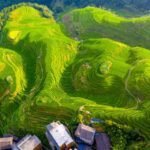
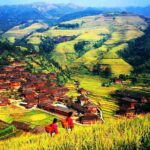
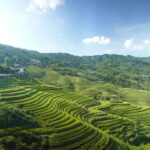
Longji’s rice terraces climb the hills of Longsheng County in broad, curving steps. From the mountain paths, you can see why the fields are famous: working farmland and village life are part of the view, not just a backdrop for photos.
I like two things about a Longji visit. First, the villages each offer a different way to see the terraces, from Ping’an’s small, tidy plots to Jinkeng’s grand mountain views. Second, the ticket is valid across the scenic area’s villages as long as you do not leave through the gate, so you can make a fuller day of it without buying a separate admission for each stop.
The main catch is that this is entry only. You arrange your own ride, meals, and any cable-car ticket, and the villages are spread across mountain terrain. If you have just one day, choose your main village before you arrive rather than trying to squeeze in every viewpoint.
At a glance
- Ping’an: A classic Zhuang village with the Seven Stars Accompanying the Moon and Nine Dragons and Five Tigers viewpoints.
- Jinkeng Dazhai: Red Yao village, with broad views from West Hill Shaole, Thousand Layers of Sky Ladder, and Golden Buddha Peak.
- Ancient Zhuang Village: Older buildings, stone paths, bridges, and terraces that retain a more traditional feel.
- Huangluo Yao Village: An included stop that can be paired with one terrace area on a one-day visit.
- Ticket coverage: Admission includes Ping’an Stockade, Jinkeng Dazhai, and Huangluo Yao Village; the general ticket is described as valid among villages while you remain inside the scenic area.
- From $13.19: A low entry price, but transport, food, personal expenses, and the cable car are extra.

👉 See our pick of the 2 Best Workshops And Classes In Guilin
- At a glance
- Why the terraces are more than a photo stop
- Choose one village, or give yourself more time
- Ping’an: small fields and classic viewpoints
- Jinkeng: Red Yao villages and broad mountain views
- Ancient Zhuang Village: older paths and wooden homes
- Huangluo Yao Village and the cultural side of the visit
- Season, weather, and the best time for your priorities
- What the ticket covers, and what it does not
- Is Longji worth booking?
- FAQ
- What does the Longji Rice Terraces adult ticket include?
- Does the ticket include transport?
- Is the Jinkeng cable car included?
- Can I visit more than one village on the same ticket?
- Which villages can I visit?
- What is a good one-day route?
- Can a vehicle drive up the mountain?
- What do I need to enter?
- When does admission stop?
- The Best Of Guilin!
- More Tours in Guilin
- More Tour Reviews in Guilin
- Not for you? Here's more nearby things to do in Guilin we have reviewed
Why the terraces are more than a photo stop
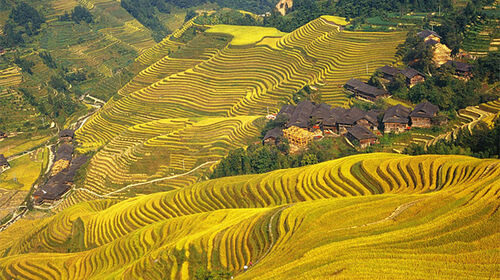
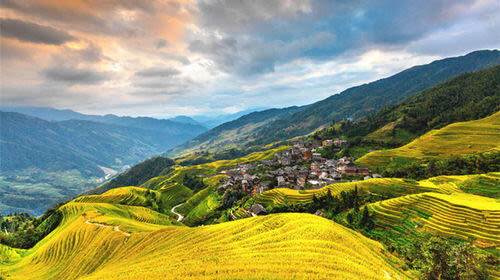
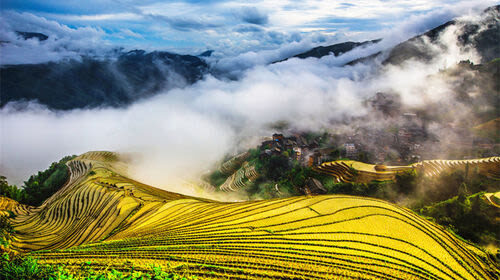
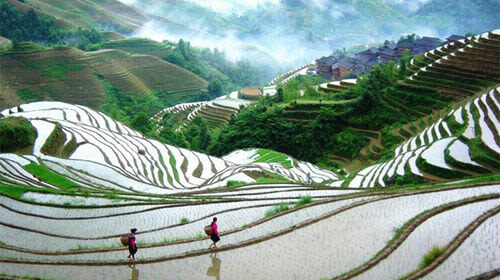
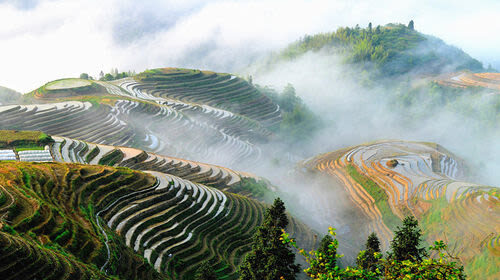
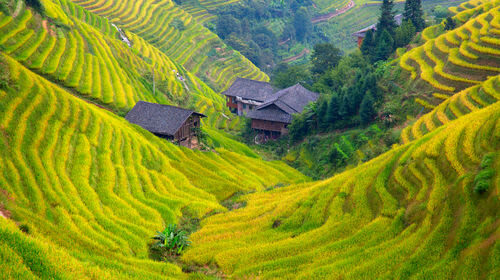
The Longji Rice Terraces are in Longsheng County, in the Guilin area of Guangxi. Their name is often translated as Dragon’s Backbone, an apt image for the bands of fields that wrap around mountain ridges. These are working terraces built to support farming in steep country, and their scale makes the practical purpose visible: each slope has been shaped into a sequence of fields that can hold crops and water.
That human imprint is what gives the place its particular appeal. You are not looking at a single viewpoint or an isolated monument. You are moving through mountain villages and cultivated hillsides, with the Zhuang and Yao communities forming part of the area’s long-standing pattern of life.
The terraces also play a role in soil and water conservation in the mountains of southern China. That matters when you are deciding what you want from a day here. The appeal is not only the sweeping view, but also the ingenuity behind turning steep land into farmland.
You can also read our reviews of more tours and experiences in Guilin.


Choose one village, or give yourself more time
The scenic area includes several villages, but they are not interchangeable. Ping’an is the classic choice, with established visitor facilities and small plots that create a quiet, closely patterned view. Jinkeng Dazhai offers a larger-feeling panorama and is associated with the Red Yao community. Ancient Zhuang Village is a good fit if traditional homes and older village details interest you as much as the terraces.
For a one-day visit, the practical advice is to pick one main terrace area and pair it with Huangluo Yao Village if time allows. Trying to see Ping’an, Jinkeng, and Ancient Zhuang Village in one day can leave you spending more time getting between places than enjoying them.
If you have two days or more, a route from Jinkeng to Ping’an and then Ancient Zhuang Village gives you a useful contrast: broad views first, a classic village setting next, and older village architecture to finish. The suggested direction is from the farther areas toward Guilin, but your transport arrangements will shape what is sensible.
The adult ticket starts at $13.19, making admission itself a modest part of the day’s cost. The value depends on how much of the area you use. If you stay in one village, the ticket buys access to its trails and viewpoints; if you visit more than one village without exiting the scenic area, its through-ticket nature can make the admission more useful.
Ping’an: small fields and classic viewpoints
Ping’an Zhuang Rice Terraces are a strong choice if you want a well-established village base. The village has about 170 households and more than 700 residents, most of them Zhuang people of the Liao surname. Visitor facilities for meals and other services are more developed here than in some of the area’s less-visited spots.
The terraces are made up largely of smaller plots. That creates a more intimate pattern than the huge sweeps of Jinkeng, and the village setting gives the view a settled, lived-in quality. In autumn, when the crops turn golden, the fields take on a different look from their greener growing-season appearance.
Two named viewpoints help you plan your walk. Seven Stars Accompanying the Moon refers to seven small hilltops left amid the terraces, set around a group of fields likened to the moon. At Nine Dragons and Five Tigers, the ridges and small hills are imagined as dragons and tigers guarding the area. The names are poetic, so you may need to use a little imagination; the views themselves are the real reason to go.
Ping’an is a sensible pick if you want a classic terrace scene and a straightforward village visit. Its earlier tourism development means more facilities, but it may feel less remote than the older settlements. If you value convenience and a traditional postcard-like view, that tradeoff is a fair one.
Jinkeng: Red Yao villages and broad mountain views
Jinkeng Dazhai is a Red Yao village with about 245 households and more than 1,130 residents, many with the surname Pan. Its terraces are known for wide, dramatic curves and viewpoints that look across the hills. The area’s Red Yao identity is also part of the experience, though the main ticket does not itself include a guided cultural program.
The Thousand Layers of Sky Ladder viewpoint is reached by a stone path and is named for the rows of fields that seem to climb toward the clouds. It is closer to the foot of the mountain than some of the other viewpoints, and its setting brings the village and terraces together in one view. The walk uphill is part of the visit, so allow time and energy for it.
Continue higher for West Hill Shaole, a more open vantage point with a broad view over the terraces. It is a notable sunrise and sunset spot, and its open outlook makes it a useful choice if you want the hills to fill the frame. The climb takes effort, and the viewpoint is farther away, so it is not the best option if you need to keep walking to a minimum.
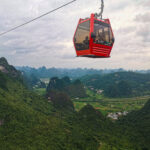
Golden Buddha Peak offers another angle, with the mountain seen as a seated Maitreya Buddha. A cable car runs from the Jinkeng Dazhai entrance directly to the peak, which can spare you the uphill walk. The cable car is not included in the entry ticket, so budget for it separately if you plan to use it.
Jinkeng is the strongest choice if your priority is a broad mountain panorama. For sunrise or sunset photography, West Hill Shaole and Golden Buddha Peak are the main options described for those views. Thousand Layers of Sky Ladder is closer to the village and works well if you want to combine the fields with a sense of daily village life.
Ancient Zhuang Village: older paths and wooden homes
Longji Ancient Zhuang Village has more than 200 households and over 1,000 residents. It is one of the older settlements in the area, dating to the Wanli period of the Ming Dynasty. Its more remote setting and later tourism development have helped preserve an older village character and traditional stilted wooden buildings along the ridges.
A walk up the bluestone path brings you past stone bridges, tablets, and carvings that connect the village to its past. The route is not just about getting to a viewpoint; the built details are part of what makes this stop worthwhile. The village is a good choice if you prefer to notice how people shaped and used the place, rather than moving quickly between photo stops.
From the Ancestor Field, continue to the Long Canal viewpoint for a view across the village. On the descent, the Swimming Dragon Down the River viewpoint looks over terraces that spiral down toward the Jinjiang River. It is a striking way to read the shape of the hills, though the paths and changes in elevation mean you should plan for a walk rather than expect to see everything from the road.
Ancient Zhuang Village can feel less convenient than Ping’an, but that is part of the appeal. Choose it for its old homes, stonework, and quieter character, not because it offers the easiest day.


Huangluo Yao Village and the cultural side of the visit
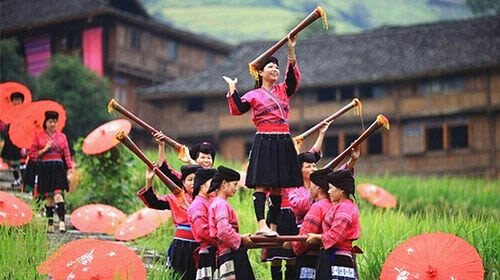
Huangluo Yao Village is included in the stated ticket access, and it is commonly paired with one terrace area on a one-day itinerary. The village is associated with the Yao people, and the area is known for the long hair of Red Yao women. That visible cultural detail is part of why a stop here can add context to a day focused otherwise on fields and viewpoints.
Keep your expectations grounded: the admission ticket is not a guided tour, and no guide or cultural presentation is included in the adult ticket described here. You can visit the village as part of your route, but the pace and depth of your visit depend on the time you set aside.
If you want more context or help with transport, separate packages are offered, including a carpooling day trip to Huangluo Yao Village and Ping’an with an English-speaking guide. Those are different options from the standalone admission ticket, so check what is included before paying.
Season, weather, and the best time for your priorities
The terraces change with the crops, so there is no single best time for every visitor. In mid-September, the fields may just be starting to turn yellow. If you want the golden autumn color, timing matters, and a visit too early can mean seeing the fields before that transformation is well underway.
The fields are still worth seeing at other times. Green terraces emphasize the repeating bands and the way the slopes have been shaped. Rain can soften the views and make the paths less comfortable, so bring weather-appropriate clothing and allow for conditions to affect photography. A rainy visit can still be worthwhile, but you should not expect clear mountain panoramas every day.
For sunrise, you will need to stay nearby or arrange an early start. West Hill Shaole is a distant, open viewpoint suitable for sunrise or sunset; Thousand Layers of Sky Ladder is closer to the village and suits sunset; Golden Buddha Peak is another sunset spot, made easier to reach by cable car. The ticket itself does not include lodging or transport, so plan those details before building your day around dawn or dusk.
What the ticket covers, and what it does not
The adult ticket is admission to the scenic area, not a full-day excursion with transport. It includes access to Ping’an Stockade, Jinkeng Dazhai, and Huangluo Yao Village. The ticket is described as valid across villages as long as you do not exit through the scenic-area gate, so keep that in mind if you are moving between stops.
Meals, personal expenses, transport, and the Jinkeng cable car are not included. The product options also include private-group and small-group Jinkeng trips, as well as an English-speaking guide carpooling tour, but those are separate packages. Do not assume that a driver or guide comes with the basic admission ticket.
Vehicles with nine seats or fewer can drive up the mountain as far as the parking lots for each scenic area. Vehicles with more than nine seats cannot drive up and need to use in-scenic-area transport at an additional cost. If you are arranging a vehicle or tour separately, confirm whether the price includes admission: transport and ticket costs can be separate.
The ticket is tied to the selected date. To enter, bring your valid ID and mobile voucher; entry requires ID verification, one person per card. Admission stops at 9 p.m., even though ticket pickup is listed as available through the day.
Is Longji worth booking?
I would book the basic ticket if you are comfortable arranging your own transport and want the freedom to choose your village and walking route. At a starting price of $13.19, admission is reasonable for access to several terrace areas, especially if you remain inside the scenic area and visit more than one village.
Choose Ping’an for a classic view and more developed facilities, Jinkeng for wide panoramas and its cable-car option, or Ancient Zhuang Village for older homes and stone paths. With one day, keep the plan simple and focus on one terrace area, perhaps adding Huangluo Yao Village if timing permits.
If you want a driver, a guide, or help making the connections, book a separate transport or guided package and check its inclusions carefully. The basic ticket is a good fit for an independent visit, but it will not solve the logistics for you.
Longji Rice Terraces
“Very nice to look at! Even though we got caught in the rain…”
FAQ
What does the Longji Rice Terraces adult ticket include?
It includes admission to Ping’an Stockade, Jinkeng Dazhai, and Huangluo Yao Village. The ticket is described as valid across villages while you remain inside the scenic area.
Does the ticket include transport?
No. Transport and other personal expenses are not included in the adult ticket.
Is the Jinkeng cable car included?
No. The cable car to Golden Buddha Peak is available separately and is not included in the admission ticket.
Can I visit more than one village on the same ticket?
Yes. The ticket is described as a general admission ticket valid in the villages as long as you do not exit through the scenic-area gate.
Which villages can I visit?
The stated ticket access includes Ping’an Stockade, Jinkeng Dazhai, and Huangluo Yao Village. The scenic area also includes Longji Ancient Zhuang Village.
What is a good one-day route?
Choose one main area, such as Ping’an, Ancient Zhuang Village, or Jinkeng Dazhai, and pair it with Huangluo Yao Village if time allows.
Can a vehicle drive up the mountain?
Vehicles with nine seats or fewer can drive to the parking lots for each scenic area. Vehicles with more than nine seats cannot drive up and need to use in-scenic-area transport at their own expense.
What do I need to enter?
Present your mobile voucher and valid ID. ID verification is required, with one person per card.
When does admission stop?
The ticket pickup time is listed as 00:00 to 23:59, but admission stops at 21:00.