Twin Beans Farm turns a cup of coffee into a small lesson in farming: you walk among Arabica plants, see how coffee is processed, then roast and brew a batch yourself. I like the hands-on sequence from plant to cup and the chance to ask questions of English-speaking guides such as An, Tsuki, Jessie, and Sukie.
I also like that this is a mountain farm, not just a tasting room: the surrounding greenery and fresh air make the outing feel like a quiet break from Da Lat. The trade-off is the location. The farm is well outside the city, so you should arrange your return ride before you go.
- What makes Twin Beans Farm worth the trip
- A farm visit, not just a coffee class
- From coffee shrubs to the processing room
- Roasting, grinding, and brewing your own cup
- The mountain setting adds breathing room
- The ride north is the main planning task
- What the price buys, and what it does not
- Who will enjoy this workshop most
- Should you book Twin Beans Farm?
- FAQ
- How long does the coffee workshop take?
- Where is Twin Beans Farm?
- Is transport from Da Lat included?
- What will I do during the workshop?
- Can I pick coffee cherries?
- Is the workshop suitable for children?
- Is the workshop conducted in English?
- The Best Of Da Lat!
- More Food & Drink Experiences in Da Lat
- More Tours in Da Lat
- More Tour Reviews in Da Lat
- Not for you? Here's more nearby things to do in Da Lat we have reviewed
What makes Twin Beans Farm worth the trip
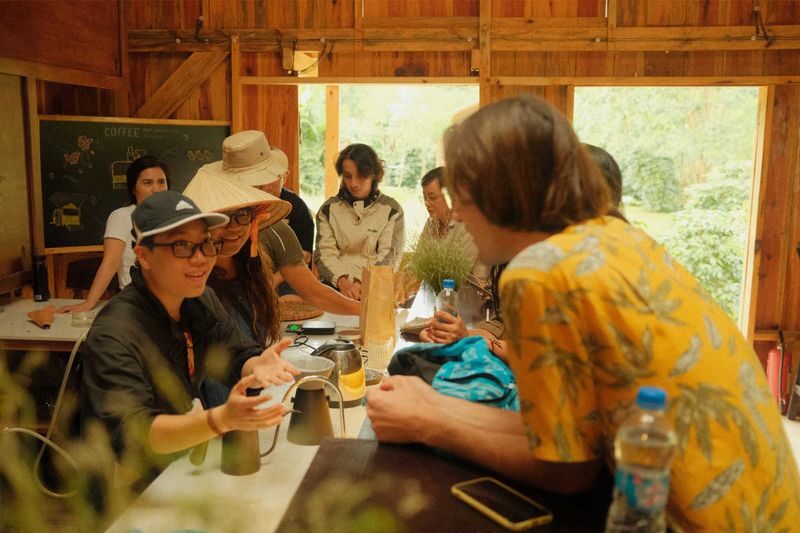
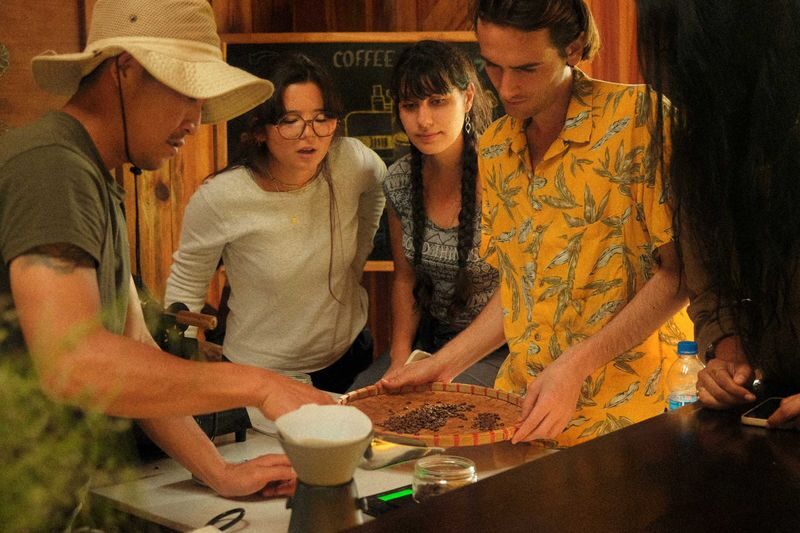
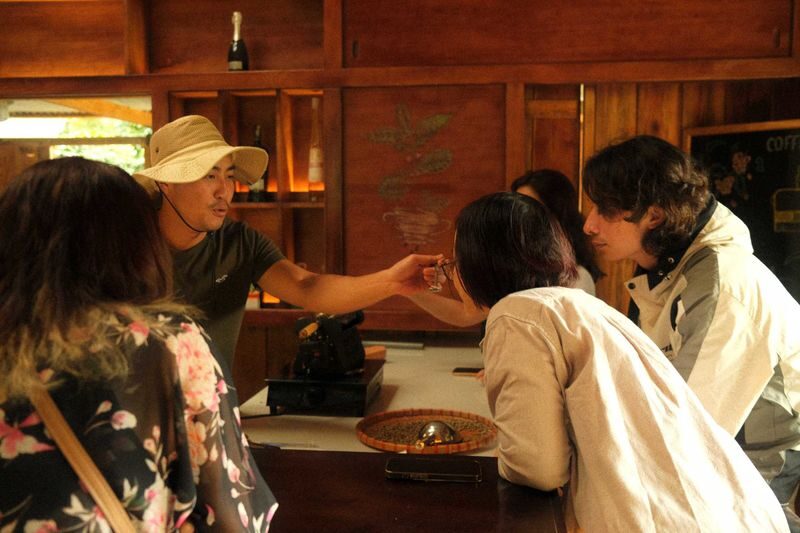
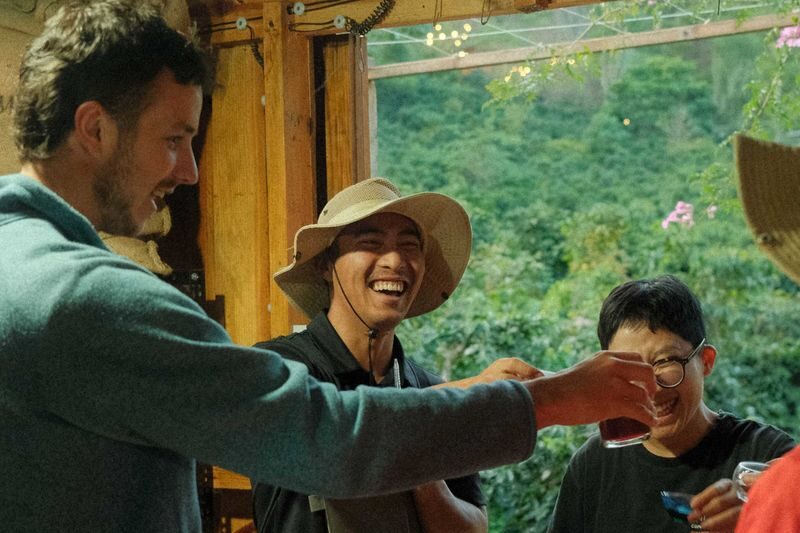
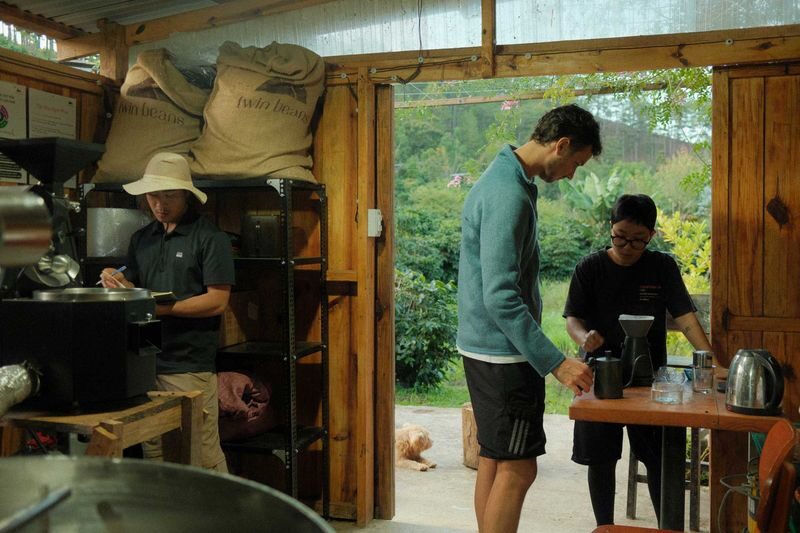
- Roast your own coffee: Handle the beans yourself, then grind and brew them for a fresh tasting.
- Follow coffee from plant to cup: Learn about Arabica cultivation, processing, roasting, and brewing in one visit.
- Visit during harvest season: From November to January, you may be able to pick ripe cherries, depending on the crop and weather.
- Get explanations in English: Guides including An, Tsuki, Jessie, and Sukie have led sessions in clear English.
- Make time for the setting: The farm sits in the mountains north of Da Lat, with a coffee shop, views, greenery, and fresh air.
- Plan transport before arrival: Ride-hailing may be difficult for the return trip, and the farm can help arrange a ride if you contact it ahead.

👉 See our pick of the 3 Best 3 Day Tours In Da Lat
A farm visit, not just a coffee class
Coffee is part of daily life in Vietnam, but it is easy to enjoy a cup without knowing what happened before it reached the filter. Twin Beans Farm gives you a useful look at those steps, from growing Arabica to processing, roasting, grinding, and brewing. You are not only watching a demonstration: the central appeal is getting involved and tasting what you have made.
The farm is in Da Sar Commune, in Lac Duong District, north of central Da Lat. It is set among coffee plantings in a mountain area, and the change from city streets to farm air is part of the outing. Some people come mainly for coffee; others will value the greenery, views, and slower pace just as much.
Expect a guided visit rather than a long agricultural tour. The experience is designed to fit into an afternoon, with a scheduled departure at 13:30 and return around 15:00. The details give both a one-hour duration and a 90-minute farm visit, so check the precise timing attached to your chosen date. Either way, allow extra time for the drive.
You can also read our reviews of more food & drink experiences in Da Lat


From coffee shrubs to the processing room
The visit begins with an introduction to the farm and its Arabica coffee plants. This is a useful place to start, because coffee can seem like a finished product until you see the shrubs and learn how the crop is grown. Your guide can explain the stages that lead from cherry to bean, and the way variety and processing shape the final cup.
The distinction between Arabica and Robusta is one topic visitors have found especially useful. The farm focuses on Arabica, while guides can explain how it differs from Robusta. The workshop also connects the plants to the work that follows, helping you see the coffee chain as a series of practical decisions rather than a single roasting step.
Depending on the season and conditions, you may see or take part in harvesting. The best stated window is November through January, when ripe cherries may be available to pick. It is not guaranteed: heavy rain or unripe fruit can rule out harvesting, even within that period. If picking is important to you, ask about crop conditions before making the trip.
Roasting, grinding, and brewing your own cup
The hands-on part is the heart of the workshop. You get to roast coffee by hand, then grind and brew it. A small batch gives you a direct feel for the process, and the result is immediate: you taste the coffee you have just worked on, rather than sampling a cup prepared by someone else.
The guided explanations help make the steps easier to follow. In particular, learning how roasting and processing can affect flavor gives you something useful to take home beyond a bag of beans. You can pay closer attention to aroma and taste, and understand why two coffees made from different beans or methods can come out differently.
The brew is commonly prepared as a pour-over, and the activity may include tasting the finished coffee alongside other cups. Some participants have also taken home beans they processed. Treat that as a possible extra, not a guaranteed inclusion: the stated package includes English-speaking staff, while personal purchases and other expenses are separate.
If you already drink coffee every day, the workshop still has value. It gives you a hands-on hour or so with the craft behind the cup, without requiring technical knowledge beforehand. If you are new to coffee, it is an approachable introduction, because the guide explains the process while you do it.
The mountain setting adds breathing room
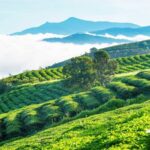
Twin Beans Farm’s location is both a plus and a practical nuisance. The farm is surrounded by greenery in the mountains, and the setting gives the activity a calm, rural feel that a city café cannot match. Visitors have found the farm pleasant even in rainy weather, though rain can make walking around the grounds more difficult and can affect harvesting.
The farm also has a coffee shop, and the broader grounds offer views and space to spend a little time outside the workshop. The visit may suit you if you like pairing a practical activity with a dose of nature. Some people have also enjoyed the farm’s friendly dogs, but their presence is not the main point of the tour. If you are uncomfortable around dogs, tell the instructor; staff have been able to keep them away when asked.
The outing is not a full farm-stay or a long plantation trek. The guided activity is fairly compact, and the main focus is learning the process and making coffee. You can ask the farm about other activities or time on the grounds, but do not assume they are part of the coffee workshop.
The ride north is the main planning task
The farm is roughly 22 kilometres from central Da Lat, and the drive has been estimated at about 40 minutes. Actual travel time can vary with traffic and weather. The departure point is Twin Beans Farm itself, so you need to get there independently; hotel pick-up and drop-off are not included.
Do not count on finding a ride-hailing car for the trip back. The remote location can make that difficult, and arriving without a return plan risks turning a relaxed farm visit into a scramble. Contact the farm in advance to ask about arranging transport or sharing a ride. One reported round-trip driver quote was around 400,000 Vietnamese dong, but treat that as a rough reference, not a fixed fare. You could also arrange your own vehicle.
The afternoon schedule is convenient if you want to keep your morning free, but it leaves little room for a late start. Arrive at least 15 minutes early. Late arrivals and no-shows are not refundable, and the farm’s schedule may shift with traffic or weather.
You can also read our reviews of more tours and experiences in Da Lat


What the price buys, and what it does not
The starting price is around US$10, which is modest for a guided, hands-on activity that includes roasting and tasting. It represents good value if you want more than a quick café stop: you get a farm introduction, instruction through several coffee-making stages, and the chance to make your own brew.
The booking details show two different starting prices, US$9.65 and US$10.65, so check the total at checkout. Transport is extra, as are personal expenses and tips. For many people, the ride will cost more than the workshop, which is why the value calculation should include getting to and from the farm.
An English-speaking staff member is included. The workshop is open to participants aged 10 and older. The farm is open daily from 08:00 to 17:30, though this particular session is scheduled for the afternoon. You can cancel for a full refund up to 24 hours before the activity date, subject to the stated booking terms.
Who will enjoy this workshop most
I would put this on the shortlist for coffee drinkers who like learning by doing. The process is engaging without requiring prior knowledge, and the farm setting makes it a good change of pace from sightseeing in town. It also works well for families with children aged 10 or older, friends, and couples who want a shared activity that is not just another meal or viewpoint.
It may be less appealing if your main goal is a long, intensive course on brewing techniques, or if you want a farm visit that is easy to reach from the city. This is a short introduction, not a deep technical class, and the drive is part of the commitment. Harvesting is seasonal and weather-dependent, so do not book solely on the assumption that you will pick cherries.
Guides named An, Tsuki, Jessie, Sukie, and others have led sessions. The names vary by date, so you should not expect a particular instructor unless the farm confirms it. The consistent practical advantage is having English-speaking staff who can explain the steps and answer questions.
Should you book Twin Beans Farm?
Book it if you enjoy coffee and want to see more than the finished cup. Roasting and brewing your own beans gives the visit a clear purpose, while the mountain setting makes the trip feel like a small countryside escape. If you can visit between November and January, ask whether ripe cherries are available, but regard picking as a bonus rather than a promise.
Skip it if you have very little time in Da Lat, do not want to organize transport, or expect a long, advanced coffee course. For a modest workshop fee, Twin Beans Farm offers a memorable farm-to-cup introduction. The key is to plan the ride both ways, check the session length and final price, and arrive ready to get your hands involved.
Hands-On Coffee Roasting & Tasting Experience by Twin Beans Farm
“We had a wonderful time at the coffee roasting class! Our guide, Sukie, was professional, kind, and very knowledgeable about coffee. We learned a l…”
FAQ
How long does the coffee workshop take?
The scheduled visit runs from 13:30 to 15:00, a 90-minute window. The activity information also gives a one-hour duration, so confirm the timing for your selected session.
Where is Twin Beans Farm?
The farm is in Da Sar Commune, Lac Duong District, Lam Dong Province, north of Da Lat. The address provided is Thôn 1, Lac Duong District, Lam Dong 670000, Vietnam.
Is transport from Da Lat included?
No. Hotel pick-up and drop-off are not included. Contact the farm in advance if you want help arranging transport.
What will I do during the workshop?
You will explore the Arabica farm, learn about coffee cultivation and processing, and roast, grind, and brew coffee for tasting.
Can I pick coffee cherries?
Possibly. Harvesting may be available from November to January, depending on whether the cherries are ripe and on weather conditions.
Is the workshop suitable for children?
Participants must be at least 10 years old.
Is the workshop conducted in English?
English-speaking staff are included, and the workshop is guided in English.