Siem Reap’s temples tell one part of Cambodia’s story. This four-hour e-bike ride takes you beyond the city and Angkor’s best-known sights, into village lanes, working rice fields and the everyday routines of the countryside.
I love two things here: the pedal-assist bikes make a long ride more manageable in the heat, and the stops bring you face to face with local crafts and food instead of keeping you on the road. You can watch a rattan weaver at work, try the craft, and taste Num Banh Chok, a Khmer noodle dish.
One consideration: this is still a cycling tour, and the morning can turn hot. The e-bike helps, but you will need comfortable clothes, sun protection and a willingness to ride on small rural paths.
At a glance
- A 10 km ride to the first craft stop: Follow quiet paths and backstreets toward a local rattan basket weaver.
- A working countryside route: Pass rice fields and grazing water buffalo before stopping at a traditional noodle shop.
- A taste of home life: Rest at a village house with local snacks and a look at traditional rural home design.
- West Baray by bike: Ride beside an Angkorian-era lake where you may see fishermen and birds.
- A Buddhist ending: Visit a local monastery, with an optional water blessing.
- A short morning outing: Meet at 7:45 a.m. and return to Pte Kru Café at about noon.
👉 See our pick of the 25 Best Guided Tours In Siem Reap
- At a glance
- Leaving Siem Reap for the village lanes
- Meeting the rattan weaver
- Riding through rice fields to Num Banh Chok
- Taking a break at a village home
- Following the edge of West Baray
- Ending at a monastery
- What the price includes, and what it does not
- Is the ride right for you?
- Should you book the Siem Reap countryside e-bike tour?
- FAQ
- How long is the tour?
- Where does the tour meet and finish?
- What is included in the price?
- What will I see along the route?
- Can I try weaving at the craft stop?
- Is the water blessing required?
- Are e-bikes suitable for children or shorter riders?
- What happens if the tour is canceled because of bad weather?
- The Best Of Siem Reap!
- More Cycling Tours in Siem Reap
- More Tours in Siem Reap
- More Tour Reviews in Siem Reap
- Not for you? Here's more nearby things to do in Siem Reap we have reviewed
Leaving Siem Reap for the village lanes
 1 / 9
 2 / 9
 3 / 9
 4 / 9
 5 / 9
 6 / 9
 7 / 9
 8 / 9
 9 / 9
The ride starts at 7:45 a.m. at Pte Kru Café, where the guide gives a short safety introduction before you set off. Arrive at least 15 minutes early. The tour returns to the same café at about noon, making this a manageable half-day plan rather than a full day away from town.
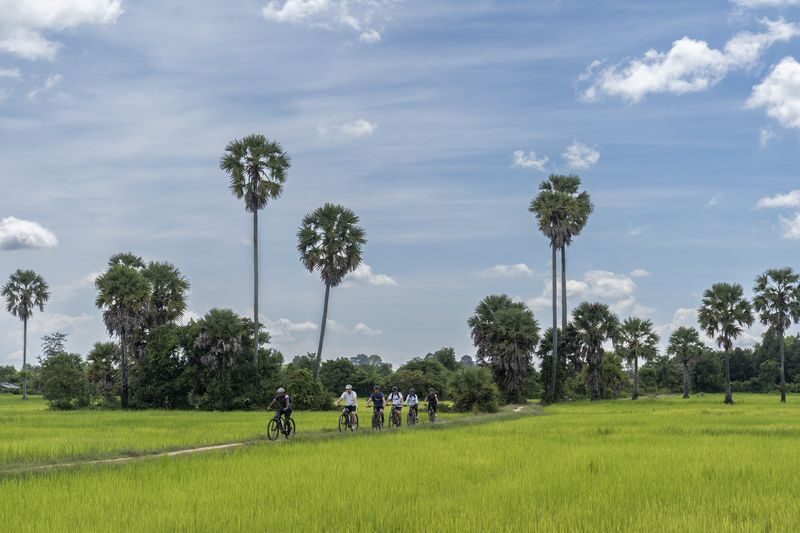
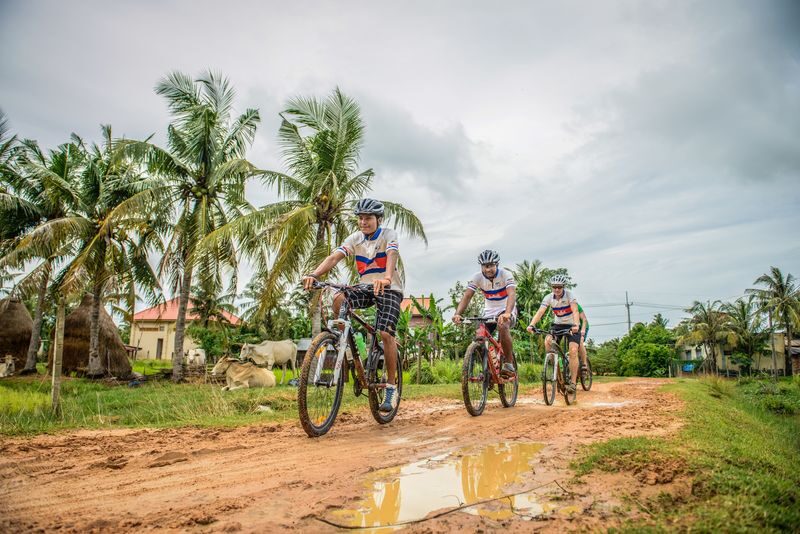
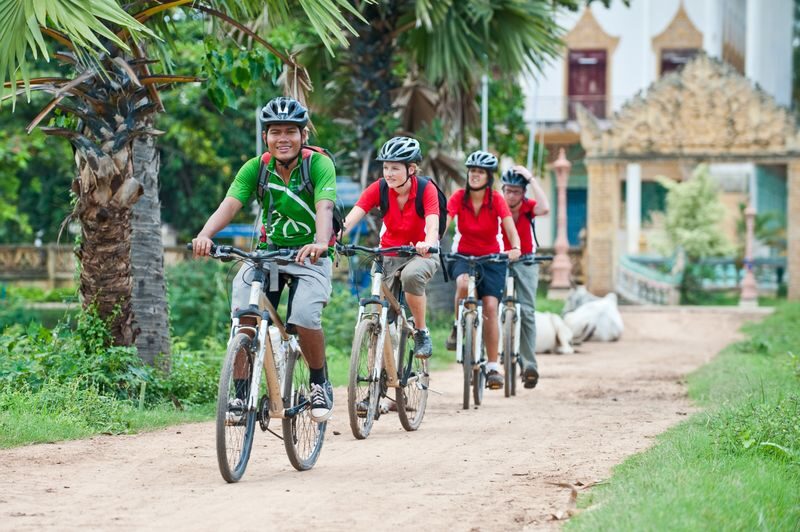
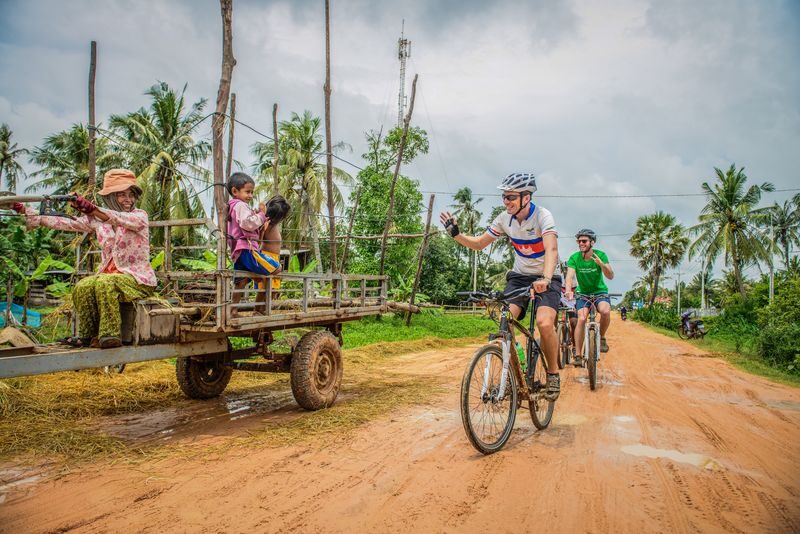
You cycle toward the outskirts of Angkor Archaeological Park, then continue into the countryside. The shift is part of the appeal: city streets give way to smaller paths and backstreets, with a chance to see daily life outside the temple circuit. The route is not presented as a temple tour, so choose it for its village and countryside stops, not for detailed exploration of Angkor’s monuments.
The first ride to the weaving stop is about 10 km. That distance matters if you are new to cycling or unsure about your stamina. The bikes have pedal assist, which adds power as you pedal and can take some strain out of the ride. One person trying an e-bike for the first time found it easy to use, while another noted how welcome the extra help was as the heat built.
You can also read our reviews of more cycling tours in Siem Reap


Meeting the rattan weaver
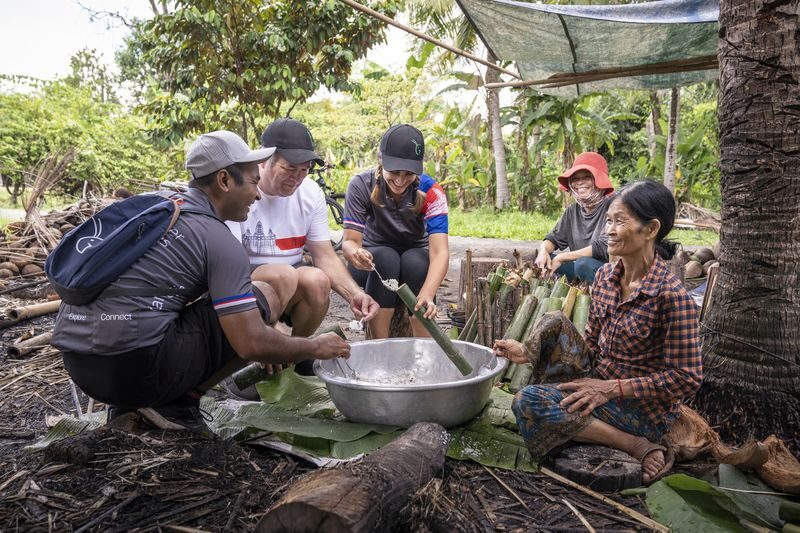
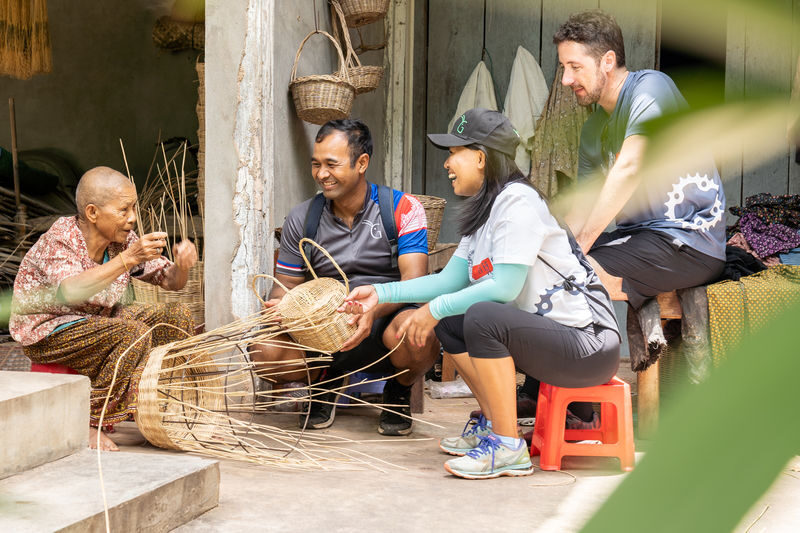
At the first major stop, you visit a local basket and rattan weaver. You can watch the craft being made and, if you like, try weaving yourself. This is a useful pause in a ride because it gives you something specific to observe: the skill and handwork behind a cottage industry that remains part of village life.
I like that the stop is not just a photo opportunity. The chance to see the work up close, and possibly try it, makes the visit more engaging than riding past a workshop. Still, the time available for hands-on activity is not specified, so treat it as an introduction rather than a formal craft lesson.
The visit also gives your guide a natural way to explain Cambodian history and culture as you go. An English-speaking guide accompanies the tour, and Sa Pot has led it. The countryside is easier to understand when someone can connect what you are seeing with local practices and the wider story of the place.
Riding through rice fields to Num Banh Chok
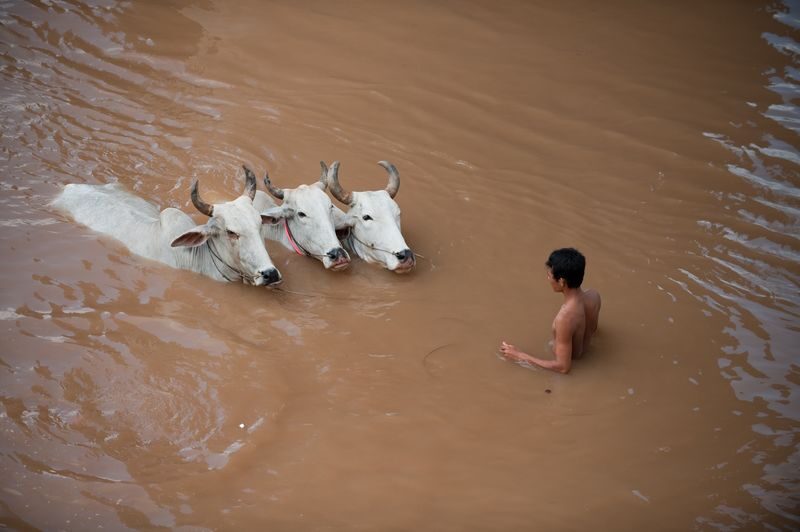
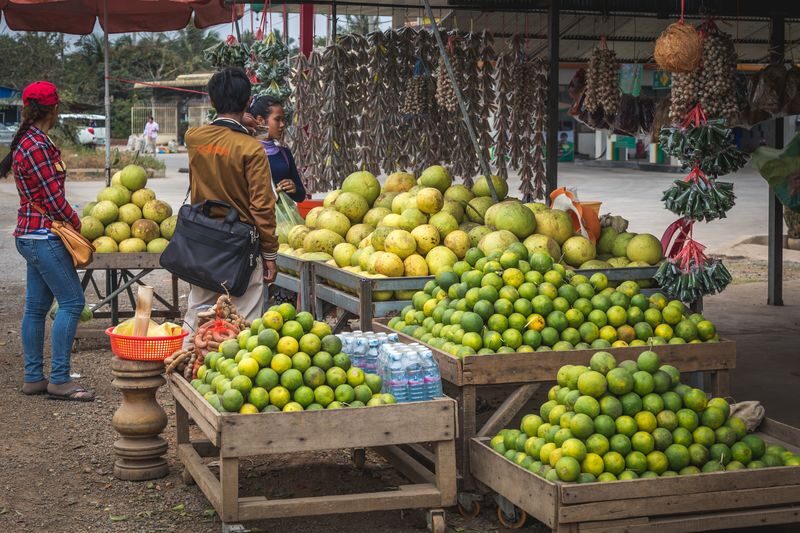
After the craft stop, you get back on the bikes and continue through rice fields, passing grazing water buffalo. The route changes from village lanes to open agricultural views, so this is a good stretch for noticing the countryside rather than watching the road alone. Keep an eye out for birds and activity in the fields, while giving the guide and other cyclists space.
The next stop is a traditional Cambodian noodle shop, where you taste Num Banh Chok, a staple of the Khmer diet. Food is one of the most direct ways to encounter a place, and this stop puts a familiar local dish into the context of a rural morning rather than a restaurant visit in town.
The meal is a tasting stop, not a full lunch. Snacks and refreshments are included elsewhere on the tour, but you should not assume this replaces breakfast or covers every dietary need. If you have specific food requirements, confirm them before booking.
Taking a break at a village home
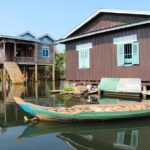
A short ride brings you to a village house, where you can rest and enjoy local snacks. The stop offers a look at everyday rural life and traditional home design adapted to the countryside. It also gives your legs a break before the ride continues toward West Baray.
This kind of visit is valuable because it shifts the focus from places built for visitors to a home setting where daily routines continue. You are there to observe, so follow your guide’s lead and be considerate about where you walk and what you photograph. The exact length of the stop is not specified, but it is planned as a relaxed pause rather than a major attraction visit.
If your main goal is to cover as many famous sites as possible, this may feel modest. If you are curious about how people live beyond the city center, the home stop is likely to be one of the more memorable parts of the morning.
Following the edge of West Baray
The route continues beside West Baray, an Angkorian-era lake. You may see fishermen at work and birds around the water, giving the ride a quieter finish than the busier temple areas. The lake is part of the countryside experience, not a separate boat excursion, so expect to see it from the cycling route.
The detailed route centers on the weaver, fields, noodle shop, village house, lake and monastery. A local market is mentioned among the tour’s general cultural highlights, but it is not one of the specific stops described for this sequence. If a market visit is essential to your plans, ask the operator what is scheduled on your date.
Weather and local activity can affect the route and timing. A dry-season ride may not look or feel like a wet-season ride, and what people are doing locally can shape the stops. Keep a little flexibility in your expectations; the route is designed around the countryside as it is that morning.
You can also read our reviews of more tours and experiences in Siem Reap


Ending at a monastery
The final stop is a local monastery, where you can learn about Cambodian Buddhist practices. An optional water blessing is offered for those interested. You are free to take part or simply observe, making this a respectful way to end the ride without treating the ceremony as compulsory.
The monastery visit adds a cultural dimension to a tour otherwise focused on village work, food and rural scenery. It is not a substitute for a longer visit to Cambodia’s religious sites, but it gives you a guided introduction to a living practice. If you choose to participate, follow the guide’s instructions and be mindful of the setting.
Afterward, you cycle back to Pte Kru Café, arriving at about noon. The total route distance is not specified, but the first stretch alone is around 10 km, so you should be comfortable spending the morning on a bike.
What the price includes, and what it does not
The listed starting price is $95.45, while the private-tour package information also gives a starting price of US$83. Because those figures differ, check the price for your date and selected package before booking. The private option may suit you if you prefer a tour for your own party, but group size and any differences in the route are not specified.
The fee includes an English-speaking guide, a quality bike, helmet, snacks, refreshments and admission to attractions. Those inclusions matter on a half-day outing: you do not need to arrange a separate bike rental or pay each time the route reaches an included stop. Hotel pickup and drop-off are not included, so plan your own trip to the meeting café.
For the price, the strongest value is the variety packed into one morning: a craft visit, countryside cycling, a local food stop, time at a village house, views by the baray and a monastery visit. If you only want a scenic bike ride, this may feel like more guided stopping than you need. If you want context and conversation as well as pedaling, the guide and local encounters are central to the value.
Is the ride right for you?
This tour suits you if you want to see rural Siem Reap without committing to a long, strenuous ride on a standard bicycle. The pedal assist is especially useful when the temperature rises; one rider described a 34-degree day and found the extra help welcome. It does not remove the need to pedal, but it can make the ride feel more approachable.
The operator does not recommend e-bikes for people shorter than 160 cm, for safety and comfort reasons. A child seat is available on request and can accommodate a child weighing up to 14 kg. The activity is not wheelchair- or stroller-accessible, and there is no accessibility seating listed.
Bring sunscreen, sunglasses, cash and a water bottle, and wear comfortable clothes and shoes suited to the day’s weather. A helmet is provided. The tour can be canceled in extreme weather or due to unforeseen events; if that happens, you can choose another date or request a refund.
Should you book the Siem Reap countryside e-bike tour?
Book it if you want a practical, guided way to get beyond the city and temple zones, and you are interested in ordinary village life as much as scenery. The craft demonstration, noodle tasting and home visit give the ride a human focus, while the e-bike support helps with the heat and distance.
Skip it if cycling is not comfortable for you, if you need a fully accessible activity, or if your priority is a market visit or a detailed tour of Angkor’s monuments. For a morning that pairs gentle activity with food, craft and local context, this is a well-rounded choice. Just check the final package price, arrive early, and bring sun protection.
Siem Reap Ultimate Countryside E-Bike Tour
“it was wonderful to get out of the tourist zones of the city and the temples– as worthy as they are. and see some 'real' Cambodia. Sa Pot was very…”
FAQ
How long is the tour?
It starts at 7:45 a.m. and is scheduled to return to Pte Kru Café at about noon, for roughly four hours and 15 minutes.
Where does the tour meet and finish?
You meet and finish at Pte Kru Café, 9VH7+X7G, Krong Siem Reap, Cambodia. Arrive at least 15 minutes before departure.
What is included in the price?
The tour includes an English-speaking guide, a quality bike, helmet, snacks, refreshments and admission to attractions. Hotel pickup and drop-off, personal expenses, tips and gratuities are not included.
What will I see along the route?
The route includes a rattan weaver, rice fields and water buffalo, a traditional noodle shop, a village house, West Baray and a local monastery.
Can I try weaving at the craft stop?
You can observe the local rattan basket weaver and have the chance to try the craft. The length of the hands-on activity is not specified.
Is the water blessing required?
No. The water blessing at the monastery is optional.
Are e-bikes suitable for children or shorter riders?
The operator does not recommend e-bikes for people shorter than 160 cm. A child seat is available on request for a child weighing up to 14 kg.
What happens if the tour is canceled because of bad weather?
The activity may be canceled due to extreme weather or unforeseen events. If that happens, you can book another date or ask for a refund.