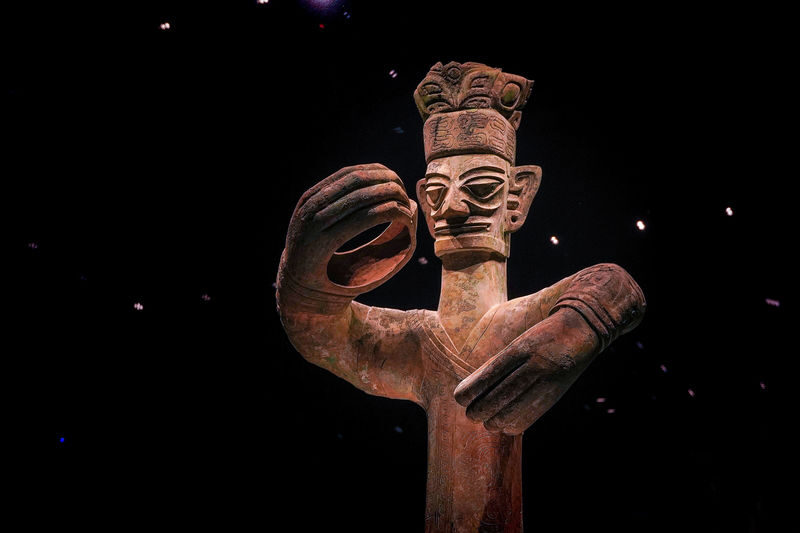
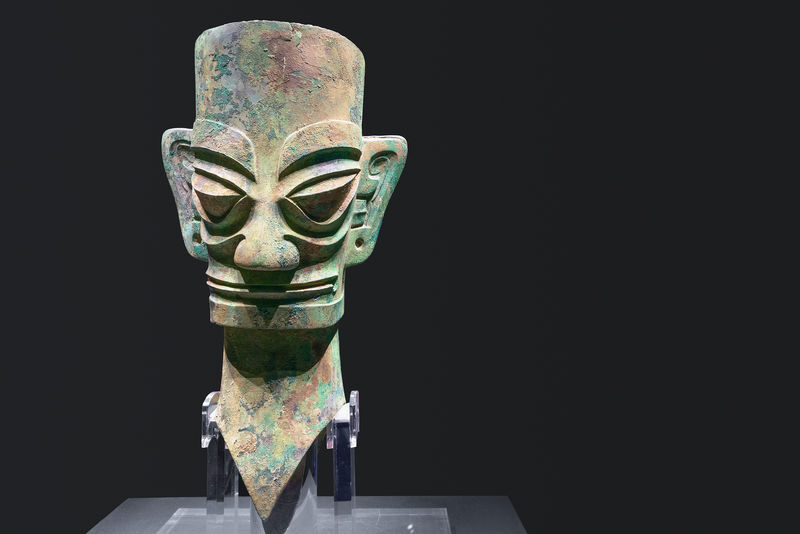
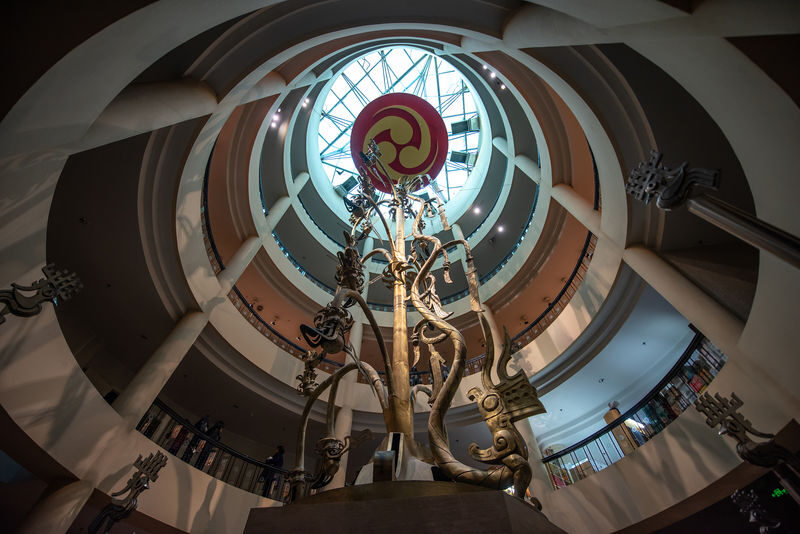
Sanxingdui’s towering bronze figure, golden mask, and sacred tree make a startling first stop: these objects belong to an ancient Shu culture whose art still raises big questions. Pairing the museum with Dujiangyan’s working, dam-free irrigation system gives you two very different windows into Sichuan’s past in one day.
I like this tour for two practical reasons. First, round-trip transport and admission to both sites are included, which saves you from arranging two out-of-town trips. Second, the Dujiangyan portion includes a Chinese-speaking guide, whose explanations can make the waterworks far more legible than a stroll through the site alone.
The trade-off is a long, tightly packed day, with an early start, a short lunch break, and possible late return. Sanxingdui is self-guided unless you arrange and pay for an interpreter or audio guide, so plan ahead if you want help understanding the exhibits.
- Sanxingdui’s headline objects: See the Bronze Sacred Tree, Golden Mask, and giant standing figure during a three-hour museum visit.
- Dujiangyan’s unusual engineering: Look across the Fish Mouth water-dividing levee and learn how the ancient system still serves the Chengdu Plain.
- Transport and admission included: The tour provides a shared air-conditioned bus, pickup within Chengdu’s Third Ring Road, and tickets for both attractions.
- Museum guiding is extra: The tour guide cannot enter Sanxingdui to explain the collection. A human guide or smart audio guide costs 30 yuan per person and needs advance booking.
- A day that may run late: The plan shows an evening return, but traffic, weather, and time spent at the Blue Tears area can push the finish later.
- Bring lunch money: The short lunch stop is at your own expense, as are optional site transport and headsets.
- Two very different stories in one Chengdu day
- Sanxingdui: three hours with the bronze wonders
- Lunch and the road to Dujiangyan
- Dujiangyan: learn how the water moves
- Free time, Blue Tears, and the late finish
- What the price covers, and what it does not
- Pickup, tickets, and who should take this trip
- Should you book this Chengdu day tour?
- FAQ
- What is included in the tour price?
- Can the tour guide explain Sanxingdui inside the museum?
- How long do the visits take?
- Is lunch included?
- How much do Dujiangyan’s optional services cost?
- Where does pickup take place?
- How far in advance do I need to reserve Sanxingdui tickets?
- What is the return time?
- The Best Of Chengdu!
- More 1-Day Tours in Chengdu
- More Tours in Chengdu
- More Tour Reviews in Chengdu
- Not for you? Here's more nearby things to do in Chengdu we have reviewed
Two very different stories in one Chengdu day
 1 / 5
 2 / 5
 3 / 5
 4 / 5
 5 / 5
Sanxingdui and Dujiangyan make a compelling pair because they answer different questions. At Sanxingdui, you face a civilization whose bronze masks and monumental figures look unlike the familiar forms of ancient China. The finds are often associated with an ancient Shu culture dating back roughly 4,500 to 5,000 years, and the objects leave room for genuine curiosity about how that society saw the world.
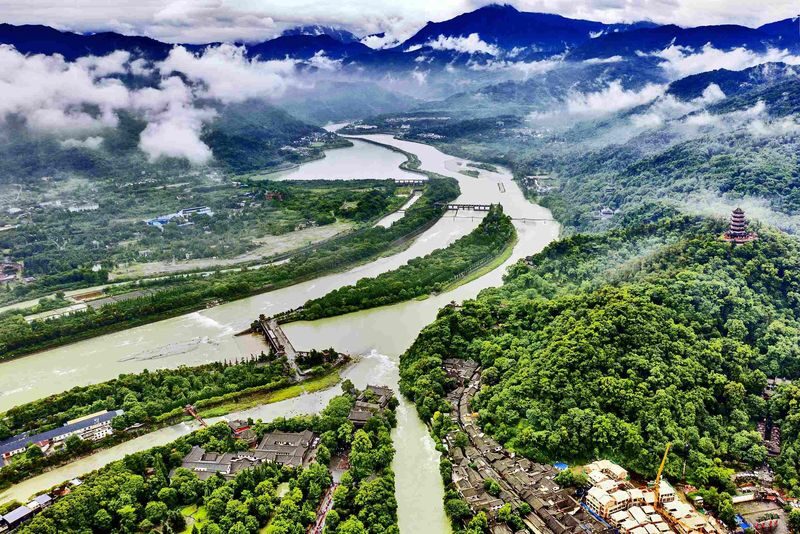
Dujiangyan shifts the focus from objects to a system still doing its job. Built about 2,000 years ago under Li Bing and his son, it directs river water without relying on a conventional dam. The Fish Mouth levee divides the flow, while other channels and structures help manage water and sediment. The result is not just a grand old construction site. It is an example of engineering that remains connected to daily life on the Chengdu Plain.
In a single day, you get archaeology, landscape-scale engineering, and a taste of Sichuan’s past. The drawback is that both places deserve more time than a day tour can give them. This works best as a broad introduction, not a slow visit to either site.

👉 See our pick of the 11 Best Shopping Tours In Chengdu
Sanxingdui: three hours with the bronze wonders
The museum visit is scheduled for about three hours, and you explore it on your own. The Bronze Sacred Tree, Golden Mask, and Bronze Giant Standing Figure are the central draws. Their size, unusual forms, and elaborate detail make the collection memorable even if you arrive with little background in Shu history.
The main planning point is that the tour guide stays outside the museum. Due to current site rules, the group guide cannot give explanations inside. You can pay 30 yuan for a smart audio guide or arrange a human interpreter for the same listed price, but the human guide must be booked online in advance. If understanding the objects matters as much as seeing them, settle this before departure rather than hoping to arrange it at the door.
A helpful way to manage the visit is to begin on the second floor, then work through the displays with the clock in mind. Guide Xu reportedly advised this route as a time-saver, a useful tip if the museum is busy or you want to make sure you reach the major pieces. Guides and tour arrangements can change, so consider it a sensible approach rather than a guaranteed instruction.
Sanxingdui tickets need to be reserved five days in advance, and they can be hard to secure during public holidays and school breaks. The operator says it will contact you if tickets cannot be obtained and assist with a refund. That possibility matters: if a Sanxingdui visit is the main reason you are booking, confirm that your ticket is secured before you travel.
You can also read our reviews of more tours and experiences in Chengdu


Lunch and the road to Dujiangyan
Lunch is allotted about 30 minutes and is not included. Treat this as a quick meal stop, not a leisurely Sichuan food break. Bring cash or a payment method you can use locally, and do not assume the tour price covers food.
The drive from Sanxingdui to Dujiangyan is listed at about 1 hour and 20 minutes. You travel by shared, air-conditioned tourist bus with a group of roughly 30 people. That is convenient and removes the need to coordinate separate transport, but it also means waiting for the group and sticking to the day’s schedule.
The order of visits can change with traffic, season, and other conditions. Some departures may visit Dujiangyan first and Sanxingdui later, so use the stated schedule as a guide rather than a promise about the exact sequence. Either way, the pace is brisk.
Dujiangyan: learn how the water moves
The guided portion at Dujiangyan is scheduled for about two and a half hours. This is where the tour’s live explanations can add real value. The site covers a large area, and without context, the levees, channels, and temples can look like separate sights rather than pieces of one working system.
At the Fish Mouth water-dividing levee, the guide can explain how the river is split, with roughly 40 percent directed toward one channel and 60 percent toward the other under the described arrangement. The system uses the shape and force of the river rather than a single barrier across it. The traditional approach of digging the channel deep and keeping the weir low helps manage water and sediment. Those details give meaning to what you see from the paths and bridges.
The Anlan Suspension Bridge offers a different view of the river and the project’s scale. Erwang Temple is another important stop, connected with the figures credited with building and maintaining the system. Guides Xu and Tian have been praised for clear explanations of Dujiangyan’s history and engineering, while Su has been commended for enthusiastic, detailed commentary. You cannot choose a particular guide in advance, but a good guide can make this part much more than a photo stop.
The scenic area also has optional internal transport and equipment. A sightseeing car costs 20 yuan per person, the Yulei Pavilion escalator costs 40 yuan, and a wireless headset costs 20 yuan. These are not included, and the tour information describes them as voluntary. The headset may be useful if you want to hear the guide clearly in a group, while the car or escalator may appeal if you want to limit walking or save time. Check the day’s plan before paying for anything extra.
Free time, Blue Tears, and the late finish
After the guided visit, the schedule allows about two hours of free time. Possible stops include Baopingkou, the Yuzui Diversion Port, Erwang Temple, Shayuan, Yulei Pavilion, Anlan Suspension Bridge, Qingxi Garden, and Tianfuyuan Blue Tears. This gives you room to revisit a favorite spot or take photos, but it can also feel like a long wait if you have already seen the main sights.
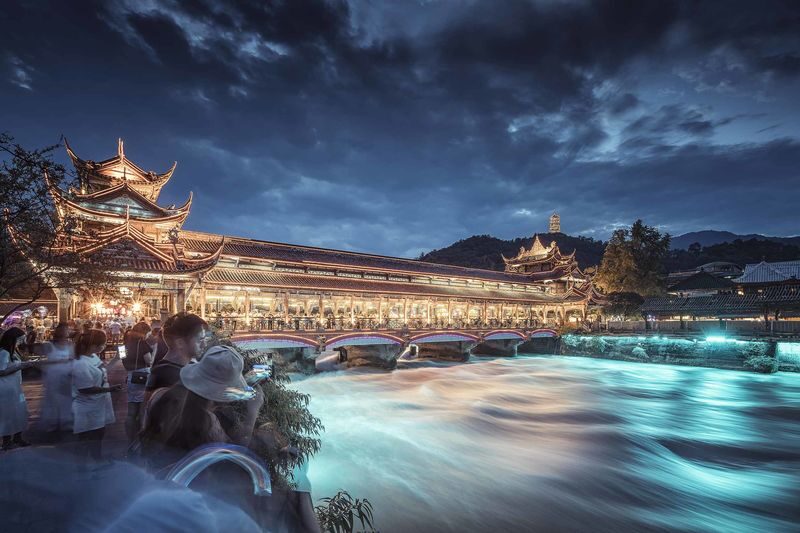
The Blue Tears display is a nighttime photo stop, not a core part of the irrigation project. Some people may find the blue-lit river attractive; others may prefer to spend the extra time on Dujiangyan itself. One practical consequence is the return time. The schedule gives a return journey around 19:30, with group dispersal around 21:00 at Qintai Road or Kuanzhai Alley. Actual departures have run later, including a reported Dujiangyan departure at about 20:40. If you have dinner plans, a train, or an early start the next morning, leave some slack.
What the price covers, and what it does not
The tour includes admission to Sanxingdui Museum and Dujiangyan Scenic Area, round-trip coach transport, pickup within the Third Ring Road, a Chinese-speaking tour guide, and travel accident insurance with stated coverage of RMB 100,000. That is useful value if you want both sites in one booking and do not want to plan the intercity transport yourself.
The advertised starting prices vary: the tour is shown from US$57.99, while the daytime package is also listed from US$50.45. Treat either figure as a starting price and confirm the total for your date and package before paying. The package price reflects group ticket calculations, and the rules for discounts and refunds can be specific. If you have a student, senior, military, or other eligible ID, ask how any ticket adjustment will be handled.
Budget separately for lunch and any museum explanation or Dujiangyan add-ons. The Sanxingdui human guide or audio guide costs 30 yuan per person. Dujiangyan’s sightseeing car, escalator, and wireless headset cost 20, 40, and 20 yuan respectively. These extras are not essential for everyone, but they can change the comfort and quality of the day.


Pickup, tickets, and who should take this trip
Pickup is offered within Chengdu’s Third Ring Road, with small cars collecting people in a loop. Pickup may fall around 6:30 to 7:00 a.m.; a central meeting option is listed at Crowne Plaza Chengdu City Center, near Chunxi Road and Taikoo Li, around 7:00 to 7:30 a.m. The exact time is confirmed the evening before, so keep your phone available and arrive a few minutes early. The return is planned for Qintai Road or Kuanzhai Alley.
Use the original ID document entered at booking, such as a passport, to access the scenic areas. Ticket entry can fail if the document details do not match, and any resulting costs are your responsibility. Children under 1.3 meters are charged for a seat and guide service, while other costs are extra; children 1.3 meters or taller pay the adult rate. Travelers under 18 need to be accompanied by family. The operator also requires travelers aged 70 or older to complete a health certificate and travel with a companion, and does not accept bookings for people aged 81 or older. It cannot accommodate pregnant people or those with certain serious illnesses or reduced mobility.
This is a good fit if you have limited time in Chengdu, want to see both a major archaeological collection and an ancient engineering site, and are comfortable with a full day on a group schedule. It is less suited to anyone who wants a quiet, unhurried museum visit, needs an English-language guide, or dislikes early starts and uncertain return times.
Should you book this Chengdu day tour?
Book it if the convenience of seeing Sanxingdui and Dujiangyan in one outing outweighs the rushed pace. The strongest value comes from combining transport, entry tickets, and a guided explanation at Dujiangyan, where the engineering is easier to appreciate with context.
Before you commit, make two checks: confirm that Sanxingdui tickets are secured for your date, and decide whether you want to arrange a museum guide or audio guide in advance. If both sites are priorities and you can keep your evening flexible, this is a practical way to cover a remarkable stretch of Sichuan history without arranging the logistics yourself.
Chengdu Dujiangyan Scenic Area & Sanxingdui 1-Day Tour
“Our guide, Mr. Xu, provided a wonderfully rich and engaging explanation, clearly outlining the history and cultural significance of the Dujiangyan…”
FAQ
What is included in the tour price?
The package includes admission to Sanxingdui Museum and Dujiangyan Scenic Area, round-trip air-conditioned tourist bus transport, pickup within Chengdu’s Third Ring Road, a Chinese-speaking tour guide, and travel accident insurance with coverage of RMB 100,000.
Can the tour guide explain Sanxingdui inside the museum?
No. Current rules prevent the group guide from entering the museum to explain the exhibits. You can arrange a human interpreter or smart audio guide for 30 yuan per person, with advance booking required for a human guide.
How long do the visits take?
The schedule allows about three hours at Sanxingdui, a 30-minute lunch break, and about two and a half hours for the guided Dujiangyan visit, followed by roughly two hours of free time. The actual schedule can change.
Is lunch included?
No. Lunch is at your own expense, and the scheduled meal stop is about 30 minutes.
How much do Dujiangyan’s optional services cost?
The sightseeing car costs 20 yuan per person, the Yulei Pavilion escalator costs 40 yuan, and the wireless headset costs 20 yuan. These are optional and paid separately.
Where does pickup take place?
Pickup is available within Chengdu’s Third Ring Road, with the exact time confirmed the evening before. A meeting point is also listed at Crowne Plaza Chengdu City Center, near Chunxi Road and Taikoo Li. Arrive five minutes before the confirmed departure time.
How far in advance do I need to reserve Sanxingdui tickets?
Tickets need to be reserved five days in advance. Demand is especially high during public holidays and school vacation periods. If the operator cannot obtain tickets, it says it will notify you five days in advance and assist with a full refund.
What is the return time?
The return journey is scheduled for around 19:30, with the group expected to disperse at Qintai Road or Kuanzhai Alley around 21:00. Traffic and the day’s arrangements can affect the actual finish time.