The Alcázar brings together fortress walls, towers, courtyards, and formal gardens in a compact visit. I like that the tour links its Moorish and Christian architecture to the monument’s changing role, and that it includes the fountain gardens, not just the fortress rooms.
The one-hour format suits a busy day in Córdoba, but it leaves little time to linger. I’d also take extra care over the meeting point: the directions can be confusing, and a missed start may mean losing the tour without a refund.
- Key points before you book
- What the one-hour Alcázar visit offers
- From fortress walls to Christian power
- The gardens: water, paths, and a change of pace
- How the itinerary works
- Guide, language, and group format
- Is the price fair for an hour?
- Who should choose this tour?
- FAQ
- How long does the tour last?
- What is included in the price?
- Where do I meet the guide?
- What languages are available?
- Is the tour wheelchair-accessible?
- Can children join the tour?
- The Best Of Cordoba!
- More Tours in Cordoba
- More Tour Reviews in Cordoba
- Not for you? Here's more nearby things to do in Cordoba we have reviewed
Key points before you book
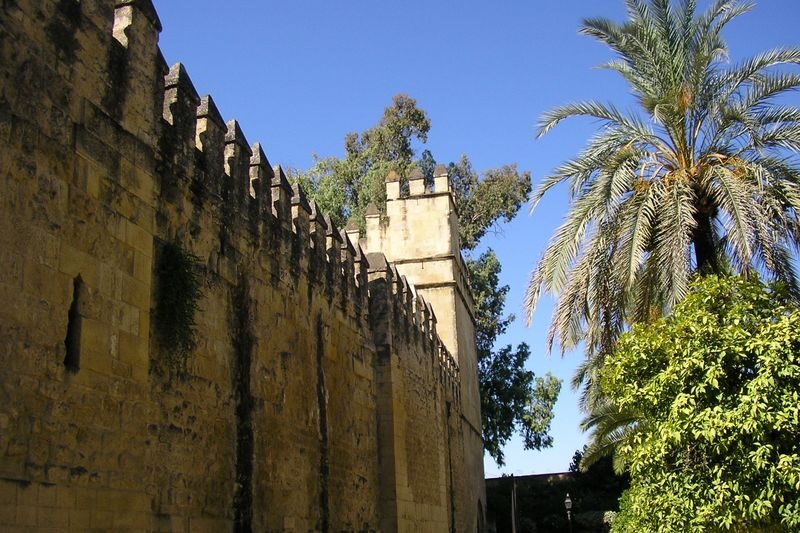
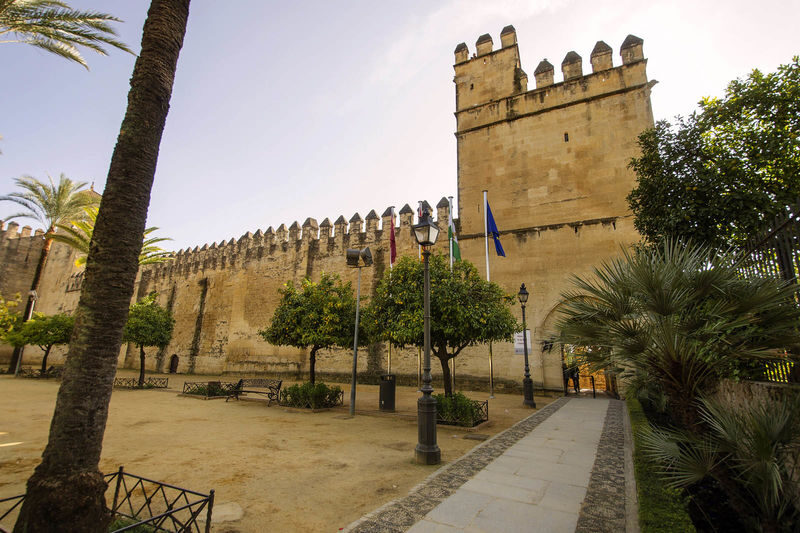
- A one-hour guided visit: Expect a brisk overview of the Alcázar’s architecture, art, and history rather than a long, unhurried exploration.
- Gardens are part of the appeal: Renaissance-style planting, pools, and fountains offer a different mood from the fortress walls and towers.
- A meeting tied to a landmark: Find the Sotos de la Albolafia sign in front of the Alcázar’s main entrance on Avenida del Alcázar, and confirm the exact spot before tour day.
- Three language options: Join-in tours are offered in English, Spanish, and French.
- Admission is included: The advertised starting prices vary by package, so check the total for your selected language and time.
- Not wheelchair-accessible: The activity is not suitable for wheelchair users.

👉 See our pick of the 2 Best Workshops And Classes In Cordoba
What the one-hour Alcázar visit offers
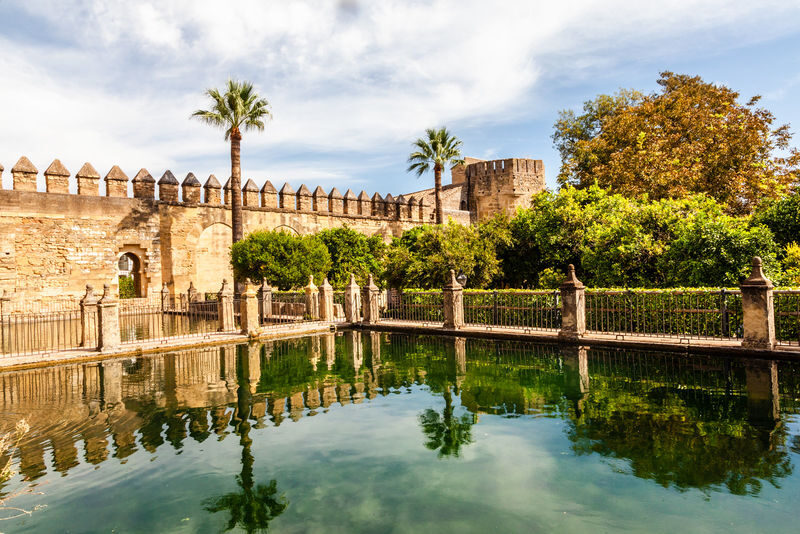
The Alcázar of the Christian Monarchs is more than a handsome backdrop for a garden stroll. This fortified compound carries the marks of Córdoba’s transition from Moorish rule to Christian power, and a guide can help you read that change in its architecture and explain how the site figured in the history of Spain.
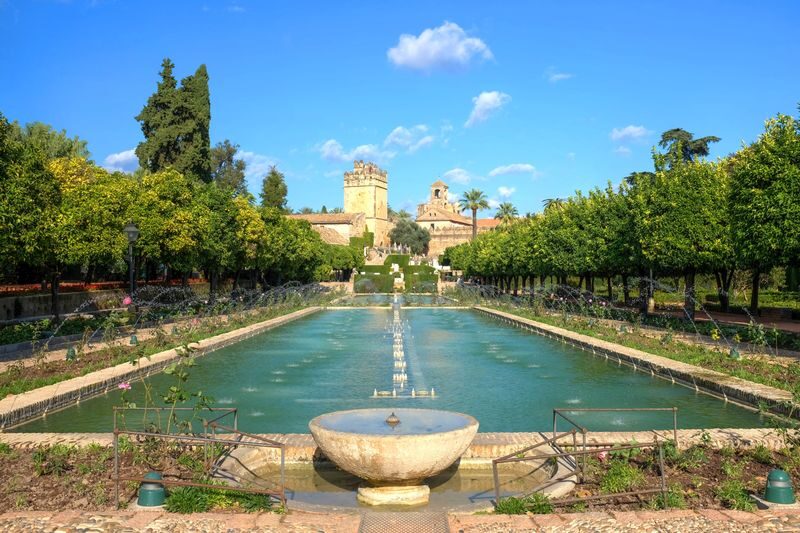
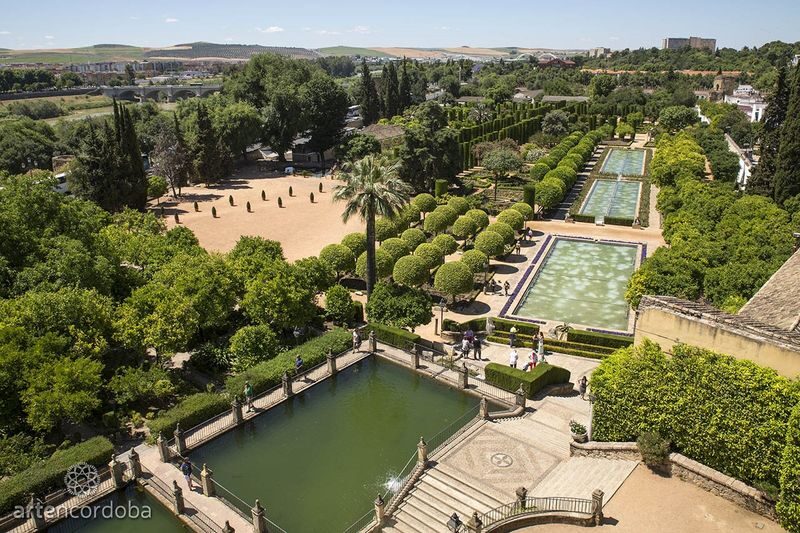
The tour’s strongest feature is its mix of settings. You get the firm, defensive character of towers and courtyards alongside the softer geometry of Renaissance-style gardens, with water, greenery, and fountains shaping the pace of the visit. That contrast is useful: it gives you more than one way to understand the place.
You can also expect discussion of the Alcázar’s cultural and political role, including the meeting of Ferdinand and Isabella with Christopher Columbus. The experience is designed as a broad introduction, with room for questions and interaction, rather than a detailed study of every corner.
A guide matters here because the architecture is not just decoration. The site’s combination of Moorish and Christian features reflects its change in use and meaning. With only an hour, a clear explanation can help you connect what you see to that larger story instead of simply moving from one attractive view to the next.
You can also read our reviews of more tours and experiences in Cordoba.


From fortress walls to Christian power
The Alcázar’s appeal begins with its transformation. It originated as a Moorish fortress and later became a symbol of Christian power. That change gives the visit a useful historical thread: you are looking at a structure shaped by more than one political and cultural period.
The tour highlights towers and courtyards as examples of the fortress’s varied structure. These are not interchangeable backdrops. Towers convey the defensive purpose of the compound, while courtyards open up the interior and offer a sense of how its spaces fit together. A guide’s explanations can make those features easier to interpret in a short visit.
The tour also points to artistic details, including murals, sculptures, and decorative elements. The supplied information does not identify particular works or promise access to specific rooms, so treat this as an overview rather than a close-up art tour. If a particular feature catches your eye, use the question time to ask about it.
One of the most compelling historical subjects is the meeting between Ferdinand, Isabella, and Christopher Columbus. The Alcázar’s role in that encounter connects the site to events beyond Córdoba. It is a memorable point in the tour, though the visit is still centered on the Alcázar itself, not on a broader tour of Spain’s exploration history.
The gardens: water, paths, and a change of pace
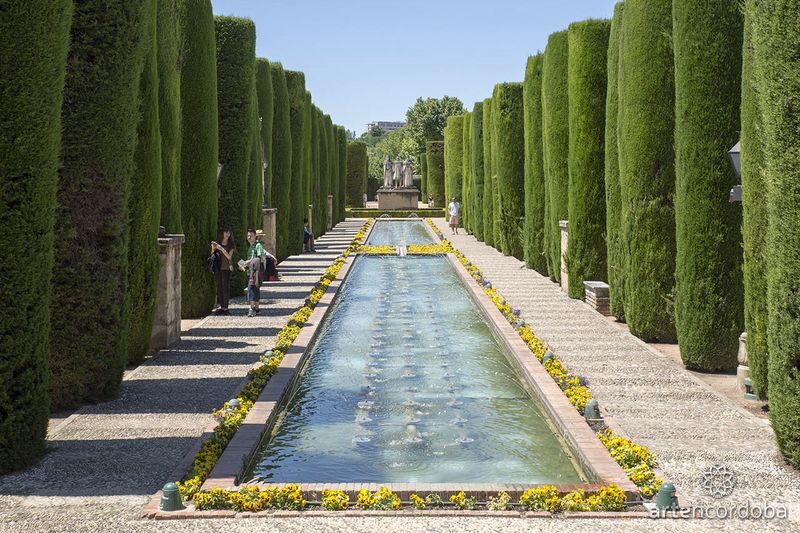
The gardens are a major reason this visit can feel more varied than a walk through a fortress alone. Their Renaissance style, fountains, pools, and greenery provide a visual counterpoint to the stone architecture. The water features also lend the grounds a calmer atmosphere.
I’d give the gardens proper attention rather than treating them as the short walk between historical stops. They are among the most appreciated parts of the experience, and the guide’s overview can help you see them as part of the Alcázar’s design, not an unrelated patch of green.
The catch is that access can depend on what is open on the day. There has been a report of a Sunday visit when only the outer gardens were available and the main scenic area was closed, alongside a complaint that no guided service took place. That does not establish a regular Sunday rule, but it is a practical reason to verify current access and tour operation before you book, especially if the gardens are your main reason for going.
If the full grounds are open, the contrast between pools, fountains, towers, and courtyards gives the hour a satisfying rhythm. If areas are closed, the experience may feel much thinner. Check the day’s conditions rather than assuming every part of the compound will be available.
How the itinerary works
The itinerary is simple: meet near the Alcázar, take a one-hour guided tour, then finish at the site. There is no transport component or meal included. The short format works well if you are fitting the Alcázar between other Córdoba sights, but it does mean the guide must keep a steady pace.
At the start, your main job is to find the group. The meeting information points to the Sotos de la Albolafia sign, in front of the Alcázar’s main entrance on Avenida del Alcázar. The address also appears as Av. Fray Albino, 1, which may not be the clearest way to locate the exact gathering spot.
There has been a report of conflicting directions from customer service and a guide waiting across from the Alcázar entrance. That kind of confusion is especially frustrating in an unfamiliar city. I’d check the precise location with the operator before the date, use the landmark description as well as the street address, and arrive 15 minutes early. The stated policy is that late arrivals and no-shows are not refundable.
Once underway, the guide covers the compound’s architecture, gardens, art, and historical role. The one-hour limit is a real constraint: you get a useful orientation, but not much time to explore at your own pace. If you want a slow visit, or hope to study individual artworks and garden details, plan for a separate visit if permitted by the site’s current access arrangements.
The tour ends at the Alcázar, with the return point listed as C. Caballerizas Reales, s/n. Departure options are 10:15 and 12:00, with corresponding return times listed as 11:15 and 13:00. The available pairing can vary according to the time you select, so make sure your booking confirmation matches the departure you intend to take.
Guide, language, and group format
This is a join-in guided tour, so you share the hour with other people rather than booking a private guide. English, Spanish, and French options are available. Choose the language in which you can comfortably follow historical explanation; the tour’s value depends heavily on understanding the guide, not simply seeing the gardens.
No guide name is provided in the tour details. One account of the experience specifically praised the guide and the gardens, which fits the tour’s strengths: a good explanation can make the Alcázar’s mix of styles and historical episodes much easier to follow. But a guide is not guaranteed by that praise, and a separate account described a tour where no guide service was provided. Confirm that the guided element is operating, particularly if you are booking around a holiday or a day when access may be limited.
The listing offers instant confirmation, generally within minutes. You receive a mobile voucher, valid only for the date and time booked. Keep it handy, and check that the language and time on it are correct.


Is the price fair for an hour?
Prices are shown from $25.75, while the language packages are also listed from US$22.39. The difference suggests the final amount can depend on the package or booking details, so check the price at checkout rather than assuming the lowest figure applies to every option.
For that cost, the key value is the combination of admission and a guide. If you want someone to explain the Alcázar’s architectural blend and its connection to Ferdinand, Isabella, and Columbus, a one-hour tour can be a practical way to get your bearings. It is less compelling if you mainly want to wander the gardens quietly or have already arranged entry and prefer to explore without a group.
Meals, drinks, personal expenses, and tips are not included. Children aged 0 to 7 can join free, while children aged 14 and older pay the adult rate. The information does not specify the price treatment for ages 8 to 13, so check that detail when booking for a family.
Cancellation is eligible for a full refund if made at least 24 hours before the activity date, using destination local time. After that window, the stated late-arrival and no-show rule matters: you should not count on a refund if you miss the departure.
Who should choose this tour?
This tour is a good fit if you have limited time in Córdoba and want a guided introduction to one of its most important historic sites. It also suits you if architectural contrasts interest you and you want the guide to connect the Moorish fortress, Christian rule, and garden design in one compact visit.
It is less suitable if you use a wheelchair, need a slow pace, or want a long, independent garden visit. The tour is explicitly not wheelchair-accessible, and one hour does not leave much time to pause at every feature. If the gardens are your priority, check that the areas you want to see are open on your chosen date.
I’d book it for the historical context and the chance to see both fortress spaces and gardens in a single visit, provided the guided service and access are confirmed. Treat the meeting point as something to verify, not a detail to leave until the last minute.
Alcazar of the Christian Monarchs Tour
“the guide was great. the gardens were great. recommend highly.”
FAQ
How long does the tour last?
The guided tour lasts approximately one hour.
What is included in the price?
Admission to the Alcázar of the Christian Monarchs and an English-speaking guide are included in the English-language package. Other listed language options are Spanish and French.
Where do I meet the guide?
The meeting point is described as the Sotos de la Albolafia sign in front of the Alcázar’s main entrance on Avenida del Alcázar. Arrive 15 minutes early and confirm the precise spot, since directions can be confusing.
What languages are available?
Join-in tours are offered in English, Spanish, and French.
Is the tour wheelchair-accessible?
No. The activity is not wheelchair-accessible.
Can children join the tour?
Children aged 0 to 7 can join free. Children aged 14 and older are charged the adult rate. The price information does not specify the rate for children aged 8 to 13.


