Sichuan cuisine is more than a hot-pot broth or a generous spoonful of chili oil. At this museum, you can see how ingredients ferment, handle traditional kitchen tools, and taste the results. The food itself is part of the exhibit, which makes this a lively change from a glass-case museum.
I like two things especially: the chance to connect cooking techniques with the region’s food culture, and the unlimited supply of more than 20 classic snacks included with the basic ticket. If you want to do more than watch, the separate cooking class gives you time with a chef and ends with a meal of the dishes you prepare.
The main drawback is the location. The museum is in Pidu District, well outside central Chengdu, so the trip can take around 40 minutes by car or closer to an hour from Chunxi Road, depending on your starting point and traffic. Language can also shape how much you get from the exhibits, so ask about tour language before you go.
- What makes this experience different
- A museum you can taste
- Start with Sichuan’s food story
- Follow the aroma to the fermentation displays
- Pause at the Kitchen God’s temple
- Walk the old restaurant street
- Try the tools, then settle in for tea
- Make room for the snacks
- Decide if the cooking class is worth the extra time
- Is the ticket good value?
- Should you book it?
- FAQ
- How long does the museum visit take?
- Where is the Sichuan Cuisine Museum?
- What are the museum’s opening hours?
- How do I get there by metro?
- Are snacks included with the standard ticket?
- Is the cooking class included with the museum ticket?
- Do I need to reserve a cooking-class time?
- Can children visit the museum?
- What is the cancellation policy?
- The Best Of Chengdu!
- More Museum Experiences in Chengdu
- More Tours in Chengdu
- More Tour Reviews in Chengdu
- Not for you? Here's more nearby things to do in Chengdu we have reviewed
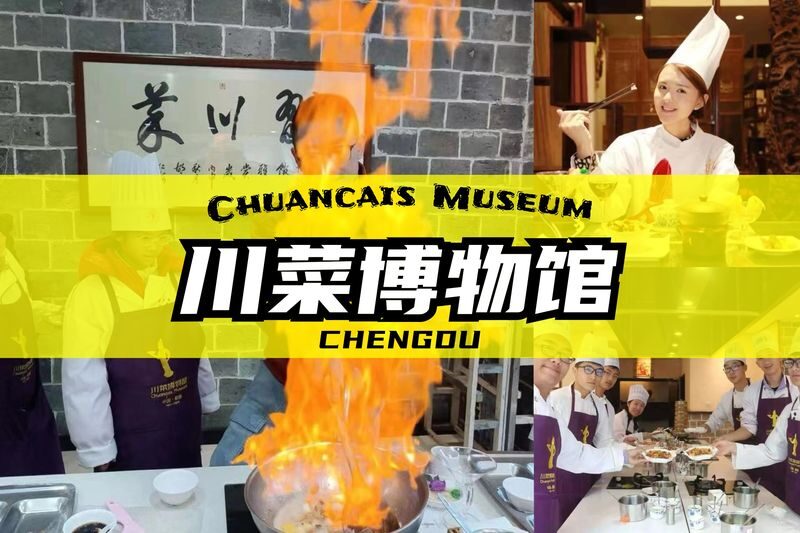
What makes this experience different
 1 / 9
 2 / 9
 3 / 9
 4 / 9
 5 / 9
 6 / 9
 7 / 9
 8 / 9
 9 / 9
- Food is part of the museum visit: Taste classic Sichuan snacks as you learn about the cuisine.
- See fermentation up close: The raw-material displays focus on traditional Zhongba soy sauce and Sichuan chili bean paste.
- Try old kitchen techniques: Use Qing Dynasty stone mortars to pound chili powder and try making stone-ground tofu pudding.
- Visit the Kitchen God’s temple: The museum presents Zao Wang as a figure tied to cooks, food, and traditional folk practice.
- Choose how hands-on to get: The basic admission includes the museum and snacks; the separate class adds guided cooking, a meal, and a certificate.

👉 See our pick of the 11 Best Shopping Tours In Chengdu
A museum you can taste
The Chengdu Sichuan Cuisine Museum is in Gucheng Town, within Pidu District, about 40 minutes by car from central Chengdu in some estimates. That distance is worth factoring in: this is not a quick stop between downtown sights. Plan it as a half-day outing, especially if you want to try the activities rather than hurry through the displays.
The museum’s central idea is simple and appealing: food culture is best understood with more than your eyes. Sichuan cooking depends on the aroma and age of ingredients, the control of heat, knife work, and the balance of flavors. Displays can explain these ideas, but tasting and handling ingredients make them easier to grasp.
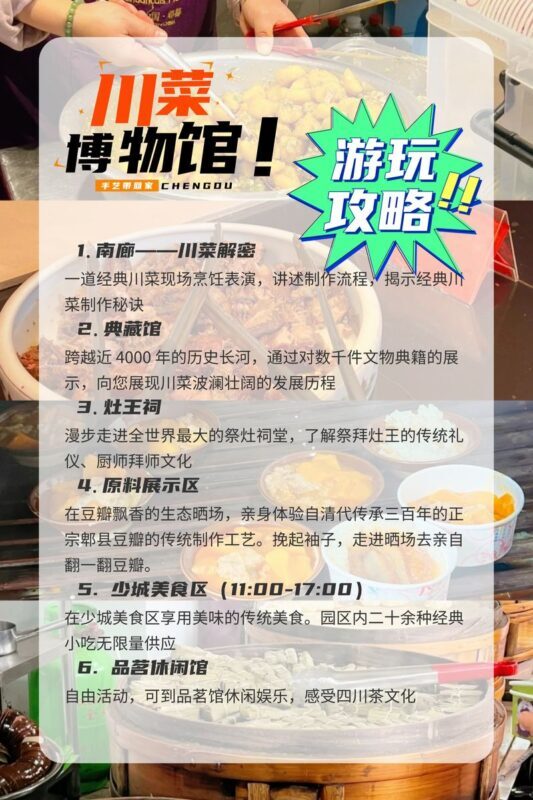
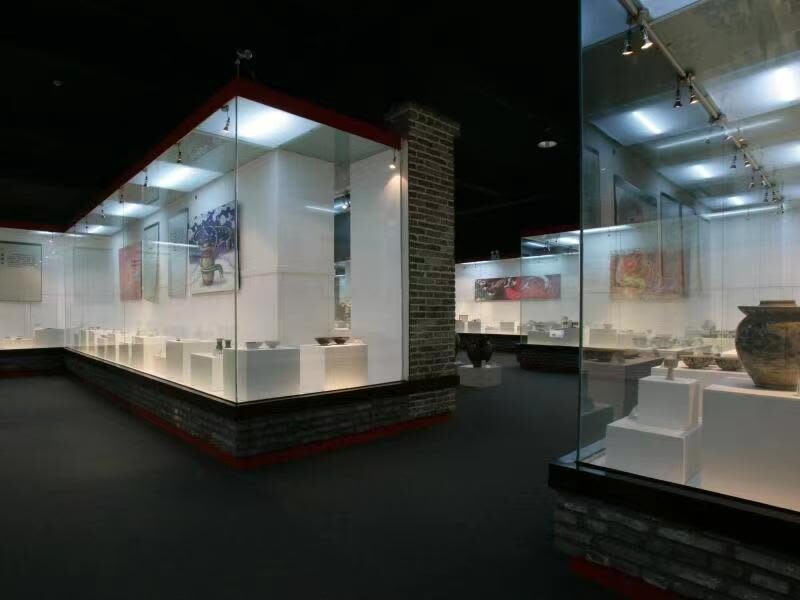
The grounds include several areas, among them a collection hall, a raw-material exhibition, a Kitchen God temple, an old restaurant street, a traditional-tool display, an interactive demonstration hall, and a tea area. The visit can feel less like a conventional museum circuit and more like a series of stops linking food, craft, and daily life.
You can also read our reviews of more museum experiences in Chengdu


Start with Sichuan’s food story
The collection hall sets out the development of Sichuan cuisine through cultural objects and written material. The museum describes thousands of artifacts and classics, and the displays aim to show how the cuisine changed over time. For a visitor who knows Sichuan food mainly through spicy dishes, this context can broaden the picture.
One useful idea is that Sichuan cooking is not simply a matter of adding chili. The exhibits introduce flavor combinations and the ways ingredients, preparation, and heat work together. A visitor has described learning about the cuisine’s 24 flavor profiles, a helpful reminder that Sichuan food includes far more than one level of spice.
The value of this section depends partly on language. Some international visitors have found a guide helpful, while others have found it difficult to get a full explanation without Chinese or English support. The cooking-class package specifies bilingual experience teachers; the standard ticket does not promise a particular language service. If detailed interpretation matters to you, check what is available before booking.
Follow the aroma to the fermentation displays
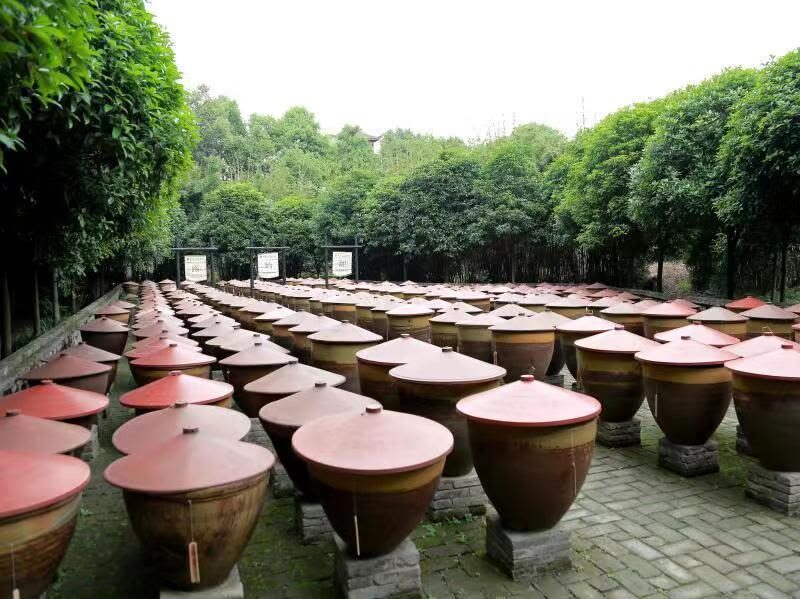
The raw-material exhibition is one of the most distinctive stops. It introduces the traditional production of Zhongba handmade soy sauce and the role of fermented ingredients in Sichuan cooking. Large pottery jars, fermentation methods, and the aromas of soy sauce and chili bean paste help connect the finished dishes to the slow work behind them.
Pixian doubanjiang, or chili bean paste, is a particularly important ingredient in the region’s cooking. Seeing how it is fermented gives you a clearer sense of why cooks treat it as a foundation rather than a casual seasoning. If you enjoy food shopping, you may also want to look for the museum’s soy sauce and doubanjiang products; visitors have bought them after tasting the more artisanal flavor.
There may be a chance to take part in a soy-sauce-making activity, but the exact activities can depend on what is operating that day. The broader appeal is the shift from eating a finished dish to considering the time, ingredients, and technique that produced it. That is the museum’s strongest lesson for curious cooks.
Pause at the Kitchen God’s temple
Zao Wang, the Kitchen God, is presented as a patron of chefs and an important figure in Sichuan folk culture. The museum says its temple is the world’s largest dedicated to Zao Wang. You can learn about the custom of honoring the deity and its link to respect for food and the work behind each meal.
This stop gives the visit a cultural layer beyond recipes and tools. The idea of treating food as something earned, rather than automatic, connects the kitchen to household ritual and community values. The temple may be a brief visit, but it offers a change of pace from the displays and demonstrations.
Walk the old restaurant street
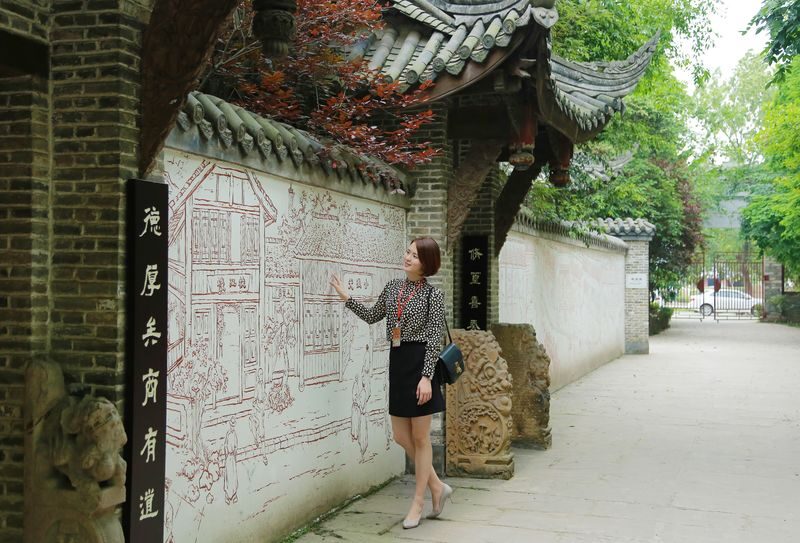
The old Sichuan restaurant street recreates the look of traditional western Sichuan architecture and dining spaces. It is a chance to see the setting in which local food culture developed, rather than encountering dishes only on a menu. The street also offers a natural pause between the exhibition areas and the hands-on parts of the visit.
The museum grounds include spaces intended for leisure as well as learning. You may find the old street more evocative than a detailed exhibit if you enjoy architecture and atmosphere; visitors focused mainly on cooking techniques may prefer to spend their time at the fermentation displays or interactive areas. The overall experience works best when you allow time for both.


Try the tools, then settle in for tea
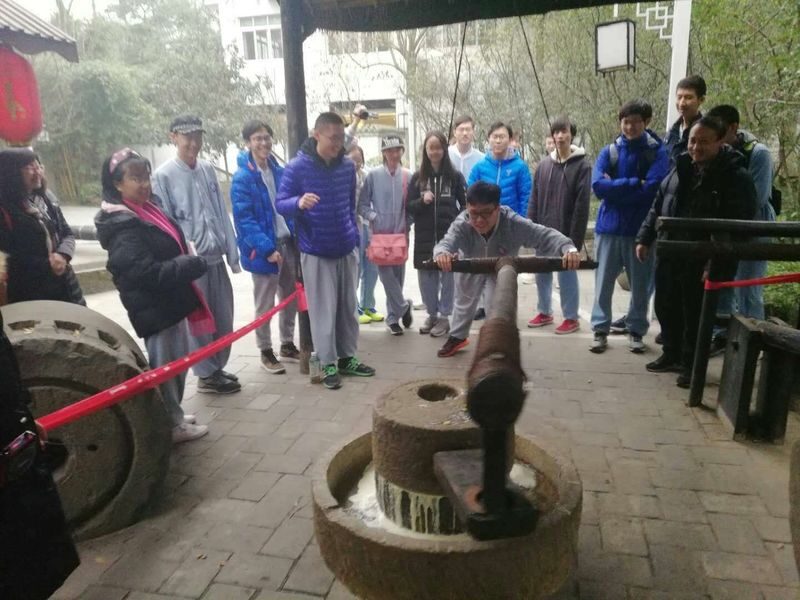
At the traditional-tool area, you can use Qing Dynasty stone mortars to pound chili powder and try making stone-ground tofu pudding. The point is not just the novelty of handling old equipment. These activities show how a basic ingredient changes through labor and technique, and they give you a small taste of the work that underpins Sichuan cooking.
Some hands-on demonstrations may vary by day, so do not assume every listed activity will be available at every visit. The museum also describes live demonstrations and interactive activities, but the exact mix can depend on the schedule. Ask staff what is running when you arrive.
The tea area offers a different kind of participation. Bamboo chairs, low tables, gaiwan tea, peanuts, melon seeds, and mahjong are presented as part of the local baba tea tradition. It is a good place to slow down rather than treating the visit as a checklist. Mahjong and other chess or card use are included at no extra charge.
Make room for the snacks
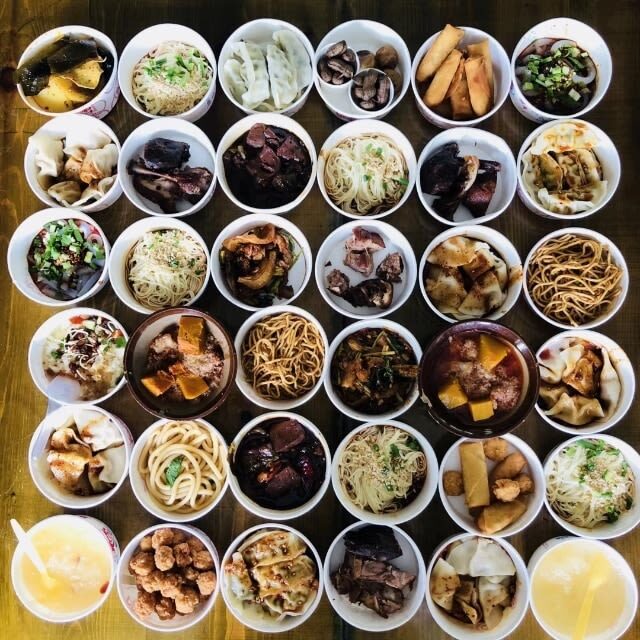
The basic ticket includes an unlimited supply of special Sichuan snacks from 11:00 to 17:00, with the exact selection subject to availability on the day. The museum describes more than 20 classic snacks, and the range is one of the clearest reasons the ticket can offer good value. Instead of paying separately to sample several dishes around town, you can taste a variety as part of the visit.
This is not the same as a guaranteed full meal at a set hour. The food is supplied as snacks, and the day’s selection can change. Arriving during the stated service window gives you the best chance to enjoy what is being offered, but it is sensible not to plan the museum as your only meal of the day.
The snacks also help make the exhibits memorable. A flavor you have just tasted can bring the earlier discussion of fermentation or seasoning back to mind. For families, this mix of learning and eating may hold attention better than a long stretch of text panels.
Decide if the cooking class is worth the extra time
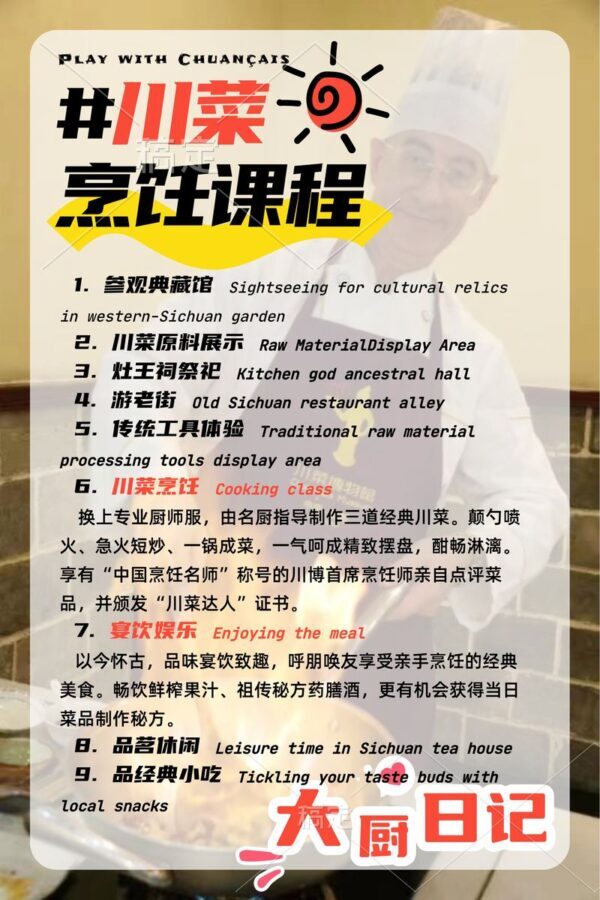
The cooking class is a separate package from the museum ticket. It is the better choice if you want to learn by doing, rather than simply watching demonstrations and sampling snacks. The class lasts about 3.5 hours and must be reserved for either the 9:00 morning session or the 14:00 afternoon session.
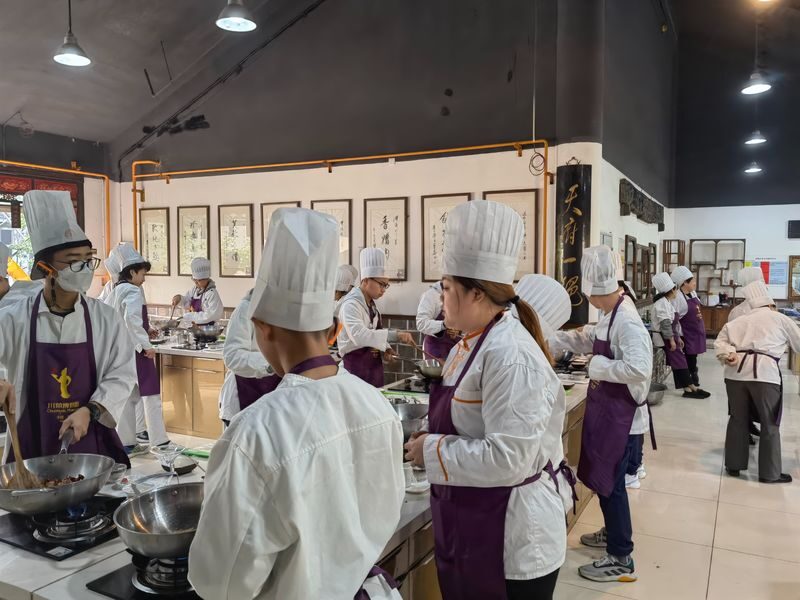
A bilingual experience teacher accompanies participants, and a chef guides the cooking. You put on a professional chef’s uniform and prepare Sichuan dishes by hand. Accounts of the class describe making three dishes, then sitting down to eat those dishes alongside additional food prepared by the staff. The class ends with a certificate from the school’s head chef.
The cooking space is set up for practical work, with ingredients and equipment prepared in advance. That makes the class more suitable for beginners than a free-form lesson where you must arrive with cooking experience. Children can take part, too, but anyone under 18 must be accompanied by a paying adult.
The class also includes a private dining room, unlimited refills of fresh-squeezed juice and several alcoholic drinks, and the possibility of receiving the recipe for the dishes prepared that day. The exact menu and recipe access are not specified in advance, so treat them as part of the experience rather than a guaranteed takeaway.
A few named guides have helped visitors through the museum and class, including Lucy and Ms. Yang. These names are useful reference points, not a promise that either person will lead your session. The class is priced separately from the basic ticket, and no class price is provided here, so compare the current package cost with your interest in cooking and the extra time involved.
Is the ticket good value?
The basic ticket starts at $9.09 and includes admission, the museum experience, and unlimited special snacks during the 11:00 to 17:00 service window. If you plan to taste several items and spend time with the displays, the price can represent good value. It is less compelling if you expect a formal, English-language guided tour to be included automatically or if you have little interest in food culture.
The cooking class is a different proposition: more time, more instruction, and a substantial meal, but also a separate package and advance reservation. If you are a keen home cook, enjoy food history, or want a hands-on activity for a family outing, the added time is likely to make sense. If you simply want to sample Sichuan snacks, the basic ticket may be enough.
The location is the practical cost beyond the ticket. A visitor’s journey from Chunxi Road has been estimated at about an hour, while other estimates put the drive from the city center near 40 to 45 minutes. The museum is at No. 8, Ronghua North Lane, Pidu District. By metro, take Line 2 to Xipu, then bus P22 to the museum; check the route on the day you travel.
Should you book it?
Book the basic ticket if you enjoy food, want a change from Chengdu’s central sights, and are happy to explore exhibits at a relaxed pace. The mix of fermentation, traditional tools, Kitchen God culture, old restaurant architecture, tea, and unlimited snacks makes it more than a snack stop.
Choose the cooking class if you want a structured lesson and a meal built around dishes you prepare yourself. Before booking, confirm the language arrangement, session time, and current package details. If your schedule is tight, you dislike traveling outside the center, or you want a guaranteed guided tour in a specific language, weigh those limits carefully.
Chengdu Sichuan Cuisine Museum Experience
“very nice, totally worth the price paid since food is unlimited and very good. it's also nice to have an intro into the museum, but beware that you…”
FAQ
How long does the museum visit take?
The standard experience is listed as 2 to 3 hours. The cooking class takes about 3.5 hours.
Where is the Sichuan Cuisine Museum?
It is at No. 8, Ronghua North Lane, Pidu District, Chengdu, Sichuan, China.
What are the museum’s opening hours?
The museum is open daily from 9:00 to 18:00.
How do I get there by metro?
Take Chengdu Metro Line 2 to Xipu, then bus P22 to the Sichuan Cuisine Museum.
Are snacks included with the standard ticket?
Yes. The ticket includes an unlimited supply of special Sichuan snacks from 11:00 to 17:00. The exact selection depends on what is available that day.
Is the cooking class included with the museum ticket?
No. The cooking class is a separate package. The cooking-class option includes a museum ticket.
Do I need to reserve a cooking-class time?
Yes. The class requires advance reservation for either the 9:00 morning session or the 14:00 afternoon session.
Can children visit the museum?
Children 100 cm tall or below enter free. Anyone under 18 must be accompanied by a paying adult.
What is the cancellation policy?
Cancellations made at least one day before the selected activity date receive a full refund. Cancellations made within one day of the activity are non-refundable. Changes made at least one day ahead are free.


