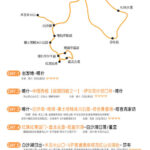
The striking shift on this six-day trip is from Kashgar’s mud-brick lanes to the high Pamir Plateau, where Baisha Lake, Karakul Lake and Muztagh Ata fill the view. You get a private car and a driver who also serves as your guide, so the long distances are part of a planned route rather than a string of transport problems to solve yourself.
I like two things especially: the chance to make pottery with an artisan in Kashgar Old City, and the overnight stay near Baisha Lake, which puts you close to the scenery instead of making every day a return drive from Kashgar. I also like that the route includes lesser-visited stops such as Muji Volcano and Bandir Blue Lake, not just the best-known lakes.
The trade-off is substantial time in the car, including a day listed at about 450 kilometres and six and a half hours. High altitude, sharp temperature changes and basic room categories also call for a little planning, and lunch and dinner are not included.
Key points
- Pottery in Kashgar Old City: Follow a local artisan and try a hands-on craft activity among the old city lanes.
- A night beside Baisha Lake: Stay at Aipa Homestay near the lake, rather than making the long return to Kashgar the same day.
- Big Pamir scenery: See Muji Volcano, Muztagh Ata, wetlands, grassland and several striking lakes on a single route.
- Private transport: The driver-guide and private car make a demanding itinerary more manageable, especially across the long distances.
- Five nights, breakfast included: Accommodation is arranged, but lunches and dinners are your responsibility.
- Practical caveat: English-speaking guide service costs extra, and weather or road conditions can change the schedule.
- Kashgar’s Old City Makes a Strong Start
- The Bazaar, Muji Volcano and Baisha Lake
- Muztagh Ata and the Grasslands Near Taxkorgan
- Panlong Ancient Road, Bandir Blue Lake and Karakul Lake
- The Long Drive to China’s Westernmost Point
- Airport Transfer and the Right Pace for Six Days
- What the Price Covers, and What It Doesn’t
- Weather, Documents and Other Useful Preparations
- Should You Book This Kashgar Tour?
- FAQ
- How long is the tour?
- Where does the tour begin and end?
- Is the tour private?
- Is an English-speaking guide included?
- Are meals included?
- What type of vehicle is used?
- Which accommodation is included?
- Do I need to bring identification?
- Are children allowed on the tour?
- What should I pack?
- The Best Of Kashgar!
- More Private Tours in Kashgar
- More Tours in Kashgar
- More Tour Reviews in Kashgar
- Not for you? Here's more nearby things to do in Kashgar we have reviewed
Kashgar’s Old City Makes a Strong Start
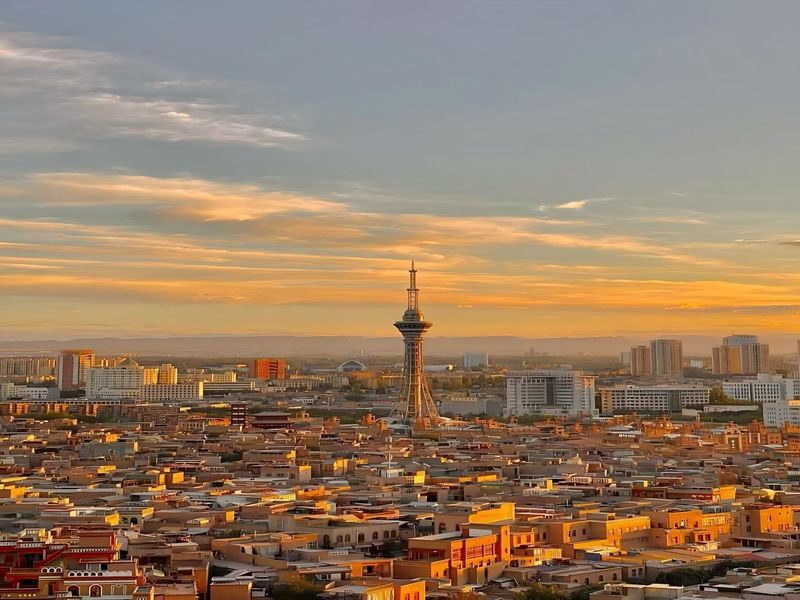
Day one begins with an airport pickup and a short drive of about 10 kilometres, usually around 30 minutes. The relaxed first day is useful after a flight: instead of setting off on a long road journey, you have time to settle in and walk through Kashgar Old City.
The old lanes are a major reason to start here. The tour describes the district as a filming location for The Kite Runner, but the more useful draw is its everyday craft life. You’ll have a chance to follow a local artisan and try pottery making, a welcome change from viewing one attraction after another from the car window.
Your first-night accommodation may be Yijing Qianxun Homestay, Wulanduo Homestay or Hampton by Hilton Kashgar. The homestays are presented as having local character and distinctive design, while the hotel option gives you a familiar international-style stay. The exact hotel depends on the arrangement confirmed for your departure.
I’d treat this day as an introduction, not a full exploration of every corner of Kashgar. The schedule leaves space for a leisurely stroll, but the tour moves on early the next morning.

👉 See our pick of the 5 Best Tours In Kashgar
The Bazaar, Muji Volcano and Baisha Lake
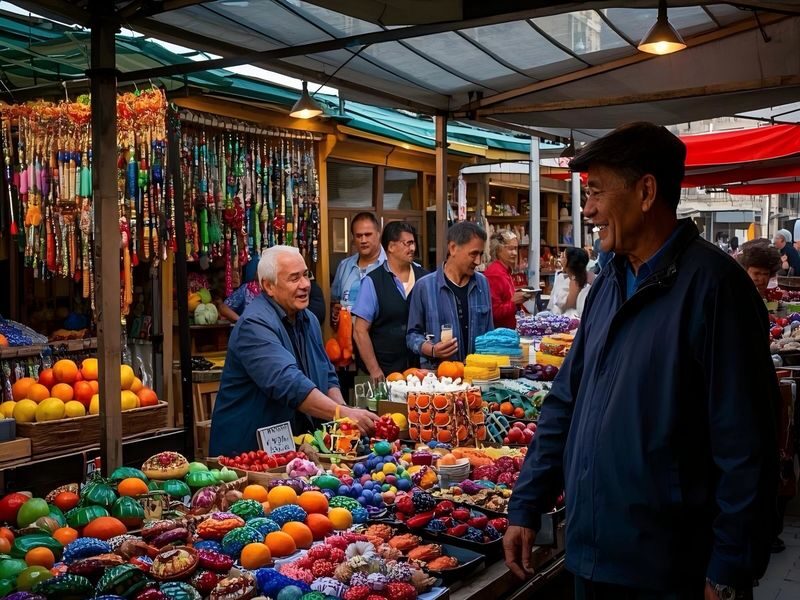
Day two takes you from Kashgar toward Baisha Lake, with about 200 kilometres of driving and roughly four hours on the road. A stop at Kashgar’s Grand Bazaar adds a human-scale pause before the scenery opens up. It’s a chance to see a local market rather than spend the whole day chasing views.
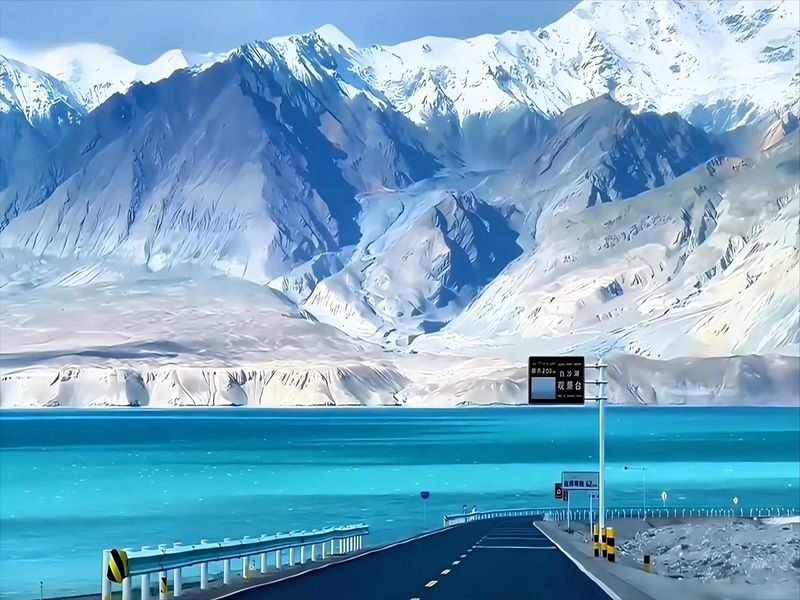
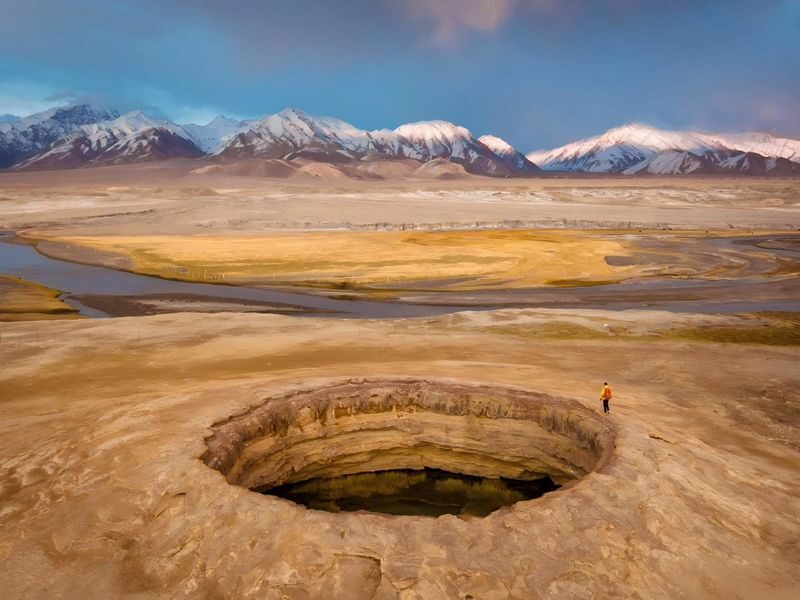
Muji Volcano, also called Muji Crater in the tour description, is another stop on the way. It gives the day a stark, geological contrast with the pale waters and sand at Baisha Lake. The route then reaches Baisha Lake, often described as one of the Pamir Plateau’s most memorable sights. The stay at Aipa Homestay’s Baisha Lake branch puts you near the scenic area, an advantage when the drive has already taken much of the day.
The location matters. Baisha Lake is not simply another photo stop on a long out-and-back excursion from Kashgar. You spend the night in the area, leaving more room to appreciate the setting at a slower pace. The tour compares the lake to the Liusha River from Journey to the West, a literary association rather than a promise that the place will look a certain way in every season or weather.
Admission charges are listed for Baisha Lake and Muji Volcano, at 40 and 50 respectively. The provided information does not state the currency, so confirm the payment details before departure. The tour’s included-cost section lists these attraction fees, but it is wise to check the final contract for exactly what your package covers.
You can also read our reviews of more private tours in Kashgar


Muztagh Ata and the Grasslands Near Taxkorgan
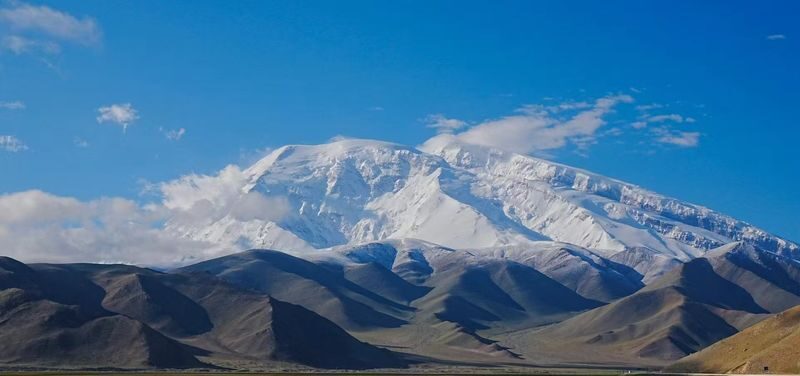
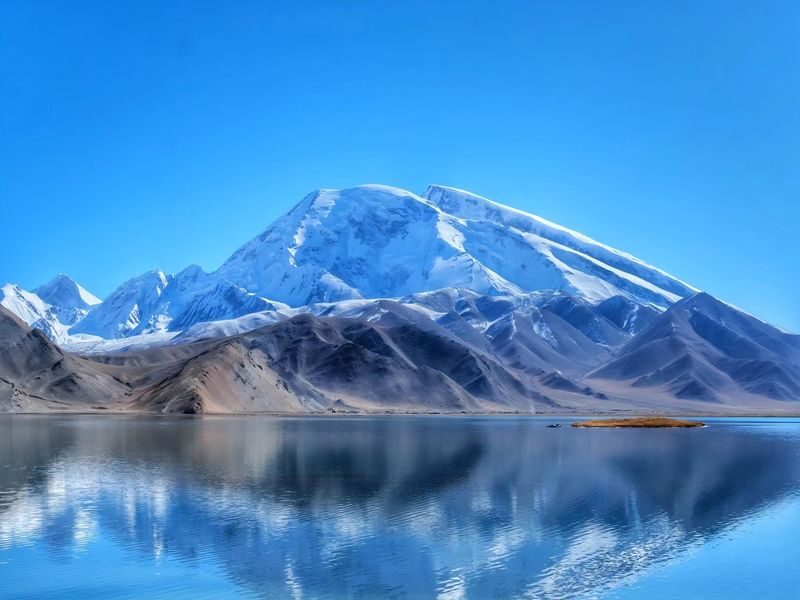
Day three brings a shorter stated drive, about 140 kilometres and two hours, though stops and road conditions affect the real pace. The main draw is Muztagh Ata, known in the tour materials as the Father of Glaciers. You’ll see the glacier area up close at Muztagh Ata Ice Park, a very different scene from the lakes and volcanic terrain of the previous day.
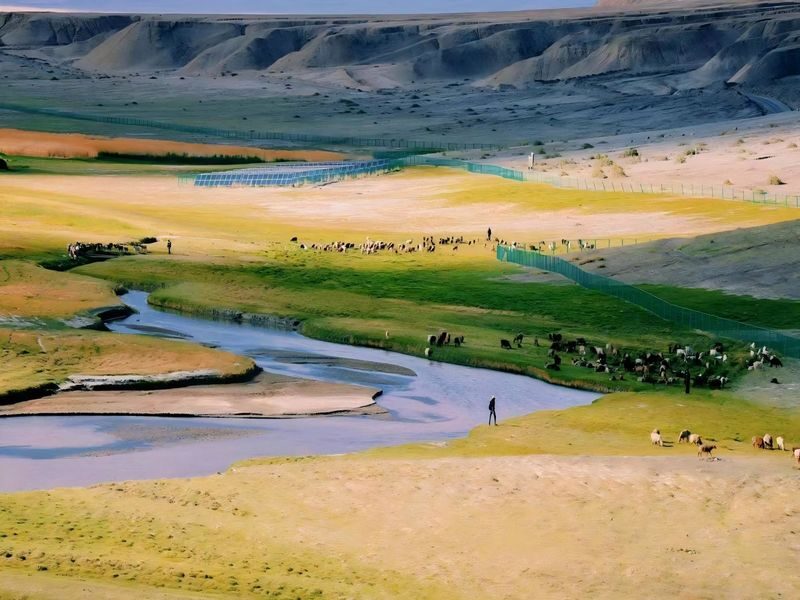
The route also includes Taheman Wetland and Jin Cao Tan, or Golden Grassland, near Taxkorgan. These stops soften the day’s visual rhythm: instead of bare mountain and water, you get wetland and open grassland. The tour describes flowers at Taheman, but conditions can vary with season and weather, so don’t treat any particular bloom as guaranteed.
You spend the night in Taxkorgan, with Wanda Meihua Hotel or Gemi Hotel among the reference options. An overnight stop here breaks up the driving and places you nearer to the next day’s Pamir Plateau route. The accommodation is arranged in a basic room category, and upgrades may be available for an additional charge.
Muztagh Ata Ice Park has a listed admission charge of 93, while Jin Cao Tan’s Stone City area is listed at 51. Again, confirm the currency and inclusion of fees in your final booking documents.
Panlong Ancient Road, Bandir Blue Lake and Karakul Lake
Day four has the most varied set of named stops. From Taxkorgan, the route follows Panlong Ancient Road, then visits Bandir Blue Lake and Karakul Lake before returning to Kashgar. The stated drive is around 300 kilometres and five hours, which makes this a full day even before allowing for time outside the car.
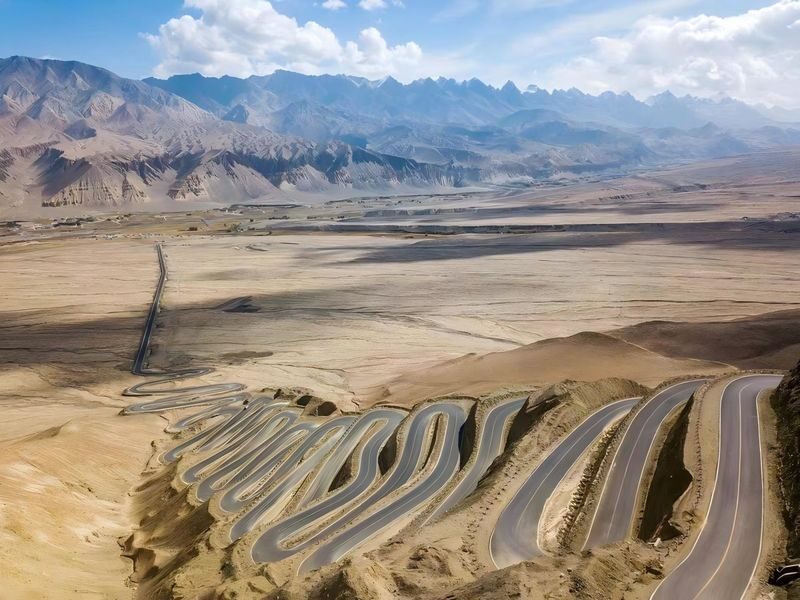
Panlong Ancient Road is a mountain route associated with the idea of a smooth life. Its winding shape is part of the appeal, but the practical point is simple: this is a road day, and you’ll spend time moving between viewpoints rather than settling into one place for hours. If you’re prone to motion sickness, bring your usual medication. Personal medicines are specifically recommended for the trip.
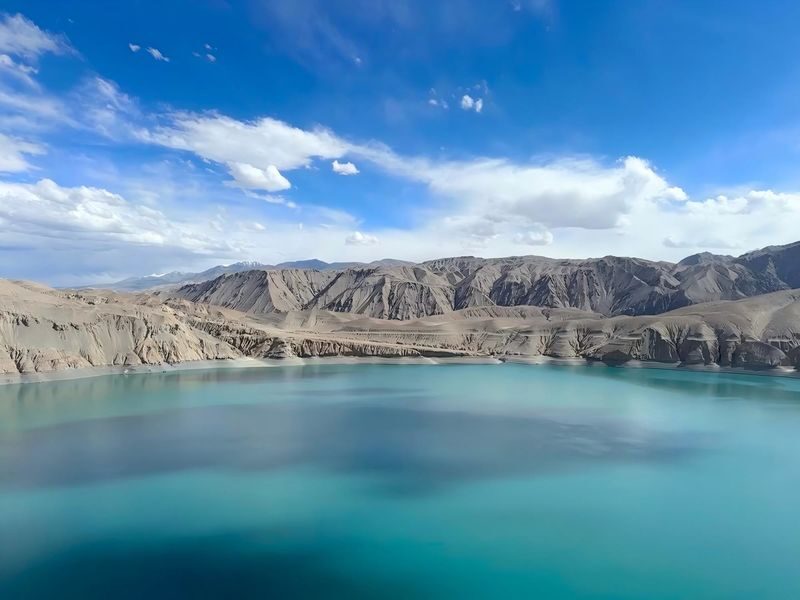
Bandir Blue Lake is described as a sapphire of the Pamir Plateau. The name signals the kind of vivid water-and-mountain view the route is designed around, though light and weather influence the color. Karakul Lake adds another high-altitude lake to the day, set against the mountain scenery around it.
After these stops, the drive returns to Kashgar for the night. That return means you’ll cover considerable ground, but it also avoids moving hotels yet again. Your Kashgar accommodation may be Yijing Qianxun Homestay, Wulanduo Homestay or a listed hotel such as Hampton by Hilton, Shenzhen Grand Mercure or Tianyuan International.
The Long Drive to China’s Westernmost Point
Day five is dedicated to the westernmost point of China, with a stated round trip of about 450 kilometres and six and a half hours of driving. That is a lot of road for a single day, so go in knowing the destination comes with a substantial transport commitment.
The point of the outing is its remote border setting and the chance to stand at the far western edge of the country. The tour describes it as a place to see the last sunlight fall on the land. Treat that as a scenic aim, not a guaranteed sunset: the schedule may shift with traffic and weather, and the day’s timing depends on conditions.
A private vehicle is especially valuable here. For two or four people, the stated vehicle class is a Sino-foreign joint-venture SUV, such as a Toyota RAV4, Honda CR-V, Toyota Frontlander or Nissan X-Trail, or a similar model. For six people, the listed vehicle is a Buick GL8 business van. A seven-seat luxury car has also been arranged for a group, but that should not be taken as the standard vehicle for every booking. Ask which car is planned for your party size.
The longest drives are where a dependable driver can make a real difference. The service includes a driver-guide and online butler support, and the strongest practical feedback about the trip concerns the car being in good condition, the driver arriving early and responding to requests. Those are small details, but on a six-day road trip they matter more than polished marketing language.
Airport Transfer and the Right Pace for Six Days
Day six is mostly free time, followed by an airport transfer based on your flight schedule. The stated return transfer window is 08:00 to 22:00, with the car planned to leave two to three hours before the flight. The final drive is about 20 kilometres and 30 minutes, though you should allow the time recommended by the operator rather than plan a last-minute dash.
The overall pace is ambitious but logical: one night in the Baisha Lake area, one night in Taxkorgan, then a return to Kashgar for the final stretch. You cover multiple regions without having to arrange a new driver or accommodation yourself each evening. The cost of that convenience is limited free time and several long road days.
This trip suits you if you want to see the Pamir Plateau’s major lakes and mountain scenery without renting a car or building the route from scratch. It is less suitable if you want slow mornings, extended hikes or a city-focused holiday. No hiking program is specified, and the itinerary’s emphasis is on scenic stops reached by private vehicle.


What the Price Covers, and What It Doesn’t
The tour is advertised from $871.99, while the named package option is shown from $758.25. Those are different starting prices, so compare the exact package, date and room arrangement before paying. The price can be good value if you make use of the private transport, five nights of accommodation, airport transfers and the route planning across distant stops.
Breakfast is included throughout the stay. Lunch and dinner are not, and personal activity costs are also your responsibility. Food stops are available along the way, and you can carry snacks if you prefer. The tour also lists admission charges for Baisha Lake, Karakul Lake, Jin Cao Tan Stone City, Muztagh Ata Ice Park and Muji Volcano; confirm how those fees are handled in your selected package.
Room arrangements are generally twin rooms for two adults, with no room sharing offered. If you’re travelling alone, a room is arranged individually. If three adults are travelling together, the information says to purchase a single-room supplement to arrange two rooms. Basic room types are the default, with upgrades available at extra cost.
For the listed vehicles, the group size affects what is provided. Two or four people are assigned an SUV-class vehicle, while six people are assigned a Buick GL8 business van. If comfort and luggage space are a priority, ask about the exact vehicle before confirming. One group arranged a seven-seat luxury car, which can make a long route feel less tiring, but that arrangement may not be included in every package.
A Chinese-speaking driver also serves as the guide. English-speaking guide service is available for an upgrade fee, so don’t assume the included driver-guide will provide English commentary. A travel accident insurance policy of 300,000 RMB per traveller is included.
Weather, Documents and Other Useful Preparations
This route includes high-altitude areas and large temperature differences. Pack a jacket you can put on or take off easily, plus sunglasses, sunscreen, lip balm, moisturizer and rain gear. Bring personal medication in your carry-on, along with a water bottle and a small day bag for stops.
You must bring the original identification document used when booking. The information specifies an original ID card or passport, or the relevant Mainland Travel Permit for Hong Kong, Macau and Taiwan residents. If you arrive without the correct document, you may be unable to enter scenic sites and could face extra costs.
The operator advises people with heart, lung, brain or blood conditions, people with high or low blood pressure, pregnant women, infants and people over 70 to consult a doctor before booking. This is sensible advice for a long-distance journey that includes high-altitude areas.
Traffic and weather can change the schedule. The operator may cancel in extreme weather or unforeseen circumstances, and attraction access can be suspended. If you book, keep your contact channels open: staff are expected to contact you within 24 hours, and overseas visitors are directed to connect with the travel concierge through WeChat for details such as insurance and ticket arrangements.
Should You Book This Kashgar Tour?
Book it if your priority is to see Kashgar Old City and a wide sweep of southern Xinjiang’s high-altitude scenery in six days, with a private car and accommodation arranged for you. The pottery activity, the night near Baisha Lake and the combination of Muji, Muztagh Ata, Bandir and Karakul make the route more varied than a simple lake excursion.
Think twice if long drives are a poor fit, if you need an English-speaking guide included in the price, or if you want meals and upgraded rooms bundled in. Before paying, confirm the selected package price, exact hotel names, vehicle, guide language and treatment of admission fees. If those details suit your needs, this is a practical way to connect Kashgar’s old streets with the remote Pamir Plateau without taking on the route-planning yourself.
Luxury Xinjiang Southern Xinjiang Kashgar 6-Day Private Tour
“We arranged a 7-seat luxury car, which made the trip to Xinjiang less tiring. The 6-day arrangement was very reasonable. I will come again next time.”
FAQ
How long is the tour?
The tour lasts six days and includes five nights of accommodation.
Where does the tour begin and end?
It begins with pickup at Kashgar Airport and ends with a transfer to Kashgar Airport.
Is the tour private?
Yes. The service is described as a private customized tour with one booking group per vehicle.
Is an English-speaking guide included?
No. The included driver also serves as a guide, and English-speaking guide service is available for an extra fee.
Are meals included?
Breakfast is included. Lunch and dinner are at your own expense.
What type of vehicle is used?
For two or four people, the listed vehicle is an SUV-class model such as a Toyota RAV4 or similar. For six people, the listed vehicle is a Buick GL8 business van.
Which accommodation is included?
Five nights are included, with reference options in Kashgar, near Baisha Lake and in Taxkorgan. Basic room types are standard, and the exact hotels depend on the arrangement confirmed for your trip.
Do I need to bring identification?
Yes. Bring the original ID card, passport or applicable Mainland Travel Permit used when booking. Scenic sites require original documents for entry.
Are children allowed on the tour?
Children aged 2 to 14 must be accompanied by a paying adult. Children aged 14 and older are charged the adult rate, and children at least 150 centimetres tall are also charged the adult rate.
What should I pack?
Bring identification, a jacket, rain gear, sunglasses, sunscreen, a water bottle and personal medication. Temperature differences can be large, so pack layers that are easy to adjust.