Whales can appear close to shore in Geographe Bay, where mothers and calves rest in sheltered water on their journey south. On this Dunsborough cruise, you watch from a spacious catamaran while the crew scans the bay and a marine biologist explains what you are seeing.
Two things I like here: the chance to see whales at close range in the bay’s clear, protected waters, and the crew’s active spotting and explanations, which make the trip more than a boat ride. The main consideration is the sea: it can get choppy farther out, so bring warm, windproof clothing and consider seasickness medicine if you are prone to motion sickness.
- The details that matter
- Setting out from Dunsborough
- Watching for whales in Geographe Bay
- What the crew adds to the trip
- Life aboard the Alison Maree
- How long it takes, and what happens if whales stay away
- Is the price worth it?
- Who should book this cruise?
- Should you book the Dunsborough whale cruise?
- FAQ
- How long is the whale-watching cruise?
- When does the Dunsborough cruise operate?
- What animals might I see?
- What is included in the ticket?
- What happens if no whales are seen?
- Where is the meeting point, and when should I arrive?
- The Best Of Busselton!
- More Whale Watching Tours in Busselton
- More Tours in Busselton
- More Tour Reviews in Busselton
- Not for you? Here's more nearby things to do in Busselton we have reviewed
The details that matter
 1 / 8
 2 / 8
 3 / 8
 4 / 8
 5 / 8
 6 / 8
 7 / 8
 8 / 8
- A 2.5-hour cruise gives the crew time to search for whales without turning the outing into a full-day commitment.
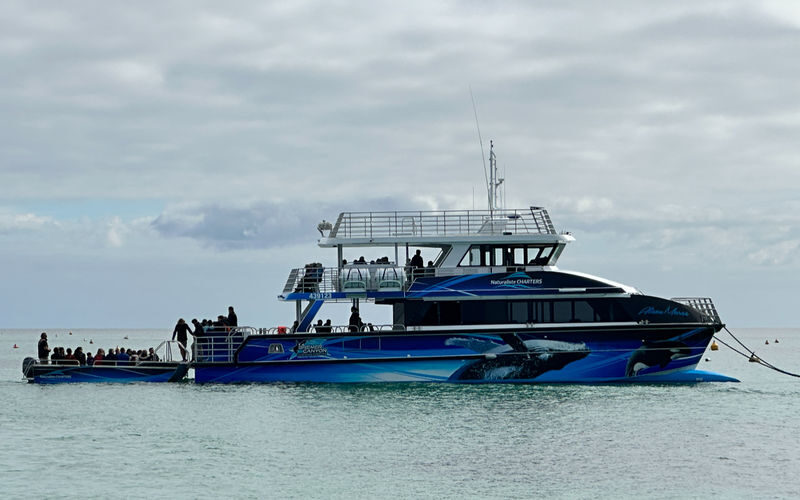
- The Alison Maree is a 23-metre catamaran, described as spacious and stable, with room to watch from outside or take shelter indoors.
- The season runs from August to November. Humpbacks and Southern Right whales are the main targets, with blue whales a possible but less certain sighting.
- A marine biologist is aboard, and the crew share information while keeping watch for whale activity.
- Hot drinks and biscuits are included, and soft drinks are available to buy. Bring your own water bottle.
- If no whale is sighted, you can return for free within 12 months, between June 1 and November 30.

👉 See our pick of the 4 Best Whale Watching Experiences In Busselton
Setting out from Dunsborough
The meeting point is the Dunsborough Professional Fisherman’s Boat Ramp at 306 Geographe Bay Road in Quindalup. It is about a five-minute drive from Dunsborough town centre, or roughly three hours from Perth by car. Allow time for the drive and arrive 30 minutes before departure. If you are driving, early arrival can also help with parking.
The cruise is listed for August through November, with departures at 10:00 a.m. and 2:00 p.m. Plan for 2.5 hours on the water. The trip is described as boarding via the beach, so expect to make your way from the meeting point to the vessel rather than walking straight along a pier and stepping aboard. Follow the operator’s instructions on the day.
There is no fixed sequence of sightseeing stops. The captain and crew search the bay and adjust the route according to where whales are found. That flexibility matters: these are wild animals, not a scheduled show, and the time spent looking is part of the experience.
You can also read our reviews of more whale watching tours in Busselton


Watching for whales in Geographe Bay
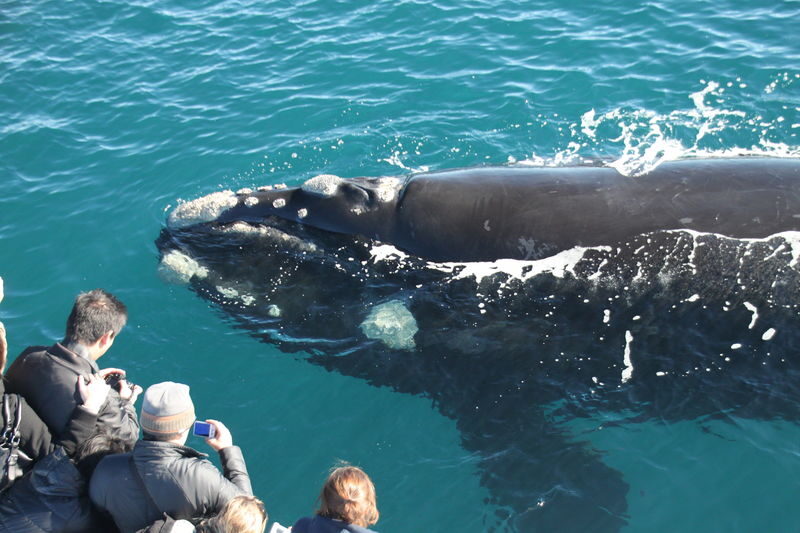
Geographe Bay is known for clear blue water, sheltered bays, and seagrass meadows. During the migration season, humpbacks and Southern Right whales may travel close to shore as they rest and care for calves on their southward journey toward Antarctic waters. The timing varies: the experience is offered August to November, while the description particularly notes whales escorting calves south from October onward.
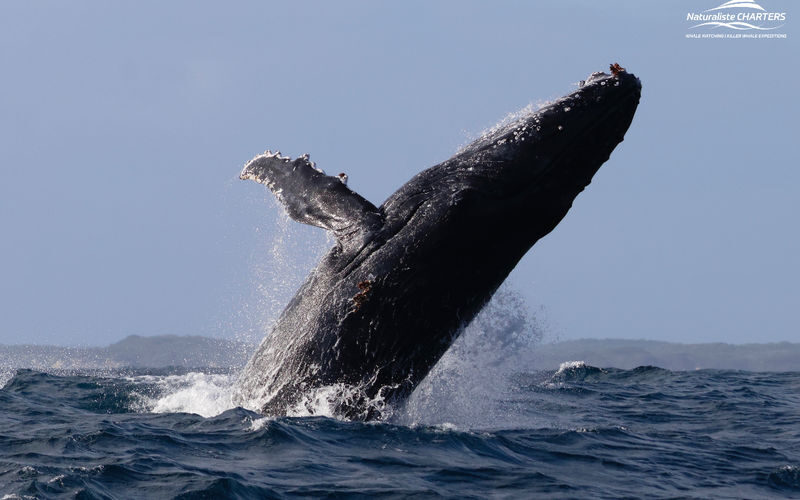
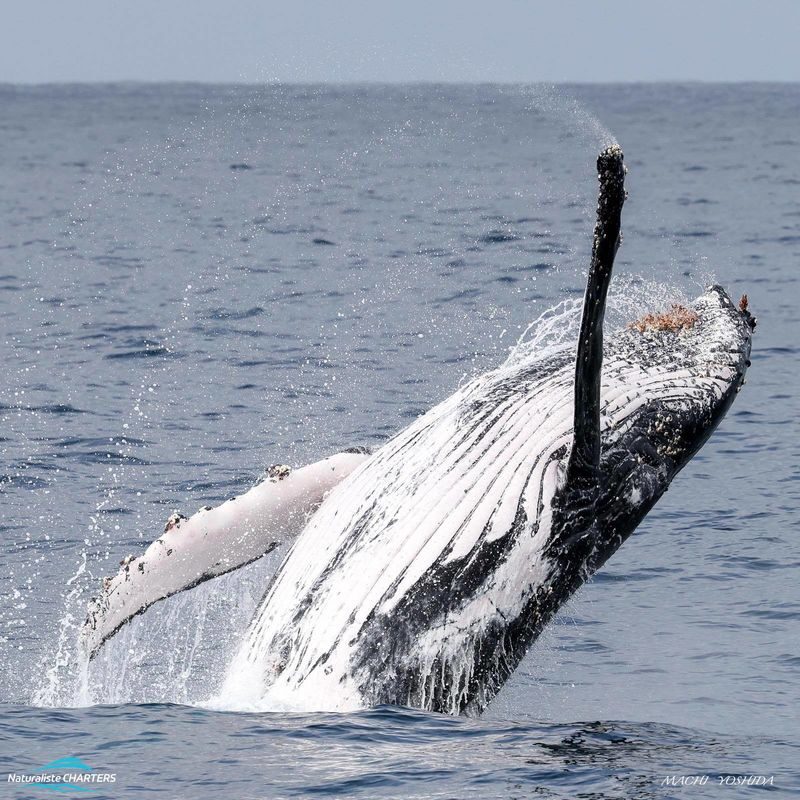
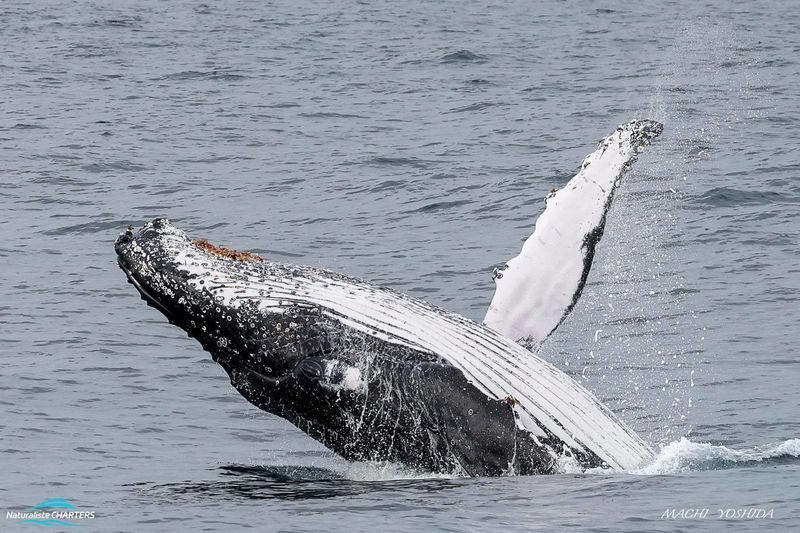
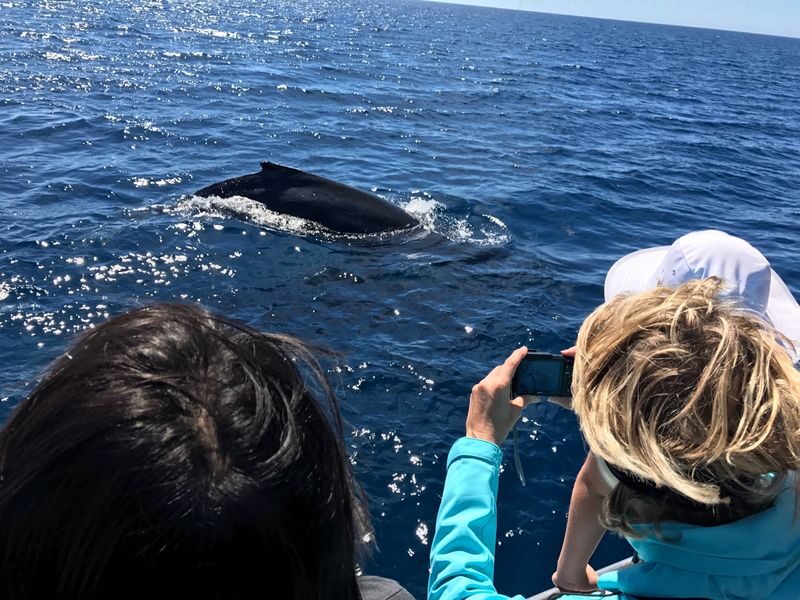
A humpback’s most memorable appearances can be sudden: a breach, a tail lift, or a close pass beside the boat. But a good sighting does not require a dramatic leap. You may see a whale surface repeatedly, travel beside the vessel, or spend time near its calf. One trip might bring several sightings and close views; another may be more about scanning the water and catching brief glimpses.
Southern Right whales are also among the likely species, while blue whales are a possibility rather than something to count on. You may also spot dolphins, long-nosed fur seals, White-bellied Sea Eagles, ospreys, petrels, shearwaters, or Australasian Gannets. Treat these as welcome extras, not a guaranteed checklist.
What the crew adds to the trip
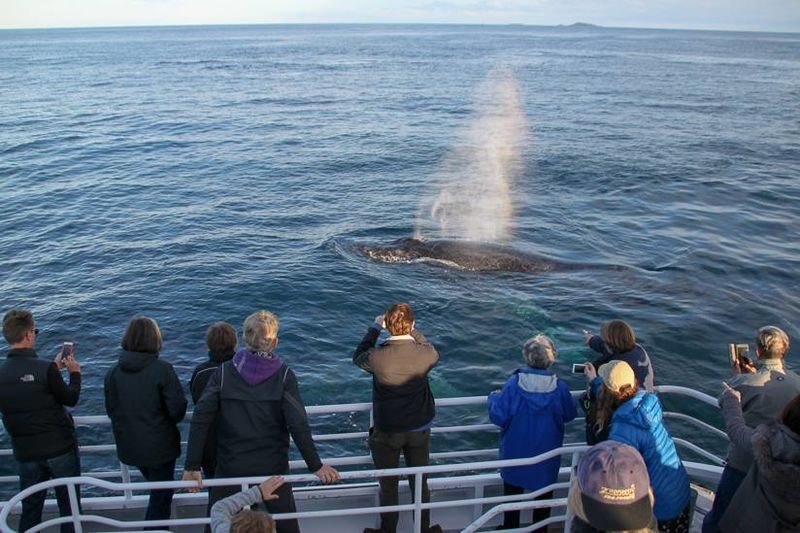
The crew’s job is not just to steer. They keep a lookout, guide the captain toward reported whale positions, and help people on board follow the action. That is especially useful when a whale surfaces briefly or appears on one side of the boat. Good direction can make the difference between seeing a tail in the distance and being ready when the animal comes up again.
A marine biologist is listed as part of the onboard experience, with explanations about the whales and the wider marine life. The crew’s commentary is a valuable part of the outing for families and anyone new to whale watching: it gives you context while you wait and helps you understand what you are seeing. No individual guide names are provided, so do not expect a particular person to be leading your departure.
The most praised parts of the trip are consistent: the crew’s effort in locating whales, their friendly help, and clear explanations. Several accounts describe close humpback sightings, including breaches and mother-and-calf pairs. Those are real possibilities, not promises. Wildlife viewing always depends on where the animals are and how they behave that day.
Life aboard the Alison Maree
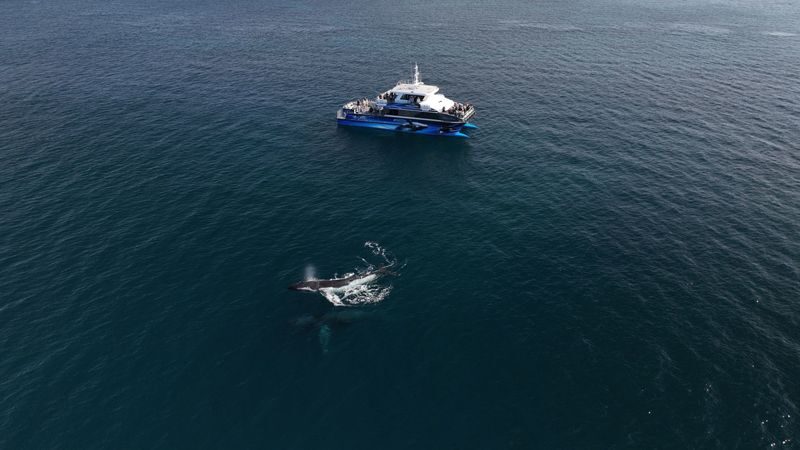
The boat is described as a modern, spacious, 23-metre luxury catamaran, designed for stability, comfort, and safety. A catamaran’s twin-hull design can make it feel more stable than some smaller boats, but it cannot remove the motion of the sea. Reports from trips include both calm conditions and choppier water, particularly farther from shore.
There is indoor seating as well as deck space on at least some departures. For whale watching, you will probably want to spend much of your time outside, where the views are clear and you can scan the water. Still, indoor space is useful if the wind picks up or you need a break from the deck.
Bring a warm, windproof layer, even if the weather feels mild on shore. Conditions can feel colder once the boat is moving, and one account notes that the second half of a trip grew noticeably colder. Take a water bottle, too. Coffee, tea, Milo, green tea, and biscuits are included, while soft drinks can be purchased onboard.
If you are prone to seasickness, plan ahead rather than waiting to see how you feel. A previous dolphin-watching trip without trouble does not guarantee an easy ride on this cruise; the sea can be rougher farther out. Follow your usual motion-sickness precautions and ask a medical professional if you are unsure what is suitable for you.
How long it takes, and what happens if whales stay away
The advertised cruise lasts 2 hours and 30 minutes, rather than two hours. In some cases, a trip may run longer while the crew continues searching. One outing was extended by about 90 minutes to find whales. That is a generous effort, but it means you should avoid scheduling a tight appointment immediately afterward.
Whales are free-roving mammals, so a sighting cannot be guaranteed. If none are seen, the operator offers a free return trip on the same experience. The offer is valid for 12 months between June 1 and November 30. That is a useful safety net, though it may be less convenient if you are visiting the region only once or travelling on a fixed itinerary.
Weather can also affect the plan. The operator may cancel in extreme weather or other unforeseen conditions; in that case, you can reschedule or request a full refund. A departure location may change because of conditions. If your plans depend on a particular harbour or route, check directly with the operator before setting out.


Is the price worth it?
The listed starting prices differ: one price is US$73.25, while another summary gives US$80.59. Treat these as guide prices and check the amount shown for your date before booking. The value is not only the chance of a whale sighting. Your fare also covers a 2.5-hour cruise, onboard commentary, a marine biologist, hot drinks, biscuits, and the no-whale return offer.
For families, the included life jackets for adults and infants are a practical plus. Children aged 0 to 2 can join free, but infants and children still need to be included in the passenger headcount. Children aged 15 and over pay the adult rate. The trip can take groups of 1 to 90, so the number of people onboard may vary by departure.
At this price, I would see the cruise as worthwhile if you are already spending time in Dunsborough or the Margaret River region and want a focused wildlife outing. It is less attractive if you need a guaranteed close encounter or cannot spare extra time in case the cruise runs late. The wildlife is the main event, and the crew can search diligently without controlling what appears.
Who should book this cruise?
This trip suits families, first-time whale watchers, and anyone who wants a marine wildlife outing without giving up an entire day. The 2.5-hour duration is manageable, and the crew’s explanations give children and adults something to learn while scanning the water. The free return offer also reduces some of the risk if the whales do not show.
It is a good choice for people who enjoy being outdoors and can handle changing sea conditions. If you are sensitive to motion, consider your comfort honestly and prepare in advance. The boat is designed for stability, but reports of choppy water make clear that it is still a boat in open water.
The experience is described as stroller- and wheelchair-accessible, though some restrictions apply. Contact Naturaliste Charters at +61 8 9750 5500 to discuss your needs before booking. Vouchers are valid only for the specified date and time, and late arrivals or no-shows are not refunded. Cancellations made at least 24 hours before the activity date qualify for a full refund.
Should you book the Dunsborough whale cruise?
Book if you want a well-supported chance to see migrating whales and are happy to let the crew search rather than follow a rigid sightseeing route. The strongest reasons are the active crew, the onboard marine biologist, the catamaran, and the possibility of close humpback sightings in Geographe Bay.
Skip it, or plan carefully, if rough water would spoil the day or your schedule cannot absorb a longer outing. Bring warm layers, arrive early, and keep your expectations realistic: the whales are wild. For a flexible half-day around Dunsborough, this is a worthwhile way to spend time on the water.
Whale Watching Experience in Dunsborough
“It was a fun experience and the crew were great & awesome. Always keeping a lookout where the whales are & at the same time giving us information a…”
FAQ
How long is the whale-watching cruise?
The cruise is scheduled for 2 hours and 30 minutes. It may run longer if the crew continues searching for whales.
When does the Dunsborough cruise operate?
The activity is listed for August through November, with departures at 10:00 a.m. and 2:00 p.m.
What animals might I see?
The main targets are humpback and Southern Right whales, with blue whales a possibility. You may also see dolphins, long-nosed fur seals, sea eagles, ospreys, petrels, shearwaters, and Australasian Gannets.
What is included in the ticket?
The ticket includes the whale-watching cruise, coffee, tea, Milo, green tea, biscuits, and life jackets for the whole family, including infants. Soft drinks are available to purchase.
What happens if no whales are seen?
You can join the same experience again for free. The no-whale return offer is valid for 12 months between June 1 and November 30.
Where is the meeting point, and when should I arrive?
Meet at Dunsborough Professional Fisherman’s Boat Ramp, 306 Geographe Bay Road, Quindalup WA 6281. Arrive 30 minutes before your scheduled departure.


