Thorong La is the big prize: at 5,416m, this high pass turns a village-to-village walk into a serious Himalayan undertaking. Over 12 trekking days, you climb through forests and terraced fields, spend time in the dry upper Manang region, then cross the pass and descend to Muktinath.
I like two things in particular: the route changes dramatically as you gain altitude, and the overnight stops bring you close to daily life in mountain villages. I also like that a licensed guide and porter support are part of the package, so you can focus more on walking and less on carrying every item yourself.
The main caution is that this is a demanding trek, not a fixed sightseeing schedule. Altitude, weather, and road access can change the plan, and a past departure was shortened and skipped several listed stops. Confirm the itinerary and meal plan with the operator before you book.
- Thorong La is the physical and scenic high point, reached after an acclimatization day in Manang.
- The terrain keeps changing, from rivers and farms to pine forests, high pastures, and dry, Tibetan-style uplands.
- Teahouses are basic but practical, with shared toilets, blankets, and hot showers or charging often costing extra.
- A porter is shared by two trekkers, with a maximum load of 25kg total, so pack light and coordinate what goes in the porter’s bag.
- The schedule has room for change, especially when weather, health, road conditions, or public holidays affect transport.
- Prices vary by group size and meal option, so compare the final package inclusions rather than relying only on the starting price.
- From Kathmandu to the first mountain village
- Rivers, farms, and the climb to Chame
- Pisang and the upper route through Manang
- The acclimatization day in Manang
- Yak Kharka and Thorong Phedi
- Crossing Thorong La to Muktinath
- Tatopani, hot springs, and the ride to Pokhara
- Teahouses, meals, and what the price buys
- Packing light and judging the effort
- Timing, guide support, and the value question
- Should you book the Annapurna Circuit trek?
- FAQ
- How long is the trek?
- How high is Thorong La Pass?
- What meals are included?
- Where do you sleep during the trek?
- Is a porter included?
- What is the best time of year to go?
- What costs are not included?
- Can the itinerary change?
- More Hiking & Trekking Tours in Bhaktapur
- More Tours in Bhaktapur
- More Tour Reviews in Bhaktapur
- Not for you? Here's more nearby things to do in Bhaktapur we have reviewed
From Kathmandu to the first mountain village
Before the trek, meet your leader and group at the operator’s office in Kathmandu for a briefing on the route and equipment. The meeting is scheduled for around 5 p.m. You can also use this time to buy any last-minute personal items, then share a welcome dinner with a Nepali cultural program.
You need to arrange your own Kathmandu lodging, and you should arrive at least 24 hours before the trek begins. That extra time matters: it gives you room to attend the briefing, sort out gear, and handle any permit details without turning the first morning into a scramble.
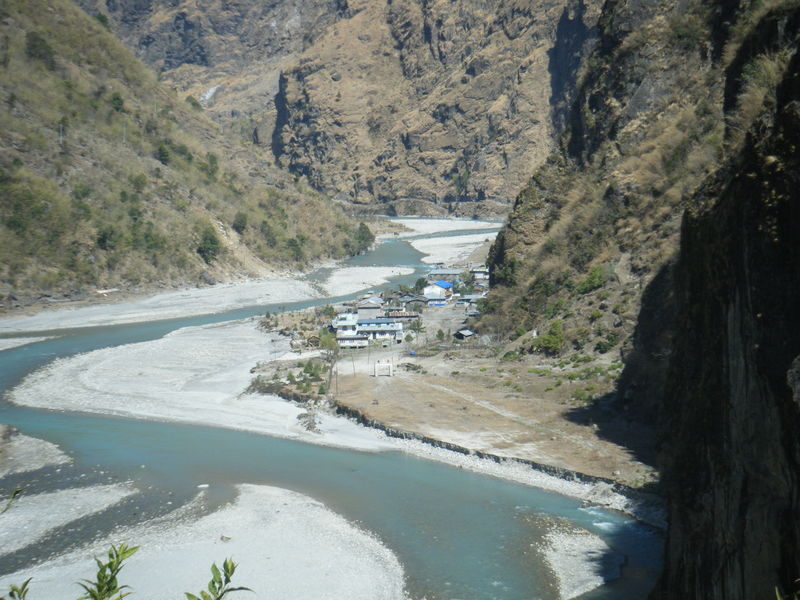
The next day begins with a roughly six-hour drive to Besishahar, the route’s starting point, followed by a two- to three-hour walk to Nadi. It is a long day of travel and walking, but the route eases you into the trek with villages, farms, rivers, and early mountain views. Expect a working day, not a leisurely first stroll.
Rivers, farms, and the climb to Chame
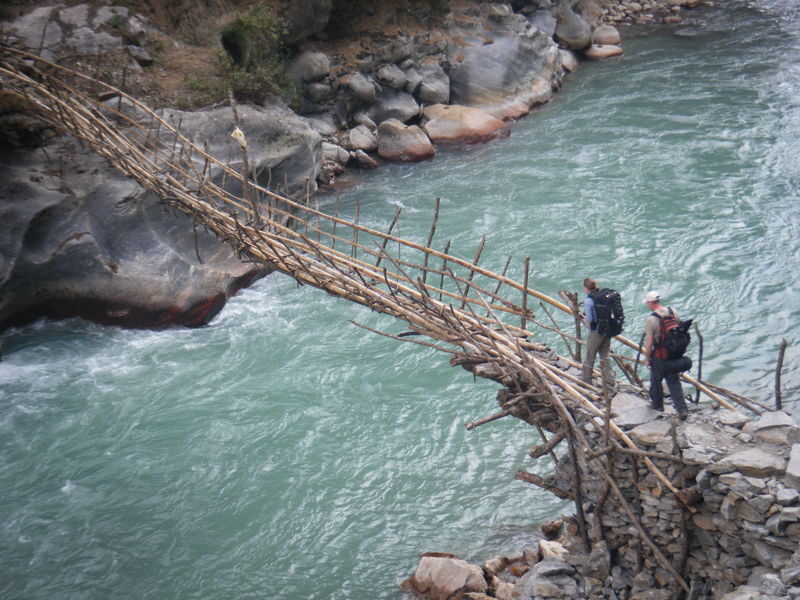
From Nadi, the trail follows the Marsyangdi River toward Jagat. Waterfalls, small settlements, terraced fields, and a suspension bridge give the day a varied rhythm. On a clear day, you may spot Manaslu and other peaks along the way. The walk takes about five hours, though the time on your feet is only part of the day’s effort.
The next stretch to Dharapani is longer, at seven to eight hours. You cross a large bridge near Tal and enter Manang district, passing fields of barley, rice, and potatoes. Dharapani is one of the larger villages in the valley, a useful place to rest after a demanding day.
From Dharapani, the trail climbs through steep forest ridges toward Chame, usually a five- to six-hour walk. Views of Lamjung Himal, Annapurna II, and Annapurna IV reward the effort. There is also a small hot spring here, a welcome chance to ease tired legs. Do not expect luxury spa facilities; the point is a warm soak after a hard day.
You can also read our reviews of more hiking tours in Bhaktapur

Pisang and the upper route through Manang
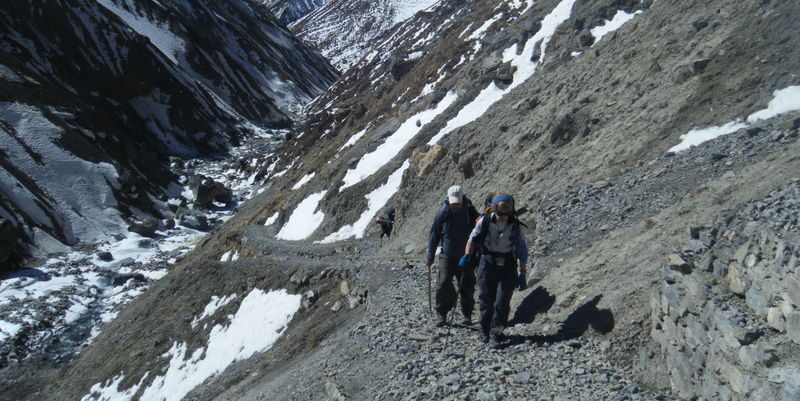
The walk from Chame to Pisang takes about five to six hours. The route passes through dense forest and a narrow stretch beneath a striking rock face that rises roughly 1,500m above the river. Then the terrain opens into the U-shaped Manang valley, framed by snow-covered peaks. Pisang, at 3,300m, marks a clear shift toward higher altitude.
The following day takes the upper route from Upper Pisang via Geru to Manang. It is longer, around six to seven hours, but offers broad views of Annapurna and Pisang Peak. The upper route also lets you see the transition to colder, drier country. In Manang, you can visit Barge Monastery, described as the largest monastery in the district.
I would treat the high route as one of the trek’s best opportunities to slow down and look around. The scenery changes, but so does the feel of the journey: villages become more remote, vegetation thins, and the air grows noticeably thinner. Manang sits at 3,500m, so take the evening gently.
The acclimatization day in Manang
Day seven is set aside for acclimatization. The plan is not to stay still all day: take a short walk to a higher point, then return to sleep at the same altitude. This gives your body a chance to adjust before the trail climbs further toward Thorong La.
Possible outings include Bhojo Gompa or Gangapurna Lake. You can also walk to Vraga, visit its monastery, and stop at the Himalayan Rescue Association to learn about altitude sickness. That visit has practical value. You are not just passing through a high-altitude region; you are preparing to cross a 5,416m pass.
Use the day to check how you feel, organize your warm layers, and ask your guide about the next stages. The itinerary calls for an acclimatization walk, but your leader may change plans if health or conditions require it. The ability to adjust is a safety feature, not a failure to stick to the schedule.
Yak Kharka and Thorong Phedi
From Manang, the trail climbs out of the Marsyangdi Valley and follows the Jarsang Khola toward Yak Kharka. This is a shorter day of about three to four hours, passing pastures, juniper, and the small settlement of Ghunsa. Horses and yaks graze in the meadows, and the route crosses a small river before reaching the village. At 4,110m, even a shorter walk deserves a steady pace.
The next day is another three to four hours to Thorong Phedi, a small settlement used as a base for the pass. The short distance does not mean the day is trivial. You are approaching the trek’s highest point, and your body has to work harder at altitude. Keep snacks and warm clothing accessible, and follow the guide’s advice about pace and rest.
Crossing Thorong La to Muktinath
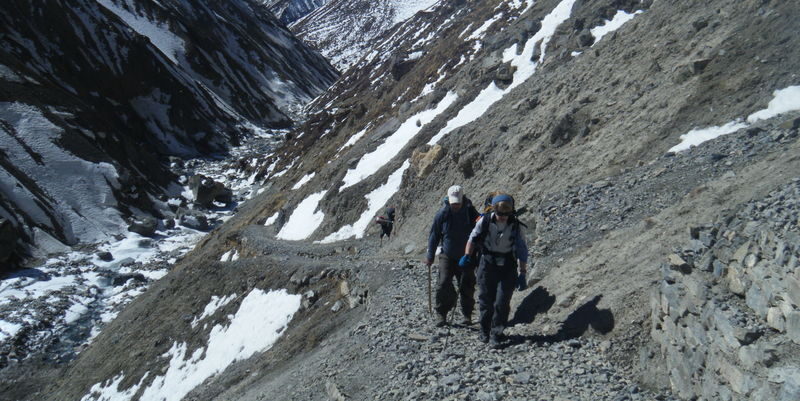
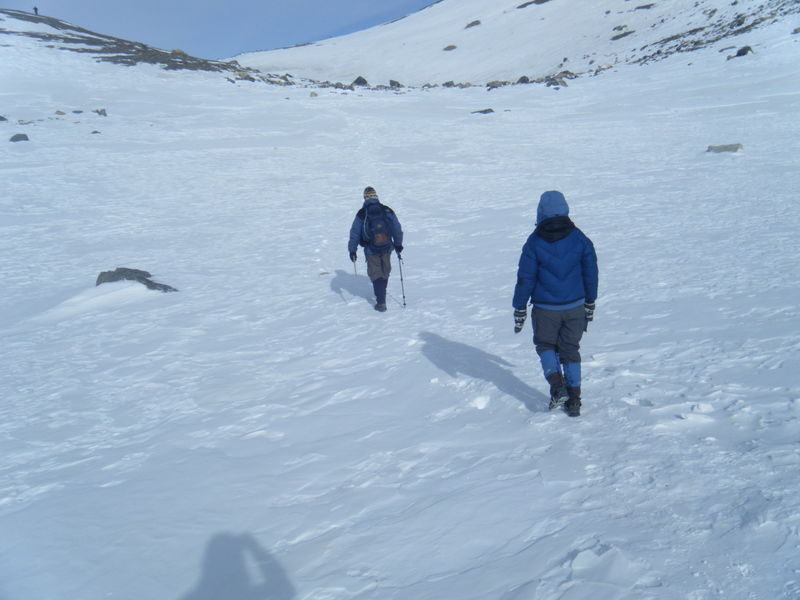
The pass day starts early and takes about seven to eight hours, including the descent to Muktinath. Thorong La reaches 5,416m, and the trail can be icy at high altitude. The climb is the trek’s central challenge, so do not judge your readiness by how you felt on lower, easier days. A slow, consistent pace is more useful than trying to hurry.
At the top, the reward is a vast view across the Himalaya and the satisfaction of reaching the route’s highest point. Then comes a long descent to Muktinath, an important pilgrimage site for both Hindus and Buddhists. Its religious significance adds a cultural dimension to the walk: this is not just a pass between valleys, but a route through places that matter deeply to local communities.
The guide’s role becomes especially important here. Guides Gyanu and Nirej have been named positively on past departures, but you cannot count on receiving either one. A guide’s judgment and communication matter most when the weather changes, the trail is difficult, or someone in the group feels unwell.


Tatopani, hot springs, and the ride to Pokhara
After Muktinath, the itinerary calls for a four-hour walk and then a bus or jeep along a plateau above the Kali Gandaki gorge, described as the world’s deepest gorge. The day ends in Tatopani, where hot spring pools offer another chance to relax sore muscles. The following day, you take a bus from Tatopani to Pokhara and are dropped at your hotel.
The final transfer is one part to clarify before booking. Road conditions and public holidays can affect transport, and a past trip missed Tatopani when a holiday made bus travel difficult. One departure also skipped planned hiking sections and finished in fewer days than scheduled. Ask the operator how it handles a change of route, a missed stop, or an early return, and confirm that the final transport to Pokhara is included.
You must arrange your own accommodation in Pokhara and your onward transport back to Kathmandu. The trek ends there, not in the capital.
Teahouses, meals, and what the price buys
The advertised price starts at US$610.69, but the actual cost depends on group size and package. Listed rates range from US$555.19 for groups of nine or more to US$803.30 for a solo traveler, with intermediate rates for groups of two to three and four to eight. These are meaningful differences, so ask which group bracket and meal plan apply to your dates.
The package includes teahouse lodging during the trek, a licensed guide, one porter for every two trekkers, permits, national park fees, government taxes, and land transport described in the itinerary. Porter and guide food, wages, and insurance are included. There is also a first aid kit carried by the Sherpa leader, plus a welcome and farewell dinner in Kathmandu.
The meal descriptions need a careful read. Breakfast is included, while the full-board option includes breakfast, lunch, and dinner throughout the trek. The half-board wording is less clear: it describes flexibility to choose lunch and dinner at your own cost, while the package details also use the phrase half board. Confirm in writing exactly which meals your chosen price covers.
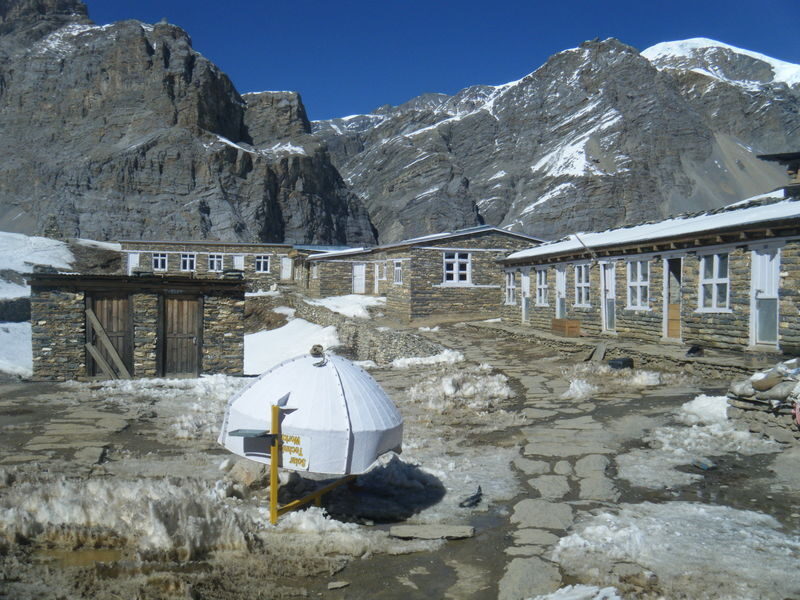
Teahouses are simple. Private rooms may be available at lower elevations, while higher stops use dormitory-style rooms. Toilets are shared, blankets are provided, and running water is available. Hot showers, charging devices, snacks, soft drinks, and alcohol can cost extra. Boiled water is available at teahouses, and meals commonly include noodles, porridge, bread, eggs, dal curry, and vegetables.
Bring cash for personal extras, and budget for tips. The suggested average is US$5 per day for the guide and porter. Your own travel and accident insurance, Nepal visa, personal gear, and any emergency evacuation costs are not included. The listed visa fees are US$25 for 15 days or US$40 for 30 days.
Packing light and judging the effort
This trek is rated medium difficulty, but that label can understate the demands of long days and high altitude. You need a good level of fitness, and the pass day is a serious test. Participants must be at least 10 years old, with children charged the adult rate.
A porter can carry up to 25kg shared between two trekkers. Pack your belongings in a lightweight bag or a duffel you do not mind getting scuffed, and agree with your partner on how to divide the load. One group of three found one porter sufficient when each person packed about 11 to 13kg, but that is a useful example, not a reason to pack more than necessary.
Bring your own trekking clothing and equipment, including a sleeping bag and down jacket if needed. Gear can be rented if you would rather not buy it for one trek. Personal items such as laundry, hot showers, battery charging, snacks, and drinks are extra, so keep your day pack practical and your expectations flexible.
Timing, guide support, and the value question
The recommended seasons are March to May and September to November, when the weather is warmer and skies are generally clearer. The trek can run at other times of year, but mountain visibility is not guaranteed. In one off-season departure, cloud and weather limited the views. If seeing the big peaks is central to your plans, choosing a recommended season improves your odds, though it cannot promise clear skies.
An English-speaking guide is available, and a Chinese-speaking guide can be requested for an additional US$200 per trip. A licensed leader and porter support are useful inclusions on a route with altitude, remote villages, and changing conditions. Still, guide quality and flexibility can vary. In one case, the guide was described as restrictive about meal choices and slow to accommodate requests; another guide was credited with helping someone through a snowy pass crossing. Ask clear questions before you depart, especially about daily walking routes, meal choices, and how the leader communicates changes.
For the price, the package can be good value if you want organized transport, permits, lodging, a guide, and porter support bundled together. It is less attractive if you expect a rigid, fully managed holiday with every expense covered. You will pay extra for several everyday comforts, and the itinerary can change for safety or practical reasons. Contact the local operator after booking to reconfirm the schedule, pickup, permits, and inclusions. You must also send a passport scan and recent passport photo so the operator can arrange the trekking permit.
Should you book the Annapurna Circuit trek?
Book this trek if you are fit, ready for several long walking days, and keen to see Nepal on foot rather than from a vehicle. Its best features are the change in terrain, the village stays, the Manang acclimatization day, and the high crossing at Thorong La. The guides and porters can take a lot of logistical weight off your shoulders.
Think twice if you need a guaranteed schedule, dislike basic shared facilities, or are uncomfortable with high altitude and possible itinerary changes. Before paying, confirm the meal plan, group size, porter arrangement, route through Upper Pisang, and final transport to Pokhara. That little bit of checking can help you judge the real value and start the trek with fewer surprises.
12D11N Annapurna Circuit Trek
“Smooth trip for group of 3, from hotel pick up (then had a meal of Dhal Bhat in Kathmandu- paid for). Smooth sailing and safe, one porter but was m…”
FAQ
How long is the trek?
The trekking itinerary runs for 12 days, from the drive to Besishahar and walk to Nadi through the transfer to Pokhara. There is also a pre-trek briefing day in Kathmandu, so arrive at least 24 hours before the trek starts.
How high is Thorong La Pass?
Thorong La is 5,416m above sea level. The pass crossing is scheduled for day 10, starting early and taking about seven to eight hours to reach Muktinath.
What meals are included?
Breakfast is included. The full-board option includes breakfast, lunch, and dinner throughout the trek. The half-board description is not fully clear, so confirm which meals your selected package covers before booking.
Where do you sleep during the trek?
You stay in teahouse lodges. Private rooms may be available at lower elevations, while higher-altitude rooms are dormitory style. Toilets are shared, blankets are provided, and hot showers may cost extra.
Is a porter included?
The package includes one porter for every two trekkers. The porter can carry up to 25kg shared between two people, so keep your luggage light and coordinate what goes in the porter’s bag.
What is the best time of year to go?
The recommended hiking seasons are March to May and September to November, when weather is warmer and skies are generally clear. The trek can be taken at other times, but visibility and conditions may vary.
What costs are not included?
You pay separately for pre- and post-trek accommodation, your Nepal visa, personal gear, travel and accident insurance, drinks, snacks, laundry, hot showers, and charging devices. Emergency evacuation costs and tips are also not included.
Can the itinerary change?
Yes. The leader may amend or cancel parts of the itinerary for safety reasons, weather, health concerns, natural disasters, or transport problems. Extra costs caused by events beyond the operator’s control are the participant’s responsibility.