The best surprise in Arashiyama may be the climb above town: at Monkey Park Iwatayama, about 120 wild Japanese macaques live among the trees, with Kyoto spread out below. You can watch the monkeys play and feed them from a safe place, but this is a nature encounter, not a petting session.
I like two things about this tour: a local guide such as Masa can add context to the temples and neighborhood, and the route links the monkey park with Arashiyama’s best-known sights in one half-day walk. The trade-off is physical effort. The path to the monkeys includes a climb and many steps, so bring good shoes and expect to take your time.
- At a glance
- A monkey park reached on foot
- Togetsukyo Bridge and the river
- Tenryu-ji’s gardens and Zen setting
- A walk beneath the Sagano bamboo
- What the guide adds to the day
- Time, effort, and value
- Who should book this walk
- FAQ
- How long is the tour?
- Where does the tour start?
- Where does the tour end?
- Is Monkey Park admission included?
- Are other expenses included?
- Can you feed the monkeys?
- How much walking is involved?
- Are children charged the same price?
- What should you bring to check in?
- The Best Of Kyoto!
- More Private Tours in Kyoto
- More Tours in Kyoto
- More Tour Reviews in Kyoto
- Not for you? Here's more nearby things to do in Kyoto we have reviewed
At a glance
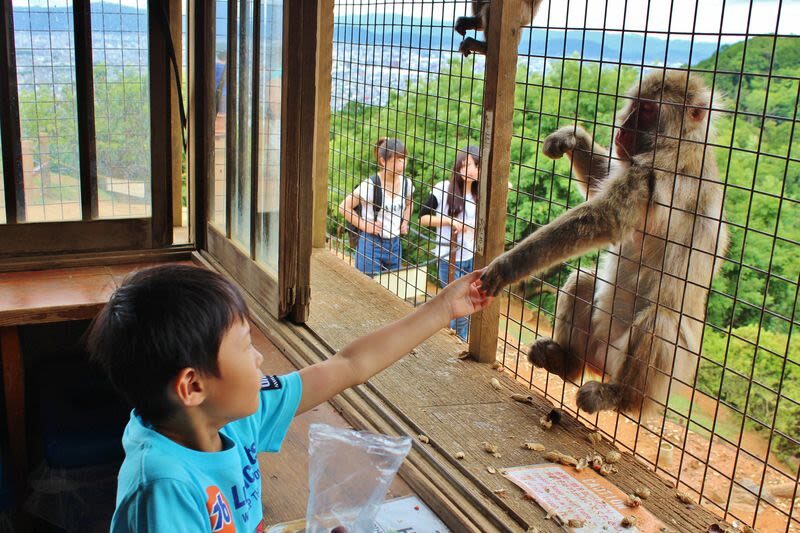
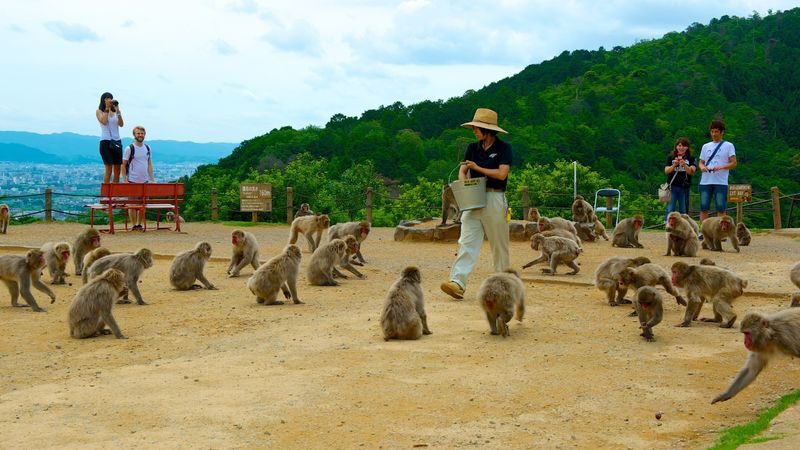
- A hill walk with a wildlife payoff: Reach Monkey Park Iwatayama on foot, watch macaques interact, and feed them from a designated safe spot.
- A local guide for the whole route: Masa, also known as Masahiko, is praised for patient pacing, local insight, and useful visual explanations. Your guide may vary.
- Four distinct Arashiyama stops: The tour includes Monkey Park, Togetsukyo Bridge, Tenryu-ji Temple, and the Sagano Bamboo Forest.
- A compact half-day plan: The listed start times are 9 a.m. or 1 p.m., with return times of 12:30 p.m. or 4:30 p.m., depending on the selected option.
- A few costs to check: Monkey Park admission is included. Other personal expenses are not, so check what you may want to spend at the other stops.

👉 See our pick of the 25 Best Workshops And Classes In Kyoto
A monkey park reached on foot
This tour’s most active stretch comes first: the walk up to Arashiyama Monkey Park Iwatayama. It is part of the experience, not a short stroll from the station. Expect a climb with stairs, and plan for a slower pace if you are not used to hills or have children with you.
The effort earns a memorable change of scene. The park is home to about 120 wild Japanese macaques, and at the summit you can watch them move, play, and interact against a broad view of the surrounding mountains and Kyoto. Their behavior and positions change, so the encounter feels more like watching wildlife than following a staged animal show.
You can feed the monkeys from a safe location. That gives you a closer look without turning the animals into something to handle. Keep your distance, follow the park’s instructions, and avoid direct eye contact: macaques can read a fixed stare as a threat. Bring a camera, but put the animals’ space ahead of getting the perfect shot.
The guide can explain details about the monkeys’ social behavior and habitat as you go. That context is useful because the appeal is not simply seeing a monkey at close range. You get to notice how the animals relate to one another, and the guide can help you understand what you are observing.
The climb is also the main drawback for anyone with limited stamina or a dislike of stairs. Several people on the tour have needed frequent rests, and the guide is described as willing to adjust the pace. Still, a considerate pace does not remove the uphill walk. If that would make the rest of your day difficult, weigh the monkey park carefully before booking.
You can also read our reviews of more private tours in Kyoto

Togetsukyo Bridge and the river
After the park, the route turns to one of Arashiyama’s best-known sights, Togetsukyo Bridge. The name means Moon Crossing Bridge. A local story links it to an emperor who, while boating on the river, watched the moon seem to cross the bridge as the boat moved along.
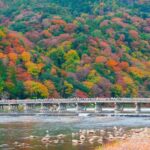
The bridge spans the gently flowing Oi River, and its simple, sturdy form suits the setting. Here, the pleasure is less about a dramatic monument than the way bridge, water, and hills come together. Your guide can share the name’s story and help you notice how the area’s natural setting shapes its appeal.
This is a useful contrast to the monkey park. The climb takes you above town for a wide view, while the bridge brings you back to the river and the center of Arashiyama. It also offers a natural pause in a route that includes plenty of walking.
The bridge is a public landmark, not a secluded stop. Arashiyama is a popular part of Kyoto, so expect other people around its famous sights. A guide can add meaning to a familiar view, but cannot make a busy area quiet.
Tenryu-ji’s gardens and Zen setting
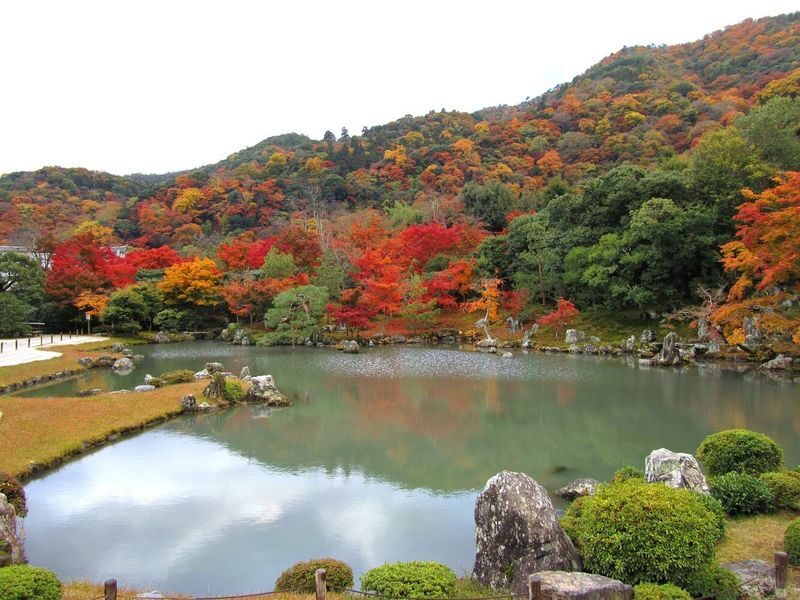
Tenryu-ji is the tour’s key temple stop. It is the head temple of the Rinzai Zen school in Arashiyama and is known for its gardens and ceiling paintings. The temple was registered as a UNESCO World Heritage Site in 1994, alongside major Kyoto sites including Kiyomizu-dera, Kinkaku-ji, To-ji, and Nijo Castle.
Its garden is a particular reason to slow down. It was the first in Japan to be designated both a historic site and a special place of scenic beauty. The setting offers a quieter counterpoint to the street and river, and a local guide can explain the temple’s place in Arashiyama’s religious and cultural life.
A guide can make a temple visit more rewarding by giving you a few points to look for rather than leaving you to puzzle out every building and garden feature alone. Masa is praised for using pictures on an iPad to help explain sites, and for sharing history without overwhelming the walk with a lecture. That kind of explanation suits a half-day tour: enough context to make the place stick, with room to look around.
One practical point needs checking before you go: Monkey Park admission is the only admission specifically listed as included. The tour information does not say that Tenryu-ji entry or other expenses are covered, so confirm any temple charges when booking and bring a way to pay separately.
A walk beneath the Sagano bamboo
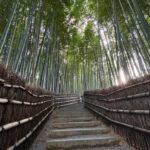
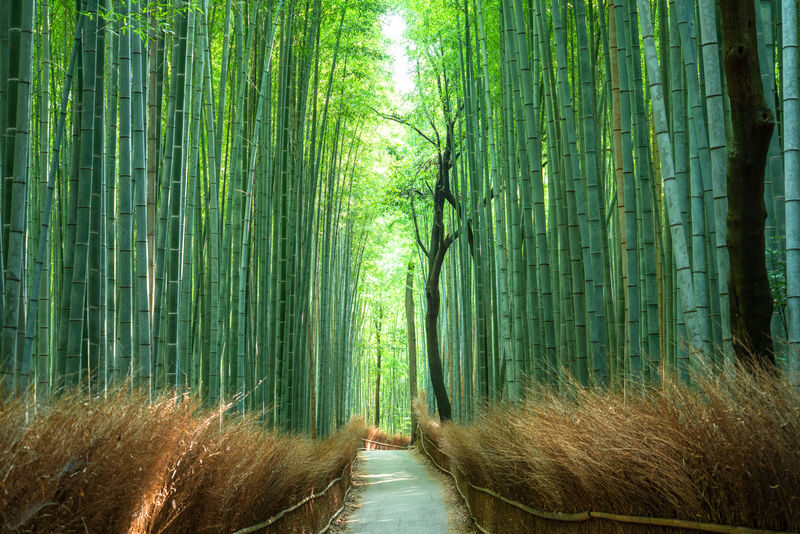
The final named stop is the Sagano Bamboo Forest. Its path runs for about 400 meters through bamboo that rises on both sides, creating a tunnel-like walk. The grove is free to enter and open to anyone walking through the area.
The bamboo is striking in any season, but the path is a short section rather than a long wilderness walk. You can take it at a relaxed pace, look up through the tall stalks, and notice how different the mood feels from the riverfront and temple grounds. The grove’s former role as a villa area for nobles during the Heian period adds a historical layer to what might otherwise be a quick photo stop.
The path is well known, so it can feel busy. That is worth bearing in mind if you are hoping for solitude or an empty photograph. The guide’s value here is not exclusive access, but help making the visit part of a connected route through Arashiyama.
What the guide adds to the day
The guide is central to the value of this experience. Masa, also called Masahiko, is the name most associated with the tour, though the specific guide may vary. He is described as a local who knows the area and can explain its temples, history, and daily character as you move between stops.
A steady, patient guide matters on this route because it combines a hill climb with several places where you may want time to look, take photos, or rest. Families with children and people who walk more slowly have found the pace accommodating. In hot or wet weather, flexibility matters even more, though you should still prepare for outdoor walking.
The personal touches described for this tour include photos, short videos, and visual aids. Some groups have received a video of their day afterward, but treat that as a possible extra rather than a guaranteed feature. The guide has also shared food suggestions at the end of the route, which can be handy if you want to continue exploring nearby.
The walking tour format is also a chance to ask questions along the way. Instead of getting a quick introduction at each stop and moving on alone, you can ask about a detail you notice or request a break when needed. That is especially useful if this is your first visit to Kyoto and you want an easier way to connect the sights.
You can also read our reviews of more tours and experiences in Kyoto


Time, effort, and value
The advertised price starts at $37.89, and Monkey Park admission is included. For a guided half-day covering four well-known Arashiyama stops, that can be good value if you want the history and local orientation as much as the sights. The guide’s help with pacing, navigation, and context is a large part of what you are paying for.
The value depends on what you need. If you are happy to find the bridge, temple, bamboo grove, and monkey park on your own, you could visit the public sights independently and pay only for the admissions you choose. If you have limited time, prefer a planned route, or want explanations as you walk, the guided format is more appealing.
The listed start times are 9 a.m. and 1 p.m. The corresponding return options are shown as 12:30 p.m. and 4:30 p.m., with options depending on the departure you select and the final itinerary. Weather and traffic can affect the schedule, so leave some flexibility around the end of the tour.
The meeting point is in front of Hankyu Arashiyama Station, not JR Arashiyama Station. The guide is identified with a Klook sign. Instructions say to arrive five minutes before the activity, while the meeting details advise arriving ten minutes early; I would plan on ten to avoid a rushed start. Late arrivals and no-shows are not refundable.
Children and infants must be included in the passenger headcount, and the same price applies to all ages. The listed tour is a meet-up activity, so it does not include transport to Arashiyama. Your mobile voucher is used for check-in.
Who should book this walk
This tour makes the most sense if you want to see the monkey park and Arashiyama’s signature sights in one organized outing. It is a good fit for first-time visitors who value local explanation, families who want a guide to help keep the day moving, and anyone who would rather not work out the route alone.
It is less suited to someone looking for a car-based visit, a quiet escape from crowds, or a low-effort stroll. The park climb is real exercise, and the tour includes several walking stops. If you have a mobility concern or a firm limit on stairs, consider whether the uphill section works for you before booking.
For many people, the strongest combination is the monkeys and the local guide. The animals bring an unusual element to a temple-and-bamboo itinerary, while a guide such as Masa can make the area’s history and layout easier to understand. The tour gives you a lot of Arashiyama in half a day, but it works best when you arrive ready to walk and let each stop have its own pace.
Half-day private tour of Arashiyama Monkey Park and Arashiyama’s famous spots
“had a great time with with masa-San. was very easy to find him and trip was well organized. even gave us a video in the end.”
FAQ
How long is the tour?
The listed schedule runs from 9 a.m. to 12:30 p.m. or from 1 p.m. to 4:30 p.m., depending on the selected departure and available itinerary.
Where does the tour start?
It starts in front of Hankyu Arashiyama Station. The meeting point is not JR Arashiyama Station.
Where does the tour end?
The listed return point is Randen Arashiyama Station. The precise return time depends on the departure and itinerary.
Is Monkey Park admission included?
Yes. Admission to Monkey Park is included.
Are other expenses included?
No. Other personal expenses are not included. The tour information does not specify that admission to Tenryu-ji is included.
Can you feed the monkeys?
Yes. You can feed them from a safe location. Follow the park’s instructions, respect their space, and do not stare directly into their eyes.
How much walking is involved?
The tour is a walking experience, and the route to the monkey park includes a climb and many steps. Good shoes are advisable.
Are children charged the same price?
Yes. The same price applies to all ages, and infants and children must be included in the passenger headcount.
What should you bring to check in?
Present your mobile voucher at the meeting point and look for the guide with a Klook sign. Arrive early; the meeting instructions advise five to ten minutes ahead of the scheduled start.