The surprise here is a rare seasonal pairing: cherry blossoms and red maple leaves in the same view. At Obara, thousands of Shikizakura trees can bloom in autumn, between visits to a historic temple and Korankei, one of the Tokai region’s best-known maple spots.
I like the contrast between the three stops: Eiho-ji offers temple buildings, garden scenery, and an ancient ginkgo; Obara brings the unusual cherry-and-maple combination; Korankei gives you the longest stretch among the leaves. I also like that the tour handles the driving, tolls, fuel, and parking, which can make a busy foliage day much easier to manage.
The main trade-off is time. The stops are self-guided and tightly scheduled, while autumn color and Shikizakura bloom depend on the weather. Traffic can also cut into the day or change the return time, so this is best for a convenient overview, not a slow visit.
- Eiho-ji’s 700-year-old ginkgo is a natural monument beside the temple’s main hall, with red maple scenery around the grounds.
- Obara’s Shikizakura bloom in both spring and autumn, creating the unusual possibility of cherry flowers and fall colors together.
- Korankei has more than 4,000 maple trees across 11 varieties, with up to 120 to 210 minutes there depending on traffic and the day’s plan.
- The tour leaves Nagoya at 10:00 and includes round-trip transfers, tolls, parking, and fuel.
- The route is self-guided at each stop, so keep track of meeting times and be ready to explore without a guide beside you.
- Autumn color is never guaranteed: weather can affect both blossoms and leaves, and the schedule may shift with road conditions.
- Three kinds of autumn scenery in one day
- Eiho-ji: an old ginkgo and a temple garden
- Obara: autumn cherry blossoms, if the timing works
- Korankei: the day’s biggest maple stop
- What the schedule feels like on the ground
- Is the price good value?
- A few practical details before you go
- Who should book this autumn day trip?
- FAQ
- Where does the tour depart from?
- What time should I arrive at the meeting point?
- When should I expect to return to Nagoya?
- How long is the stop at Eiho-ji Temple?
- How much time is planned at Obara?
- How much time can I spend at Korankei?
- Are cherry blossoms guaranteed at Obara?
- What is included in the tour price?
- Can children join the tour?
- Can I bring luggage?
- More Tours in Aichi
- More Tour Reviews in Aichi
- Not for you? Here's more nearby things to do in Aichi we have reviewed
Three kinds of autumn scenery in one day
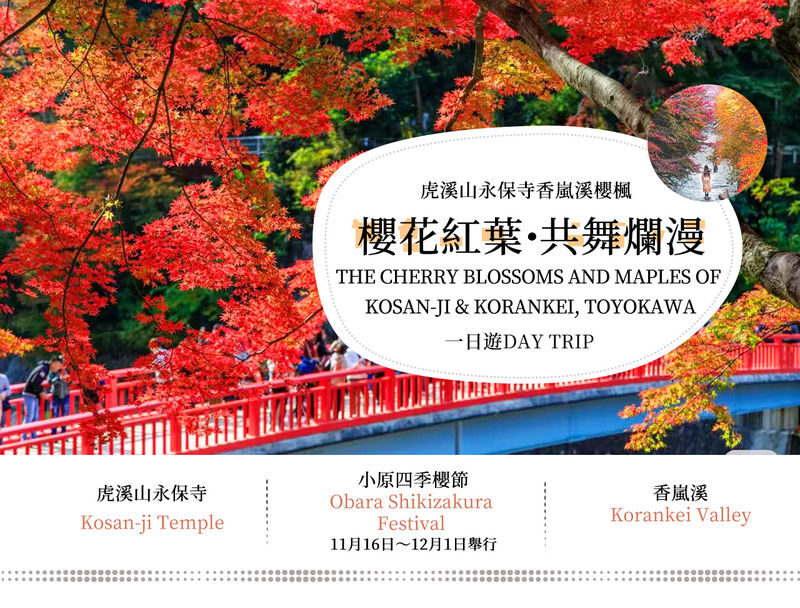
This outing strings together three places with very different moods. At Kokeizan Eiho-ji, the appeal is a quiet temple setting and venerable trees. Obara is about the uncommon sight of cherry flowers appearing alongside autumn color. Korankei is the grand finale, with thousands of maples and the most time to wander.
That variety is the tour’s central strength. You are not spending a whole day at one famous viewpoint, and you do not have to arrange transport between several destinations yourself. Instead, you get a brisk sampler of Aichi’s seasonal sights, with a driver-guide handling the road and each stop left to your own pace.
The route also asks you to accept a few limits. There is no promise that every tree will be at peak color or bloom on your date. And because this is a fixed group itinerary, you cannot add an unplanned stop or linger indefinitely when a view catches your eye.
Eiho-ji: an old ginkgo and a temple garden
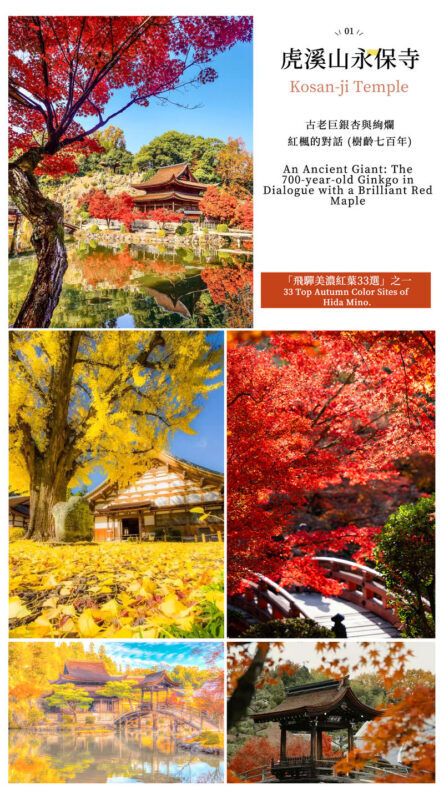
The first stop is Kokeizan Eiho-ji, reached around 11:00 for about an hour of self-guided time. Founded during the Kamakura period by the Zen master Muso Kokushi, the temple takes its name from the Tiger Stream of Mount Lu, a place whose scenery it recalls.
The grounds give you more than a quick look at a famous tree. The temple’s pond garden is designated a national scenic spot, and the Kannondo and Kaisando halls are national treasures. In front of the main hall, a ginkgo believed to be about 700 years old is a natural monument. Ceramic lanterns add another detail to notice as you walk through.
I like this opening stop because it sets a calmer pace before the more crowded foliage sites. It also gives the day some substance beyond seasonal color: you are seeing an old religious site with notable architecture and a garden, not simply stopping for a photograph.
An hour is enough for a focused visit, but not a long temple ramble. You will want to decide what matters most: the ginkgo, the garden, or a closer look at the halls. The itinerary is self-guided, so watch the time and return to the meeting point promptly.
You can also read our reviews of more tours and experiences in Aichi.

Obara: autumn cherry blossoms, if the timing works
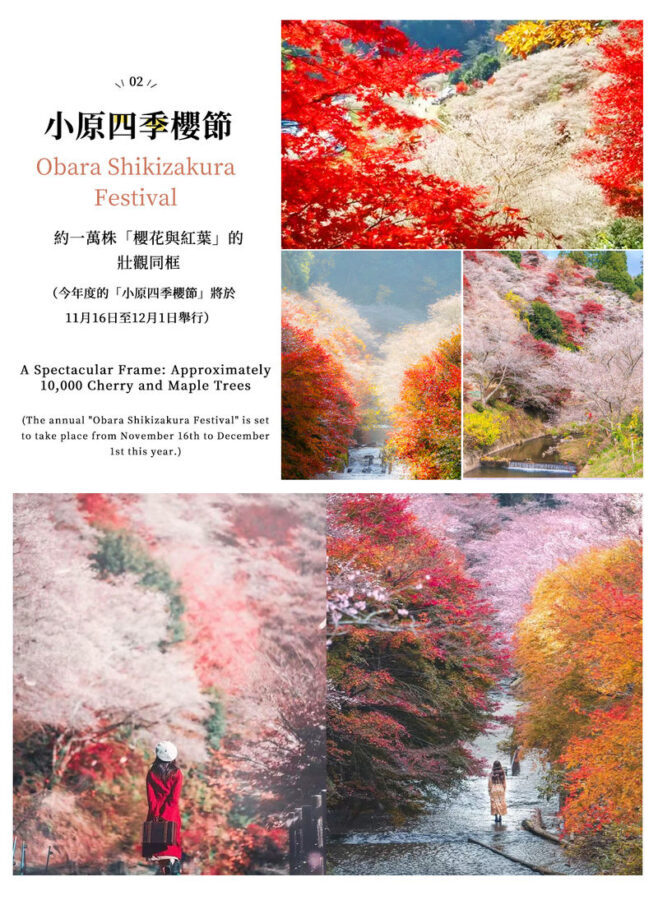
The tour reaches the Obara Shikizakura Festival at about 13:15, with roughly 30 minutes to explore. Shikizakura is a hybrid cherry tree that can flower in both spring and autumn, unlike the familiar Somei Yoshino cherry. In the right conditions, more than ten thousand Shikizakura trees and autumn foliage share the view.
That pairing is genuinely unusual. Cherry blossoms usually signal spring, while red and gold leaves mark fall. Seeing both in the same season can make Obara the day’s most distinctive stop, especially if the flowers and maple color are both showing well.
But this is also the stop most exposed to timing and weather. The festival is scheduled for November 16 to December 1, with local events and stalls, yet a festival date does not guarantee that every tree will be in bloom. A cold, rainy, or windy day can make a short stop feel shorter still. One person on a late-November trip found the blossoms absent and the weather bitter, while another visitor enjoyed the cherry-and-maple combination. That is the honest bargain with seasonal nature: the calendar offers a window, not a contract.
Thirty minutes is a brief visit, so keep expectations measured. You can take in the area and look for the flower-and-leaf contrast, but you will not have a long festival stay. If Shikizakura is your main reason for booking, check the seasonal timing as close to departure as possible, while remembering that the tour does not offer refunds simply because the natural display is less impressive than hoped.
Korankei: the day’s biggest maple stop
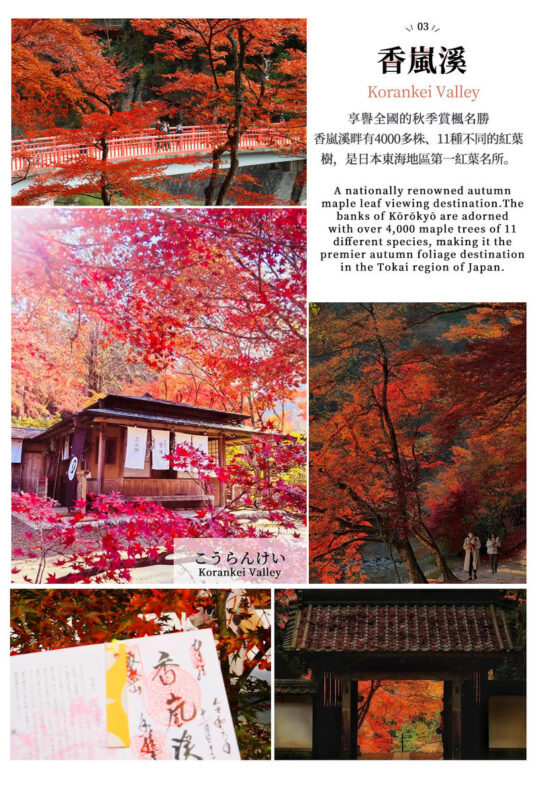
Korankei is the longest and most famous foliage visit, scheduled for about 15:00. The stated stay can range from 120 to 210 minutes, depending on traffic and other conditions. This is valuable flexibility: the stop gets more room than the other two, though the precise amount of free time is not fixed.
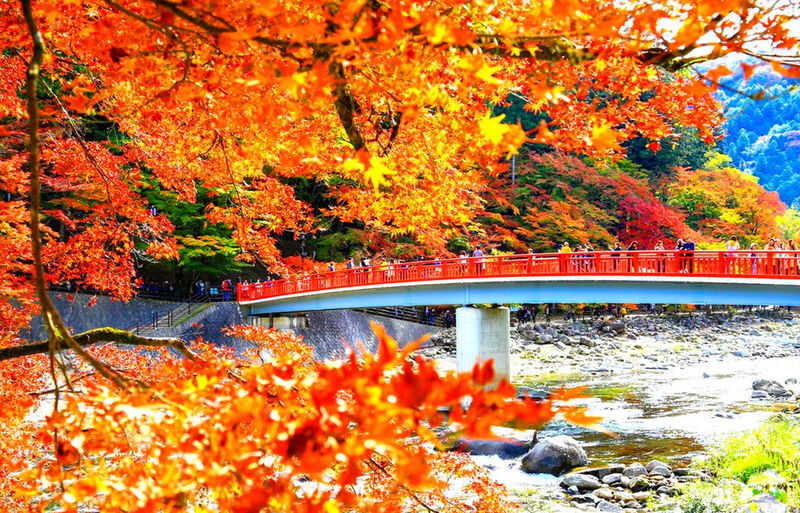
The valley is known as a leading autumn foliage destination in the Tokai region. Its name connects Korankei with Koujaku-ji Temple and Mt. Arashi. In the 17th century, a Zen priest named Sansuei began planting maples here; today, more than 4,000 trees in 11 varieties color the area.
That scale explains why Korankei is the anchor of the tour. It is not just a single tree or a quick roadside view. You have time to walk around and enjoy the broader display, and the range of maple varieties gives the seasonal show a character of its own. The exact color will still depend on the weather and the date.
A three-hour visit has been enough for some people to enjoy Korankei without feeling rushed, though your pace and the day’s conditions matter. One practical wrinkle: when traffic is heavy, getting back to the vehicle from the parking area can take time. Listen carefully to the guide’s meeting instructions and leave a buffer rather than assuming the bus is a few steps away.
What the schedule feels like on the ground
The day begins at 10:00 in Nagoya, followed by Eiho-ji at about 11:00, Obara at 13:15, and Korankei at 15:00. The return to Nagoya is listed around 20:00 to 20:30, but the actual arrival can be earlier or later as road conditions change. The tour also notes that the return journey begins at 18:30, so treat the arrival estimate as a guide rather than a firm appointment.
This is a long day, with considerable time spent moving between stops. The payoff is that you do not have to navigate the route, pay separate tolls, find parking, or coordinate several connections during peak foliage season. For many people, that convenience is worth more than the freedom of an independent itinerary.
The tour is a multilingual group outing. Services may be in Chinese and English, or simple multiple-language communication, and the vehicle may be a small car with the driver also serving as guide if the group is small. In that arrangement, driving safely comes first, so expect relatively brief commentary rather than a running lecture. A guide named Ms. Guo has been praised for useful advice, thoughtful arrangements, and help taking photos, but guide assignments can vary.
Is the price good value?
The experience is advertised from $49.20, while the named Xianglan Stream Cherry and Maple Leaves package is listed from $70.29. Check the exact option and date when booking, since those prices refer to different displayed amounts. The value is not just the seat: round-trip transfers, tolls, parking, and fuel are included.
Compare that with the time and effort of arranging three stops on your own. This tour offers a practical way to see a temple, the Obara festival area, and Korankei in one day without planning the driving. It is particularly useful if you are staying in Nagoya and want to avoid managing transport during a busy seasonal period.
The compromise is control. You follow a set route, cannot ask for temporary stops outside the planned sights, and have limited time at each place. If you want to spend half a day at Korankei, wait for ideal light, or linger at a temple, an independent trip may suit you better. If you want the three-part overview with transport sorted, the fare can be a sensible use of your day.
A few practical details before you go
Arrive at the Nagoya Station Taikodori Exit meeting point 15 minutes before departure. The address is 5-10 Tsubakicho, Nakamura-ku, Nagoya, near the Ministop Tsubakicho store. The guide does not contact participants in advance; vehicle and guide details are sent by email between 16:00 and 22:00 Japan time on the day before departure. If several messages arrive, use the latest one.
Plan for a full day and avoid scheduling evening plans that depend on a precise return time. Traffic, weather, and holiday crowds can affect the route, the order of visits, and the time you arrive back. Bring clothing suited to the forecast, especially because rain and wind can make a foliage day cold.
Each passenger may bring one piece of luggage at no extra cost. Additional bags cost ¥2,000 each, and the vehicle operator can refuse a booking if the group or luggage exceeds vehicle capacity. Children aged 3 and older pay the adult rate; children aged 0 to 2 ride free only if they do not need a separate seat. Child seats are not available.
Who should book this autumn day trip?
I would choose this tour if I wanted to see several seasonal highlights without managing the transport myself. It suits first-time visitors to the area, people with a single open day in Nagoya, and anyone happy to trade a little freedom for an organized route. The 700-year-old ginkgo and Korankei’s extensive maple groves are appealing even if the Shikizakura bloom is modest.
I would hesitate if you have a fixed evening commitment, need a highly accessible vehicle, or want a slow, in-depth visit at one site. The schedule can change, and the natural display may not match your hopes. Seniors aged 70 or older need a medical certificate, and seniors in that age group or pregnant participants must also submit a waiver form by the day before departure.
Book it for the range and the easy transport, not for a guaranteed peak-bloom photograph. If you can be flexible about weather, timing, and the return hour, this is a practical way to connect three very different autumn sights in one long day.
Must-See Autumn Foliage Spots in Nagoya, Japan | Kokeizan Eiho-ji Temple: 700-Year-Old Ginkgo Trees & the Unique Spectacle of Obara Cherry Blossoms and Maple Leaves Together & Korankei Valley Autumn Leaves One-Day Tour
“It rained at least 3/4 of the day on Nov 25, Korankei and the temple was worth a visit the view was spectacular. The cherry tree place can skip as…”
FAQ
Where does the tour depart from?
It departs from Nagoya Station’s Taikodori Exit, by the Ministop Tsubakicho store at 5-10 Tsubakicho, Nakamura-ku, Nagoya.
What time should I arrive at the meeting point?
Arrive 15 minutes before the 10:00 departure.
When should I expect to return to Nagoya?
The stated return estimate is 20:00 to 20:30, but the actual arrival time varies with road conditions.
How long is the stop at Eiho-ji Temple?
The planned visit is about one hour, and it is self-guided.
How much time is planned at Obara?
The planned stop is about 30 minutes, and it is self-guided.
How much time can I spend at Korankei?
The stay may range from 120 to 210 minutes, depending on traffic and other conditions.
Are cherry blossoms guaranteed at Obara?
No. Shikizakura can bloom in autumn, but natural conditions affect the actual display.
What is included in the tour price?
The tour includes a professional driver-guide, round-trip transfers, toll fees, parking fees, and fuel fees. Personal expenses and tips are not included.
Can children join the tour?
Yes. Children aged 0 to 2 can join free if they do not occupy a separate seat. Children aged 3 and older pay the adult rate. All infants and children must be included in the passenger headcount, and child seats are not available.
Can I bring luggage?
Each passenger can bring one piece of luggage free. Additional pieces cost ¥2,000 each, and luggage must fit the vehicle’s capacity.