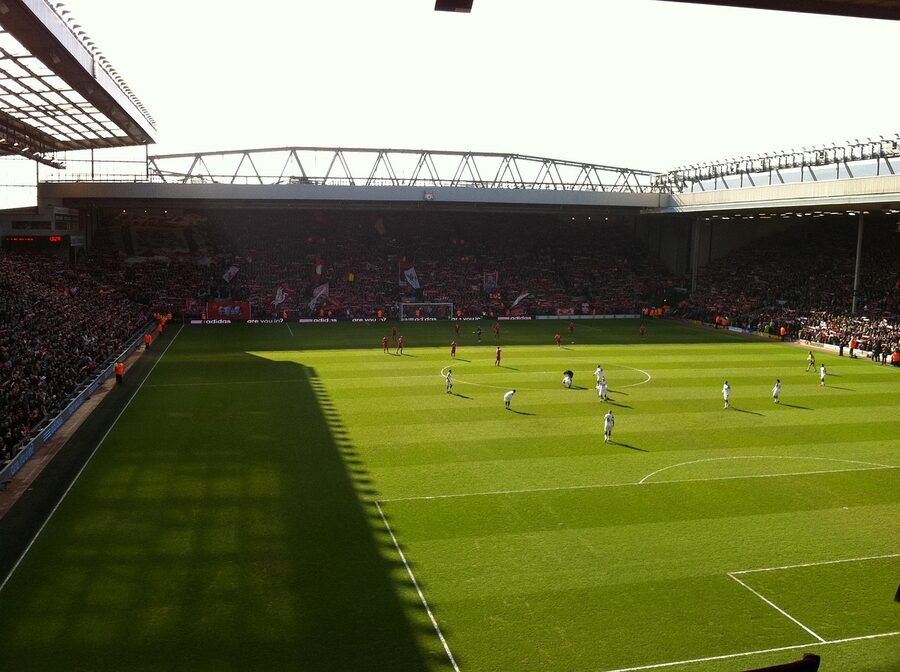
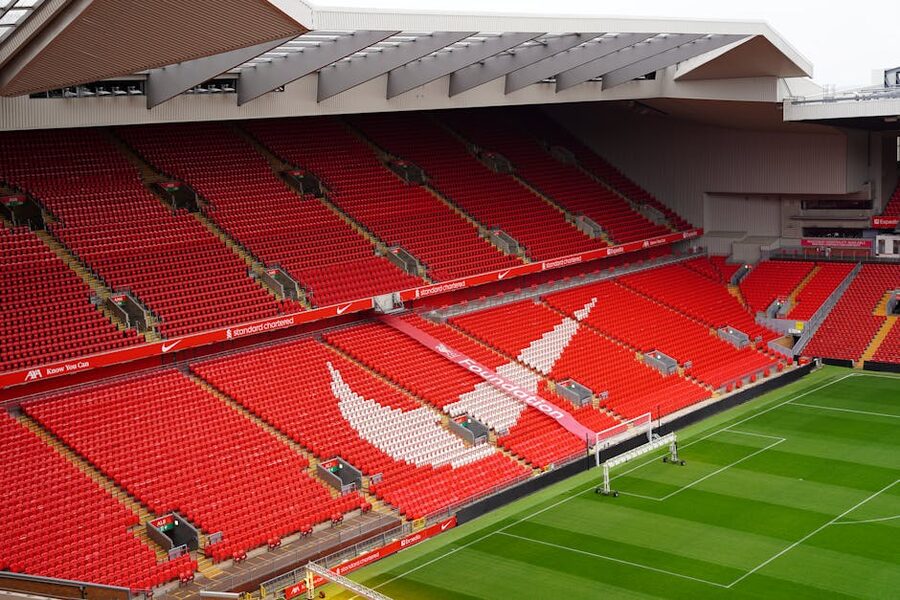
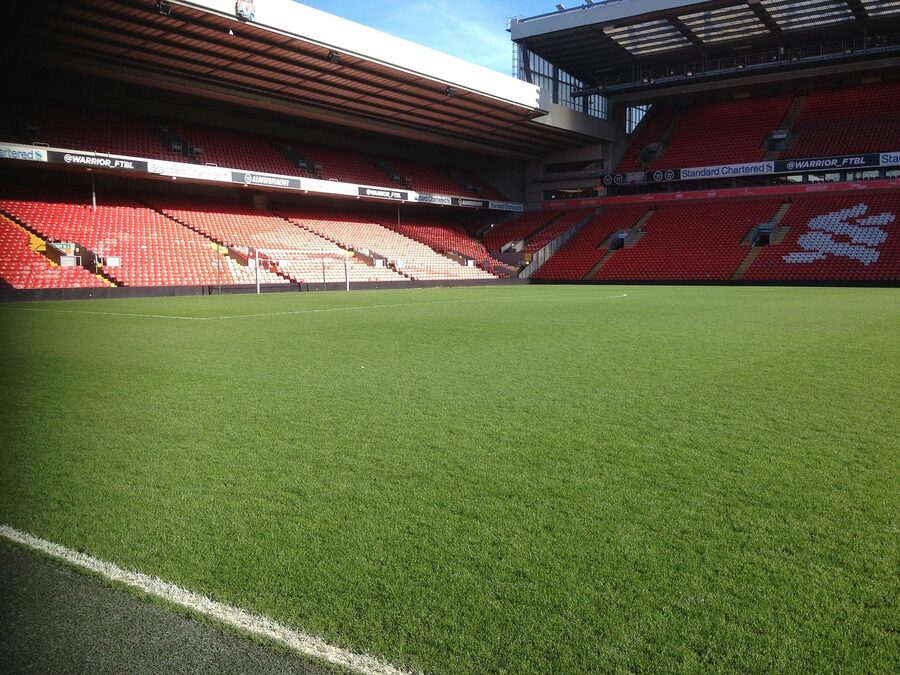
You smell the cut grass and stale beer first, even on a non-match day. Then you hear it from a tinny speaker somewhere above the press box: a recording of You’ll Never Walk Alone, scratchy and cathedral-loud at the same time. Standing on the lip of the Anfield pitch in an empty 61,276-seat bowl is a strange kind of holy. The Kop looms behind the goal, painted red, waiting.
This is a guide to actually booking the Liverpool FC stadium tour at Anfield. Prices, what you see, when to go, and the three tour formats that are worth your money. I’ve put the route, the trophies, the abseil option, and the bits competitors leave out further down. Skip to the bookings if you’re in a rush.
- In a Hurry: My Top Three Anfield Tour Picks
- What Anfield Actually Is
- The Three Anfield Tour Formats Worth Booking
- 1. Liverpool Football Club Museum and Stadium Tour: from pp
- 2. Legends Q&A and Stadium Tour: from pp
- 3. Anfield Abseil & Liverpool FC Museum: from pp
- What’s on the Standard Tour Route
- The “This is Anfield” Sign
- The Kop and Why It Matters
- The LFC Museum: What’s Actually In It
- If You Want the Abseil
- Booking Logistics
- When Anfield is Open for Tours
- How Far in Advance to Book
- How Much It Costs
- What to Bring
- Getting to Anfield
- Where to Stay Near Anfield
- Pairing Anfield with the Rest of Liverpool
- Anfield vs the Other Big English Football Tours
- A Quick History Detour
- Things People Get Wrong About Anfield
- Food and Drink Around the Ground
- Accessibility
- One Liverpool Tip the Locals Will Tell You
- Pairing with Other Liverpool Stuff Worth Doing
In a Hurry: My Top Three Anfield Tour Picks
Stadium & Museum (audio-guided) at around $33pp. The standard tour and the one I’d book first if it’s your first visit. Check availability
Legends Q&A + Stadium Tour at around $74pp. A former player sits with you for half an hour of stories, then the full tour. Worth it if you grew up watching them. Check availability
Anfield Abseil + LFC Museum at around $60pp. You drop 100ft off the front of the Main Stand. Not for everyone. Check availability
What Anfield Actually Is
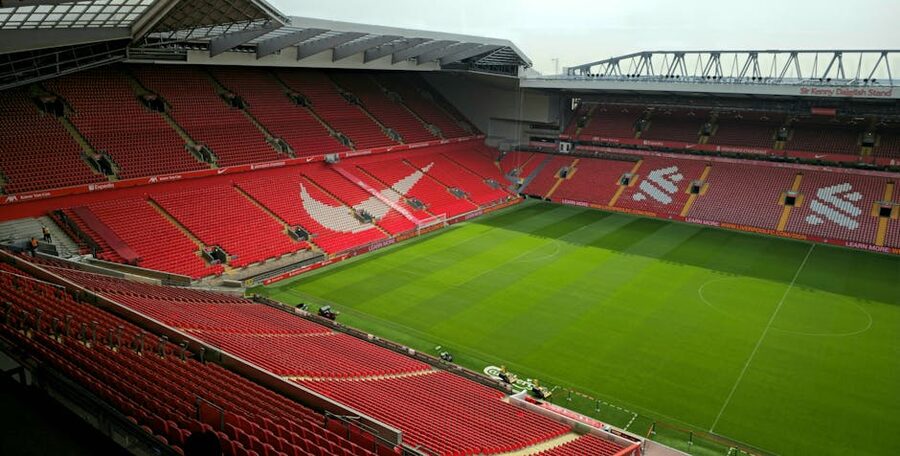
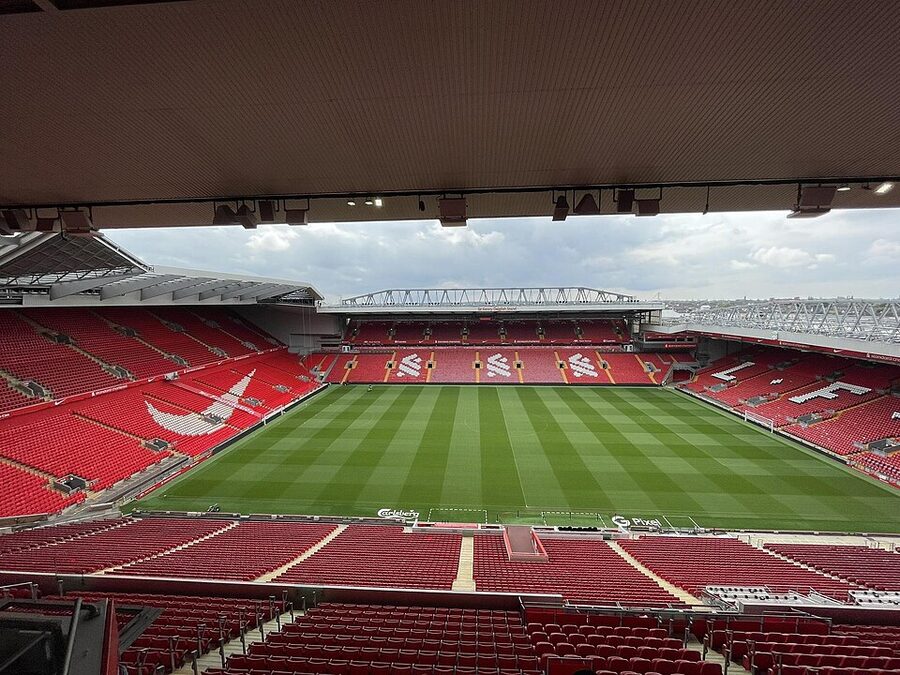
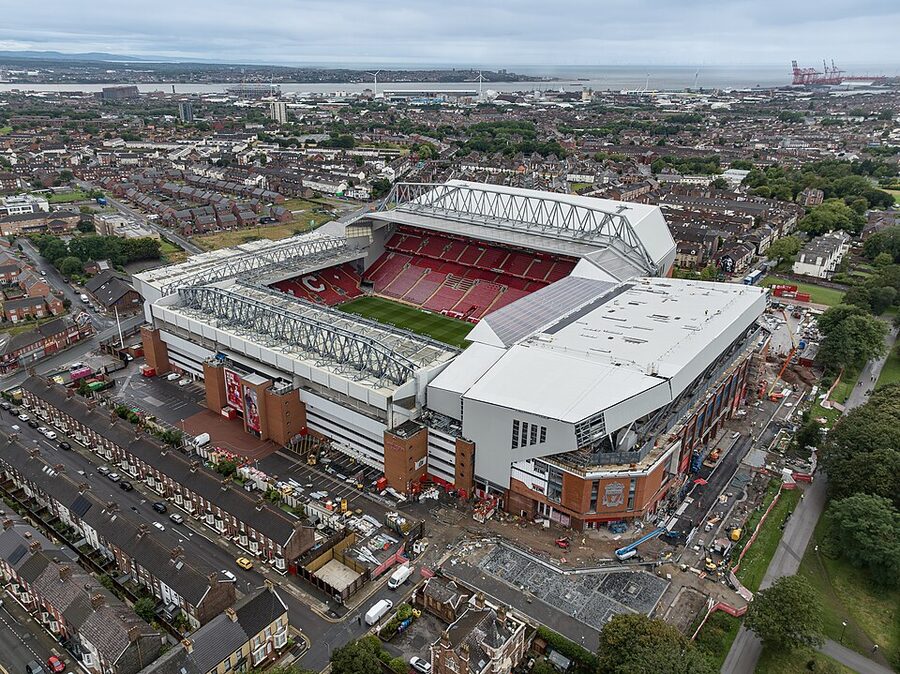
Anfield has been Liverpool FC’s home since 1892. Capacity now sits at 61,276 after the Anfield Road End redevelopment finished in 2023. That makes it the third-biggest club ground in England behind Old Trafford and the Tottenham Hotspur Stadium.
The four stands are the Main Stand (where you start the tour), the Kop behind the south goal, the Anfield Road End (the new build) and the Sir Kenny Dalglish Stand on the far side. The Kop is the part you’ll have seen on TV. It holds about 12,000 standing-equivalent seated fans and it’s where the singing starts.
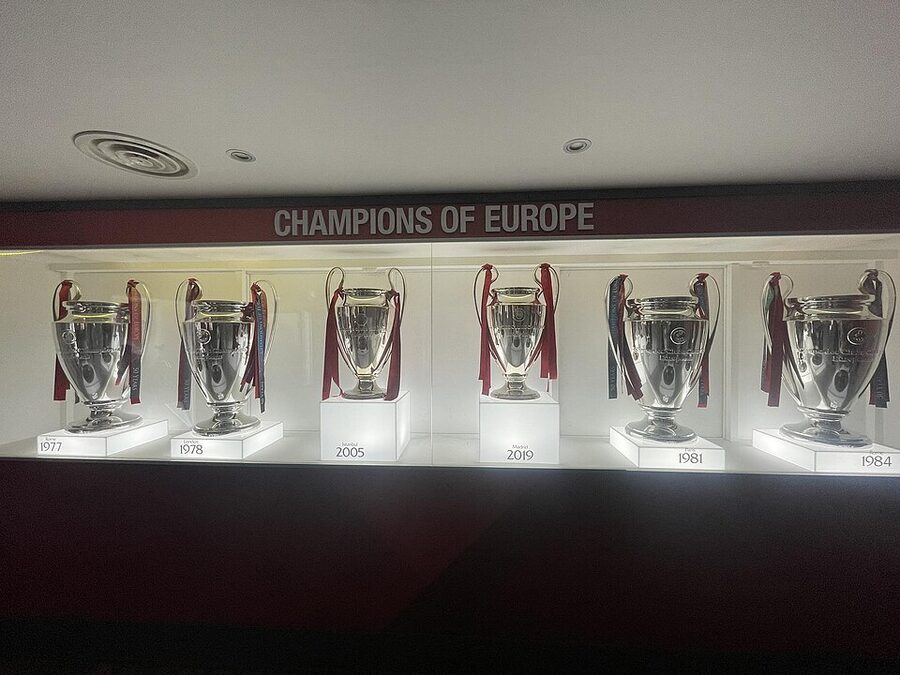
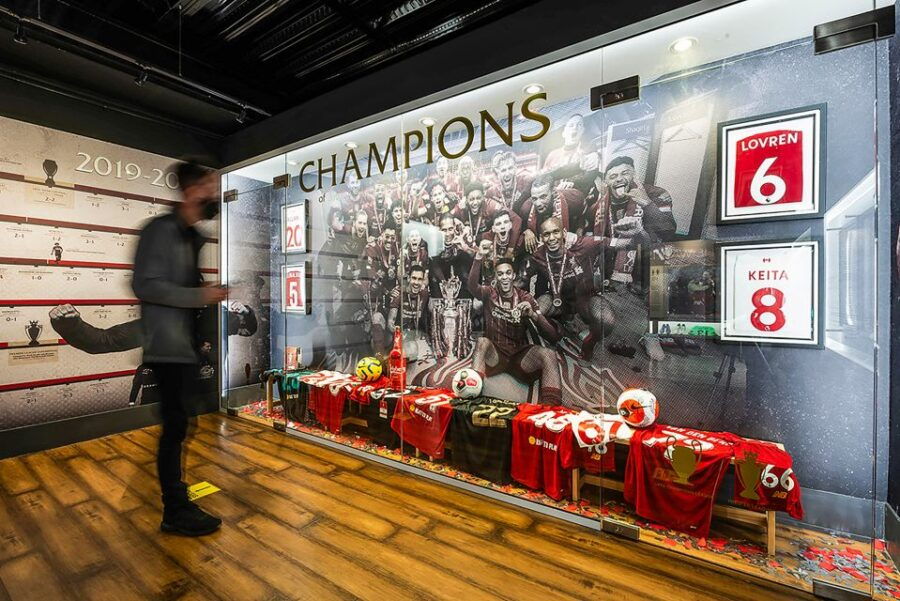
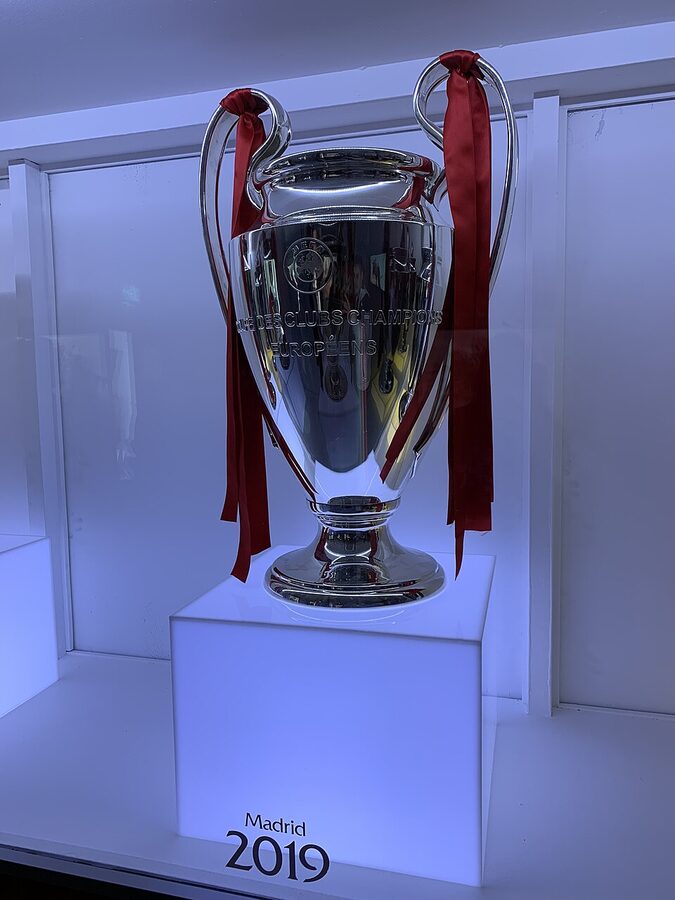
For context: the club has won 19 league titles, 8 FA Cups, 10 League Cups, and 6 European Cups/Champions Leagues. The most recent two Champions League finals are the ones the museum leans into hardest. Madrid 2019 against Spurs. Istanbul 2005, the comeback from 3-0 down at half-time against Milan, which most Liverpool fans can recite verbatim. Both are in the Boom Room exhibition near the end of the tour.
The Three Anfield Tour Formats Worth Booking
Liverpool FC sells stadium experiences through GetYourGuide and a few resellers, plus their own bookings.liverpoolfc.com site. Prices and availability sync across most platforms. I’ve stuck to the three that are actually worth your time.
1. Liverpool Football Club Museum and Stadium Tour: from $33pp
This is the one you book if you’ve never been before. It’s the most-reviewed Anfield tour by a wide margin and the audio-guided format means you can take it at your own pace, which matters because the Boom Room exhibits have more video than you’d think. Our full review of the Stadium and Museum tour covers what’s inside the players’ lounge and which audio-guide language tracks have the best music edits.
2. Legends Q&A and Stadium Tour: from $74pp

You sit down for half an hour with a former player. The rotation when I last looked included Ian Callaghan, Jan Molby, John Aldridge, Phil Neal, Phil Thompson and Terry McDermott. The stories are unguarded and a bit profane, which is the point. The Q&A leads into the full stadium walkthrough afterwards. My review of the Legends Q&A goes into which legends rotate on which weekdays, since that’s the question I get most.
3. Anfield Abseil & Liverpool FC Museum: from $60pp

I’m sticking this one third because it’s a niche pick. You don’t get the full stadium tour with this booking, just the museum plus the abseil itself. If you’re scared of heights, skip it; if you’re not, it’s the most physical thing you can do in football tourism. Our Anfield Abseil writeup walks through what the harness check feels like and how long the queue is at the top.
What’s on the Standard Tour Route
The standard audio-guided tour runs about 70 to 90 minutes for the stadium part, plus another 30 to 60 minutes in the museum. You can do them in either order; most groups start with the stadium. Here’s what you actually walk through:
- Main Stand upper concourse, where you pick up the audio handset. The view from here is the one in every aerial Anfield photo.
- Press conference room. Same lectern Klopp banged his fist on. The mock backdrop is up most days.
- Home dressing room. Smaller than you’d expect. Each peg is named, and they reorganise it on a rota.
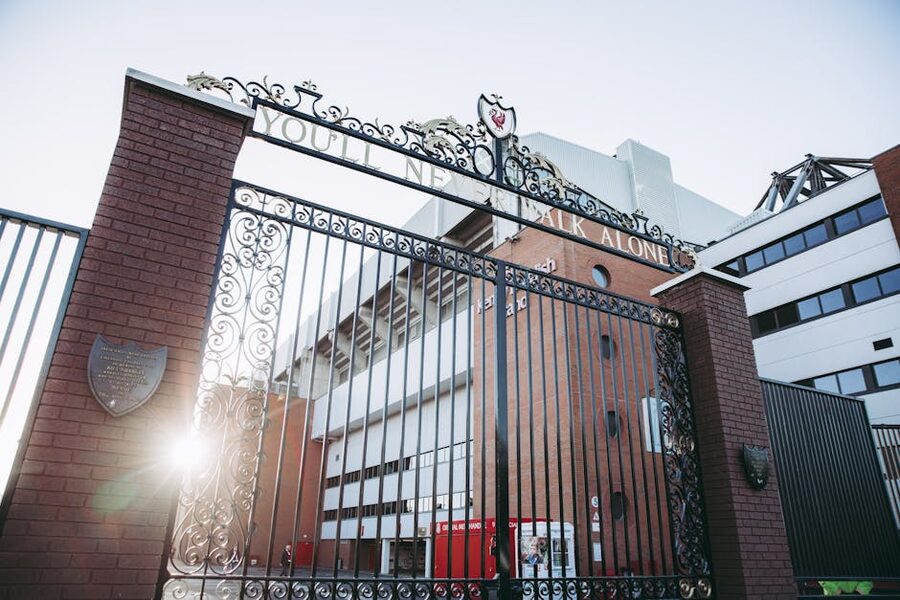
- Players’ tunnel and “This is Anfield” sign. The sign is at head height as you walk out. You touch it with your right hand. So does every player.
- Pitchside. You walk to the manager’s bench, sit if you want, and look up at the Kop from the dugout angle.
- The Kop end concourse. The terrace itself is roped off but you get the sightline.
- LFC Museum and trophy room. Six Champions League trophies, FA Cups, the Boom Room.
The “This is Anfield” Sign
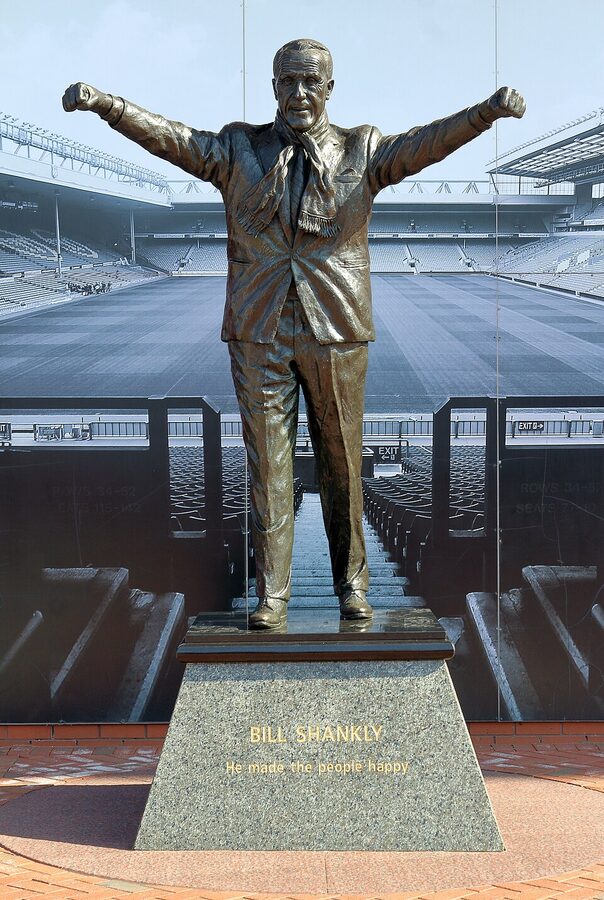
Worth its own section because it’s the moment that catches people. The original 1974 sign is in the museum behind glass. The one you actually touch on the tour is the dressing-room replacement, but the ritual is real and the players do it for every home game. Bill Shankly put the sign up to remind the team and the visitors what they were walking into.
The Kop and Why It Matters
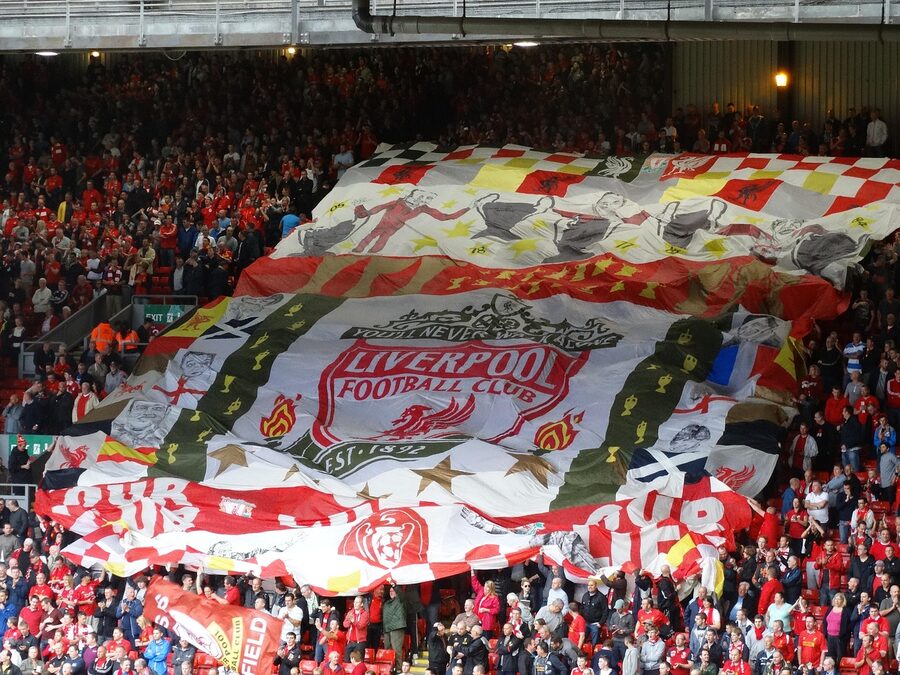
The Kop is the south stand. It started as a packed-earth terrace in 1906, named after Spion Kop, a hill in South Africa where Liverpool soldiers had died in the Boer War. For most of the 20th century it was standing-only, capacity around 28,000, and it’s where the modern football crowd-singing tradition arguably started. You’ll Never Walk Alone got picked up in 1963 from a Gerry and the Pacemakers cover, and it stuck.
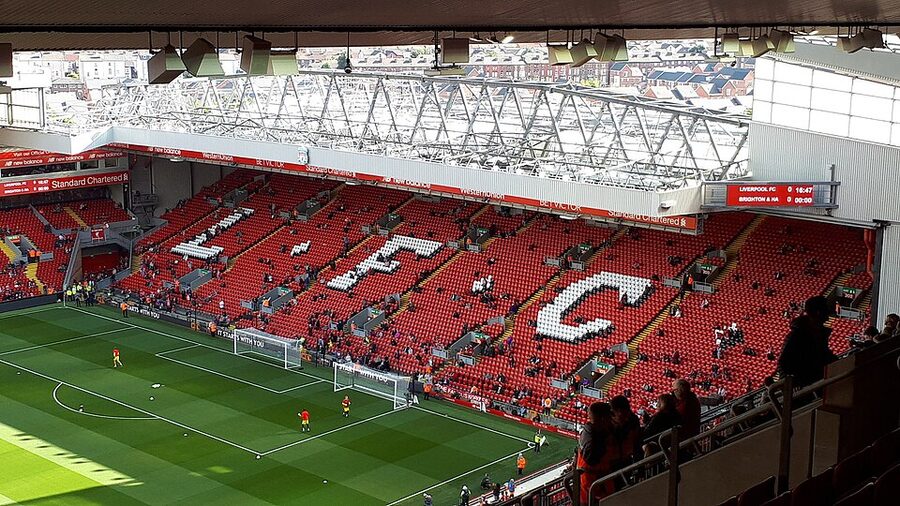
On the tour you don’t sing. But the audio guide cues up a recording at the right moment and people do go quiet. It’s a touristy bit and I rolled my eyes the first time, then I found myself staring at the painted YNWA banner across the back wall longer than I’d planned to.
The LFC Museum: What’s Actually In It
The museum sits inside the Kop stand at the south end of the ground. It’s smaller than I expected, about an hour at a normal pace, and the curation has improved a lot since the 2018 refurb. The Boom Room is the highlight. Big screens, a Steven Gerrard Istanbul jersey, and an interactive panel where you tap on a year and the trophies from that season light up.
Rooms in roughly the order you walk them:
- The early years: Anfield’s first XI, the Houlding split with Everton in 1892, the wooden-rattle era.
- Shankly and the boot room: where the Anfield boot-room culture is explained, with a recreation.
- European cups: 1977 Rome, 1978 Wembley, 1981 Paris, 1984 Rome again, 2005 Istanbul, 2019 Madrid.
- The Boom Room: the modern-era room, built for selfies, and surprisingly fun.
- Trophy hall: 19 league titles in vertical glass cabinets.
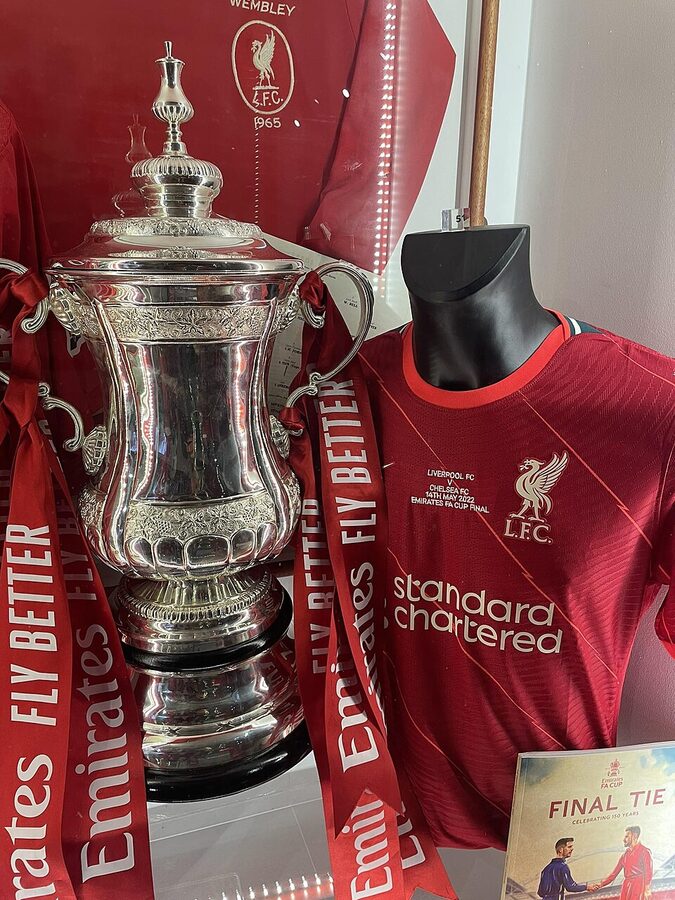
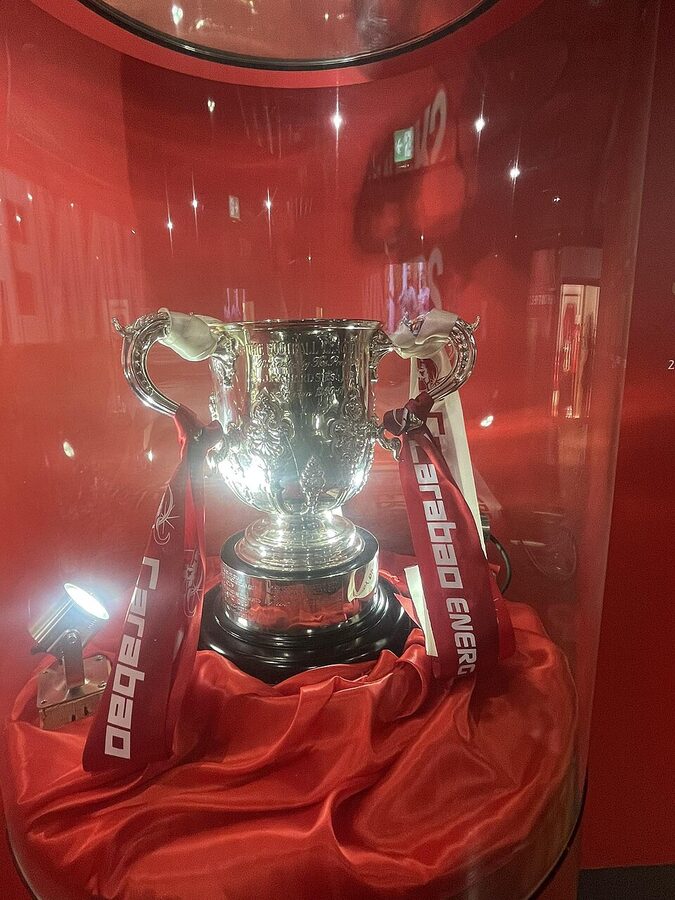
One quiet pick: there’s a tiny cabinet in the Shankly Room with handwritten team-talk notes from the 1960s. Most groups walk past. Slow down for a minute.
If You Want the Abseil
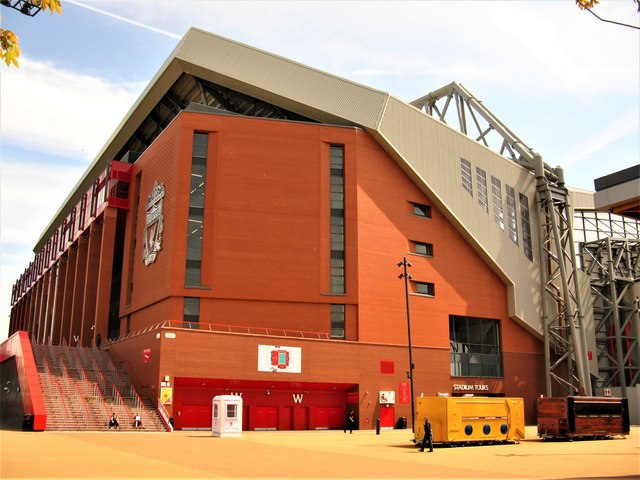
The Anfield Abseil is run from the front edge of the Main Stand. You drop just over 100ft on a static rope with two instructors managing the harness. Bookings open in batches and slots vanish fast for school holidays. You get the museum entry as a combo, but not the full stadium tour, so if you want both you’ll need two separate bookings (or a half-day allocated for the abseil and a separate morning for the standard tour). Our Anfield Abseil review covers exactly what to wear and which weather conditions cancel slots.
Booking Logistics
When Anfield is Open for Tours
Stadium tours run daily 10am to 3pm, with the last admission at 2:30pm. The museum opens earlier and closes later, 9:30am to 5pm, last entry 4:30pm. Closed on December 25, January 1, and (typically) Good Friday. The public site lists the dates each year. Most importantly, tours don’t run on match days. Check the LFC fixture list against your travel dates before you book a flight.
How Far in Advance to Book
School holidays and weekends sell out two to three weeks ahead. Weekday mornings outside school holidays often have same-week availability. The Legends Q&A is a different beast: those slots cap at maybe 30 people per session and they go a month or more out. The abseil runs in chunks (specific dates) so check the calendar months ahead.
How Much It Costs
Standard adult: from $33. Child (5 to 16): roughly half. Under 5s free but still need a ticket. Legends Q&A: $74. Anfield Abseil + museum: $60. Add the LFC Foundation £1 voluntary donation that pops up at checkout. It’s small money for a youth football charity, easy yes.
What to Bring
- Photo ID is not required for the standard tour but is for the Legends Q&A (security check at door).
- Big bags get checked. Stick to a daypack.
- Phones and small cameras fine; tripods restricted in the museum.
- Pen if you want autographs at the Legends session. They sign team sheets afterwards.
Getting to Anfield
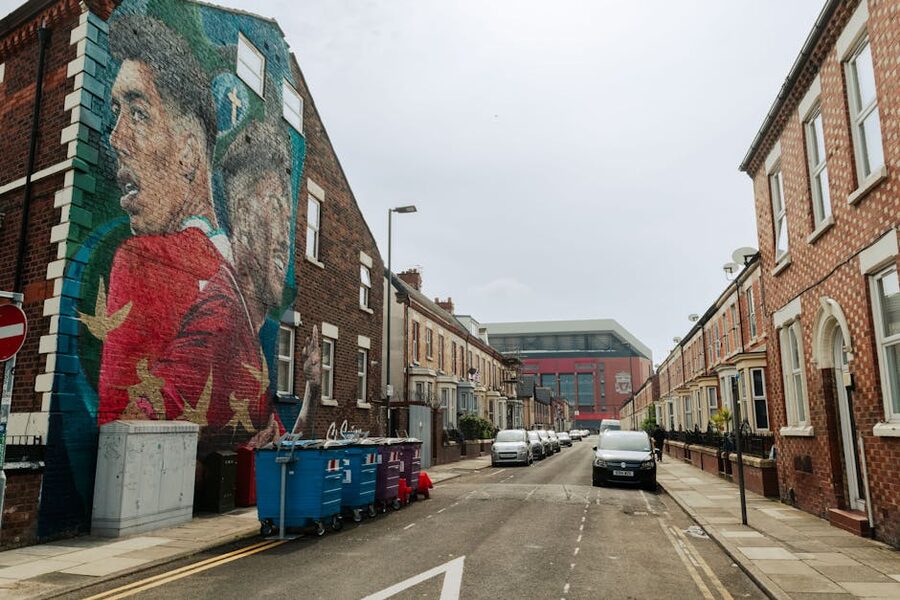
Anfield is in Walton, about 3 miles north-east of Liverpool city centre. Three options:
- 917 Soccerbus: from Sandhills station (Merseyrail) to right outside the ground. About £2.50, runs every 10 minutes on tour days.
- 26 / 27 bus: from Queen Square in the city centre, around 25 minutes.
- Walking: a flat-ish 50-minute walk from Lime Street through Everton Park. I’d do this if the weather’s good and you want a feel for the city.
Where to Stay Near Anfield
If your visit is purely Anfield-focused, you don’t need to stay nearby. The city is small and transport is easy. But the Sandhills end of Liverpool has a couple of clean-and-cheap chain hotels (Premier Inn and Travelodge) within walking distance of the Soccerbus, which I’d go for if you’ve got an early-morning tour booked.
Pairing Anfield with the Rest of Liverpool
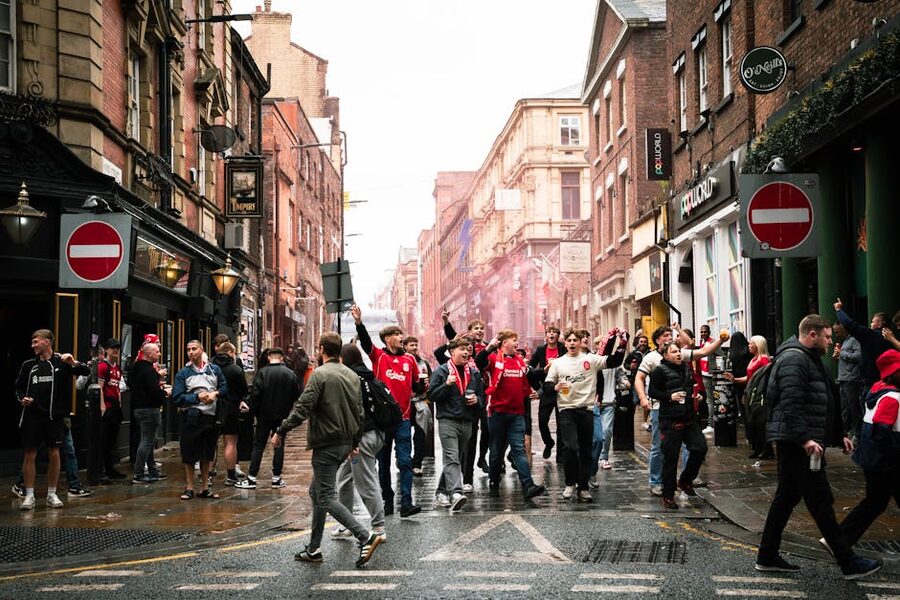
The standard mistake is booking just Anfield and leaving the same day. Liverpool punches above its weight on a weekend break. Pair the stadium with at least one Beatles thing and a pub crawl through the Cavern Quarter and you’ve got a packed two-day trip.
Some practical pairings:
- If you’ve got two full days, do the stadium morning + a Beatles tour around Penny Lane and Strawberry Field in the afternoon.
- If music’s your thing more than football, the Beatles Story exhibition in Albert Dock is the obvious add-on; it’s the world’s largest permanent Beatles collection and it’s a 20-minute taxi from Anfield.
- For a one-day flying visit, a Liverpool city + Beatles combo covers the docks, the Liver Building and the Beatles sites in a coach loop and you can squeeze a stadium tour either side.
Anfield vs the Other Big English Football Tours
If you’re trying to pick between English stadium tours on a single trip, here’s the rough hierarchy from someone who’s done all the major ones:
- Anfield: history, atmosphere, story-rich. Best museum of the lot.
- Old Trafford: the rival, similar vibe, currently scaffolded in places due to renovation talk.
- Etihad (Manchester City): modern, slick, less aura. Worth it if you’re a City fan; otherwise Anfield wins. Our Etihad guide gets into when to choose it over Anfield.
- Emirates (Arsenal): tight little museum, very London. London Emirates guide covers booking specifics.
- Stamford Bridge (Chelsea): smaller-feeling tour. Decent. London Chelsea guide has the price comparison.
If you’re a casual fan rather than committed to one club, my pick goes Anfield > Emirates > Etihad > Old Trafford > Stamford Bridge. Anfield is the most genuine. Emirates is the slickest. Old Trafford is the most weighed down by history. Etihad is the easiest to combine with the rest of Manchester. Make of that what you will.
A Quick History Detour
Anfield wasn’t always Liverpool FC’s. It was actually Everton’s home from 1884 to 1892, before a rent dispute with the landowner John Houlding. Everton walked across Stanley Park to a new ground (Goodison), and Houlding founded a new club to keep his stadium tenanted. That new club was Liverpool FC. The original 1892 Liverpool team was largely Scottish imports because Everton had the local players and Houlding needed a squad fast.
The Kop went up as a banked-cinder terrace in 1906. The main stand (the original one) was a wooden affair until a 1971 redevelopment turned it into a proper double-decker stand. The 2016 expansion of the Main Stand brought capacity past 54,000, and the Anfield Road End rebuild took it to today’s 61,276.
Things People Get Wrong About Anfield
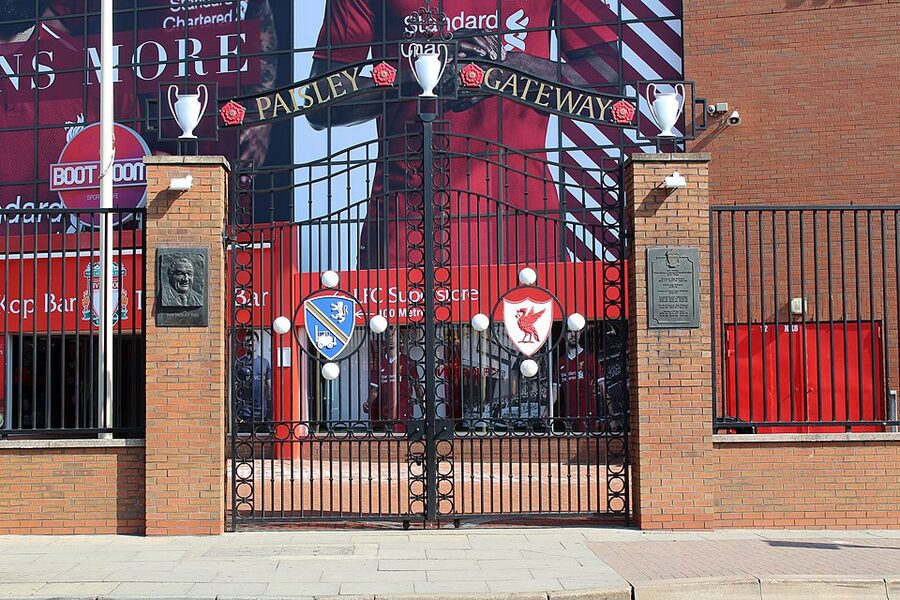
A handful of corrections I keep having to make to friends planning visits:
- You can’t tour on match days. Even the morning of a match. Don’t try.
- The “This is Anfield” sign you touch is a replica. The 1974 original is in the museum.
- The shop is bigger than the museum. Budget time accordingly if you’ve got family asking for shirts.
- You don’t see the away dressing room. Only the home one. The away room is famously plain and the LFC tour leans into the rivalry-flavoured idea that visiting teams should be uncomfortable. They don’t show it on purpose.
- The Kop terrace is a no-go zone for tours. You stand at the rear of the lower section. You don’t get up onto the steps.
Food and Drink Around the Ground
Skip the inside-stadium food court if you’re on a non-match day; it’s geared for crowd volume and the queues stretch absurdly. Better picks within a 5-minute walk:
- The Park Pub (Walton Breck Road): matchday classic, reasonable on tour days, proper pints.
- The Sandon: the pub where Liverpool FC was founded in 1892 (technically). Schmaltzy, but the location backs it up.
- Homebaked Bakery on Oakfield Road: a co-operative bakery, scouse pies, the local pre-match food. It is brilliant.
If you want a sit-down meal, head back into town for the Baltic Triangle area, about 20 minutes by taxi.
Accessibility
The standard stadium tour has step-free access throughout. Lifts run between the levels of the Main Stand. Audio guides come with hearing-loop compatibility, and there are large-print transcripts available at the Main Stand reception (ask at booking). Wheelchair users do not abseil, for what should be obvious reasons.
One Liverpool Tip the Locals Will Tell You
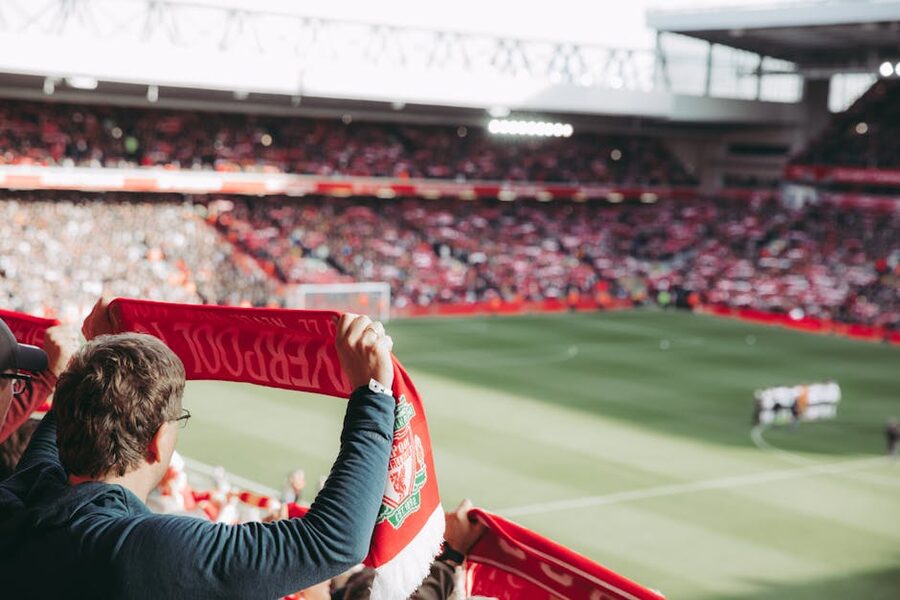
If you can swing it, time your stadium tour for the morning before a Champions League home night. The Boom Room is buzzy with fans flying in for the match, and the Park pub afterwards is the most fun pre-match atmosphere in English football. Just make sure your tour is the morning, not the afternoon. Afternoon tours get cancelled when there’s a 5:30pm kick-off.
Pairing with Other Liverpool Stuff Worth Doing
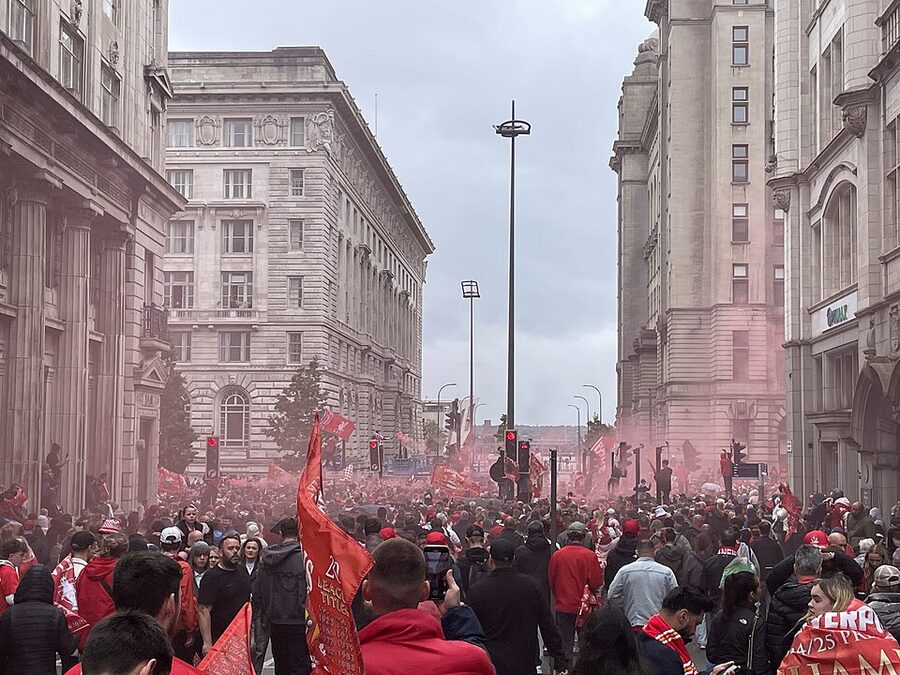
Liverpool punches well above its weight for a two-day visit, and most of the must-do things are within walking distance of each other once you’re back from Anfield. The Beatles bus and walking tours are the obvious add-on, especially if you can get the Penny Lane and Strawberry Field stops on the bus version. For deeper Beatles obsessives the Beatles Story in Albert Dock is genuinely the world’s largest exhibition of its kind, and it pairs naturally with a Mersey ferry crossing. If you’d rather cover the city as a whole on day two, a Liverpool city plus Beatles combo coach with a live guide and live music is the most-reviewed of all the Liverpool day-tour options for a reason. And if you’ve also got Manchester on the trip, the Etihad tour is a natural sister-stadium booking the day after.