
Step back in time and enjoy the thrilling world of ancient Rome at the Gladiator School of Rome.
Discover what it takes to become a gladiator as you learn the art of combat from expert instructors.
Feel the weight of authentic weapons in your hands, don a traditional gladiator tunic and belt, and unleash your inner warrior.
Located near the majestic Colosseum, this unforgettable experience offers personalized attention and the chance to participate in a gladiator tournament.
Don’t miss this exhilarating adventure into the world of gladiators.
- Good To Know
- Overview and Experience
- Inclusions and Logistics
- Gladiator Training and Experience
- Types of Gladiator Competitions and Myths
- Gladiators as Celebrities and Impact on Roman Society
- Common Questions
- How Physically Demanding Is the Gladiator Training at the Gladiator School of Rome?
- Are There Any Age Restrictions for Participating in the Gladiator Training?
- Can Participants Choose the Type of Gladiator Competition They Want to Learn About and Train For?
- How Long Does It Typically Take to Become Proficient in Gladiator Sword Fighting?
- Did Gladiators Have Any Specific Rituals or Traditions Before Entering the Arena for a Fight?
- The Sum Up
- More Tour Reviews in Rome
- Looking for something different? Other Rome activities we've written about
Good To Know
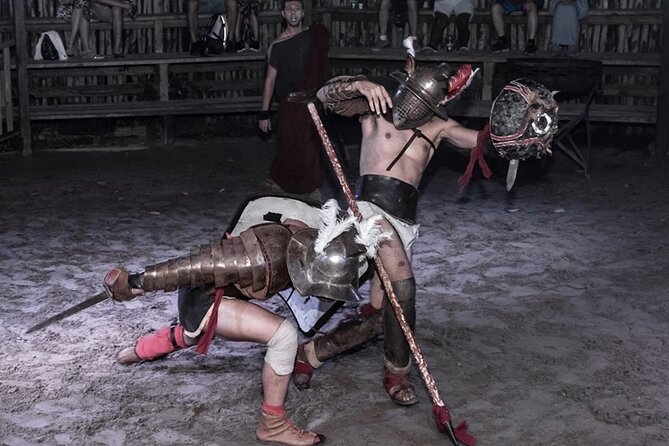
- The Gladiator School of Rome offers a hands-on lesson on becoming an ancient Roman gladiator, taught by instructors from the Historic Group of Rome.
- Participants will learn how to fight with authentic weapons of the time and wear traditional gladiator clothing.
- The school is located on the Appian Way, near the Colosseum, and offers a 2-hour class that includes entrance to the Gladiator School of Rome Museum.
- Gladiators participated in various types of competitions, including duels, wild beast fights, and naval battles, and their role in Roman society was more complex than just being entertainers.
Overview and Experience

Participants can expect a comprehensive two-hour class at the Gladiator School of Rome, where they’ll learn the essential skills and experience the life of an ancient Roman gladiator. Located on the Appian Way near the Colosseum, the school offers a hands-on lesson with instructors from the Historic Group of Rome.
Students will have the opportunity to learn the techniques used by gladiators in ancient Rome, including how to fight with authentic weapons of the time. They’ll even get to wear a traditional gladiator tunic and belt.
The Gladiator School of Rome has a rich history, dating back to the days when gladiatorial games were held in the grand amphitheaters. By participating in this class, students won’t only gain knowledge about the history of gladiators but also experience firsthand what it was like to be one.
Find more activities and experiences we've covered in Rome.
Inclusions and Logistics
Participants in the Roman Gladiator School can expect a range of inclusions and logistical details to enhance their experience. Located on the historic Appian Way, near the iconic Colosseum, the Gladiator School offers a 2-hour class to become a Roman Gladiator in a Day. Instructors from the renowned Historic Group of Rome provide costumes and training swords, allowing participants to learn the basic skills of gladiator sword fighting.
The schedule runs daily from 9:30am to 1:30pm and from 2:00pm to 6:00pm, ensuring flexibility for all. Along With the class, participants also have the opportunity to explore the Gladiator School of Rome Museum and receive a certificate of accomplishment.
The meeting point is at Via Appia Antica, with easy access via public transportation. With its immersive experience and convenient location, the Roman Gladiator School is the perfect destination for those seeking to step into the shoes of ancient warriors.
Gladiator Training and Experience
Gladiator training at the Gladiator School of Rome immerses participants in the ancient world, teaching them the skills and techniques of sword fighting. Instructors from the Historic Group of Rome provide costumes and training swords, allowing participants to experience the thrill of stepping into the shoes of a gladiator.
The training focuses on the basic skills of gladiator sword fighting, providing a hands-on and authentic experience. For those seeking an extra challenge, there’s the option to participate in a gladiator tournament, where participants can put their newly acquired skills to the test. The victor of the tournament even receives a prize.
At the end of the training, all participants receive a certificate of accomplishment, making them official graduates of the Gladiator School of Rome. It’s an unforgettable experience that allows individuals to truly enjoy the world of ancient Rome and the life of a gladiator.
Types of Gladiator Competitions and Myths
Various types of gladiator competitions were held in ancient Rome, attracting large crowds of spectators. These battles were highly entertaining and showcased the skill and bravery of the gladiators.
Here are some types of gladiator battles and myths associated with them:
Duels: Gladiators fought one-on-one, showcasing their individual combat skills.
Wild beast fights: Gladiators faced off against ferocious animals like lions and bears, displaying their courage and agility.
Naval battles: Amphitheaters would be flooded to recreate epic sea battles, where gladiators fought as if they were part of a naval fleet.
Combat techniques: Gladiators were trained in a variety of combat styles, such as using swords, shields, and nets.
Gladiators as volunteers: Not all gladiators were slaves; some chose to become gladiators for fame and fortune.
These competitions played a complex role in Roman society, serving as both entertainment and a form of social control. Gladiators were admired and celebrated, gaining fame and recognition for their victories in the arena. They were even the subject of popular art and literature, with wealthy individuals sponsoring their training and equipment.
Despite the myths and misconceptions, the gladiators’ impact on Roman culture can’t be understated.
Gladiators as Celebrities and Impact on Roman Society
Successful gladiators in ancient Rome garnered fame and recognition through their victories in the arena. They became celebrities in Roman society, admired and celebrated by the masses. Gladiators had fan clubs and were often the subject of popular art and literature. Wealthy individuals would sponsor gladiators, supporting their training and providing them with the best equipment. Gladiators enjoyed a certain level of social status and were sometimes even granted freedom. They underwent rigorous training, including physical conditioning, combat techniques, and weapon mastery. Experienced instructors, known as ‘lanistae,’ trained them intensively, focusing on developing their strength, agility, and endurance. Gladiators played a significant role in Roman culture and entertainment, captivating the public with their daring and skill in the arena. Their popularity reflected the Roman fascination with violence and spectacle, and their performances served as a form of social control, diverting the masses from political and social issues. The decline of gladiatorial games in the later Roman Empire coincided with the rise of Christianity and changing societal values.
| Gladiators in Popular Culture | Gladiators in Literature and Art |
|---|---|
| – Gladiators are often portrayed in movies and TV shows, such as "Gladiator" and "Spartacus". | – Gladiators are depicted in ancient Roman literature, such as the works of Seneca and Juvenal. |
| – They have become iconic figures of strength and bravery in popular culture. | – Gladiators are often depicted in ancient Roman art, such as mosaics and sculptures. |
| – Their stories continue to captivate audiences, showcasing their heroism and determination. | – These artistic representations provide a glimpse into the lives and battles of gladiators. |
| – Gladiators have inspired various forms of media, including books, comics, and video games. | – Their depiction in literature and art contributes to the understanding of Roman society and its fascination with gladiatorial games. |
| – The image of the gladiator has become synonymous with courage and resilience. | – The portrayal of gladiators in literature and art adds depth and richness to the historical record. |
- Rome: San Clemente Underground and Basilica
- Rome by Night-Ebike Tour With Food and Wine Tasting
- Rome: Vatican Museums, Sistine Chapel, and Basilica Tour
- Rome: Colosseum, Palatine & Roman Forum Tour With Fast Entry
- Rome: Vatican Museum, Sistine Chapel&St Peters Guided Tour
- Rome: Borghese Gallery Entry Ticket With Timed Entry
Common Questions
How Physically Demanding Is the Gladiator Training at the Gladiator School of Rome?
The gladiator training at the Gladiator School of Rome is physically demanding. Participants face physical challenges and learn various training techniques. It is an intense and rigorous experience that tests their strength, endurance, and combat skills.
Are There Any Age Restrictions for Participating in the Gladiator Training?
Age restrictions for gladiator training at the Gladiator School of Rome are minimal, with a minimum age requirement of 6 years. Participating in gladiator training at a young age can provide numerous benefits, such as physical fitness, discipline, and historical education.
Can Participants Choose the Type of Gladiator Competition They Want to Learn About and Train For?
Participants at the Roman Gladiator School have the opportunity to choose their gladiator specialty and learn about different types of gladiator competitions. They can train specifically in duels, wild beast fights, or naval battles.
How Long Does It Typically Take to Become Proficient in Gladiator Sword Fighting?
Becoming proficient in gladiator sword fighting typically takes several months of dedicated training. Participants at the Gladiator School of Rome learn various techniques and engage in rigorous practice sessions to hone their skills.
Did Gladiators Have Any Specific Rituals or Traditions Before Entering the Arena for a Fight?
Gladiators trained in various weapons such as swords, spears, and nets. Their training included rigorous physical conditioning and combat techniques. In Roman society, gladiators gained fame and were admired for their victories in the arena.
The Sum Up
Step into the world of ancient Rome and unleash your inner gladiator at the Gladiator School of Rome. With hands-on training, authentic weapons, and a chance to participate in a gladiator tournament, this immersive experience is perfect for history enthusiasts and adventure-seekers alike.
Don’t miss the opportunity to learn the art of gladiator combat from expert instructors and receive a certificate of accomplishment to remember your time as a Roman gladiator. Join the ranks of these legendary warriors and embark on an unforgettable journey through time.
More Tour Reviews in Rome
- Bona Fide Roma Highlights Tour
- Cloister of St John in Lateran Basilica Ticket
- Highlights of Jewish Ghetto And Trastevere Walking Tour
- Pantheon with Smart Audio from Naples, Florence and Rome
- Pantheon Entry with App-Led Experience + Pre-Arranged Access
- Rome: 14-Day Flavors of Europe Tour from Rome to Vienna
Looking for something different? Other Rome activities we've written about
- Bona Fide Roma Highlights Tour
- Cloister of St John in Lateran Basilica Ticket
- Highlights of Jewish Ghetto And Trastevere Walking Tour
- Pantheon with Smart Audio from Naples, Florence and Rome
- Pantheon Entry with App-Led Experience + Pre-Arranged Access
- Rome: 14-Day Flavors of Europe Tour from Rome to Vienna
- Rome: Audio guide of the Roman Forum and the Colosseum
- Rome Bike and eBike Rentals
- Rome: Skip-the-Line Vatican Museums Ticket and Audioguide
- Rome: Roman House of the Celio Hill Ticket & Audio Guide App
- Rome: Pantheon Priority Entry Tickets with Interactive App
- Rome: Pantheon Entry with Host and Digital Commentary Link